
Throughout human history, war has always been deeply affected by culture, and culture by war. The entire post-war period from 1946 to 2020 was culturally defined by a single global conflict and reactions to it. This relationship between cultural norms and warfare runs far deeper than most people realize.
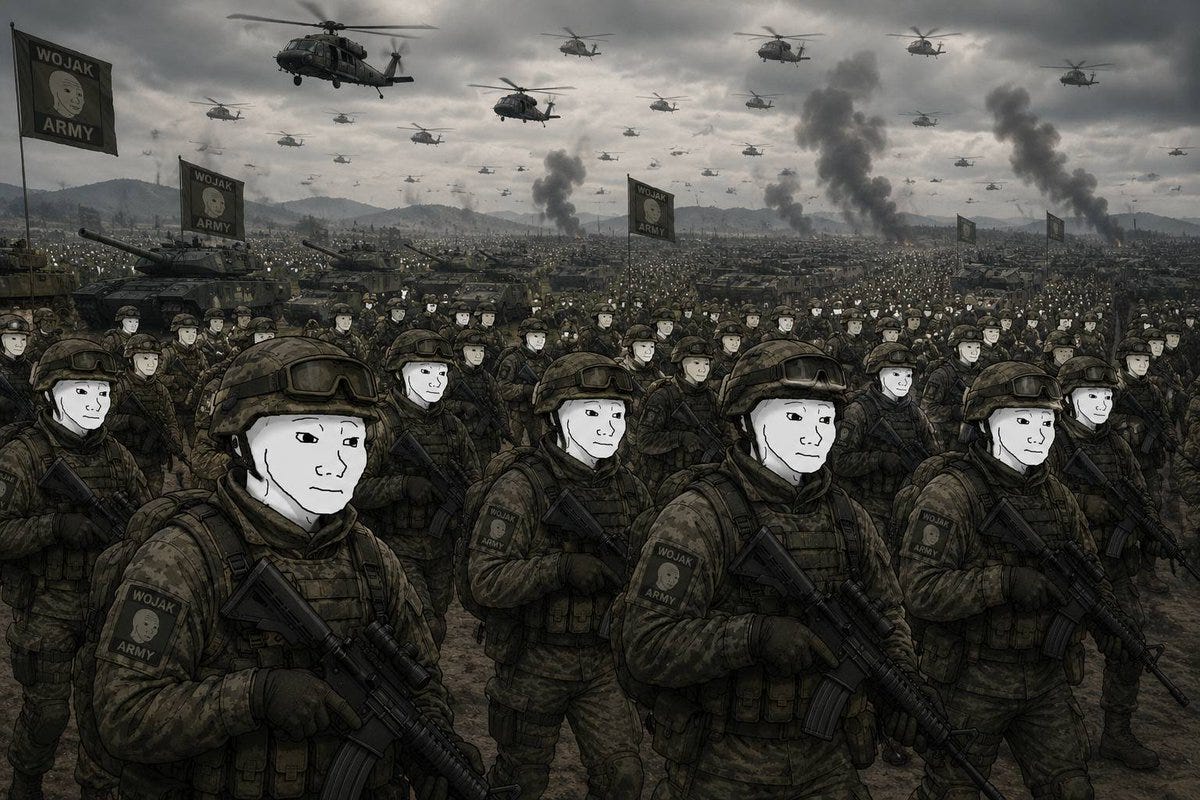
Historically, human civilizations oscillate between periods of broad common-law rights and Rule by the People™, and periods of strong hierarchy and rule by a small elite or a noble class. It’s generally recognized that the mass slavery of the Bronze Age gave way to the many Republics and Democracies of the Classical Iron Age. The Republics themselves then failed, and strong hierarchies and the Rule of Kings and serfdom were imposed during the Medieval period…
That era of Kings and Knights ended in the birth of modernism and republicanism, in the mass armies of Pike and Shot. An era that proceeded to the World Wars, the GWOT, and various skirmishes and wars of the early 21st century.
That era is probably ending.
These historical oscillations between highly hierarchical and democratic forms of governance coincide with specific technological changes. That is, when armies are small and operate via elite soldiers with (comparatively) massive logistics chains, governments become hierarchical, and the rights of The People™ are suppressed. When armies are large and require direct participation from a significant portion of the population, democratic rights are expanded, and The People™ are elevated as civic virtue.
This apparent correlation is causation in my opinion.
The elites, when they require large slavish populations to keep the war machine running, will ensure that those populations are unarmed, unable to command or defend themselves, and act in concert with a top-down managed hierarchy. Simultaneously, when the elites recognize that they require a massive army of independent soldiers to operate the war machine, the elites extol individual liberty, education, a right to property, and a right to self-defense, enfranchising a massive class of citizens, and supporting their access to military-equivalent armament.
When technology supports militaries that are comparatively small and packed with elite technology and soldiers (Charioteers in the Bronze Age, Knights in the Medieval era), governance is top-down. When technology supports massive militaries (Classical armies with steel swords and masses of musketeers), governance is democratic.
The enfranchised class then comes to defend both their collective interests as their own home nation against foreign adversaries, and they defend their collective interests as workers against the very Elites who enfranchised them in the first place.
The transition from Hierarchy to Democracy and back again has historically been messy; often requiring several generations, and the social development of entirely new forms of legitimacy. With that said, it does appear that the world is beginning another transition1.
As a note, I put a lot of time and thought into these articles, and I respect your time by not relying on AI bots to write them for me. All of these are human-written and human ideas. Real data thrown into a sea of slop. I’d hope that most of you would consider respecting my time and purchasing a subscription. It’s 6$ a month, and I appreciate every single one of you who tosses a coin or two in my change jar.
Substack allows me to write different messages for my unsubscribed and my free-subscription audience. If you have a paid subscription, then you can vote in a hidden poll on what you want me to cover next.
One of the downsides of being good at forward-facing analysis is that sometimes one encounters realities that one would rather not acknowledge. In evaluating the current trends and their likely continuation into the future, I’ve occasionally encountered instances where I’ve benefited at a personal level2.
The distinct changes occurring in 21st-century warfare leave me concerned about our place in future governments. Despite being a Monarchist, I am also a constitutionalist (it makes sense if you read the material I’ve written on the subject), and I heavily endorse individual liberties3. Particularly the rights to self-defense as described in the original US Constitution. Technological development, however, seems oriented in the other direction.
Like many of my articles, I am threading together multiple concurrent ideas, each presented and tied together at the end.
Drones are a key component that I’ll get to, but realistically, these changes have been in the works since the 1940s4.

The argument to be made is not that warfare has suddenly changed in the 21st century (though it has), but that law enforcement has fundamentally changed over the 20th. In the 1940s and 1950s, the United States police force rapidly adopted the use of two-way VHF mobile radio devices. Over the next 60 years or so, the idea of perpetual-constant communications solidified into an enforcement apparatus that very rarely needs the men with guns to perform enforcement against regular, mostly law-abiding citizens5.
I read a Substack some months ago that states there’s little more humiliating for a man than to be condescended to by a person he could easily physically overpower. If anyone can find that original article so I can cite it here, let me know.
Once upon a time, during the Age of Sail, captains would be given vague orders, and then have full discretion on how to carry those orders out. The world required Men of Action to be at the helm, ready to make hard choices, as the state could not be immediately consulted for help half a world away.
In the current era, fat, poorly kempt, miserable cat-ladies operate the most intrusive bureaucratic system in history, because they can. The HR Lady, the CPS Lady, the government inspector for your home or your car. The reason that these arms of political power can be so unimposing is that the power of the State Systems (the Men with guns) are a mere phone call distant.
She can tromp into your house like she owns the place because, even if you were to physically engage this affront to your own dominion, rest assured that big men with big rifles will be kicking in your door later that day. This has resulted in an information asymmetry in the way governance can be conducted. The state has engaged in dramatic oversteps merely because it can continuously leverage more and more resources until a given dissident is dealt with6.
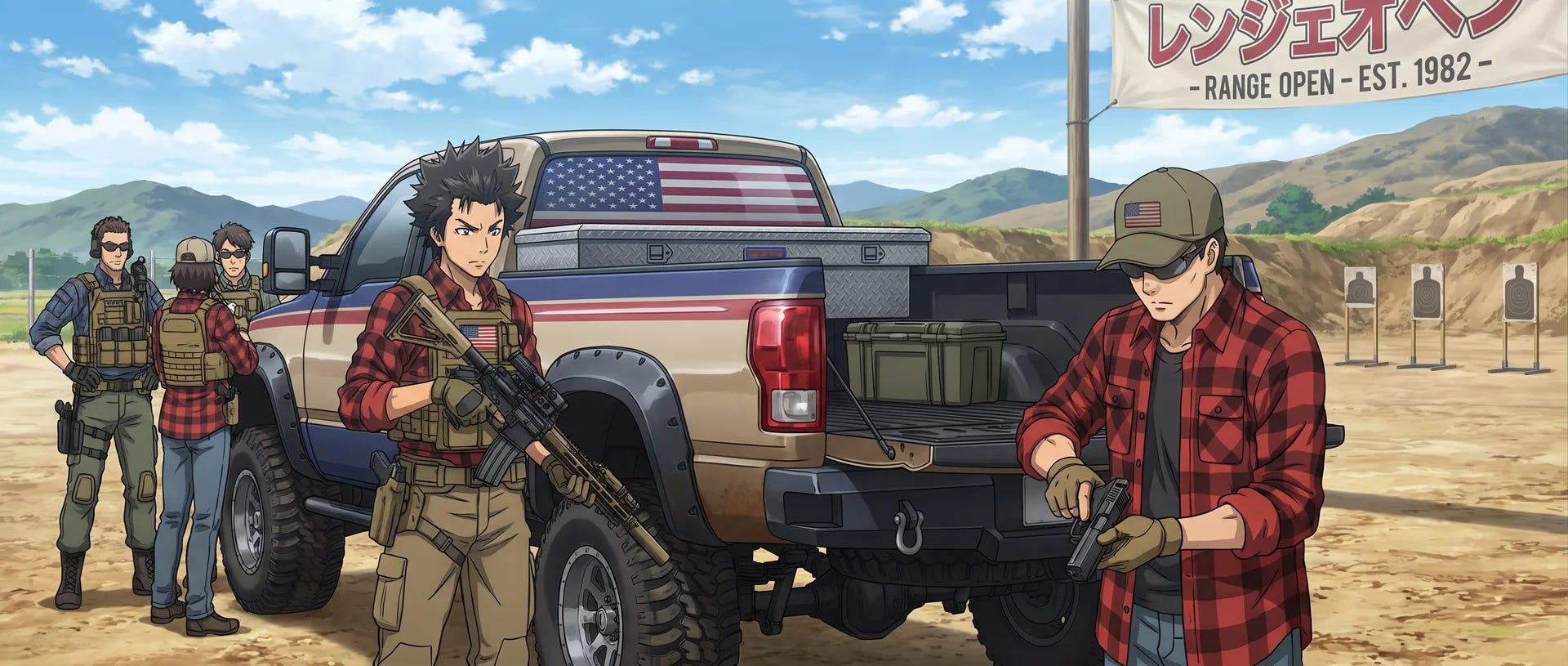
Since the 1990s or so, preparedness-militia types have been chasing technical parity with military-equivalent tools. This space has ramped up significantly since 2016 and certainly since 2020. The Post-Pandemic era has very nearly been a Golden Age for the firearms industry as all the pandemic panic-buying led to funding for R+D, resulting in innovations in civilian night vision, radio, rifles, thermals, etc.
Right now, the average interested autism-American with a cumulative $10k invested has technical parity with all but the elite individual soldiers fielded by the US military. Imagine a team of somewhat disciplined guys with full NVGs, M855A (or even M855A1) Ammunition, smoke grenades, and body armor getting in a fight with the local police force. It’s very likely the militia-types would win, at least initially.
But the 2020s do not reflect the conditions of the Battle of Blair Mountain in 19217.
Modern elites, rather than attacking the FPC and GOA, are reshaping what power itself means8. Direct violence is becoming secondary to the control of information, the control of high technology, and the exploitation of information asymmetry.
If one vaguely observes historic trends, it appears that for as long as we’ve had large market economics, the following has held: A single man can purchase one decent military-equivalent weapon for roughly one ounce of gold (within a 30% margin or so).
Industrial production that allows for the mass production of military equipment also accelerates gold-mining. Economic downturns see a proportional increase in both the value of gold and weapons and munitions. It’s very consistent.
Until recently, in the United States, a single ounce of gold cost roughly $2000. Now the price is closer to $4500, with the sudden increase in price occurring between the beginning of 2024 and peaking (at just over $6,000) 2 years later at the beginning of 2026. This, I do not think, is coincidental. The sudden increase in the price of gold took place concurrently with the Ukrainian Conflict, the Israel-Palestine Conflict, and now the Israel-United States-Iran conflict.
Global economic instability has occurred in parallel to dramatic shifts in warfare.
Those technological and economic changes are cascading from battlefield innovations, and impacting the way that armed and organized citizens are able (or unable) to seek redress of grievance from uncooperative government.
All of this is to say that, economically speaking, the definition of “one decent military-equivalent weapon” appears to have changed. One might argue that, now, such a tool lies outside of what an average citizen can afford, much less produce.
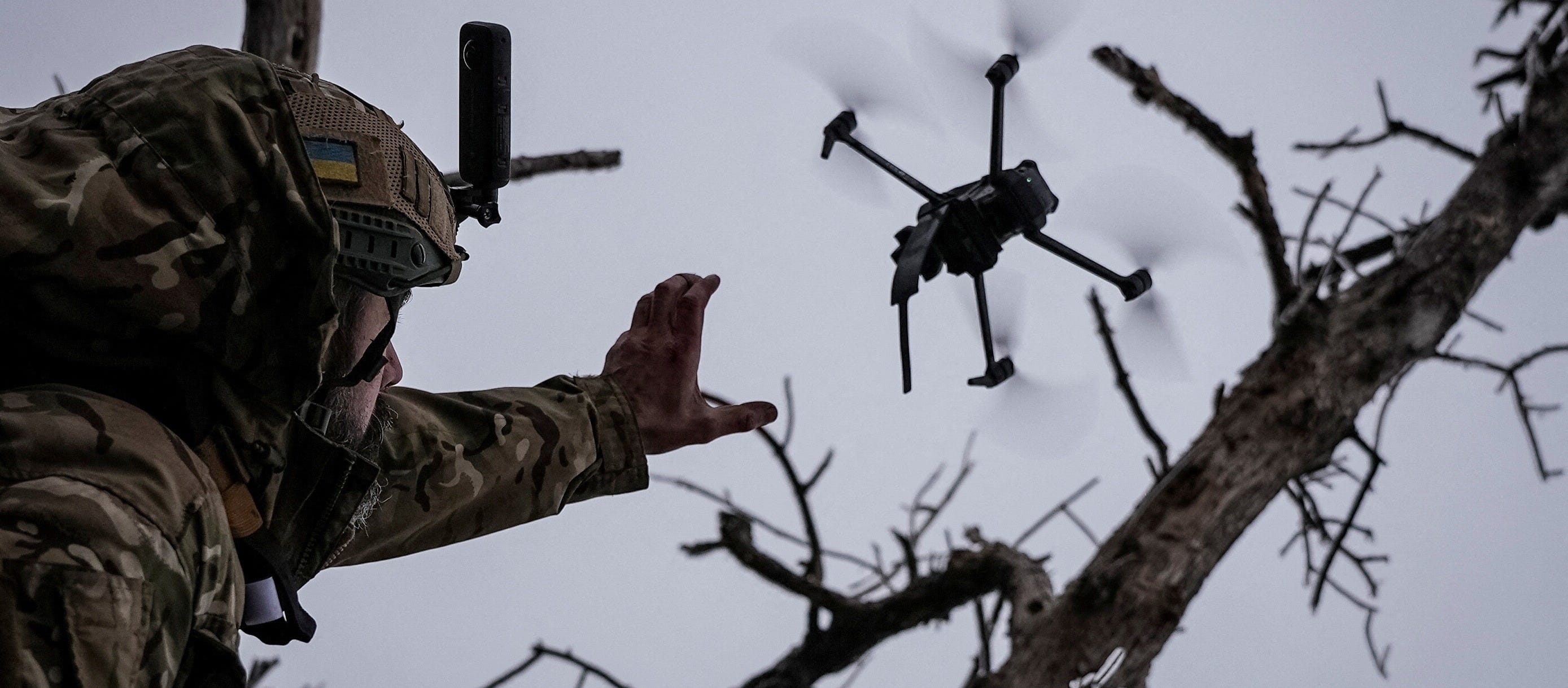
The majority of deaths in warfare over the 20th century (roughly 80%) were caused by artillery. In the fog of war, the men on the front lines identify and then pin a target with covering fire; once pinned, the opposing target can be pulverized with directed artillery fire from the rearward positions. This is the basic combat doctrine of 20th-century warfare. Mortars, Howitzers, and heavy artillery have dominated the battlespace from WWI up until 2024 or so. 20th-century military doctrine is focused on spreading out and digging across a broad frontline to minimize a formation’s vulnerability to artillery9.
FPV drones have changed warfare dramatically, similar to the degree of change from the late 1800s to the trenches of the First World War. Spreading out and digging is now necessary not only on the front lines, but across the entire battlespace. As Iranian targeting has demonstrated, long-range drones can reach out and target distant military bases for only a few tens of thousands of dollars a pop.
Another change is demonstrated in Ukraine. The ratio of Killed-In-Action to Wounded-In-Action soldiers was 1:10 during the GWOT, as rapid medical evac allowed soldiers to survive wounds that would have been lethal in any previous era10. In the Ukrainian war (particularly among the Russian lines), the ratio of KIA to WIA is approaching 1:111. That is, if a soldier is injured in combat, there is a 50% chance that soldier dies of infection, bleeds out, or suffers death due to hypothermia or… something. That is the most lethal combat-death ratio in modern history, and it’s because of drones. One cannot evacuate a wounded soldier if drones are threatening to blow up the helicopter or ambulance, or even the dudes with a stretcher hiking their wounded friend out. Thus, injured soldiers are left on the front lines for days or weeks before they can be taken to a medical facility.
Half die before then.
Warfare is changing at a pace unprecedented by the previous century, and combat doctrine is evolving just as quickly. The FPV and light drone are becoming as dominant in the battle space as artillery once was.
It’s frustrating to be into firearms myself right now. With so many great wins from the GOA and the FPC when it comes to forced-reset-triggers, SBRs, suppressor laws, etc., the American Civilian can finally play with all the best modern military toys…. except that it doesn’t anymore.
I feel like Tony Soprano, the modern age is one where we’ve arrived after the party is already over12.
Right now, in a meta-social sense, it seems that the American citizens are not “winning” their rights to arms back in the form of the 2nd Amendment; it seems that the American citizens are being permitted to regain their right to own guns because, insofar as modern armaments go, guns are far less dangerous in civilian hands than they once were. Information, and exploiting information-asymmetry, and precision-guided munitions (lethal or non-lethal drones) is the new battle-space.
The purpose of the 2nd Amendment is so that a group of citizens has the capacity to present force on parity with a small military detachment to seek a redress of grievance from the governing body. Historically, that has been done with firearms. For the time being, it still is done with firearms, but for how much longer?
With universal surveillance, Flock cameras, Ring cameras, AI analytics, and a credit score that analyzes how hard your car brakes for a stoplight, the only thing that one has in the face of such information asymmetry is the gun itself13, and we saw how that worked out at Ruby Ridge long before the FBI could just fly flashbangs into the old man’s cabin with a never-ending stream of FPV drones.
The United States Marine Corps is dropping snipers and seeking to replace them with drone teams, because an FPV doesn’t have to wait in the grass and sneak up to a target to make a critical shot from 2000 meters away. Give the squad a few exploding FPV drones and now they can hit 5 targets all across the front lines at the same time, and perform advanced scouting and recon simultaneously14.
One could not historically use artillery against a group of gangsters hold up in a warehouse in Cleveland. There is no reasonable way a police force could deploy artillery against our ethnically diverse rocket-scientists (or those who dare speak ill of such reputable gentlemen) to enforce the law without risking catastrophic collateral damage.
With an FPV drone, however, it’s different. A drone can deploy tear gas, a taser, or just fly overwatch to track where cars and individuals travel, and use facial recognition so they can be arrested later at home, at 3 am in their beds. We live in an era where your insurance company uses drones to check in on your house for excuses to drop coverage15. Federal agencies are, I guarantee, using these tools in supportive roles, and exploring options for primary roles. It’s only a matter of time before that trickles down to police departments who realize that arrests get a lot easier if you can just fly a few flash-bangs or tear gas to a target's lap from a distance16.
As a result of all this, the civilian gun, the theoretical tool with which a small group can apply direct lethal force when faced with unjust governance, is no longer going to work. The Battle of Blair Mountain would have looked a lot different if the big boys could just use explosive FPVs to blow up the organizers.
More likely, the battle wouldn’t have happened at all, as FBI agents could identify and eliminate the labor organizers from a distance months before anything took place on the hill. The information asymmetry allows key individuals to be identified, tracked, and eliminated (or even better, quietly defanged, defamed, or arrested), long before they pose an actual existential threat to the corporate or government systems from which they seek redress. There are still ways to organize, but it gets harder over time. I go into functional modern methods in my NMC presentation visible on YouTube here17.
The armed citizen historically meant firearms, rifles, and a group of guys who were marginally organized. While a lot of dudes have been building up their arsenals, the groundwork was laid at the top for excising the civilian voice from public policy. Not through the ATF (though they are assholes) but through a series of what, at the time, were wholly unrelated fields.
The FCC dramatically restricts the use of bandwidth for radio communications. This is necessary for the sake of public order, but it also means that remote systems and civilian tools can only (legally) operate on very narrow radio bands. That makes almost all civilian hardware easy to jam, as the specific radio bands used by civilian hardware are well known and built into the design specs for most tools: from Radios to drones to security cameras.
3D printer limits have been proposed across many states. That a 3D printer not be permitted to print ye olde Ghost Guns. Of course, once AI tech is in place to automatically scan print files, it’s easy to expand the list of no-no items. High on the list of priorities (or after one cartel member blows up a federal judge or something) will be restricting 3D printers from creating drone parts. This one is still early in the works, and suffering significant pushback from the firearms communities. But I doubt that drone-enthusiasts can see the danger until it’s too late.
Electronic firmware restrictions, again something that can be perfectly easily sold with the “let’s prevent Chyna from getting these chips” line. Realistically, electronics restrictions already exist in the form of radios and built-in firmware. Civilians are going to see their digital devices further limited with built-in backdoors and hard-coded firmware. For the time being, likely, this won’t even make the public media outside of a few niche circles. Firmware restrictions will further magnify the information asymmetry between the citizen and the government-corporate apparatus.
Social media restrictions. They have been graping free expression for some time now. Back in 2010, Occupy organized around a common goal seeking redress from the government. In 2016 and 2020, something similar happened. In all cases, the pressure from social media companies to censure grew18. Now digital systems are opaque corporate censors that seed information in ways that none of the users of those systems understand. It’s to the point where whole linguistic creoles have developed because we think some words might be automatically flagged. We simply don’t know for sure which ones or why, resulting in a modern mysticism around AI and The Algorithm.
The last piece of the puzzle, after hard-locking electronic firmware and bandwidth limitations, is likely to appear in the next decade or so. I could see fiberoptic cable becoming restricted equipment like chemical components to create explosives or drugs. If the federal government can, at will, shut down even home-built custom-drones by jamming the correct radio bands, then the only real risk will materialize from drones that can use direct fiber-optic connections. Thus, a legal framework will be created to minimize access to those materials.
The result of all these systems will be a preservation of extreme information asymmetry between citizens and their governing body. The effective routes to bear (legal) functional military-equivalent arms are already mostly closed (small explosives are also highly restricted). At the same time, none of us want to see gangs in Chicago flying explosive FPV drones into each other’s houses.
Ok, some of us want to see it. I do have the image of a gold-plated diamond-encrusted drone being shown off by various vain underworld entrepreneurs saying “This is my problem solver right here.”
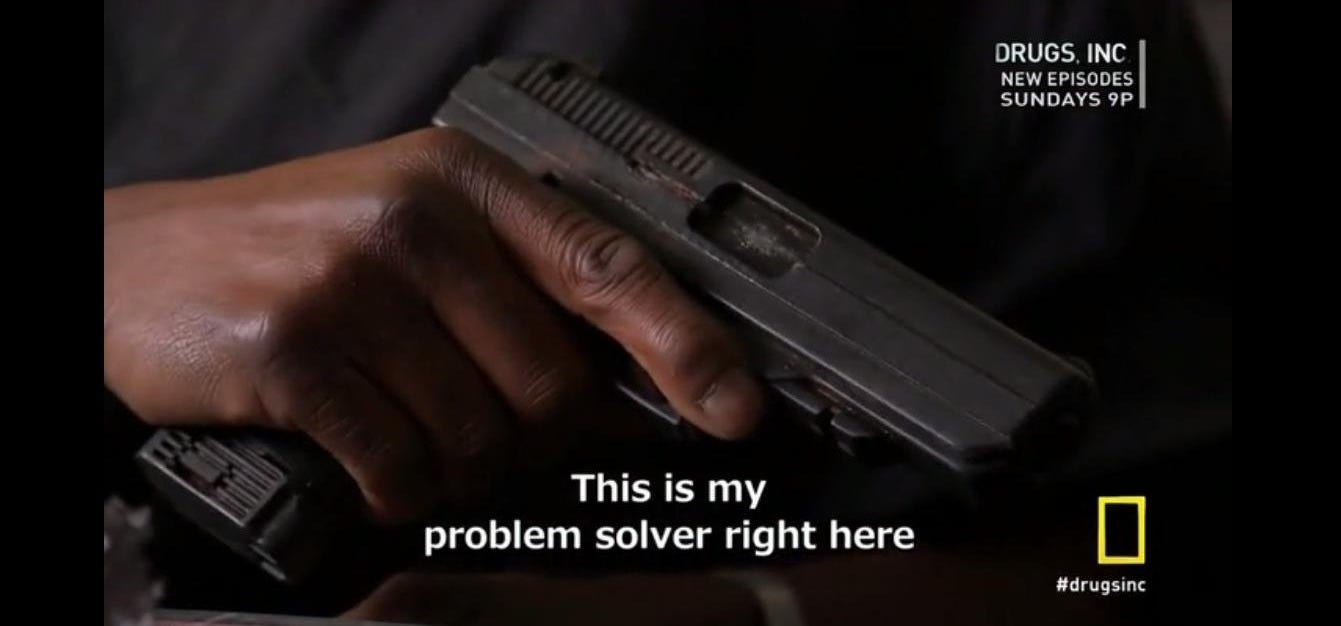
Functionally, at this point, the elite ruling caste are aware that technological development has rendered the gun an ineffective tool for demanding redress from a recalcitrant government. Thus, they no longer see a reason to fight with the population over gun ownership, but they will be damned if you think they’ll let you carry equivalent arms to theirs. I am reminded of Solzhenitsyn, and left wondering what would happen if his proposed resistance had rifles, but the soviet government they were resisting had drones equipped with flash-bangs or grenades or chlorine gas hovering outside their windows19.

Now, it may be possible to regain one’s civil liberty to Bear Arms, but doing so will be an incalculable uphill push. First, people would have to recognize where the actual infringements lie:
The invisible information asymmetry, AI, algorithms, and mass surveillance
The armed FPV drones now being used by the military
The draconian control of the airwaves by the FCC
The digital firmware embedded in advanced milling tools and additive manufacturing devices
The capacity to manufacture and sell small explosive systems
That seems unlikely, not least of all because the existing administrative systems have a vested interest in not allowing people to have those tools. Furthermore, I can’t even reasonably state that I trust most people with those tools. The cartels are already using drones to kill each other; the probability that the United States Supreme Court will go over the head of the FCC and the ATF, and the FAA to formally legalize the civilian ownership of military-equivalent drone technology is basically zero.
At a bare minimum, a new layer of infrastructure would need to be created first: high-powered lasers in most cities to shoot down drones, broad-spectrum jammers, and possibly even civil-defense drones. Still, at least starting that fight to broaden the definition of “arms” in the American Civilian market is probably a good move. Maybe create some gaps before the [Powers that Be] lock the civilians out of actual arms-ownership entirely. I wouldn’t be surprised if thermal cameras become legally restricted at some point as a matter of course.
The existing balance of power between the citizen and his government is swinging even more dramatically in favor of government even as citizens are rediscovering their love of firearms. Because firearms don’t matter that much anymore.
It’s telling that a functional military-grade firearm ($800-$2000) is far less expensive than an ounce of gold these days ($4500-$6000)… but a DJI Mavic drone with an equipped thermal Device carrying a cheap explosive payload to drop? Take a look for yourself.
Feral Historian makes an excellent point about high-trust cultures as apparent aberrations of human civilization in his review of Camp of the Saints20. In the case of Japan, one could make the argument that “White Culture” can be transplanted onto another ethnic group and that they can adopt enough high-trust cultural standards to perpetuate an environment of somewhat-reasonable individual liberty and positive trust at the national level. In the case of South Africa or India, one could make the argument that, no, such a culture cannot be transplanted, and once the White individuals exit, the whole civilization once built there begins slowly winding down, surviving on inertia until it eventually collapses.
That is to say, that over the last 800 years or so, Europe developed the social technology required to build “high-trust” societies that were governed not by shame or fear, but by guilt. That is, it is on the individual to do the right thing, and it is the individual who holds themselves to that standard. In that way, Christianity originates all of “White” Civilization21.
While the world seems to be sleepwalking into a new form of techno-authoritarianism in shift from Democracy back to hierarchy, that’s not to say things will need to stay that way. It could be that new social technologies can be created: A new civilization capable of producing what I would refer to as an “ultra-high-trust” culture. A culture where your neighbor owning 50 explosive FPV drones for “fun” would be as normal and non-threatening to the average citizen as their neighbor owning a few thousand rounds of ammunition today22.
By “citizens,” I mean real Americans, not urban bug-people, or Europoors.
Ultimately, I think that it is interesting to live during one of these tectonic cultural shifts, even if not entirely comfortable. It’s unfortunate that it happens in our time, and I do hope that we can preserve individual liberties across the coming age. I am not, however, hopeful.
Still, if there’s a place for delusional stubborn optimism, the rights of the people to keep and bear arms as a means to seek redress from our corrupt leaders is as good a place as any.

This idea has been described as the “Hoplite Thesis” in Greek history. You can read more on the topic in Victor Davis Hanson’s work, “The Western Way of War; The Other Greeks.” As the defense of the city-state came to depend on ordinary citizens rather than aristocratic horsemen, the hoplite class increasingly demanded a voice in political decisions, and in many poleis the right to vote and hold office was tied to one's ability to fight in the phalanx. If every hoplite mattered equally in battle, he should matter equally in the assembly. I can also cite Stanislav Andreski, who wrote “Military Organization and Society”
My correct prediction in early January that in February 2020, the United States would close borders produced a significant increase in my quality of life, for instance.
My article on Neo-Monarchy as a blueprint for liberty and libertarian ideals
Neo-Monarchy: A Blueprint for Liberty
·
March 6, 2025

This is a follow-up to my previous work “A Reasoned Case for Monarchy.” How can one make a monarchy to maximize individual liberty and success? This is a broad-strokes paintbrush proposal. Food for thought as they would say.
Obligatory reference to “Leviathan and Its Enemies by Samuel T. Francis.”
Police radios became somewhat standard in the late 1920s across most cities, and in rural areas by the 1940s. The bootleggers found themselves often at an information disadvantage when the police radio could beam information forward at the speed of light to intercepting officers. The first police scanners weren’t available until the late 1960s and 1970s, meaning that there was roughly a 20 to 30 year gap between police capabilities and the development of civilian equivalents.
Why, yes, I am still mad about Ruby Ridge and the Branch Davidians, and Uncle Ted, why do you ask?
The battle of Blair Mountain took place in West Virginia as a violent dispute between coal miners and the companies that micromanaged them in company towns. Miners who attempted to unionize were evicted, blacklisted, or subject to violence (sound familiar?). After the assassination of a pro-union sheriff, 10,000 armed miners marched on Mingo County to free jailed union miners and demand recognition. There, they confronted 3,000 lawmen and company guards. Roughly one million rounds were fired during the five-day conflict, and it didn’t end until the US president deployed 2,500 additional soldiers to suppress the uprising.
That’s not to discount the work of the Firearms Policy Coalition or the Gun Owners of America. If there’s any way to “fix” the current issues, FPC and GOA are going to be at the forefront of it. They’ve done tremendous work for the 2A in the United States, and I fully support all the hard work they’ve put into their achievements over the last 5 to 10 years.
The Operational Art of War, a 2-year-old YouTube series with fewer subscribers than this substack is probably one of the most succinct analyses of mechanized warfare ever put into short-form video. I highly recommend it. At the same time, many of the assumptions it makes about combat doctrine are now becoming noticeably dated… which itself is a testament to how rapidly technology is forcing doctrine to change.
Here’s a citation to a source. It’s roughly between 8 and 13 depending on the location and the specific conflict of the GWOT that people reference. In some cases it was as low as 5.5 to 1.
Not quite 1:1, closer to 1:1.3 or so. But significantly higher than we’ve seen in previous conflicts. Even the Mexican-American War in 1864 had a Killed to Wounded ratio of about 2.2, and the Civil War in the United States sat at 2.4. 1:1.3 is incredibly high, one of the highest ever seen in modern history.
We arrived in the modern world, regaining all our rights to modern firearms just at the time when they start becoming irrelevant: Flock cameras, universal surveillance, AI, and drones now make a gun worth what? The ability to apply direct violence, but when it comes to the purpose of those tools: the redress of government grievance, what use are they?
It is required by law that in 2027 and thereafter, all cars sold in the US have an analytical system that will perform facial recognition, biometric scanning, and AI analysis to determine if that particular driver is “fit to drive” that car today. Yes, I do plan to buy an old beater from the 1980s, or illegally get one shipped in from Mexico if these are my choices.
Yes, insurance companies are absolutely doing this right now, flying them over private property, and the way the legal code works, there’s nothing the land owner can do about it. Also shooting at them or shining a laser at a drone hovering outside your bedroom window is the same crime as attempting to shoot down a passenger airline, meaning years in federal prison.
I am already worried about the day that the Forest Service begins using high-altitude drones with telescopic lenses flown by AI that will perform facial recognition and license-plate analysis on various guys who are just trying to get up into the woods and be left alone. One day a ticket for a broken taillight will show up in your mailbox with a picture of your shitbox truck 10 miles up an unmaintained dirt road in the middle of nowhere. First sold as a “wildfire early warning system,” such drones get quickly retasked to micromanaging the guys who want to be left alone for the weekend; Temporarily exiting the system of surveillance for a few hours becomes itself impossible, illegal, or both.
This video is also linked in my article on the Nationalist Media Conference, but I had fun making it. Take a look if you feel like learning more about organizational methods:
Here’s my article regarding a 12-year retrospective on the culture war that highlights the Age of Censure when it began back in 2018 or so. Younger zoomers and none of gen alpha realize that the internet was once a place for the free exchange of ideas rather than the consumption of brainrot slop.
“And how we burned in the camps later, thinking: What would things have been like if every Security operative, when he went out at night to make an arrest, had been uncertain whether he would return alive and had to say good‑bye to his family? Or if, during periods of mass arrests, as for example in Leningrad, when they arrested a quarter of the entire city, people had not simply sat there in their lairs, paling with terror at every bang of the downstairs door and at every step on the staircase, but had understood they had nothing left to lose and had boldly set up in the downstairs hall an ambush of half a dozen people with axes, hammers, pokers, or whatever else was at hand?...”
His review of Camp of the Saints is a fascinating read of the book, and I highly recommend it.
Functionally we’re all psychos. A christian is just a psycho on a leash.
I would like to reference my old Holistic Civilization series on this topic, which you may find interesting.
Comments
Nothing yet. Say the first thing.
Sign in to join the conversation.