
I’m covering Overlook Film Festival remotely, bringing you dispatches and reviews on some of the boldest and most unsettling horror films from this year’s lineup. First up is Ash, a sensory-forward sci-fi horror film that commits fully to atmosphere, dread, and bodily unease, often at the expense of narrative clarity and ultimately stronger for it.
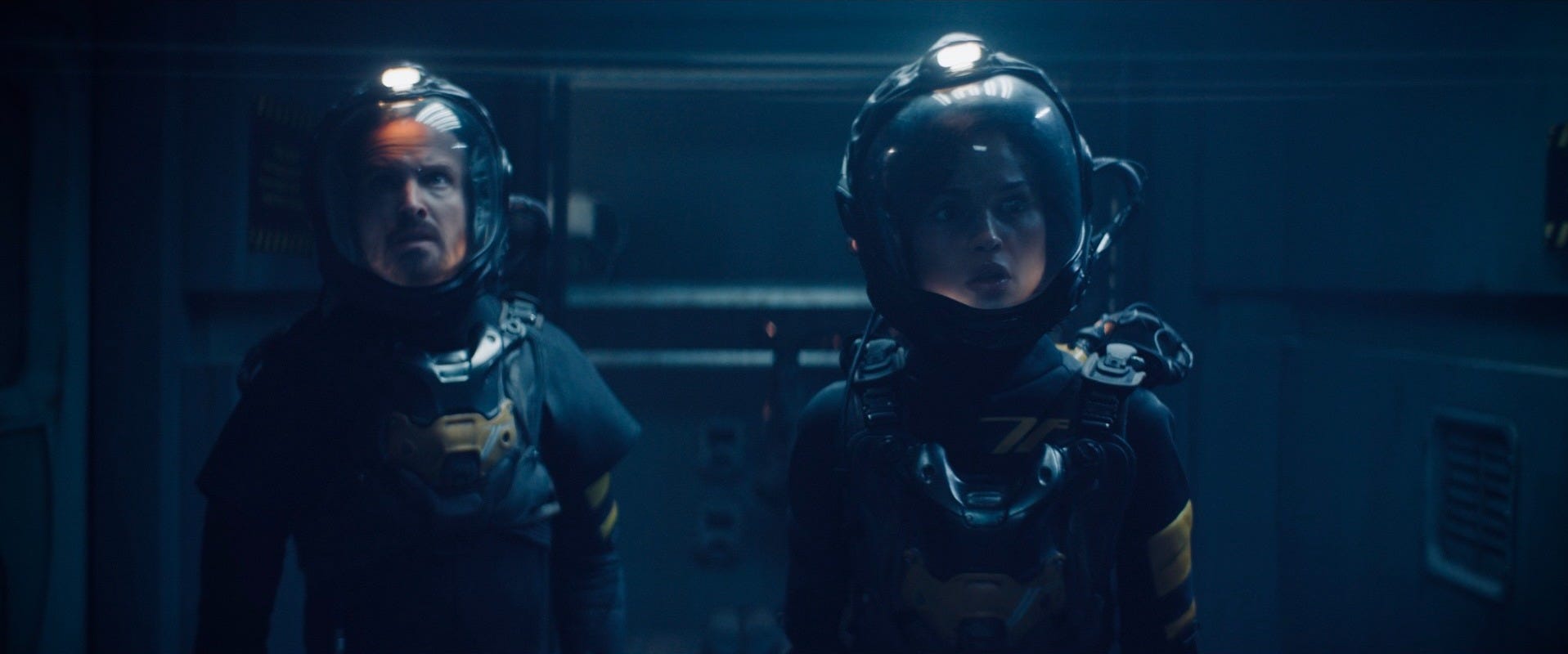
Directed by Flying Lotus, Ash opens in a state of confusion and never fully releases its grip. Riya, played by Eiza González, awakens alone on a distant planet with no memory of what happened to her crew. Her surroundings are immediately hostile. Flickering lights, decaying industrial corridors, and a setting that feels both technologically advanced and biologically compromised establish a tone of constant instability. The film offers little exposition and even less reassurance, opting instead to let disorientation define the viewing experience.
Flying Lotus directs with a clear priority: sensation over explanation. The film unfolds less like a mystery to be solved and more like a sustained confrontation with fear, isolation, and physical vulnerability. The sound design is oppressive and ever-present, humming and pulsing beneath nearly every scene. It creates a physical response in the viewer, often guiding the emotional rhythm more than dialogue or plot progression. The pacing is deliberate and occasionally punishing, but rarely stagnant. Even when narrative information is withheld, the film continues to press forward through mood and texture.
González carries the film with a restrained, physical performance that grounds its abstraction. Much of Ash unfolds in near isolation, and she communicates Riya’s fear, resolve, and exhaustion through movement and expression rather than exposition. Her performance resists melodrama, allowing the character’s vulnerability to feel lived-in rather than heightened. This restraint is essential in a film so uninterested in overt emotional signposting, and it provides a necessary human anchor amid the film’s more cosmic ideas.
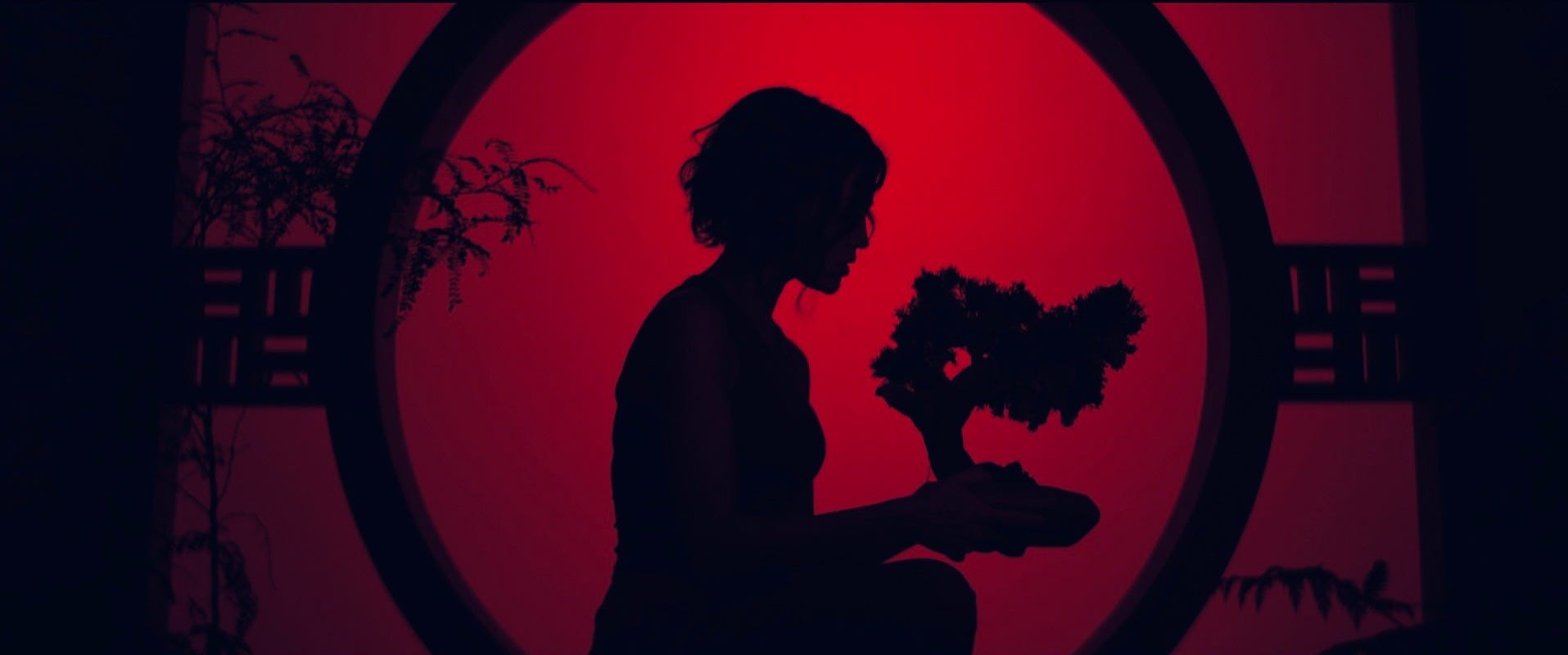
Visually, Ash draws from familiar sci-fi horror lineage. Influences from Alien and broader cosmic horror traditions are evident, but the film avoids feeling derivative. The production design emphasizes decay and instability, reinforcing themes of bodily fragility and identity erosion. Organic textures creep into mechanical spaces, suggesting a world where boundaries between human, machine, and environment are no longer stable. These ideas are introduced elliptically, but the ambiguity feels intentional and invites interpretation rather than demanding answers.
That refusal to clarify will not work for every viewer. Ash is content to gesture toward its themes rather than articulate them fully, and its final act leans even further into abstraction. Yet within the context of Overlook, this commitment to discomfort feels aligned with the festival’s ethos. The film trusts its audience to sit with uncertainty rather than seek resolution, framing horror as a sustained emotional state instead of a sequence of narrative payoffs.
Ultimately, Ash stands out as one of Overlook’s more confident and immersive genre offerings. It is bold, tactile, and unafraid to prioritize atmosphere over accessibility. Flying Lotus establishes himself as a filmmaker with a distinct voice and a firm grasp on mood-driven horror, crafting a film that challenges its audience to experience fear rather than simply observe it.
Thanks for reading Alt Tab Culture! Subscribe for free to receive new posts and support my work.
Comments
Nothing yet. Say the first thing.
Sign in to join the conversation.