
Quick recap if you’re new here: every few years I launch a new brand to keep my fashion startup muscles sharp.
I love going through the full process - concept, branding, sourcing, website, marketing, it keeps me current in a way that’s impossible to fake, because things are changing fast, and if you’re not actually in it, you can’t keep up.
In 2020 I launched Terracotta City, which became two case studies for my clients in advertising and wholesale.
In 2021 I started NGHTMRKT to explore the world of Amazon overnight millionaires.
And in 2024 I launched nu:titty, a line of post-surgical mastectomy bras for breast cancer patients.
To be completely honest, I have no desire to run a brand full time. All of these were just experiments to test different strategies at the time. Because I’d rather test things with my own money than have my clients try it out themselves.
A few weeks ago I shared what I learned from hiring one of New York City’s top publicists - and how I was able to DIY better results on my own.
And, this week I want to share the data I collected on influencer marketing for the same brand.
Spoiler: while influencer marketing made brands millions in 2018, it is generally a waste of money in 2026. And there are better strategies you should be using instead - which I’ll get to in just a minute.
I say this all the time but it bears repeating: data is everything.
I track everything - email opens and click rates, sales reports, likes, shares, and saves on social. Everything. Because, constant analysis is what makes you better.
So when I ran mynfluencer campaign for nu:titty, I wasn’t just sending out product and hoping for the best. I tracked results three ways:
Custom discount codes - the first way to track how many sales each influencer generated, each influencer got a special discount code that they could tell their followers to go and use.
Affiliate links - the second way to track sales, each influencer got a special link that when clicked on would track any sales they generated.
Staggered posting - each influencer posted one week apart so I could isolate their individual impact. I did this so I could track traffic, not sales.
I sent bras to 15 breast cancer influencers - all well-known in the community, with strong social media SEO (that part is important). The kind of accounts that come up when you Google “mastectomy bra” or “breast cancer.”
I got zero sales.
And this isn’t the first time I’ve heard this.
Client after client has told me the same thing - “influencers” just aren’t influencing a purchase these days. And, IMO, that’s mostly because customers understand they are being paid to shill, so no longer trust their opinions.
UGC - User Generated Content - is content real customers create and share that brands then repost.
It’s arguably more persuasive than celebrity endorsements. Like I said, very few people trust influencers these days because they know that as long as they’re getting paid, they’re willing to promote anything. Whereas a regular person who’s just like you, there’s a lot more credibility in that.
So I sent out 15 bras to regular people - and surprisingly got a few sales… Not enough to offset the cost of the free product, but it did start generating real buzz.
A great example of UGC is Rent the Runway. They let customers who rent items post photos directly on their site. And, people love it for two reasons: they get to see real bodies, not models, wearing the product, and the people posting love the mini-celebrity moment of being featured on the site.
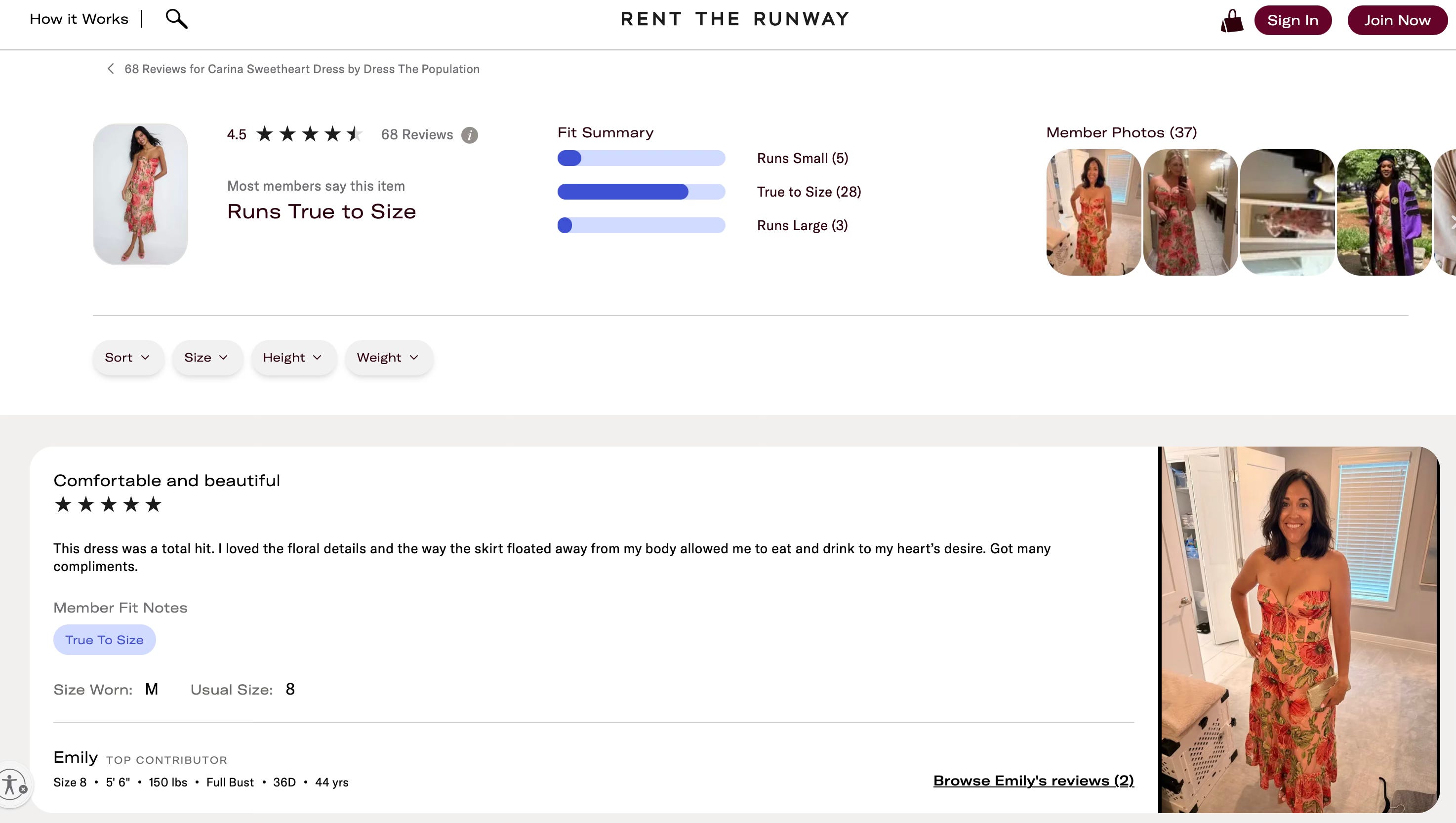
And, this was silver lining from my influencer experiment: even though I got zero sales, the influencers created beautiful photos, images, and unboxing content that I repurposed across my own accounts.
Basically I turned the “influencer” content into UGC. And, that content became part of my own marketing strategy, nurturing my audience and converting to sales over time.
UGC is a long game, not a quick fix.
For years, influencers manipulated brands into paying more than they deserved. The classic line: “You’re paying for my labor. I don’t work for free.”
Sure.
But if they’re not generating results, maybe they’re in the wrong business. Paying influencers who don’t convert isn’t a marketing strategy, it’s charity without the tax write-off.
Five years ago saying this out loud would have gotten me canceled. Now the data (man, I love data) backs it up, and more brands are openly changing their strategies to reflect it.
So here’s what I’m going to give you: exactly how to structure influencer deals so you don’t get ripped off, plus three better places to put your money that actually generates returns.
From now on, the good stuff is behind a paywall.
Think about how many times you’ve read something here and thought “Wow I had no idea.”
Now, think about the hours of trial, error, and money I’ve spent to share the knowledge with you.
The price for the info is only $5 a month. Sixteen cents a day.
You spend more than that on a coffee you don’t finish.
So, if my expertise has ever saved you time, money, or a costly mistake (and, I’m pretty sure it has) I feel like asking you to show up for $5 a month is fair.
⬆️The actionable stuff. The real strategy. The things that will actually move your business forward. That’s what’s waiting on the other side⬆️
BTW - “PS- In case you are curious…” and “Lastly, before I go, a few cool things…” will always be FREE. But the guides, how-tos, and true industry knowledge (like this weeks step-by-step social media partnership guide) will now be $5 a month.
We’re out in East Hampton this week, and it’s proof that people are spending money, not just the ultra-rich, but those with credit card debt too.
So, listen up brands that have been complaining about slow sales…
Because what happens Out East is a masterclass in marketing.
The Hamptons have created this fake world where everyone has money, or pretends to. People will spend their last few dollars to get a photo of themselves eating a Round Swamp pie rather than pay their rent on time.
Which in itself is it’s own case study - because if you have ever eaten Round Swamp, objectively… it’s not very good, and certainly not worth the 30x markup.
Anyway… One of my favorite things to do is sit in town and people-watch. And when you do, you get quite good at spotting who actually has money and who’s pretending to. They both have very obvious tells (and no the billionaires don’t all wear beat up new balances and t-shirts - that an old wives tale).
Aside from being entertained by these very public displays of wealth (and want-to-be wealth), there’s a real lesson in branding hiding underneath it.
What drives people who really should be saving their money to spend like crazy instead? And what do they spend on and what do they pass on?
...That’s the secret to good marketing... And, I’m going to talk more about it in the coming weeks.
Fabric that is 15 times stronger than steel.
My company made 1 million shirts - wrong!
This packing hack is ruining your clothes.
Is your factory ripping you off?
Because I see way too many brands wasting way too much money on social media partnerships when they could get better results for free. I’m going to share what should always be in an influencer contract. And 3 better places to collaborate than with influencers for a better return.
Comments
Nothing yet. Say the first thing.
Sign in to join the conversation.