

Leaked Slacks Undercut Phia’s Claims
Spinnova Eyes $15M U.S. IPO
FLORA is Launching Studios
CircKit x De Montfort University on Circularity Reshaping Fashion
WeMarket A/S acquires FashionLab
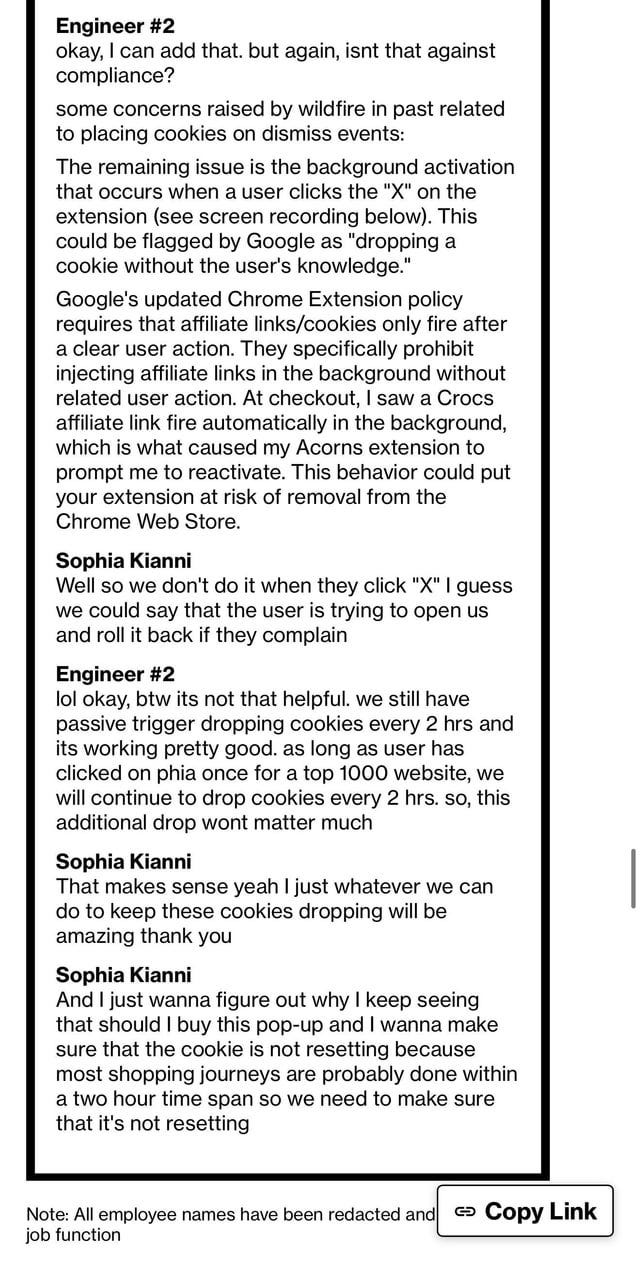
A new Bloomberg investigation, published August 11, contradicts Phia’s own timeline of how it discovered “cookie stuffing”. Internal Slack messages reviewed by Bloomberg tell a different story: co-founders Phoebe Gates and Sophia Kianni were discussing the mechanics of the practice with engineers as far back as December, seven months before the company’s public statement.
The Slack excerpts are specific. On December 18, Gates wrote to a developer, “can u confirm auto pop for cookie drop is live on ALL sites w a coupon to confirm we are monetizing on all gmv,” later adding “but regardless we should capture every transaction if the cookie drop was working.” Kianni, in a separate thread about a feature that could drop a tracking cookie even when a user tried to close Phia’s pop-up, wrote to an engineer: “whatever we can do to keep these cookies dropping will be amazing thank you,” after that same engineer asked “I can add that. but again, isnt that against compliance?”
Bloomberg also found the mechanism wasn’t a bug, as Phia had claimed, but a toggle labeled “enable coupon auto drop” that had been switched on since December 10 and off only on July 7, the day Bloomberg first contacted the company. An internal estimate cited by Bloomberg attributed roughly 51% of Phia’s June merchandise value to the practice, and average daily revenue reportedly fell from about $80,000 to $10,000–$28,000 once it was disabled.
By Alexandra Harrell
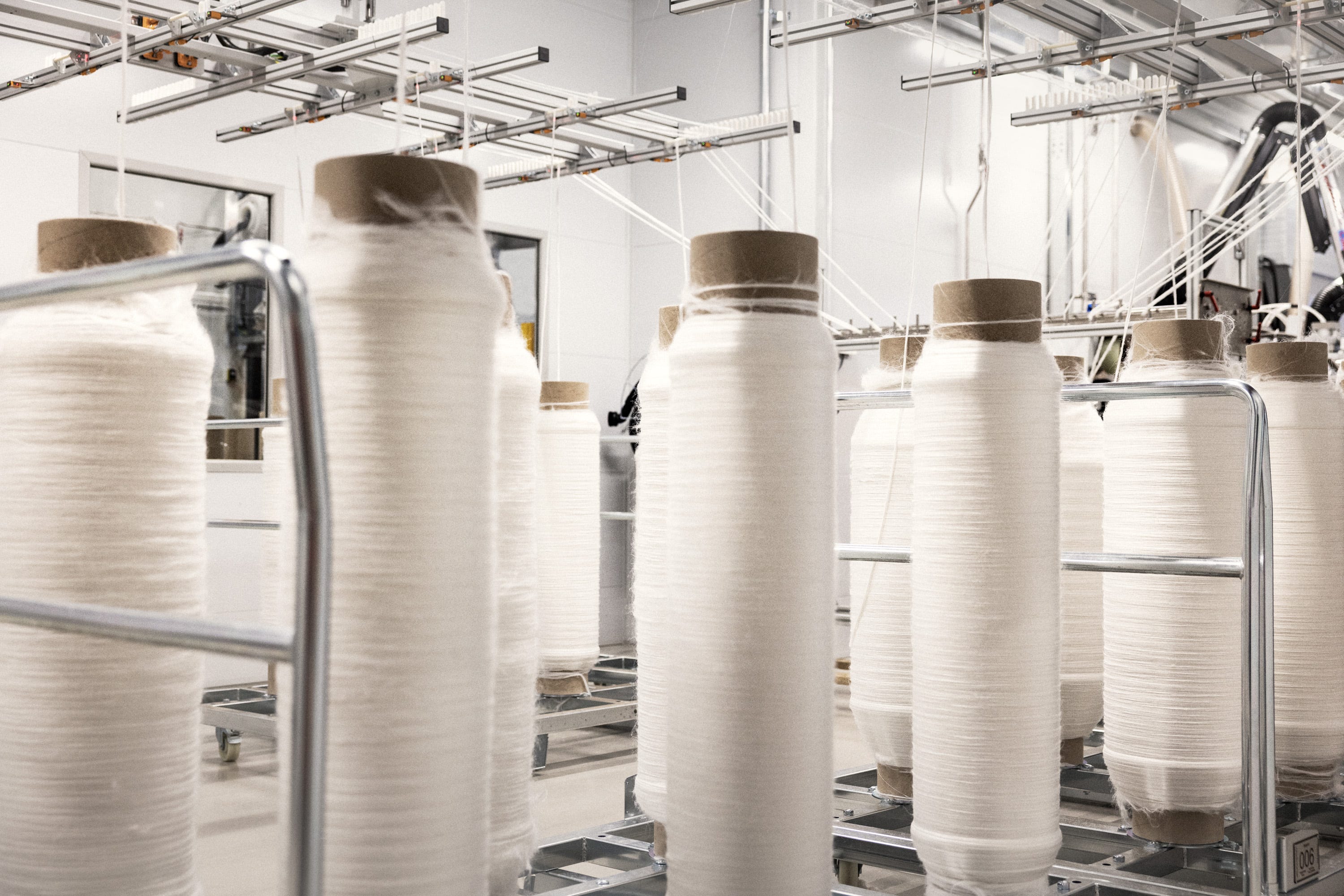
Finnish materials firm Spinnova is looking to raise at least $15 million through a U.S. initial public offering (IPO) as it works to commercialize its wood- and waste-based fiber technology.
The Jyväskylä-based company confidentially submitted a draft Form F-1 registration statement to the Securities Exchange Commission (SEC) for the proposed sale. If completed, the offering would be accompanied by a dual listing on the Nasdaq Capital Market. Spinnova’s existing shares would continue trading on Finland’s Nasdaq First North Growth Market under the ticker SPINN.
Spinnova said it would use the net proceeds to ramp up its Eteläportti demonstration facility, advance the commercialization of its technology and support general corporate purposes. The facility came under Spinnova’s full ownership last year after Brazilian pulp producer Suzano withdrew from further investments in its Woodspin joint venture. Production was subsequently halted while Spinnova evaluated options for restarting operations.
The contemplated raise follows a financially difficult year for the company. Spinnova generated 344,000 euros ($396,589) in revenue in 2025 and posted an operating loss of 41.3 million euros ($47.6 million), including an impairment of 18.4 million euros ($21.2 million) tied to Woodspin. It is scheduled to report its results for the first half of 2026 on Aug. 31.
Spinnova has traded in Finland since 2021, when its initial public offering raised approximately 115 million euros ($132.6 million).
FLORA, the AI creative canvas built by Weber Wong and Alex Li. This week it took its first step into vertical software with Fashion Studio, a connected set of tools that carries a garment from sketch to finished campaign, all in one workspace.
The tool moves through three stages: Concept turns a sketch or prompt into a photorealistic render. Refinement handles recoloring, fabric swaps, and flips between flatlay and worn “ghostform” views. Campaign covers the marketing side: model shots, multiple angles, 360-degree video, and a direct export to Shopify.
Testimonials from designers at Nike’s Jordan Brand and Prada’s Linea Rossa back the release, and the tool is free to try, with heavier usage metered.
It arrives five months after FLORA’s $42 million Series A, led by Redpoint Ventures, brought total funding to $52 million.

Fashion is undergoing its most significant transformation in a generation. Circular design, lifecycle accountability and compliance requirements are no longer emerging topics - they are live industry expectations and the next generation of fashion leaders needs to arrive ready for them.
CircKit for Universities is an academic licensing programme designed to bridge that gap, giving students hands-on access to the circular design and compliance tools used by real industry teams. De Montfort University is the first institution publicly confirmed to go live with the platform, embedding CircKit across multiple courses.
By working directly inside real industry lifecycle assessment (LCA) tools and navigating compliance and eco-design strategies first-hand, students develop a practical fluency in sustainability and circularity that theory alone cannot replicate - along with the critical thinking and decision-making skills employers are looking for from the moment they enter the workplace.

By Jannick Troelsen
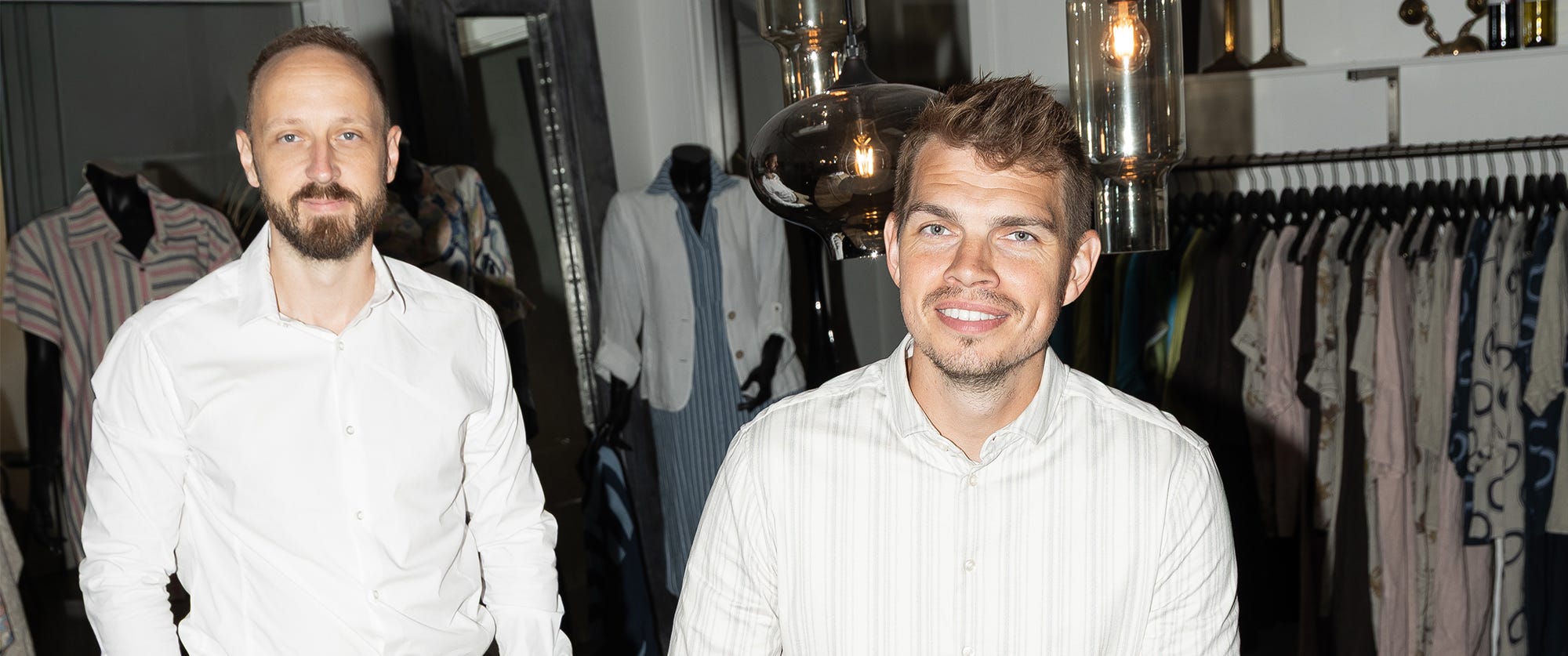
Danish agency WeMarket A/S today announces the acquisition of Swedish FashionLab. With the acquisition, WeMarket takes over the brand and customer base from FashionLab with a clear ambition to introduce these customers to the industry’s strongest AI photography solutions for the fashion industry.
WeMarket has recently distinguished itself with some of the absolute fastest-growing AI solutions tailored to the fashion industry and e-commerce. The technology enables fashion brands to create razor-sharp, professional fashion photos for their webshops faster and more efficiently than ever before.
Through the acquisition of FashionLab, WeMarket now aims to reach out to companies that have already explored the possibilities within AI-generated fashion and offer them a significant technological upgrade.
Thomas Haurum, founder of WeMarket, sees great potential in the acquisition and the synergy between the two brands: “The acquisition of FashionLab is a strategically important step for us. We have built a technology that truly pushes the boundaries of what is possible with AI in fashion and e-commerce. Now we look forward to welcoming FashionLab’s customers to our platform and showing them how our solutions can truly elevate their visual expression and streamline their business,” says Thomas Haurum.
For WeMarket, the acquisition is largely about building on the interest and groundwork that FashionLab has already created in the market. Rasmus Stouby, Business Director at WeMarket, adds: “The customers who have tried FashionLab have already shown immense curiosity and a willingness to optimize their e-commerce with new technology. Our task now is to carry that torch forward. We are ready with one of the industry’s absolute strongest and most thoroughly tested solutions for creating fashion photos, and we are convinced that we can create immense value for the customers we are now entering into dialogue with.”
Ex-fashion CEO compared to Elizabeth Holmes as US seeks sentence
Vestiaire Collective: New management, returning to growth, AI and a culture of ‘delivery’
Marc Jacobs expands its brand storytelling strategy with ‘The Swap’

FashionLab acquired by WeMarket A/S
Undisclosed amount on August 17, 2026
ThreadChain
Design-to-production infrastructure for Technical designers, In-house design teams & ManufacturersVault
Vault is an AI-powered fashion technology and e-commerce platform building the future of social wardrobe sharing.Circulei
Circulei is a women-founded retailtech based in Curitiba that transforms wardrobes into smart assets. Through peer-to-peer clothing rental, each piece generates income, shares stories, and drives more conscious choices.FLORA
PerDiem helps models and creatives track income across agencies, manage taxes in real time, and use AI to make smarter career decisionsOuiShopp
Shop online with friends. The world's first collaborative online shopping app.
Thanks for reading All Things Fashion Tech! This post is public so feel free to share it.
Comments
Nothing yet. Say the first thing.
Sign in to join the conversation.