
UPDATE July 11: I’ve added info about the Whitley/Ptacek/Gelb connection at the end of this essay.
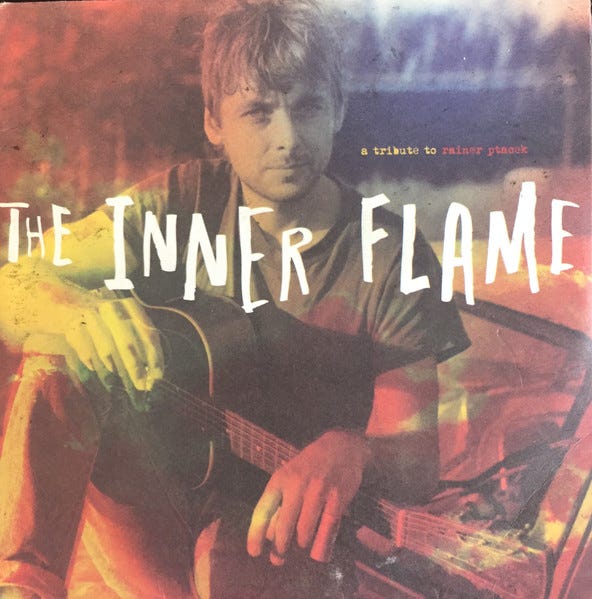
I’m writing this essay to mark the 29th anniversay of the June 26, 1997 release of The Inner Flame, an album produced to help Rainer Ptacek cover medical bills. I’m also writing to provide a deeper look at Rainer’s life and music and to highlight the many Ptacek-Whitley similarities. As I’ll explain, the intended Whitley-Zevon-Pirner contribution to The Inner Flame didn’t see the light of day until an expanded re-release, The Inner Flame: A Tribute to Rainer Ptacek, was released in 2012— seven years after Whitley died—and jolted us Whitley fans with a CW track from “the other side of the world”.
Rainer Ptacek was a Tucson, AZ-based singer/songwriter/guitarist. Born in East Germany in 1951, his family fled when Rainer was a pre-schooler, eventually settling in Chicago, IL. He moved to Arizona in the early 1970s and mostly played solo but also formed/played with bands: e.g., Rainer & Das Combo and Giant Sandworms, which became Giant Sand when the other band members moved to New York. Rainer remained in Arizona, partly because he had deep roots there and partly because he refused to disrupt the lives of his wife and children. In the video below, Rainer explains his take on ‘the blues’—note the similarity to Chris Whitley’s—and sings “Worried Spirits”;
Here’s an excerpt of a video (Live at Mt. Lemmon AZ, 1987) to better illustrate Rainer’s excellent guitar playing (the song is Rainer’s “Last Fair Deal”):
You can hear and feel the emotion Rainer seeks in his ‘blues’; both his vocal and his guitar here are gripping. Note that Rainer uses a stomp box to add a percussive beat. Remind you of anyone?
Indicative of Rainer’s respect among musicians, both Billy Gibbons (ZZ Top) and Robert Plant (Led Zeppelin) asked to record with him. The Ptacek-Gibbons project yielded 1993’s The Texas Tapes (be sure to read the story there about why Gibbons is not credited). The Ptacek-Plant project—as far as I can tell—yielded two tracks also released in 1993: “Whole Lotta Love” and “Great Spirit” featuring Rainer on guitar. In the following video, Plant describes his work with Rainer as “b-sides”:
Here’s the full “Whole Lotta Love” with Rainer on guitar:
0:00
-4:42
Listening to both “Whole Lotta Love” and “Great Spirit”, I can’t believe that anyone would call these “b-sides”!
In February 1996, Rainer had a seizure while driving his motorcycle, leading to the discovery that he had a brain tumor. Like many catch-as-catch-can musicians, Rainer lacked the financial resources to cover the medical expenses that ensued. That’s when the support of friends can—and did!—save the day. Rainer’s long-time friend and former Giant Sandworms band mate, Howe Gelb, put his devotion into action, launching a project to raise funds via an album featuring Rainer and his musician friends and supporters. Howe informed Robert Plant of Rainer’s diagnosis and the fund-raising project, and Plant immediately dropped everything to help Gelb co-produce the album. The following video tells the story and ends with Rainer’s cancer being in remission:
A "Who’s Who of industry headliners contributed tracks, including Plant and band mate Jimmy Page, Emmylou Harris, PJ Harvey, … and Chris Whitley joined by Dave Pirner (Soul Asylum) and Warren Zevon.
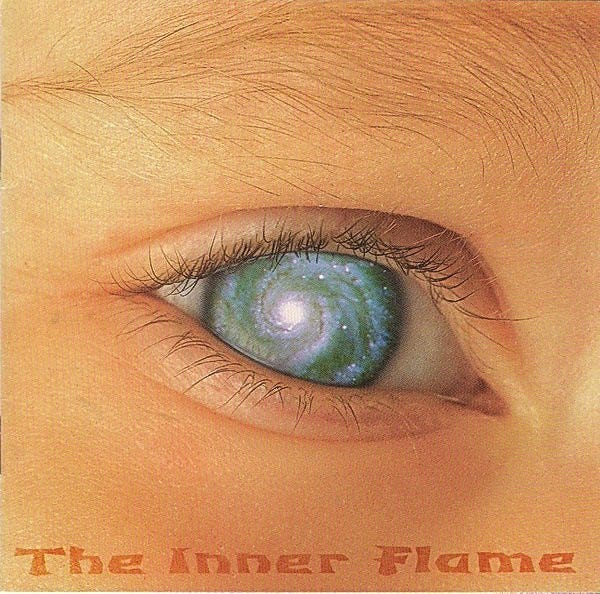
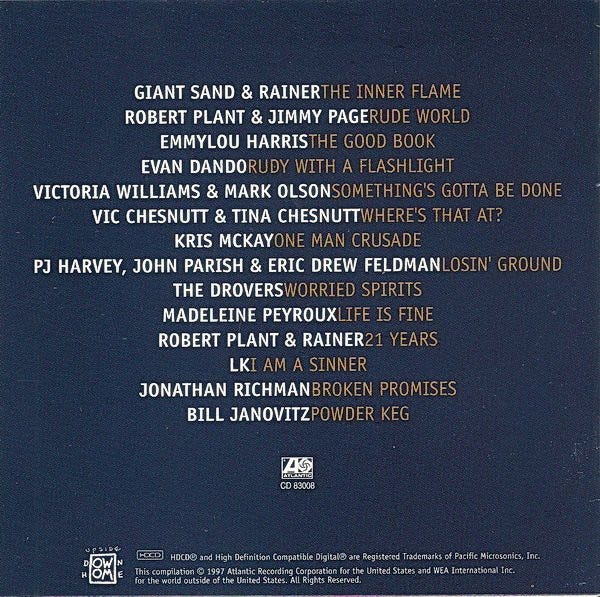
Here’s the “new song” that Rainer mentions in the background video and that provided the tribute album’s title. “New song” in that, after treatment for his brain tumor had resulted in Rainer forgetting how to play guitar, he had to learn all over again:
Tragically, the remission didn’t hold. The cancer returned in October 1997 and took Rainer’s life a few weeks later on November 12, at just 46 years of age.
In the previous section, I included Chris Whitley et al as contributors to the fund-raising album. But, if you examine the track listing of the 1997 release, you won’t find Whitley or Zevon or Pirner. What’s up?
Howe Gelb also produced the 2012 re-release, The Inner Flame: A Tribute to Rainer Ptacek, on which Whitley’s track with Dave Pirner and Warren Zevon finally appeared. You can read more about the advent of this re-release on Ptacek’s website.

Here’s a bit (from Howe Gelb’s Tour Journal) about the circumstances of their recording this track and the reason it didn’t make the 1997 release:
[T]here is that missing track from Rainer’s ‘Inner Flame’ tribute CD, with Chris Whitley and Warren Zevon in a hotel room jamming to “Powder Keg.” You could hear the mini bar depletion in that track, but it was a stunning vibe as you can imagine. At the last minute David Pirner put the kabash on the use of it since he had partaken in that on the fly recording as well and figured that maybe it might have been a take too hammered. There was no time to get him to check it out, the record was literally being mastered at that moment. We had to leave it off.
We know exactly when and where “Powder Keg” was recorded, courtesy of Warren’s tour diary as shared in Crystal Zevon’s bio, I’ll Sleep When I’m Dead:
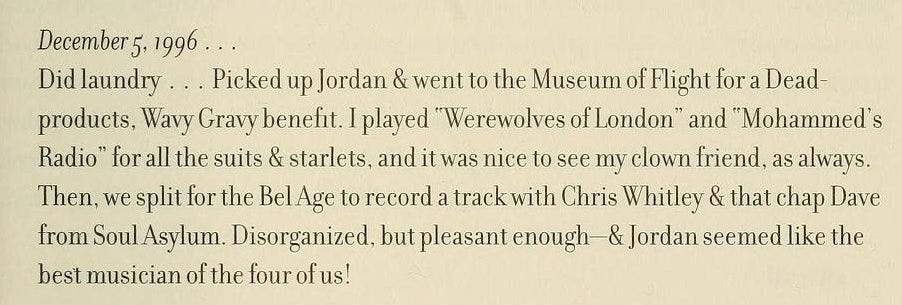
Note for my fellow anal-retentives: Warren misnamed the Museum of Flight - it was the Museum of Flying in Santa Monica, as confirmed by an LA Times article about the event. The Bel Age is now The London West Hollywood, just off the Sunset Strip. Why Chris was there at the time is unclear, but the Dust Radio newsletter noted that Chris would (and did) tour with Zevon through the beginning of December and then do some solo shows in LA and the East Coast.
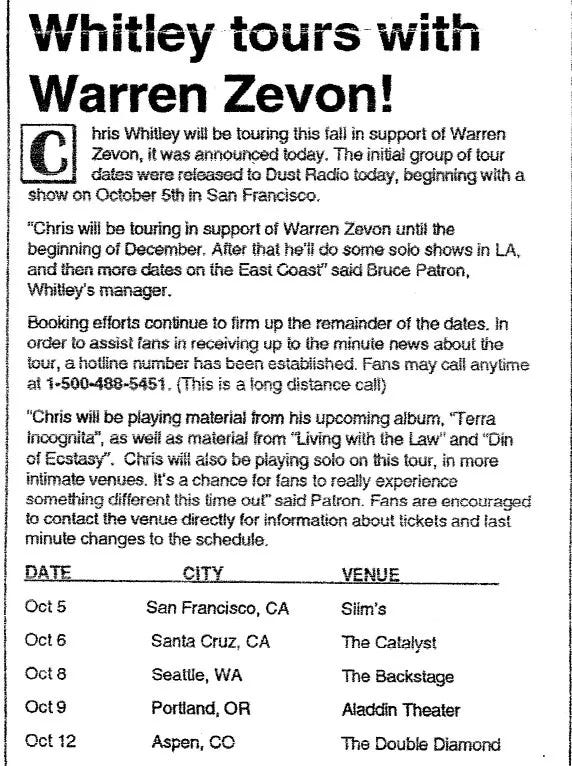
However, Chris never did those gigs in LA because he became ill with the “flu of ‘96” and spent much of December hospitalized with pneumonia.
Whatever. How the guys came together is less important than that they did. Here’s Rainer’s “Powder Keg” from his 1992 album Worried Spirits …
0:00
-2:43
… and the guys’ cover:
0:00
-5:25
My fondness for this cover derives primarily from its feel: the guys seem to be having a blast!
I’ve been drawn to Rainer Ptacek’s life story and music for years, but hadn’t taken the time to delve into either more fully. Writing this article motivated me to do so, though I’m still just an inch-deep into both. I suspect that I’m drawn to Rainer for many of the same reasons I’m drawn to Chris Whitley. Both were mainly independent artists who made music for their own reasons and on their own terms. Both viewed ‘the blues’, not as a formula or music genre, but as a way to express deep emotions. And—a great loss to the music world—both died young, their lives foreshorten and musical voices silenced by cancer. A final similarity is that both Rainer and Chris were honored by Howe Gelb: Rainer with a tribute album and Chris by Howe helping Susann spread Chris’s ashes in the Sonoran Desert near Tucson.
As I explained in a Substack Note, I completely overlooked a vital source as I wrote this essay: Howe Gelb’s journal entry that I had snagged from his web site over a decade ago. In that journal entry, Gelb wrote the following ‘bits’ (quoted as Gelb wrote them with my elisions indicated as [….]):
[W]e were visited by malcom burn [….] Malcolm asked all of a sudden, “has any heard from chris whitley?” [….] It was enough to make me remember the times chris and I hung out. And how I ever heard of him. It was rainer. Rainer loved that record he did with Malcolm and he played it for me way back when it came out. That was years before I would record with Malcolm [….] And then there was that first blurry memory of rainer and chris here in Tucson jamming ….was it cushing street ……?…..after we all left the local Mexican restaurant (el minuto).
Later in the journal entry, Gelb wrote “Celia blackwood came over. We talked about chris and she said she thought jim or patti had some stuff with him and rainer playing together. All these years that has never been heard if it does exist.” Don’t we all wish that would see the light of day!
Then there was the few times I would run into him on the road. In a studio in new york working on one of his records. In Austin at one of his shows. And one time simply by chance while I was at a phone booth in manhatten. We hung out all night after that happenstance. Him, me and jd. And then there was that time our kids played together while him and I settled back on the park bench. They were both the same age then… about 11, I think.
7 years ago.And I remember his apartment. It was like he lived there forever. Like he was never going to let it go cause he had such cheap rent because of the rent control law there, and his neighbors were paying 10 times the amount.
Then on another tired solo touring night in Dresden a couple years ago, I was taken to a bar after my show for only about 15 minutes. I was too tired and had to go crash instead. But before I left the bar, a woman approached me. She said she was chris’s girlfriend and how he wanted to be here to catch my show but had to be away on tour. Strange little moment I thought. Lucky to just about catch it.
After Chris died, Susann contacted Melissa Sheehan, who called Howe: “She said chris’s ashes were on their way to Tucson. The woman I met in Dresden was arriving on thanksgiving day. She would need some help.” I pulled out a portion of the journal entry into a separate document, “Spreading Chris’s Ashes”, way back in 2013.
It is out there way south of town [Tucson] where rainer’s ashes are spread too. a place where he [Rainer?] liked to go. A place where a river still flows defiantly and beautifully carves the desert some. Friday Susanne called me. She said chris asked to have his ashes spread around some, and some had to come here to the sonoran desert. I pointed the way to a powerful peaceful piece of desert west of town.
Rainer’s ashes spread “south of town”; Chris’s ashes spread “west of town”? Whatever. Both asked to have their remains spread in the Sonoran Desert.
If reading this essay has sparked your interest in Rainer Ptacek and his music, consider checking out some of the following resources:
2026 tribute fest in AZ - Rainer’s son Rudy was featured playing drums
Comments
Nothing yet. Say the first thing.
Sign in to join the conversation.