
Posthumous releases usually do little to enhance an artist’s reputation, but Dislocation Blues is a strong exception. It gives a glimpse into Chris Whitley’s possible but unfortunately truncated future. His unique take on acoustic blues achieved a level of intensity and personal truth that few, if any, contemporary blues practitioners have matched. ~ Vintage Guitar
Today is the 20th anniversary of the release of Dislocation Blues. Technically, we can celebrate twice! DB was released August 19, 2006 in Australia (Australian Broadcasting Company/ABC Music); and April 3, 2007 in the USA (Rounder Records). Jeff Lang, who collaborated with Chris Whitley to create the album, organized a celebration of the album’s release and a tribute to his collaborator, who had died exactly nine months earlier.
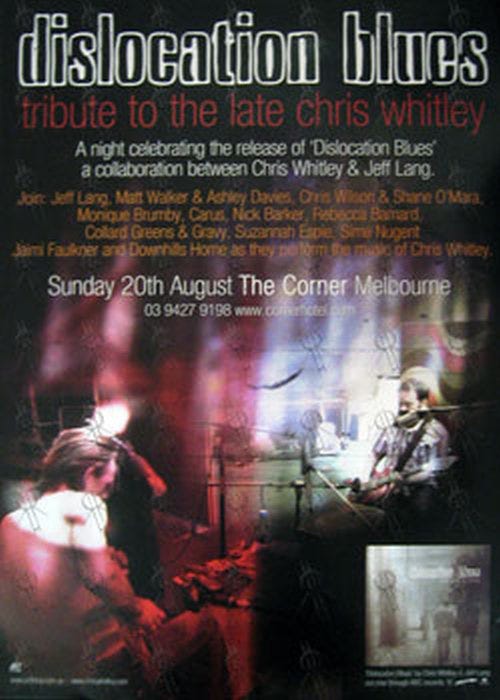
The celebration was held the day after the album’s release at The Corner Hotel in Melbourne, Lang’s hometown and the location of Adelphia Studios, where he and Chris recorded the album.
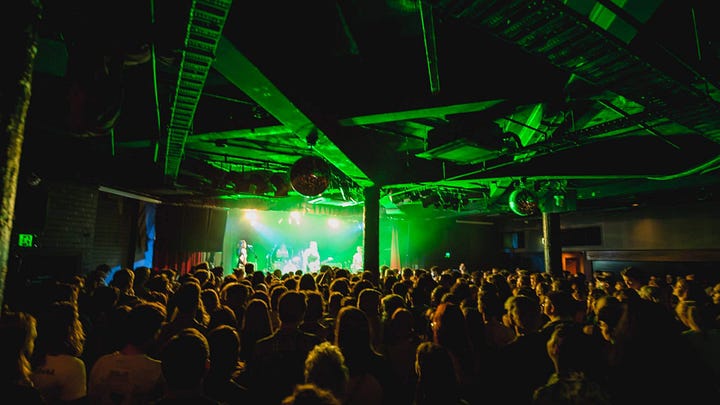
The line-up featured many of Australia’s finest musicians, including Lang, Matt Walker, Ashley Davies (drummer and BBQ banger on DB), Chris Wilson and Shane O’Mara, Nick Barker, Rebecca Barnard, and Jaimi Faulkner (watch Jaimi’s later cover of “Dirt Floor” and read about his opening for CW in Spring 2005)— all playing the music of Chris Whitley.
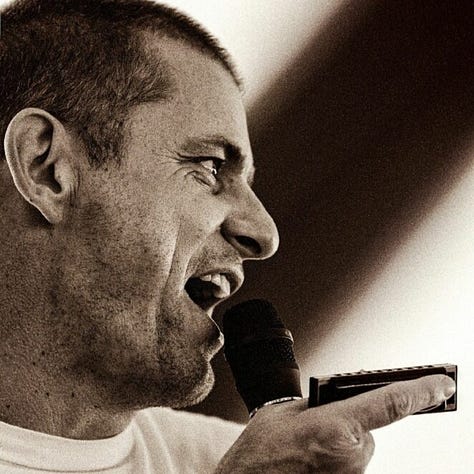
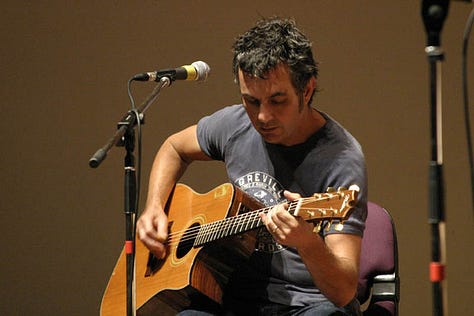
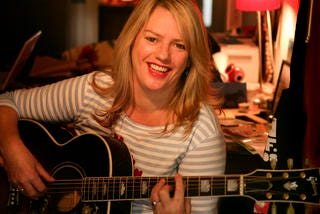
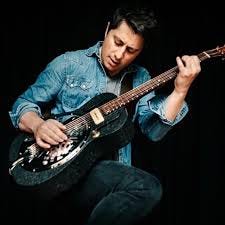
Unfortunately, I’ve been unable to find more info about the event, just a one-sentence preview in The Age.
I discussed the planning and recording of the album in the second article of my four-article series about DB:
However, I gave short schrift to recording details because the articles were so long already. Here I provide more bits about how the duo, joined by bass player Grant Cummerford and drummer Ashley Davies and engineered by Mick Wordley, recorded the album. Many readers might not be interested, but I’m betting that musicians, producers, sound engineers, whatever will be.
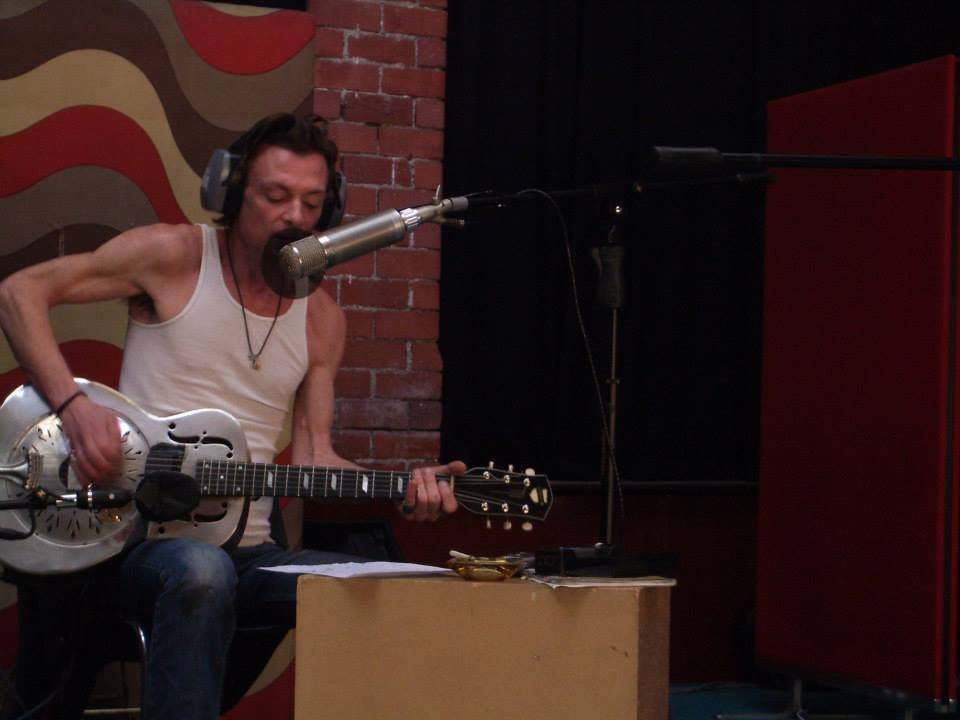
In an interview with Anil Prasad, Jeff Lang discussed the album, providing some info re guitars he and Whitley used. Whitley played his Nationals—a Style O and a Duolian—and a Kalamazoo Acoustic. I’ve never encountered a National Duolian among Whitley’s guitars; perhaps Prasad meant Triolian, aka Mustard? Hmmm, possibly a clue. Here’s a photo Jeff labeled “Stagger Lee brass-bodied Duolian”, which we ID-ed as Chris’s 1940 Style O, which is a single-cone resonator:
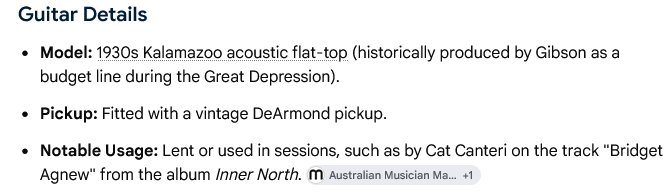
We’ve also never documented Chris owning a Kalamazoo (so called because these guitars were manufactured in a Gibson facility in Kalamazoo, MI), so I asked Google AI if Jeff did. Yup! So Chris must have borrowed Jeff’s.
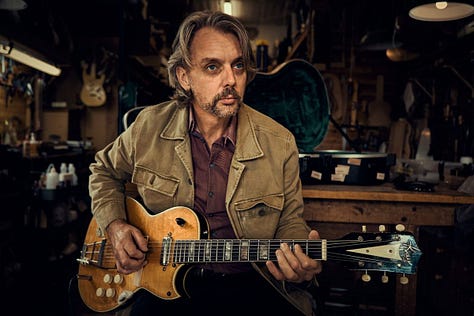
Lang played several guitars, including “an early-’60s Guyatone electric, a ‘50s National e-scale Reso-Phonic, and a 14-fret Style O reproduction, built by Australia’s Greg Beeton.”

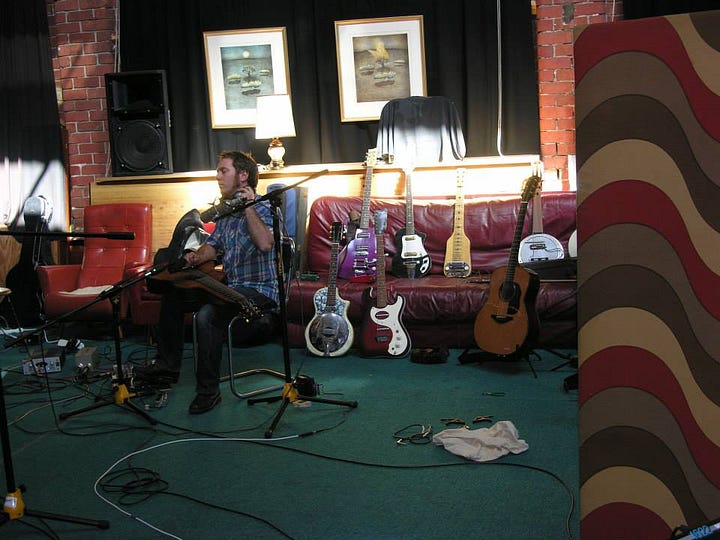
In Lang’s memoir, Some Memories Never Die, Jeff discussed the ‘what’ and ‘why’ about the amps he and Chris used:
Chris and I mostly played through small guitar amps. I used my little five-watt early 60s Australian-made Rex Mascot for the most part, and Chris mostly used another small valve amp of mine, a Fender Bronco. We weren’t stressed about making everything super isolated for this album. We wanted to allow just enough spill between the various instruments into each other’s microphones, so that we could occasionally leave an amp mic off in the mixes where it felt appropriate.
Again in his memoir, Jeff provided more detail about how this awesome, over 7-minute track was recorded … in ONE TAKE!
The first song we tackled was the traditional “bad-man” folk song, ‘Stagger Lee’, and the take on the album is the first take—indeed the one-and-only run-through of the song. Chris and I had worked up a version in a hotel room in Alaska the previous October, then I’d picked out the verses I liked from the myriad versions out there, without looking to any of them for the song’s structure or chord arrangement. We wanted to play it much starker and harder sounding. Bass player Grant Cummerford and drummer Ashley Davies were the rhythm section, and there was no need to tell them what to play. ….
When Mick Wordley and I mixed the album a month or so later, I remember turning up Chris’ vocal mic on its own, us looking at each other and saying “Well, that sounds like 80% of the mix right there!” It was a wonderful sounding space, and Mick had placed the microphones where they needed to be to capture that sound on a recording. ….
[I]n ‘Stagger Lee’ my amp was just a spectral component of the mix, floating around in the background, making my guitar sound like it’s quite far away from the listener, whilst Chris’ National was mixed up front, right in your face, sounding like it could slice the speakers with each distinctive chordal stab.
ICYMI: Jeff’s video of “Stagger Lee” incorporating footage Mick Wordley recorded during their three days at Adelphia.
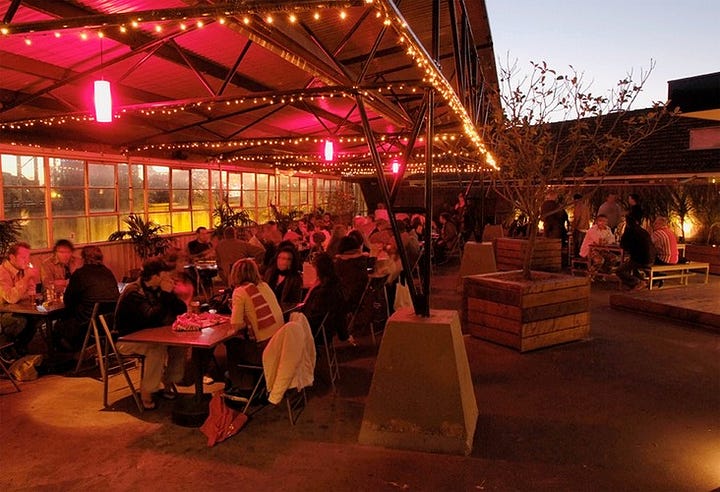
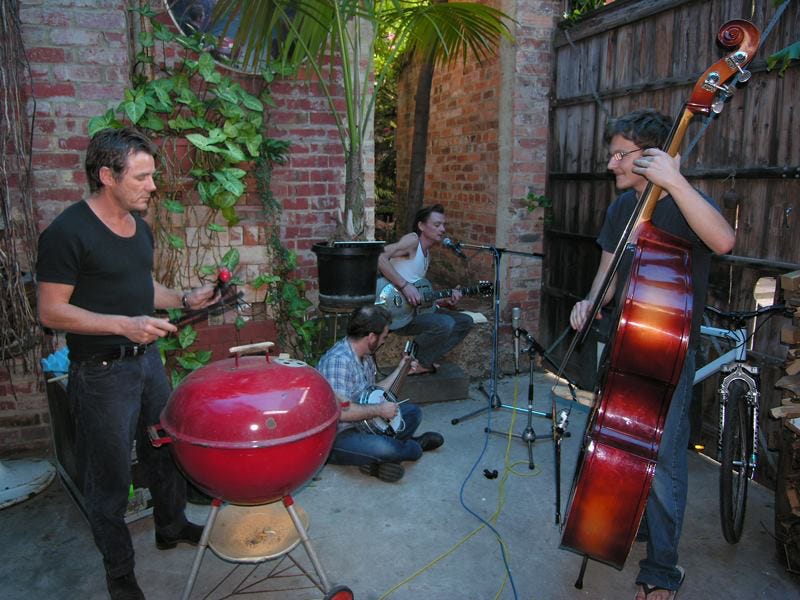
In his memoir, Jeff Lang described the set up for this track. On the suggestion of Grant Cummerford, the title track was recorded in the open-air courtyard of Adelphia “complete with street traffic right on the other side of the fence. …. [Mick ran] a Neumann stereo mic out into the courtyard, placing it in amongst the players, adding just one extra microphone for Chris’ voice.” Ashley Davies traded his drum kit for a BBQ grill, which “sounded rusty, which was perfect.” Again, Mick Wordley “tweaked the balance the old-fashioned way, by calling out for each of us to move our positions relative to the microphone.” Once again, the guys caught amber in a bottle, recording “Dislocation Blues” in one take.
Jeff Lang expressed the ‘magic’ of recording in his chapter about Whitley:
I view recording, especially when it’s done right, as the nearest thing to time travel we have. I can put the album [DB] we made on, close my eyes, and I’m back there, everything where it was on those three days. …. I’m looking across at my late friend Chris, and he’s still here, and I’m watching as he sings in that haunted whisper “about that bad man, cruel old Stagger Lee”. It’s fucking magic, so it is. And I can do that – sit there, in my mind, in that room, back then - because Mick Wordley caught it, and because he caught it right. Thanks, Mick!
I’m grateful that he [Whitley] got to hear it finished, that I got to hear first-hand that he dug it, grateful that it all came together, that we made the album at all, instead of it being a talked-about-but-never-occurred event ….
On this 20th anniversary, many of us can also time travel, not to Adelphia Studios but perhaps to the moment we purchased, read about, or first listened to Dislocation Blues. In my case, I time travel a short distance to last year, when I finally gave DB the attention it richly deserves, really listening to the full album, discovering its beauty, and writing four essays about it. And I too am grateful that, just weeks before Chris Whitley would take his last breath, he listened to the mixes Jeff had sent him:
Before Chris learned of the disease that would claim his life in November 2005 we had spoken about the record he made in America shortly after this recording (Reiter In) and his plans to continue a series of “Bastard Club” releases with a shifting lineup of musicians. When I spoke to him in late September he had the mixes I’d sent him for this album playing loudly in the background and was full of ideas about starting his own label for albums like this. He and I had agreed on the mixes, track order and title, though he did have a soft spot for calling it “Road Dog Shall Inherit The Earth”.
Because “we have the records” (as Dougie Bowne stated in the Dust Radio documentary), these artists and their spirits—whether ‘bastards’ or ‘road dogs’—may not ‘inherit the earth’, but they surely inhabit our lives. For that we too can be grateful.
Comments
Nothing yet. Say the first thing.
Sign in to join the conversation.