
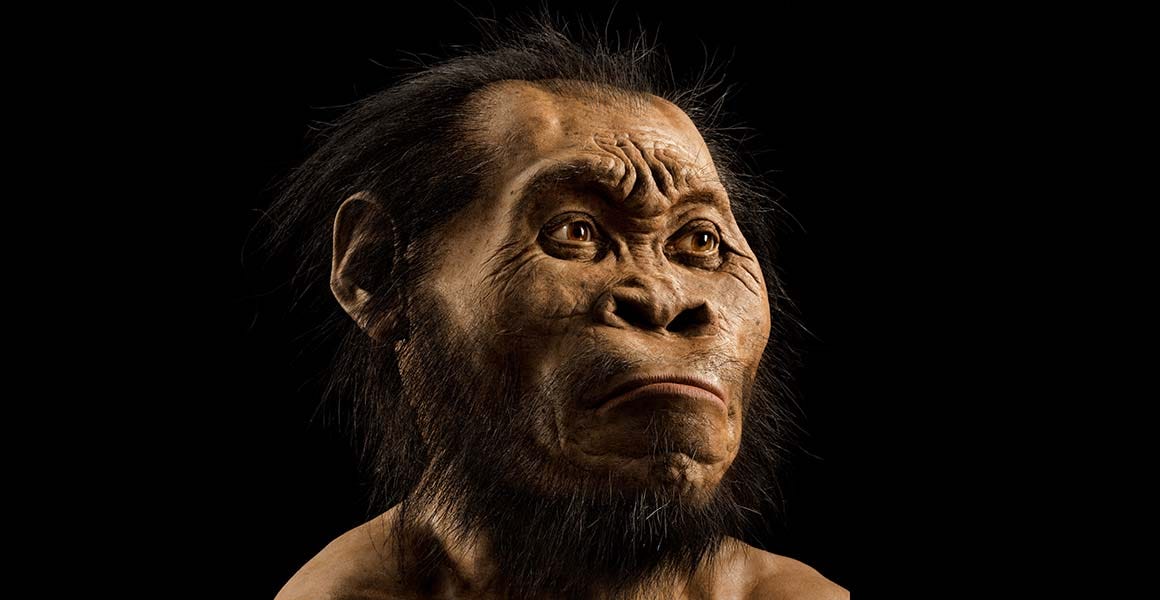
In 2013, two recreational cavers squeezing through a barely charted passage outside Johannesburg found a scatter of bones that looked, at first glance, unremarkable. Over the following two years, a team led by paleoanthropologist Lee Berger pulled more than 1,500 fossil fragments out of that same chamber, representing at least 15 individuals of a hominin species nobody had ever named before. They called it Homo naledi. Its skeleton read like a patchwork built from two different eras: shoulders and curved fingers suited to climbing trees, paired with legs, feet, and hands capable of long-distance walking and fine manipulation, wrapped around a brain barely a third the size of a modern human’s.
A real surprise arrived in 2017, once dating results finally came back. Naledi’s remains were between 236,000 and 335,000 years old, which meant this small-brained, tree-climbing cousin had not lived deep in humanity’s ancestral past at all. It was alive at the exact moment modern Homo sapiens were emerging elsewhere on the African continent. That single result quietly broke the textbook image of human evolution as one tidy line marching from primitive to modern. At least two very different kinds of human relative shared the African landscape at the same time, and a separate body of genetic evidence now suggests a third, still unnamed population, may have been out there too.
Reaching the chamber where naledi’s remains lay required squeezing through a gap known among cavers as Superman’s Crawl, barely wide enough to force an adult through by stretching one arm ahead like the character’s signature pose, followed by a knife-edge ridge nicknamed the Dragon’s Back and then a nearly vertical chute dropping about 12 meters into total darkness. Berger himself could not fit through the passage. He ended up recruiting a team of slight, experienced excavators through a public call specifically seeking small caving scientists, a group that came to be known, half-jokingly, as the underground astronauts.
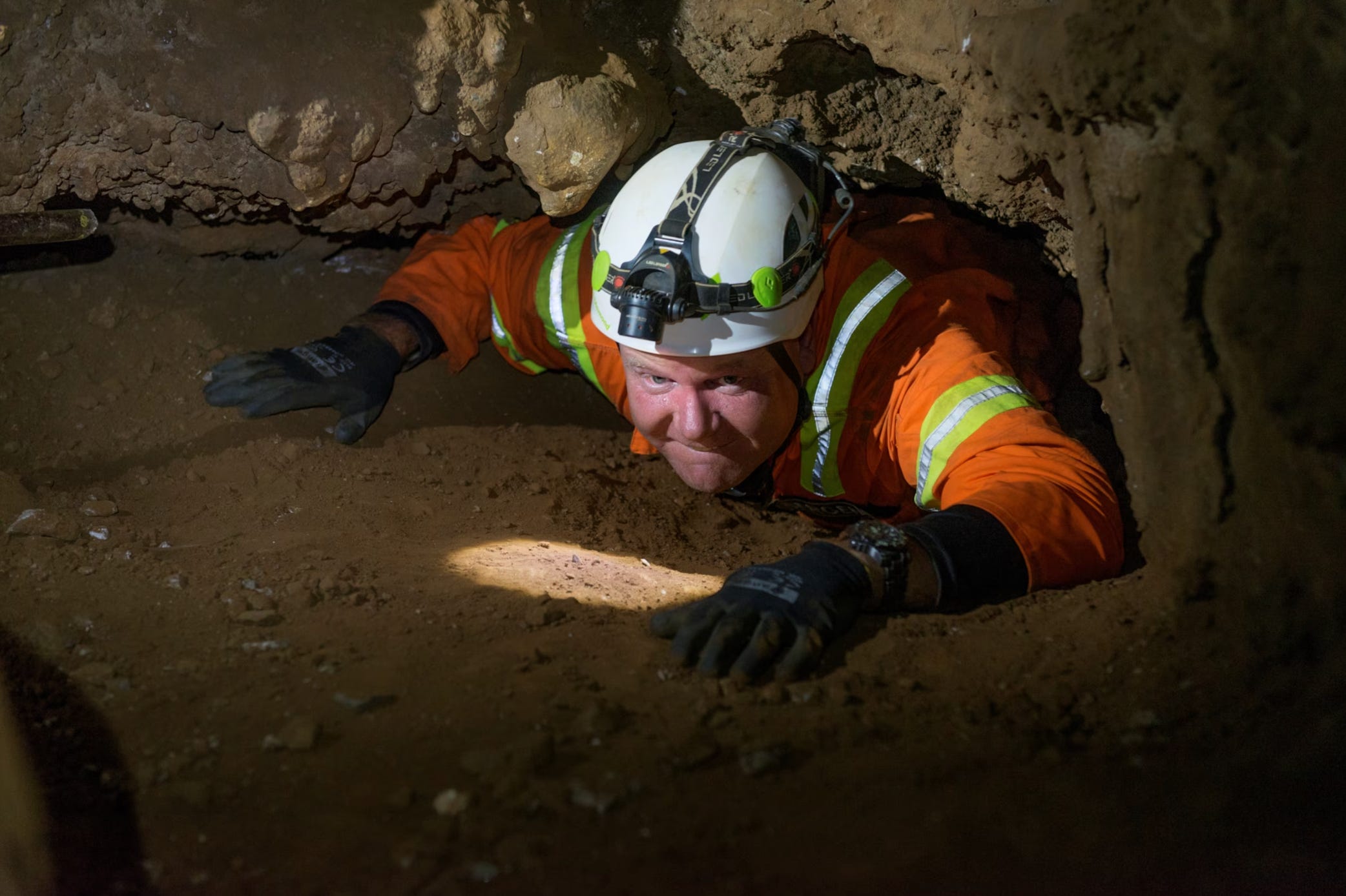
Cave surveys turned up no evidence of an easier entrance existing at the time these individuals died, which means something, or someone, carried bodies into one of the least accessible corners of the entire cave system, apparently on more than one occasion across what may have spanned generations. That single fact, more than any bone measurement, is what turned Homo naledi from an interesting fossil into one of the most argued-over discoveries in modern paleoanthropology.
Comments
Nothing yet. Say the first thing.
Sign in to join the conversation.