
Come writers and critics who prophesize with your pen
And keep your eyes wide, the chance won't come again
And don't speak too soon, for the wheel's still in spin
And there's no tellin' who that it's namin'
For the loser now will be later to win
For the times, they are a-changin'
— “The Times They Are a-Changin’,” Bob Dylan (1964)
Dear Readers,
There are years, and then there are years. 2025 was definitely the latter, filled with violent (both metaphorical and literal) unrest. So much happened you could remake the worst version of Billy Joel’s “We Didn’t Start the Fire” with headlines from just the last 12 months. Considering that, I will be taking a somewhat “big picture” approach to my annual wrap-up post, rather than focusing on superficial highlights like Substack metrics or most popular articles.
The chaos started in January with the new administration ordering mass firings, cuts to education and scientific research, and dismantling life-saving foreign aid. Spring brought masked ICE agents grabbing immigrants off the streets for deportation, sometimes to overseas prisons like CECOT in El Salvador. Over the summer, there were high-profile political killings that triggered a crack-down on free speech. Meanwhile, the economy groaned and creaked under the pressure of rapidly fluctuating tariffs, yet the stock market continued to soar thanks to a boom in AI that many (including me) began to suspect was a speculative bubble. And that’s not even considering dozens of other major stories that were important over the last year.
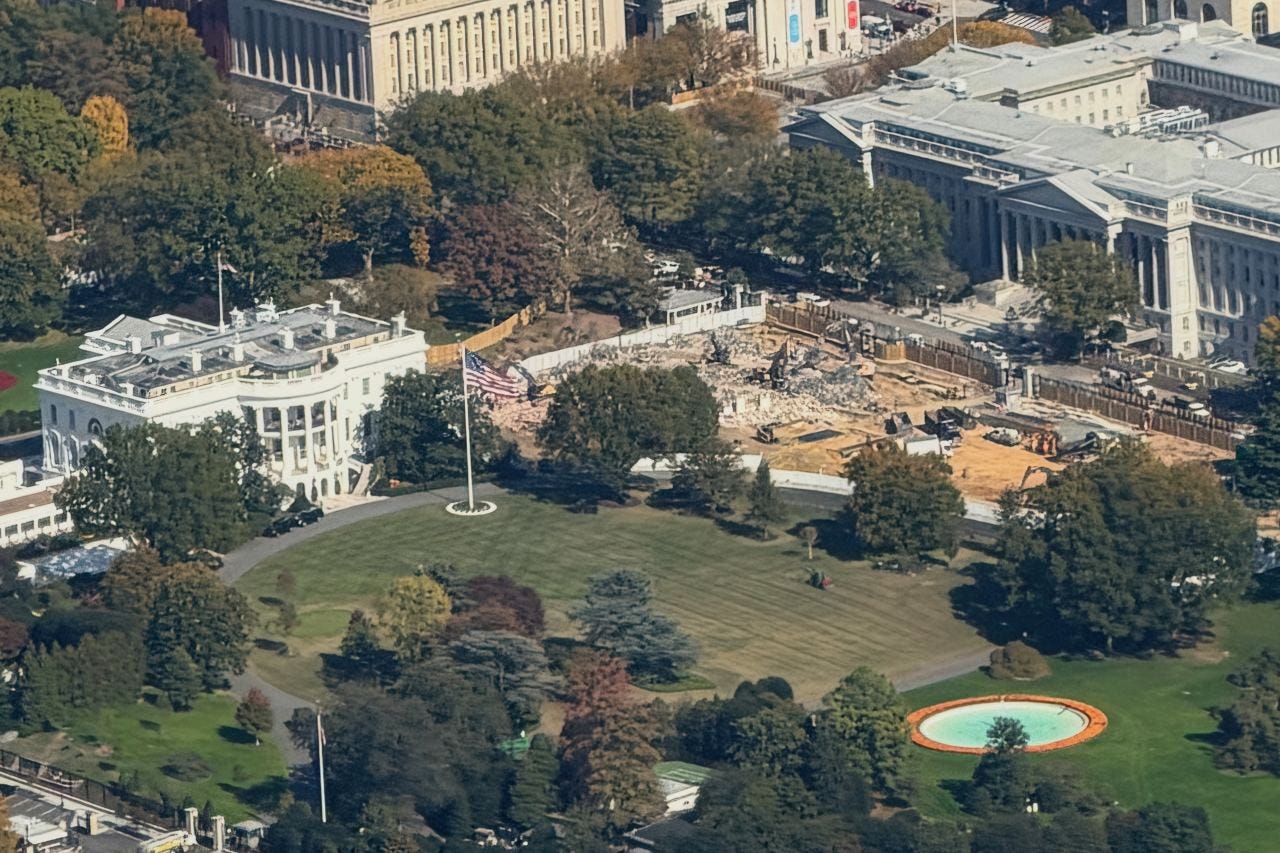
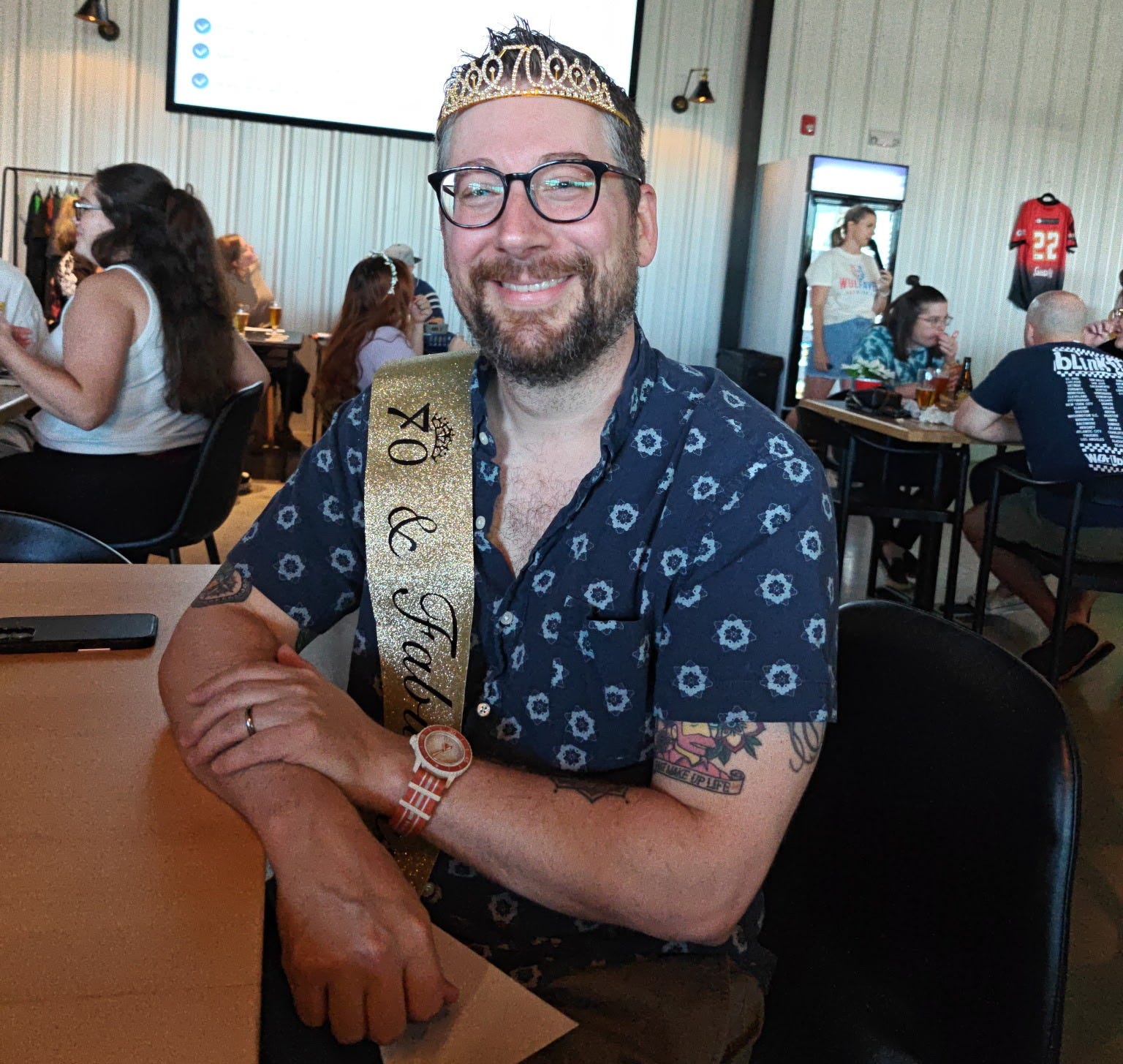
Amid the backdrop of cultural and political tumult, it was also a momentous year for me personally. I turned 40 and officially entered middle age. We said goodbye to our beloved dog Jack. My pathology career hit the skids, requiring me to go back into practice to make ends meet. I took a hiatus from writing on Substack for almost two months over concerns it was impacting my job search, before deciding to pick the pen back up.
***
One of my highlights of 2025 was traveling to Sicily in April. It was not just a vacation, but also a heritage trip of sorts for both me and my wife; we visited the rural farm towns where our ancestors lived over 100 years ago. History loomed large over the visit—the island of Sicily is a melting pot of many cultures due to its position as a major trade hub in the Mediterranean and repeated conquests by everyone from the Arabs to Greeks, Italians, and Normans.
This was most apparent on the day we hiked through the Valley of the Temples in Agrigento. Here lay the ruins of seven Greek religious structures dating back to the 5th century BCE. They are some of the best preserved temples outside of Greece; while some like the Temple of Heracles below consisted of only a few pillars, others like the Temple of Concordia are almost completely intact. Staring at 2,500 year old columns that stood more than 60 feet in the air filled me with awe. I thought about the lives of the people who built them. What were their hopes and dreams? Could they imagine that their way of life would end in the not too distant future? Or that thousands of years later, tourists who dressed and spoke like aliens would come to capture images of their work on small magical devices?
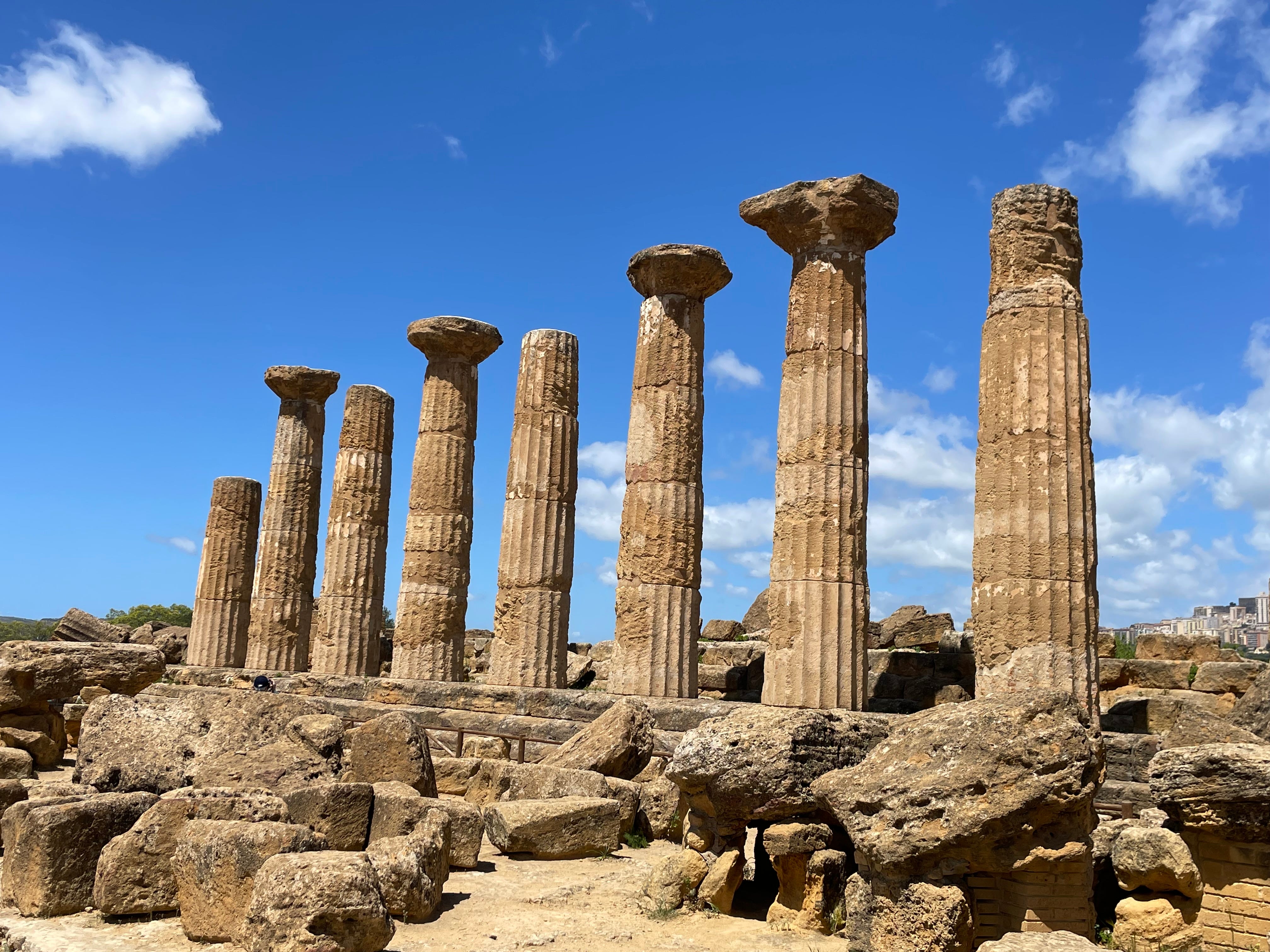
Visiting ruins like those in Agrigento is a humbling reminder that nothing is permanent, and we are all impossibly small in the grand scheme of geological time. The tyrants that seem invincible today will soon be gone and forgotten by everyone but historians. As King George III sings in the musical Hamilton:
“Oceans rise, empires fall
We have seen each other through it all”
Looking back on ancient cultures also gives me the long view perspective, rather than getting wrapped up in fleeting ephemera. I don’t have any illusions that people in 2,100 CE will know who Eric Fish is, but it does encourage me to focus on mentoring the next generation, and producing things like essays and research studies that will outlast whatever latest outrage is going viral on Twitter (I refuse to call it X).
***
For the last few years, I have set a yearly “intention,” rather than traditional New Year’s Resolutions. After the political turmoil of 2024, my intention for 2025 was to FOCUS ON ART. To this end, I switched from reading mostly non-fiction (primarily science/economics) books to 70% fiction. I had forgotten the simple pleasures of getting lost in another world, and it was a lot of fun.
At the beginning of the year I reviewed Bonnie Garmus’s hilarious and touching novel Lessons in Chemistry, about a woman struggling to succeed in the sexist world of science in the 1960s. Other highlights included classics like Ernest Hemingway’s novella The Old Man and the Sea (which I bought at his house in Key West), to the original dystopian cyberpunk novel Neuromancer by William Gibson, and the excellent speculative short story collection Exhalation by Ted Chiang. A few weeks ago, I finished Vineland by Thomas Pynchon1, about a group of former 60s hippies and radicals fighting corrupt federal agents in Reagan’s America; one of Pynchon’s least cynical books, Vineland suggests that family and community are the bulwark against corruption.
Besides reading more fiction, I also devoted myself to guitar. I tried to practice every day, and instead of only learning songs from tabs, buckled down and studied theory and scales. I’d still consider myself an “advanced beginner” or maaaaaybe intermediate guitarist, but losing yourself in music is a wonderful way to forget the drama going on in the world.
So for 2026, I am setting my intention to…
Pretty much every year since the COVID-19 pandemic has been characterized by dramatic upheaval. Yet this is nothing new, as Bob Dylan sang 62 years ago. So much of life, from health to careers to politics, is beyond our ability to predict or control (sometimes to even comprehend). The only way to stay sane is to let go of the expectation that we have much sway over external events. As I wrote almost a year ago in my review of the animated movie Flow:
Water is an ever-present symbol in the film, and it is constantly flowing forward, propelling the action and our characters. With the title literally named FLOW, impermanence seems to be the main message: Things are constantly changing, the world moves on. We often can’t control the turbulent storms of life. What we can control are our own actions. You can choose to fight the current or go with it and make the best of what you find down river.
***
Throughout the year, this newsletter was a lifeline that kept me sane. I’ve always felt I express myself better through prose than speech, and the act of writing is both cathartic and allows me to process my thoughts. On weeks where my calendar was empty, it gave me purpose to sit down at my keyboard and draft essays for you. After several of my posts this spring about my job situation, I received an outpouring of supportive messages from readers, including several residents I worked with over the past two years; I will be forever grateful for your kind words.
I don’t pretend to know what 2026 has in store for any of us. Only the most foolish offer confident predictions. However, I can say I deeply appreciate each and every person who reads these emails, and I wish you all a happy and healthy New Year!
—Eric
This novel was the loose basis for the 2025 Paul Thomas Anderson movie One Battle After Another starring Leonardo di Caprio.
Comments
Nothing yet. Say the first thing.
Sign in to join the conversation.