
I didn’t pick up Mary McCarthy’s novel The Group looking for an object lesson in the wild swings of parenting norms over the last century. So I was frankly a little annoyed when I realized, midway through, that my “fun” reading was becoming “work” reading. (Alas, when gender norms and family dynamics are your beat, this is a perennial hazard.)

The novel, published in 1963, follows a group of eight women from their Vassar College graduation in 1933 through the death of one of their number in 1940. In between, there are marriages, divorces, affairs, and pregnancies aplenty—enough domesticity to incite the ire of one Norman Mailer, who sneeringly dismissed The Group as a “lady-book” in a rather sexist review.
There are overarching story arcs, but the sheer number of protagonists means The Group reads more like a collection of interlinked stories. The chapter that pushed me firmly into work mode came midway through, when Priss Hartshorn Crockett takes center stage.
By now, readers have learned that she was the “group grind” in college; that she secured the double whammy of fiancée and government job right after graduation; and that she’s had several miscarriages over the years.
We meet Priss now in the maternity ward, a few days after giving birth to her first child. Though I personally looked a hot mess at that stage, Priss is in full makeup and wearing a satin nightgown. Not by choice: rather, both her husband (Sloan, a pediatrician) and her (male) OB believe it’s “important for a maternity patient to keep herself up to the mark.”
Priss pines for a comfortable hospital gown and feels “unreal to herself” in all these trappings, but no one seems especially interested in her wishes or feelings. She’s presented as more subject than agent: a pawn in her husband’s game (he’s aiming to make a name for himself as a “new man” in medicine) and a bystander caught between warring factions (doctors versus nurses; her mother’s generation versus her own).
Much of the kerfuffle stems from Priss’s eccentric “choices” (scare quotes, because only in a very distant sense is she acting of her own free will) regarding infant feeding. Horror of horrors, Priss is breastfeeding her son. Exclusively!
Her mother is scandalized; the nursing staff look on skeptically; a friend in publishing implores Priss to sell the sensational story of a nursing Vassar woman to Reader’s Digest.

[A slight digression: a little digging suggests McCarthy was exaggerating for emphasis and/or projecting norms from the early 60s, when she was writing, back into the 30s. Breastfeeding initiation was still very common in the earlier period, though women with Priss’s educational background were somewhat quicker to embrace bottle-feeding as “modern” and “scientific” than other groups. Breastfeeding initiation declined over the ensuing decades, reaching its lowest point in the early 70s.]
Were Priss to deliver a baby in 2025, the same “eccentric” behavior would instead be lauded as the epitome of good, evidence-based motherhood. Expectant parents today are fed a steady drip (pun intended) of breast-is-best rhetoric. While some healthcare providers seem to be moving toward a “fed-is-best” discourse, the idea of a hierarchy with breast at the summit still comes through in many contexts.
To cite one example from my own recent experience, the handout I received at my daughter’s 4-month checkup read, “Be proud of yourself if you are still breastfeeding. Continue as long as you and your baby want.” Formula feeders were offered no guidance about how they should feel. Sheepish? Mournful? Repentant?1
I have no desire to argue with anyone about whether breastfeeding is best and, if so, just how much better it is than the alternative. Instead, I’m aiming to underscore how our collective obsession with identifying the “best”—and then harshly judging mothers who come to a different conclusion or cannot for some reason access that “best”— is just as shortsighted now as it was back in 1933.
McCarthy puts it this way:
“[Priss’s husband] was quite forward-looking, but he was enamored of his own theories, which he wanted to enforce…regardless of the human factor.”
The human factor, in this case, being Priss, who sometimes feels proud of her nursing, and sometimes ashamed. She admits to herself that she acquiesced to Sloan’s pressure to breastfeed primarily because she hoped doing so would make her breasts less sensitive, and in turn make Priss less reluctant to let Sloan touch them during sex. Specifically:
“So that she could give Sloan, who was entitled to it, more fun in bed. But so far nursing, like most of sex, was an ordeal she had to steel herself for each time it happened by using all her will power and thinking about love and self-sacrifice.”
And the human factor being Priss’s newborn, who cries for hours a day, likely, we’re meant to conclude, because Priss isn’t producing enough milk to satisfy him.
Back in the present day, neither breast-feeding nor bottle-feeding moms have a monopoly on judgment, guilt, and shame. Breastfeeding mothers report shame and criticism around feeding their babies in public and get side-eye when they choose to breastfeed well into toddlerhood. They feel pressure to stop breastfeeding early, or to start combo feeding, in order to meet the demands of their paid work. They feel shame around discussing the hard parts of breastfeeding, which, incidentally, leads them to avoid seeking help.
Bottle-feeding mothers face a different but no less painful set of obstacles. Their commitment to their child’s wellbeing is questioned; the specter of selfishness is raised; they are offered the dubious reassurance that “at least you tried.”
One way or another, few escape unscathed. What might a better way look like? My friend and colleague Leigh Senderowicz offers a potential model.
Leigh studies family planning in the global health realm. She noticed that aid programs and health ministries typically measure success based on the percent of women who receive contraceptives. Leigh’s intervention, which seems obvious in retrospect,2 is to ask whether the women wanted the contraceptive. Specifically, were they able to make a “free, full, and informed choice” about whether and which contraceptive to use?
In her revised model, “success” means that someone who wants an IUD gets an IUD. “Success” also means that those who don’t want IUDs…don’t get them.
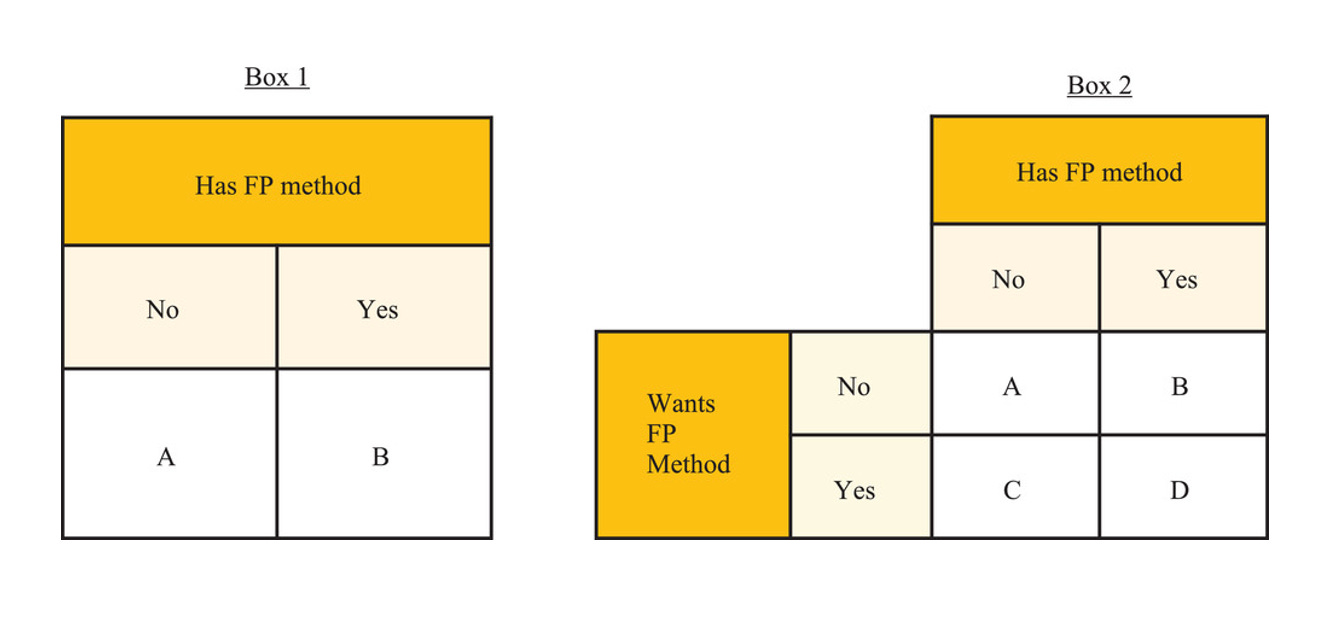
If we applied this framework to the case of breastfeeding, we’d move away from a narrow definition of success as exclusive breastfeeding for 6+ months and failure as everything else. Rather, success would mean that a woman who wants to exclusively breastfeed is able to do so. And a woman who prefers to supplement or replace breastmilk with formula is also able to do so.3
Right now, we’re doing a poor job on both sides of this equation. Kerala Goodkin wrote recently from the perspective of a mom who really wanted to breastfeed her children exclusively but found the conditions of employment incompatible with doing so. “We’re not going to get anywhere,” she writes, “if ‘breast is best’ doesn’t make universal paid leave a central tenet of its argument.” Breastfeeding advocates, she argues, need to acknowledge that “women who struggle to work and pump full-time should in no way be shamed for their inability to ‘get creative’ and ‘make it work.’” Amen!
On the flip side, I know many moms who don’t want to breastfeed exclusively or at all, for various reasons. Sometimes there’s a trauma history. Sometimes there are mental health conditions exacerbated by lack of sleep, such that being able to share feeding responsibility with a partner is a literal life-saver. Sometimes there’s prolonged pain. Sometimes there are problems with the baby’s latch or milk transfer, in which case “triple feeding” is often prescribed, leaving moms with no time to care for other children, feed themselves, or simply rest. These same moms often persist with exclusive breastfeeding for longer than they’d like, because they’ve been conditioned to see anything else as failure or dereliction of maternal duty.
Reading Priss’s story from today’s vantage point, it may be tempting to congratulate ourselves on our success: look how far we’ve come from the days when we saw formula as the epitome of evidence-based feeding!
But though the object of our collective ire may have shifted, the fact that we shame women for doing the best they can, often with substandard support, remains the same. That’s not the kind of progress worth celebrating.
Comments this week are for paid subscribers only! As always, but particularly for sensitive topics like this one, I implore you to comment with kindness.
Kerala Goodkin, in the same excellent post I cite below, describes a similar reaction to the CDC’s suggestion that we “celebrate mothers who breastfeed.”
I mean this as high compliment! This is true of many of the best policy proposals, in my experience.
Breastfeeding complicates the matter somewhat, as the child’s interests must also be accounted for in the equation. But you’d need to believe that bottle-feeding was a vastly inferior choice, not just “worse than breastfeeding” but “actively harmful”, in order to convincingly argue that women should not have free choice in their feeding methods. Some people, I am sure, do argue this…
No posts
Comments
Nothing yet. Say the first thing.
Sign in to join the conversation.