
“AI is probably the most important thing humanity has ever worked on. I think of it as something more profound than electricity or fire” - Sundar Pichai
When ChatGPT launched in November 2022, for the first time, hundreds of millions of people worldwide could directly interact with AI. Within two months, ChatGPT crossed 100 million MAU, becoming the fastest-adopted consumer AI product in history. That early surge made it clear that the question had already shifted from “Will consumers use AI in day-to-day life?” to “How will they use it, and in what new, innovative ways?”
The internet democratized access to information. AI is now doing the same for intelligence. Until recently, only the wealthiest 1% could afford personal tutors, therapists, career coaches, trainers, or nutritionists. AI collapses that divide by making these services hyper-personalised, always available, and priced at mass-market affordability. In practical terms, every student could have a personal tutor, every young professional a career coach, and every household a health or financial advisor—at the cost of a mobile subscription.
A helpful analogy is electricity. Before industrialisation, goods were handmade, artisanal, and reserved for the wealthy. When electricity scaled mass production, those same goods became standardised and affordable, opening access to the masses.
Forces driving this consumer AI wave:
Democratisation of Intelligence for the Mass Market
AI turns premium services into accessible, always available and personalised services, just like Uber did for private drivers.
Multimodal capability
Second is multimodality. Models can now see, hear, speak, and act, which allows AI to blend into devices consumers already use. Whether through text on WhatsApp, voice on smart glasses, or visual search on phones, AI fits existing behaviour rather than demanding new habits.
Distribution at scale
Third is distribution. The biggest accelerant is not just the technology but its distribution. Apple and Samsung are embedding AI into their operating systems, Meta has placed it inside glasses, and super-apps like WeChat, Douyin (Chinese App) and WhatsApp are making AI ubiquitous. Consumers don’t have to download “yet another app”—AI arrives where they already spend their time.
Core differentiation on why verticalized AI consumer products will stand out.
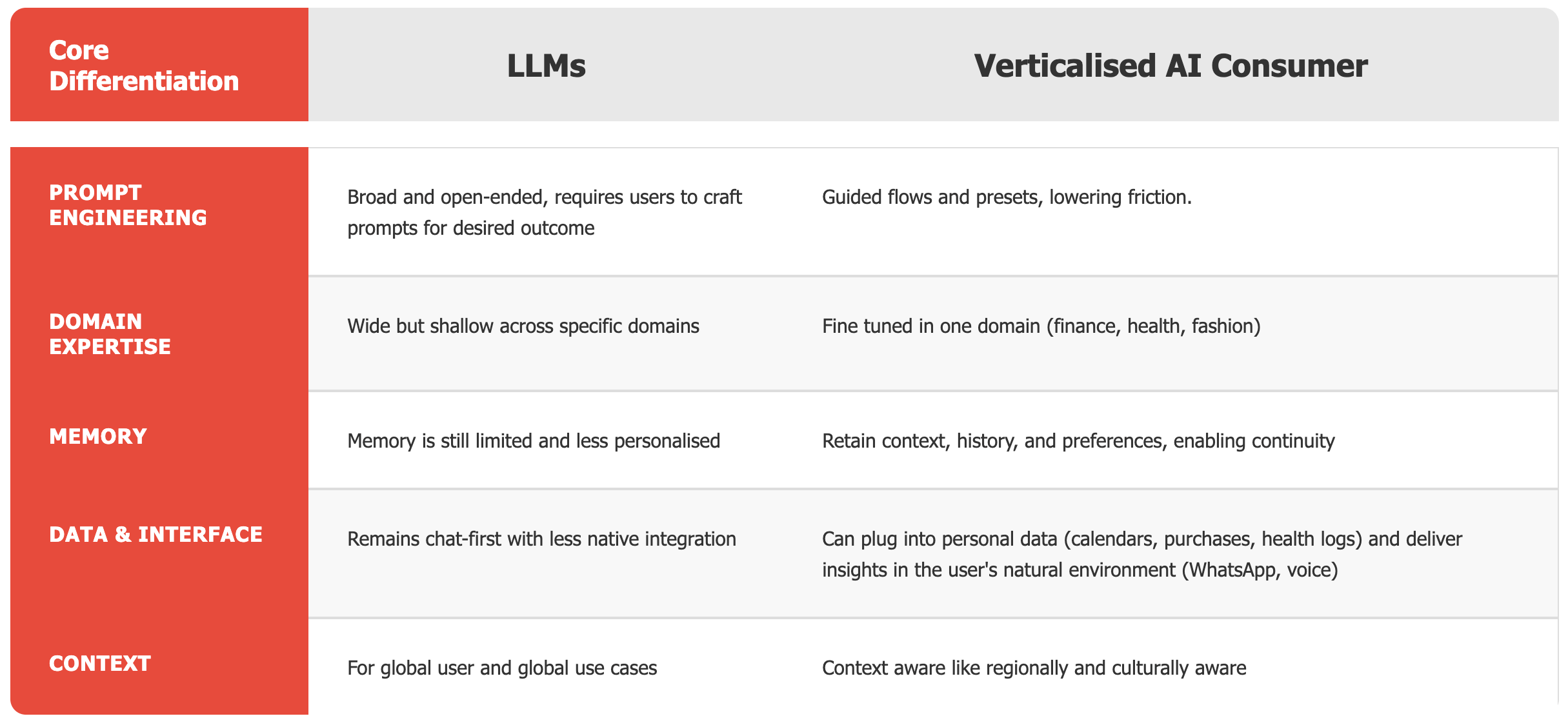
Globally, consumer-facing products are rapidly adopted, like
Meta Ray-Ban Display AI glasses eyewear with embedded display and AI assistant (US)
Robotic pets, robot dogs used for entertainment without the worry of teaching or training. (China/US)
Intelligent home appliances, full AI-powered meal-making machines(China/US), and many more
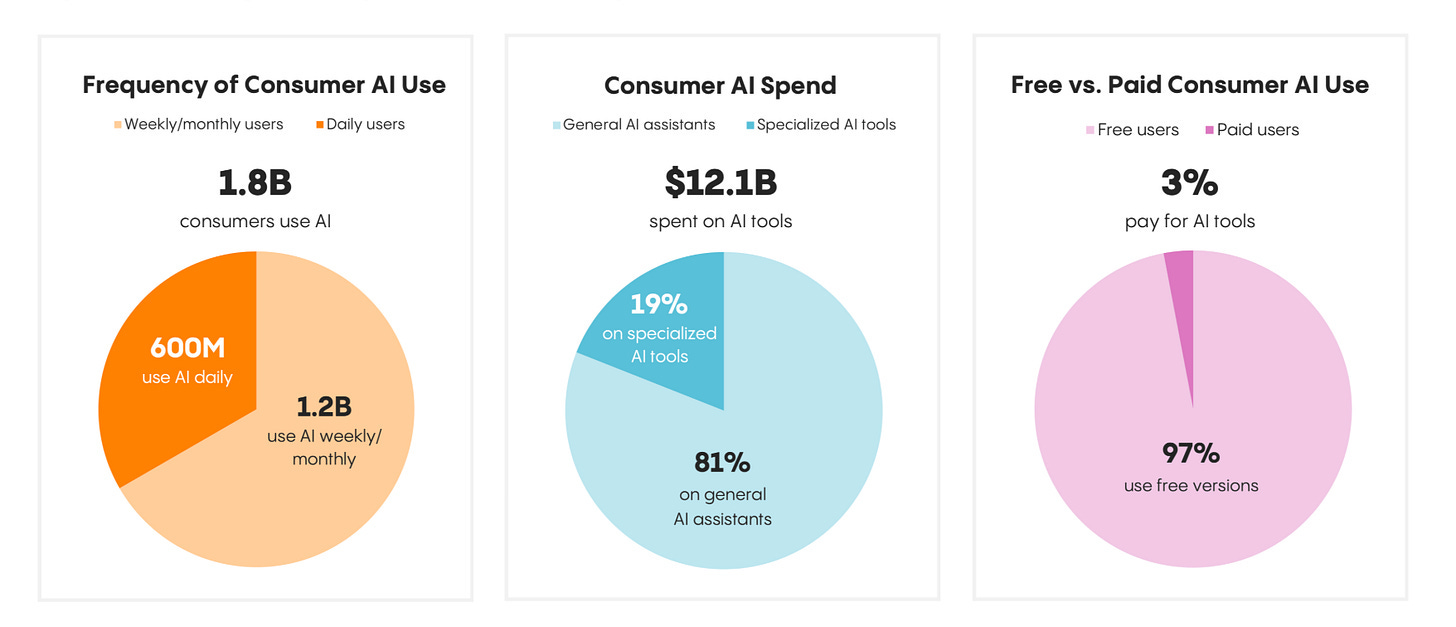
To math it down, the market slicing and sizing of India. India has ~806 million internet users. A survey, conducted by Microsoft, found 65% of Indians have used generative AI, significantly higher than the global average of 31%, which equates to an exposed base of roughly 520 million users.
Yet, global behaviour shows that the leap from usage to payment is incredibly shallow. Even ChatGPT, with its first-mover advantage and global brand recognition, converts only 1–1.5% of weekly active users into paying subscribers.
If India follows a similar early pattern, a ~1% paid conversion today would translate to, that yields ~5.2 million paying users. At an average of ₹199/month (~$2.4), consistent with India’s digital services willingness-to-pay, this represents an annual revenue run rate of ~₹1,200 Cr ($150M).
However, this is only indicative of how a winner could perform today, not the true market ceiling.
As AI agents become more useful (book/pay/do), vernacular coverage expands, and UPI Autopay removes friction, conversion is likely to increase significantly. A conservative winner-scenario ramp looks like this:
Year 1 (2026): 2.5% conversion, ~13 million payers at ₹249/month, annual revenue of ₹3,800 Cr (~$450 M).
Year 3 (2028): 5.0% conversion, ~26 million payers at ₹299/month, annual revenue of ₹9,400 Cr (~$1B).
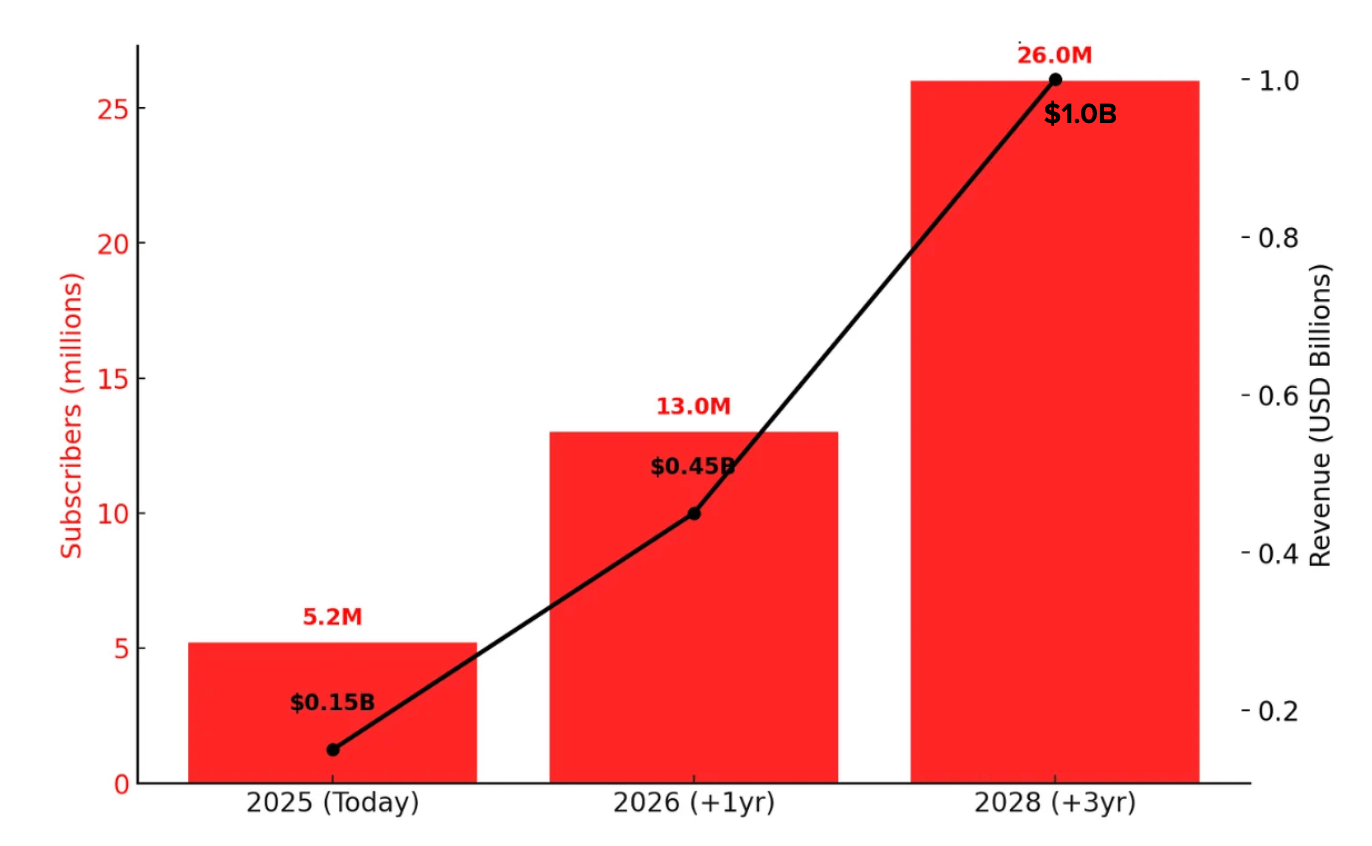
The real story is not the revenue today, but the gap: hundreds of millions trying AI, <2% paying. This gap represents one of the largest untapped monetisation opportunities in consumer tech.
India is already the world’s #2 market by user base and could become the testbed for monetisation models that go global.
India has seen this playbook before mobile gaming and astrology apps scaled via micro-transactions and low-ticket subs.
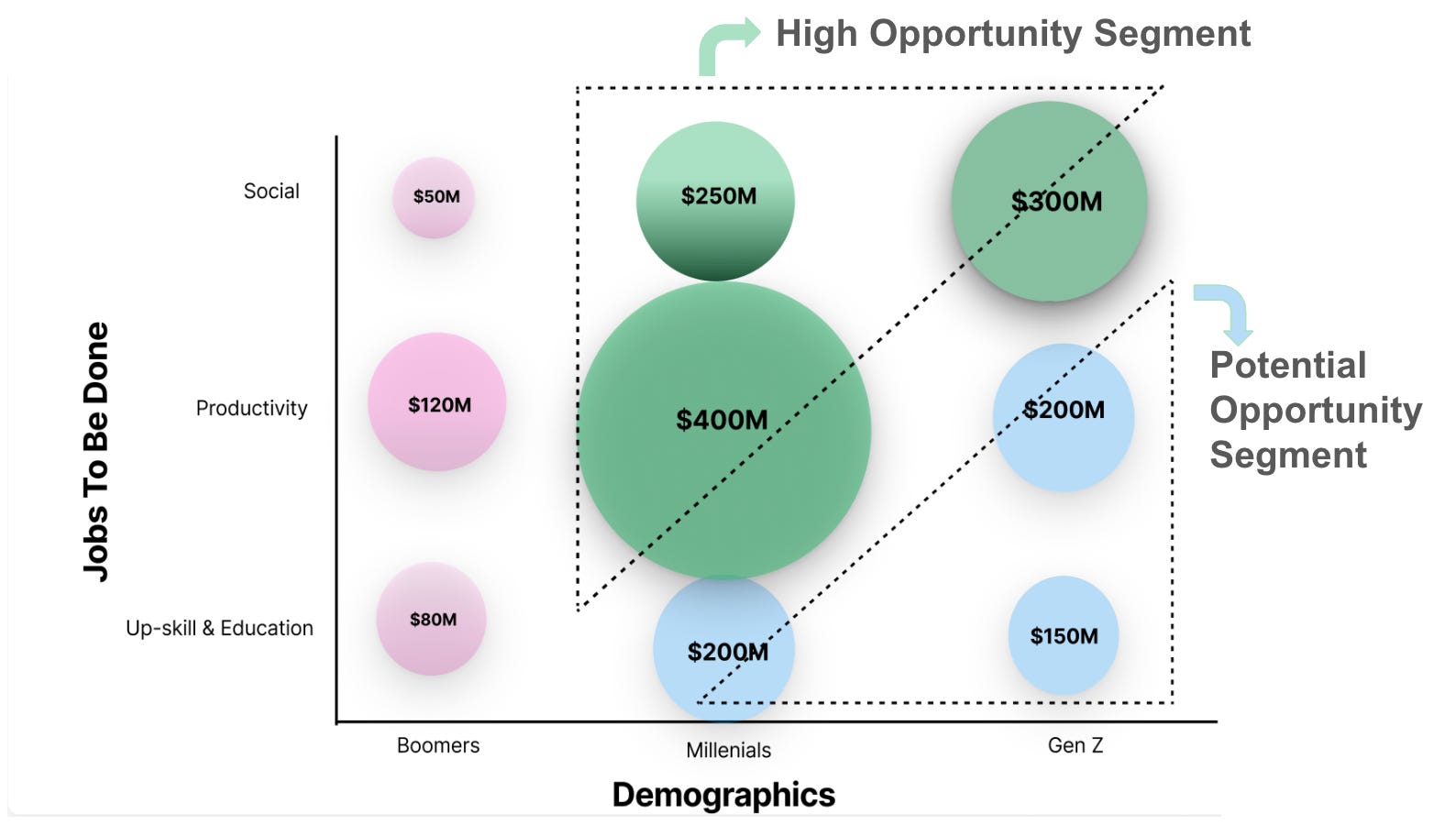
Consumer AI traction is clustering around four zones: anxiety relief, identity discovery, micro-entertainment, and productivity agents.
High-Anxiety Use Cases: “Need-it-now” tasks like parenting, health, or event planning. 79% of parents have used AI, nearly double non-parents, for childcare, lists, or quick research.
Identity Exploration: Digital twins and AI personas are expanding self-expression, from avatars that speak in your voice to brand-driven virtual influencers.
Productivity Agents: Everyday tools like speech-to-text, summaries, and travel planning save time directly. Over half of potential users cite AI assistants as their top preference.
Snackable Entertainment: Short AI content, short videos, GIFs, and memes are booming on social media platforms.
“In consumer AI, momentum is the moat ... it’s become nearly impossible to build as slowly or methodically as we did in the mobile era. What matters is velocity: how fast you can launch, gain traction, and seize mindshare” - a16z
India is a tricky market to understand when it comes to the consumer market; what might have worked for global users might not work for India. Dropping a few metrics and pointers that have worked for the India market.
Preset Prompts Indians prefer guided experiences, preset prompts/questions, tap-to-ask menus, and vernacular phrasing mirroring how they already use WhatsApp, UPI, and astrology apps, making curated prompt journeys far stickier than blank chat screens.
Contextual and vernacular relevance drives trust. Whether it’s asking “Mumbai ka weather” or checking cricket scores in Hindi, Indian users engage more deeply when AI mirrors their cultural and linguistic reality. Startups building on the government’s Bhashini language stack are already proving this.
Emotional hooks resonate. Bollywood, cricket, and astrology fandoms shape consumer behaviour. AI companions or creators that embed these elements feel alive to users, not mechanical. The same cultural “stickiness” that made TikTok and Moj explode in India will underpin AI companionship and identity-driven apps.
Adaptive Learning Consumer AI apps in India must adapt instantly to user behaviour and feedback, refining tone, prompts, and recommendations in real time to build trust and stickiness, since static experiences quickly lose engagement in this market.
In short, India rewards AI that is voice-first, vernacular, emotionally sticky, and micro-priced. These are drawn directly from how Indians have embraced every prior wave of digital products.
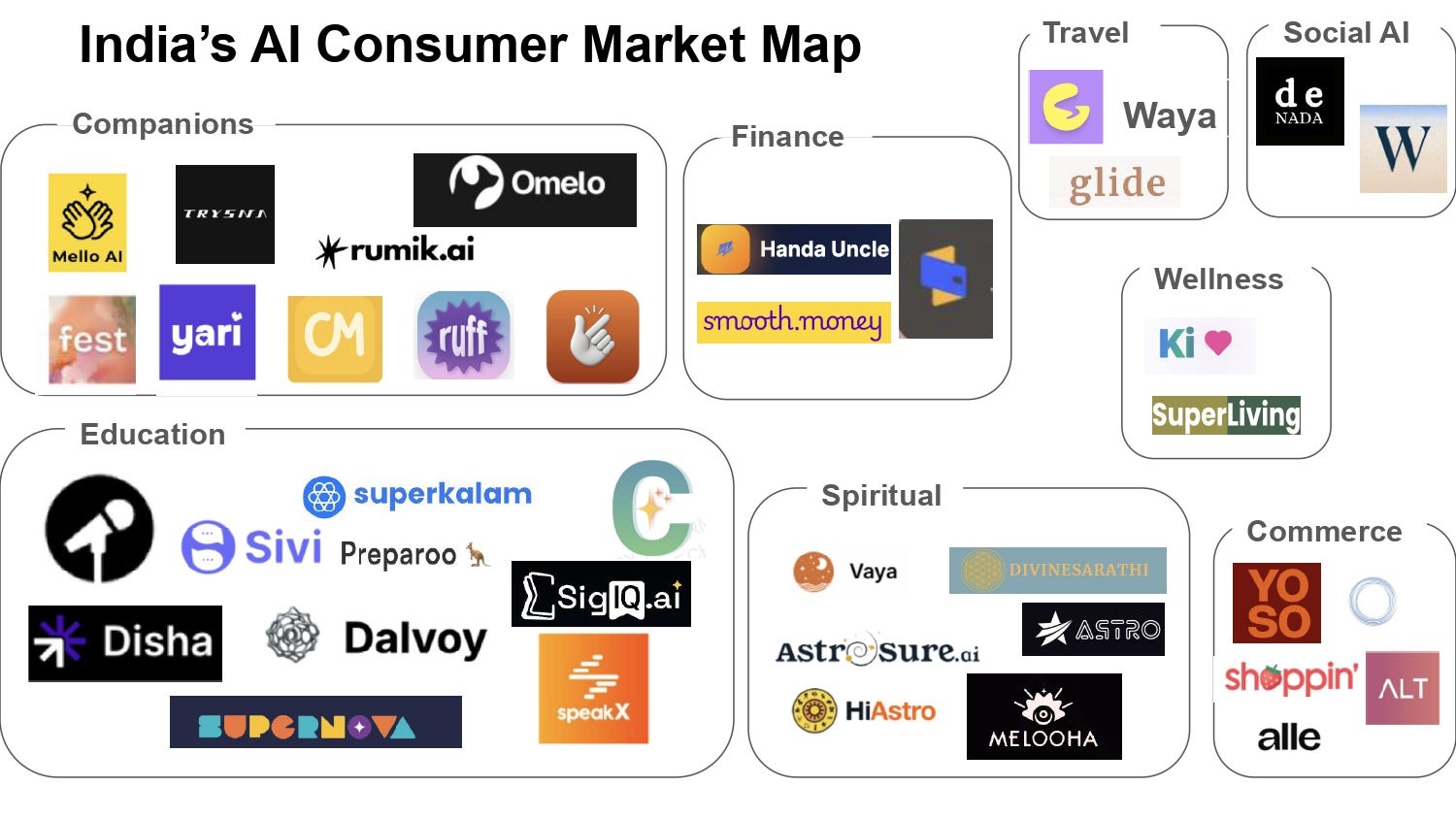
The biggest winners will be vertical AI companions that solve high-anxiety, high-frequency problems.
Pet-care companion: helps new owners with health and training decisions in a fast-growing pet market.
Shopping assistant: filters Gen Z fashion overload into influencer-style, personalised picks.
Financial wellness guide: simplifies savings, credit, and investing for first-time earners and many more.
These can be the moments of choice, overload and uncertainty where AI can provide clarity, comfort, and confidence.
Founders who combine domain expertise, cultural nuance and trust will set the next defining trends in consumer AI.
No posts
Comments
Nothing yet. Say the first thing.
Sign in to join the conversation.