
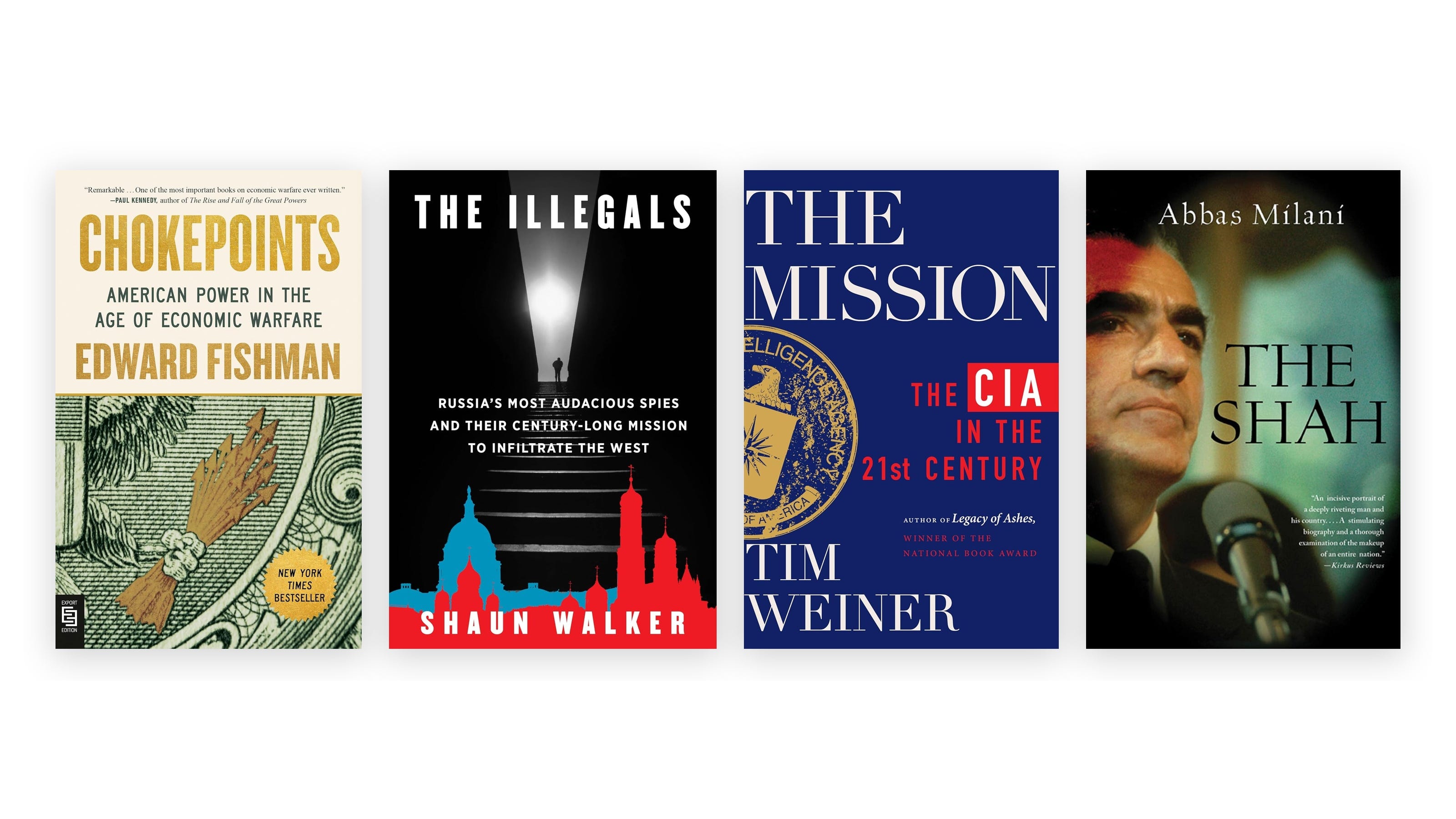
One of my favorite topics is the nature of intelligence and I recently read four books which covered the history of the CIA (The Mision), the FSB / KGB (The Illegals), the Financial Intelligence Agency of the US Department of Treasury (Chokepoints) and the Shah’s SAVAK (The Shah).
All four are outstanding books and I learned that the bible verse from John 8:32 is also the slogan of the CIA.
There were a few things which were interesting to discover across the four books.
Autocrats often start as populists but lose touch with reality over time. In one mind-blowing scene, the Shah was complimented in a way that is hard to believe that it really happened:
In 1975 his Court minister and closest confidante, Assadollah Alam, had assured him that he was as wise as a prophet, as politically astute as General De Gaulle—the Shah’s great “ego-ideal.” During the same period, Nelson Rockefeller had compared the Shah to Alexander the Great, adding, “We must take His Majesty to the US for a couple of years so that he can teach us how to run a country.” This praise gave the Shah a false sense of security, and he developed a haughty disposition toward Western leaders. On one occasion, Alam told the Shah, “these miserable Americans needed some words of encouragement from Your Majesty, and Your Majesty surely gave them what they needed.” The Shah, Alam wrote, was particularly pleased by this comment.
In reality, the end of the monarchy was already apparent in 1975, and better decisions might have reverted the course of history with the Islamic regime starting in 1979.
The same happened with the Illegals program in the US. It is beyond belief that someone thought that blue collar workers might gain easy access to US state secrets. However, these Illegals were often the only trusted source of information as other Russians in the West were often living in compounds with little interaction beyond their office routines. You can probably remember the picture of Boris Yeltsin visiting a US supermarket and marveling at the plentiful offer.
I am a big fan of Bellingcat and can only recommend the book about their work. They have pioneered the concept of open-source intelligence (OSINT). It is quite interesting that you can track for free a lot of what used to be assets of national intelligence agencies.
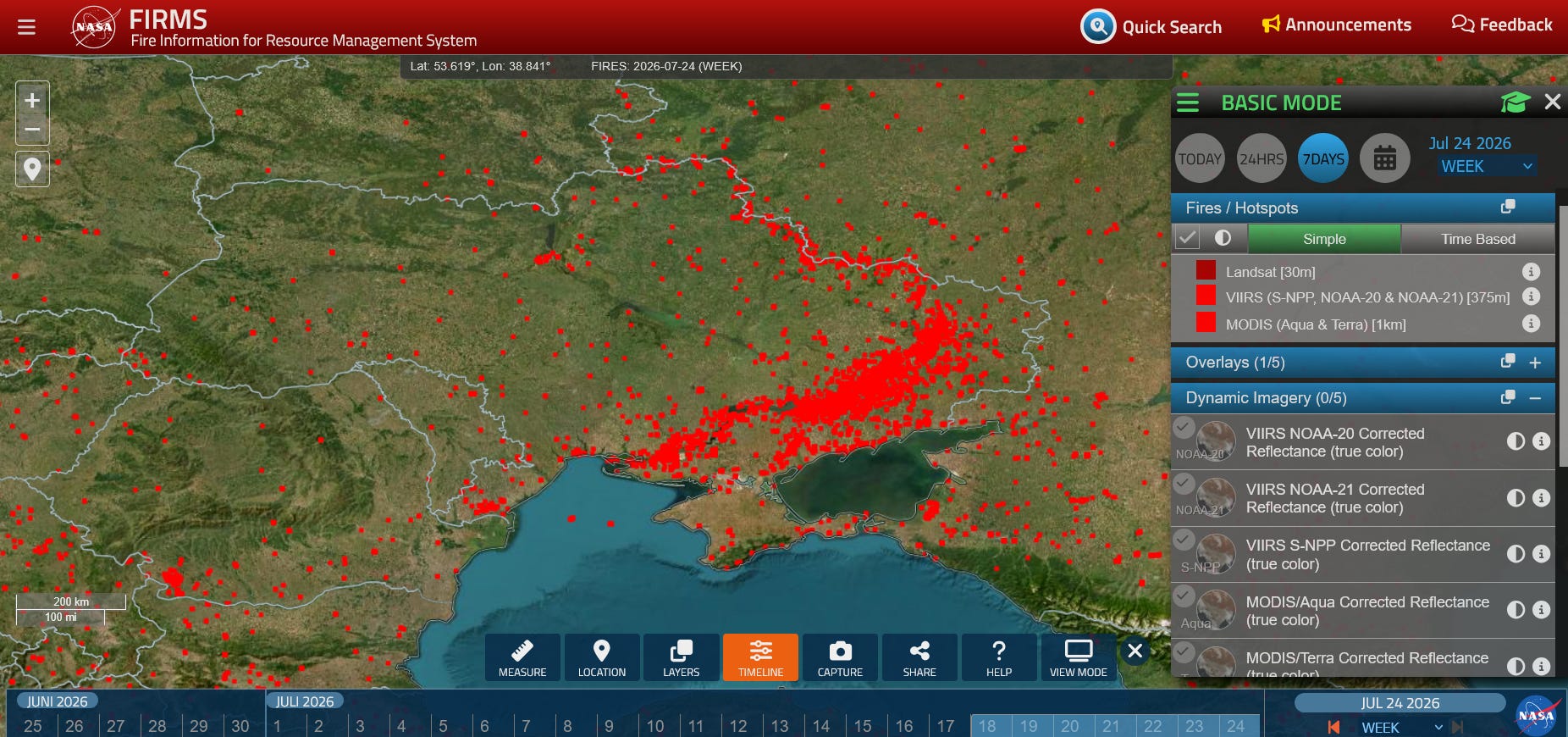
Just check something like the heat tracker published by NASA. It is aimed at wildfires, but you can also see burning refineries or front lines in wars.
That is also referred to as signals intelligence. For example, the CIA had for two decades a focus on signals. There is the famous saying that the US government “kill[s] people based on metadata”.
However, there are some shortcomings to this approach. For example, you might have access to the transcript of a high-level meeting but – as long as you are not in the room – it is difficult to know what the real intentions are. To understand the intention is often referred to as human intelligence.
There were a couple of interesting points to note.
Diversity is really an important asset in this respect. For example, a mission in Somalia requires someone who looks and talks like a local. Sending a white American would be “terrible tradecraft”.
Russians had difficulties to teach their spies to act like Westerners (someone who lived almost 20 years in Russia confirmed it). It is interesting how many cultural nuances are hard to understand if you are used to it like the fish in the water.
There were countless examples where the hierarchy just reported what was the preferred message. That was often the end or the beginning of a catastrophe.
A third category could be financial intelligence. I was surprised to learn that the US Department of the Treasury has a separate financial intelligence agency (Office of Terrorism and Financial Intelligence). Financial intelligence has a big benefit as the results of actions can be easily observed. You know if sanctions work (they work surprisingly well) when currency reserves dwindle, companies stop doing business with certain countries or banks stop lending to certain sectors.
Books about intelligence agencies obviously cover the catastrophic shortcomings that happened over time. It was somewhat surprising that many of them happened as intelligence agencies were slow to grasp fundamental changes that happened.
I often think about societies as part of a vector space. In short, it means that we can define societies as dots in multi-dimensional spaces and societies move all the time.
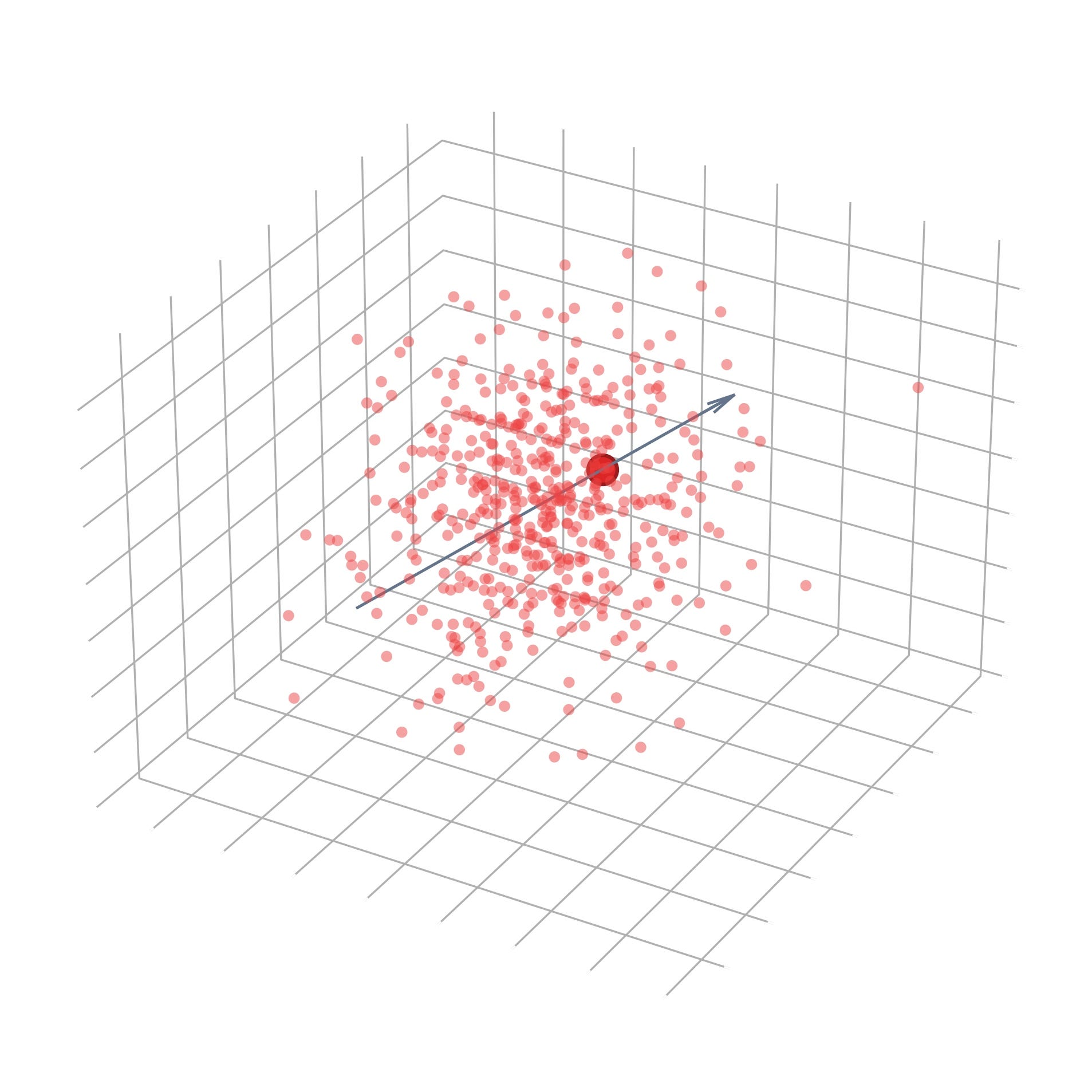
Just consider the society we live in today and how it is different to one 10, 20, 50 or 100 years ago. Just think about military expenses, global trade, human rights, family values or the cost of intelligence.
Three examples were quite interesting throughout the books:
Today, we are less afraid of terrorism but of Russian attacks on Europe. After 2001, the US changed as a society which had wide repercussions across multiple domains. The focus on counter-terrorism led to some blind spots when it came.
Iranian economic policy was quite successful in the 1960s and 1970s which led to an expanded middle class. This middle class demanded more democratic participation which was not considered by the autocratic shah.
The US is using its dominance in financial markets to enforce its sanctions quite successfully (and contrary to common wisdom). However, its use led to the attractiveness of alternative financial mechanisms (think cryptocurrencies for decentralized payments).
This observation is often referred to as “seed of their own destruction”, “culminating point of victory” or “victory contains the seeds of defeat.” I do not really mean it in this military sense but unexpected changes happen when societies move to a different place.
No posts
Comments
Nothing yet. Say the first thing.
Sign in to join the conversation.