
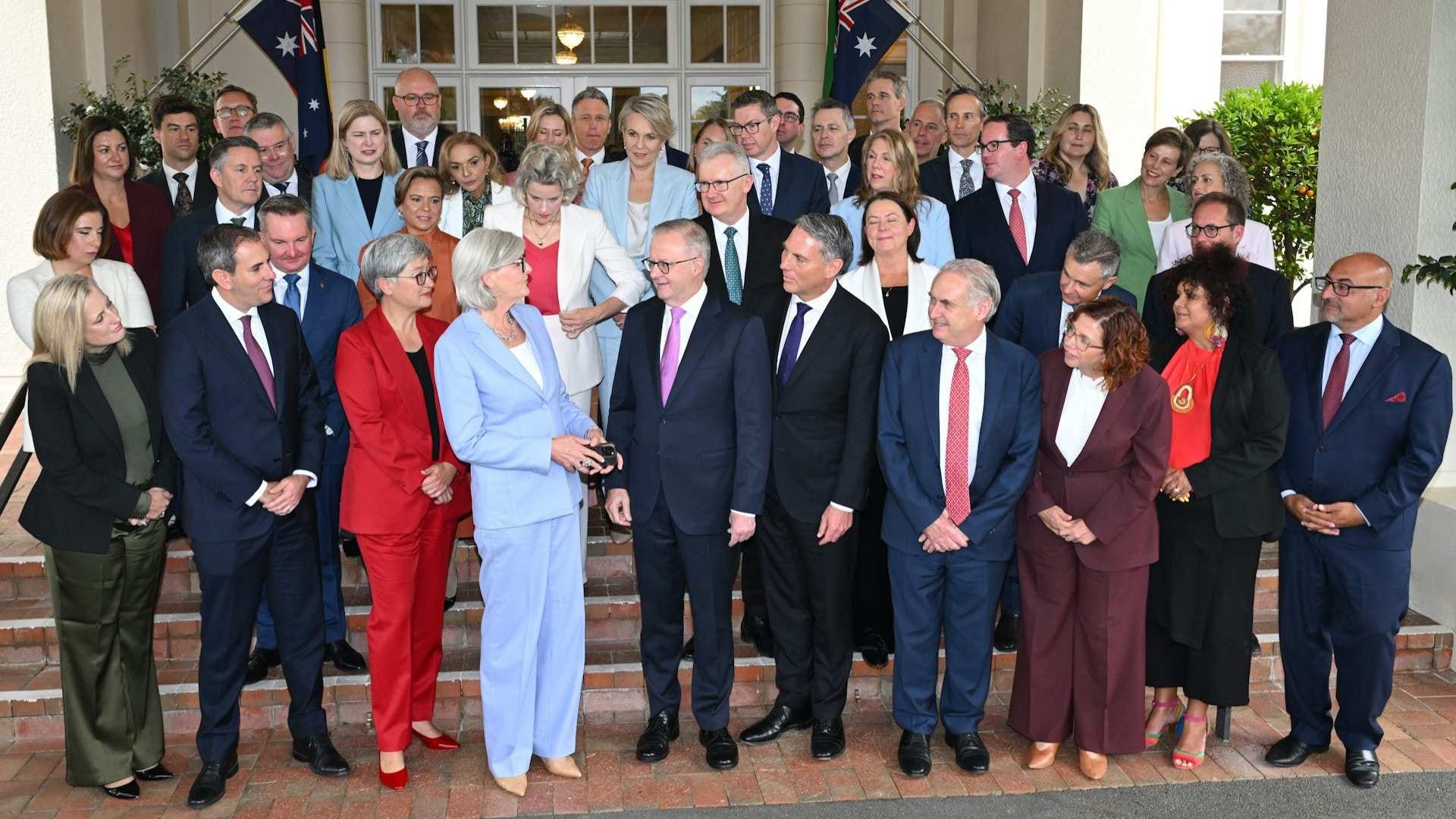
Australia just crossed a milestone. For the first time in our political history, federal cabinet has more women than men. Women hold a record 49.1% of seats across the parliament. Labor’s party room is 56% women. The photo opportunities are unmistakable: a front bench that looks, at long last, like half the country.
And yet.
Globally, only 1 in 7 countries is led by a woman. Women hold just 22.4% of cabinet positions worldwide — down from 23.3% last year. Parliamentary representation has crawled to 27.5%, up 0.3 percentage points in a year. Fourteen countries have achieved parity in cabinet. Eight countries still have zero women ministers.
What is happening in Australia is not the opposite of that story. It is a more sophisticated version of it.
Because here is the question no one is asking loudly enough: we got the numbers. Did we get the power?
We were sold representation as the endpoint
For two decades, the strategy has been about access. Quotas. Pipelines. Diversity targets. First-woman-to. Emily’s List. Pathways to Politics. Gender scorecards.
And it worked — partly. Women walked in.
But somewhere along the way, we confused presence with power. We began to treat a woman being sworn in as proof that a system had shifted. We let the optics stand in for the architecture.
Representation was never the goal. Power was. And power has not moved.
Women were inserted into systems built by and for someone else
Look closely at what women in politics are actually doing and the pattern is unmistakable. The UN Women 2026 report is blunt: women are disproportionately assigned portfolios covering human rights, gender equality, social protection. Men continue to dominate defence, home affairs, justice, finance — the portfolios where decisions over coercion, money, and national direction get made.
Australia mirrors this. Yes, ten women now sit in cabinet. But the structural portfolios have not shifted. Tanya Plibersek was moved from education to environment — widely read as a demotion — and along the way lost responsibility for Women, which was folded into Finance under Katy Gallagher. When “Women” becomes an add-on to a man-dominated fiscal portfolio, that tells you where the real weight of government sits.
The story here is not that women failed to rise. It is that the rooms they entered were built by others, for others, and the rules were never rewritten.
The glass cliff is still there. It just has a roof now.
The 2025 federal election was supposed to be a breakthrough. Statistically, it was. But the Global Institute for Women’s Leadership at ANU found women candidates at both major parties were still disproportionately placed in hard-to-win seats. Coalition women were 13% more likely than Coalition men to be running in “glass cliff” electorates. Labor women, 7% more likely.
For Coalition women, only one in six were in safe or fairly safe seats — compared to more than a quarter of Coalition men. The Coalition still fielded twice as many men as women.
The parties have learned the language of gender equality while continuing to sort women into precarity.
And what happens when women do win? Three years after the Jenkins Report — which found one in three people working in federal politics had experienced sexual harassment — the Independent Parliamentary Standards Commission legislation was introduced twenty months after its recommended deadline. Brittany Higgins now lives in France. The workplace that set off a national reckoning has not become a safe one for the women in it.
The abuse is working. That’s the point.
This is the part the mainstream conversation refuses to name: women are not just being filtered out. They are being driven out.
Jacinda Ardern quit saying she no longer had “enough in the tank.” Sanna Marin spoke of endurance being tested. Nicola Sturgeon, the physical and mental toll. All three women, within months of each other, used nearly identical exhaustion language. Helen Clark described the abuse Ardern faced as “a level of hatred and vitriol which in my experience is unprecedented.”
Kamala Harris lost the 2024 US election to a campaign in which racism and misogyny were fused as strategy. Research consistently shows women officials — and women of colour in particular — absorb the overwhelming majority of targeted political abuse online. This isn’t background noise. It’s an active filtering mechanism.
When we talk about women “leaving politics,” we should be more precise. The women are not leaving. They are being pushed out of systems that were never restructured to hold them.
The Double Glazed Ceiling: CARM women in Australian politics
This is where the Australian conversation about gender and power goes quiet — because the country still has not learned how to talk about race and gender together without flinching. And because the data, once you run it honestly, breaks the progress story.
At COMPELL we ran the numbers on every candidate at the 2025 federal election — using the CARM (Culturally and Racially Marginalised) framework adopted by the Diversity Council of Australia, because “CALD” flattens racialisation into language and country-of-birth. The picture is stark:
• CARM candidates made up 12% of all candidates in 2025 — a 38% rise in House of Representatives candidacy on 2022.
• But only 9% of elected MPs are CARM, up barely a percentage point from 8% in 2022.
• In the Senate, CARM candidacy went backwards — a 20% proportional decline from 2022.
• CARM women were just 3.4% of all HoR candidates and 5% of all Senate candidates in 2025. Not 34%. Not 13%. Three point four per cent.
• Indigenous representation in parliament dropped from around 3% to 1%.
This is the diagnosis the gender-parity conversation in this country cannot accommodate: more CARM women ran than ever before, and the structure that determined who actually held a seat barely moved. The candidates came. The pipeline delivered. The outcomes did not.
Parties want our faces, but not our voices.
And the attrition rate tells you exactly how the system feels from the inside. Between 2022 and 2025, 73% of independent CARM candidates, 69% of Greens CARM candidates and 68% of Liberal CARM candidates did not return. Labor’s attrition rate was 44% — better, but not because the structure held them. Because Labor machinery absorbs and manages them more aggressively than anyone else.
We don’t have a pipeline problem. We have a retention problem. We have an authority problem. We have an infrastructure problem. CARM candidates are being used for optics, not nurtured for leadership. Given no real backing, training or investment. Abandoned post-election.
Look at what happens to the CARM women who do survive the system long enough to take a position. In 2024, Senators Mehreen Faruqi, Lidia Thorpe and Fatima Payman wrote formally to the President of the Senate demanding action on racism in the chamber — describing being “marginalised, belittled and silenced.” Fatima Payman, Australia’s first hijab-wearing senator and first Afghan-Australian parliamentarian, left the Labor Party in 2024 after being sanctioned for crossing the floor on Gaza. She did not lose her seat. She lost her party.
The structure could accommodate her presence. It could not accommodate her voice.
That is the Double Glazed Ceiling. A CARM woman breaks through race. She then hits gender. Then she hits a factional structure that has no protective machinery built around her. Then she hits a media environment that racialises her dissent. Then she hits a party discipline system that treats her independence as betrayal in a way it rarely treats a white male backbencher’s.
You cannot fix this with quotas. You cannot fix this with another scorecard. You fix this by building power infrastructure that did not previously exist.
The real problem: we built access pathways, not power
Here is the uncomfortable truth the progress narrative cannot accommodate. We did not fail to let women in. We succeeded. The last twenty years of advocacy did open the door.
What we failed to do was build anything on the other side of it.
We built access pathways — mentorship programs, quota systems, leadership pipelines — without building the power infrastructure that would allow women, and especially CARM women, to hold authority once they arrived. No independent institutional backing. No constituency-level machinery. No cross-party formations. No long-term political patronage that is not controlled by the men who have always controlled it.
This is why the numbers rise and the outcomes do not move. This is why CARM candidates are recycled every cycle and the same seats stay safe for the same people. This is why cabinet looks like Australia on the day it is sworn in, and like every other cabinet by the time decisions are made.
This is the gap COMPELL, with the introduction of Multicultural WHIP exist to close: not more women in the room, but actual power built around the women already there.
Stop celebrating entry. Start auditing power.
The metrics we should be using in 2026 are not how many women are in parliament. They are:
• How many women hold economic, security, and justice portfolios — not social ones?
• How many CARM women are in winnable seats, not glass-cliff ones?
• How many women who speak against their party line survive politically with their career intact?
• How many CARM candidates from the last cycle return in the next one — and who has institutional backing behind them?
• How many women exit on their own terms, and how many are pushed?
Run those numbers on Australia, and the progress story collapses.
The lie of progress is not that it didn’t happen. It is that we mistook visibility for authority.
If women entering politics hasn’t changed who holds power, then the problem isn’t access. It’s architecture.
That is the work of this decade. Not another “first woman to…” headline. Not another photo op. The serious, un-glamorous, infrastructural work of building power systems that were never designed to include us — because they were never designed with us in mind at all.
We got the numbers. Now we build the power.
Join Our Multiucltural WHIP - Launch Event
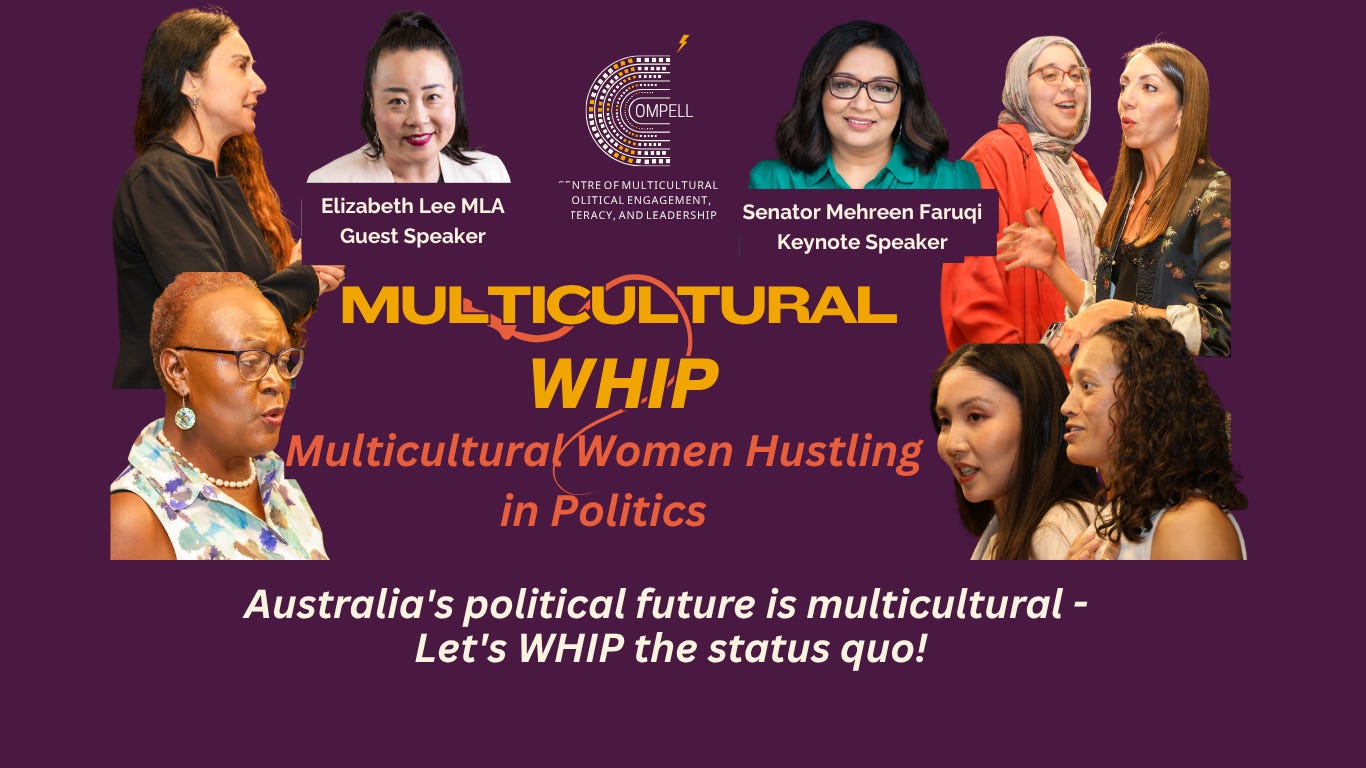
The halls of power in Australia don’t look like us.
Not in our parliaments. Not in our councils. Not in the rooms where the decisions that shape our communities are made.
That’s not a pipeline problem. That’s an infrastructure problem. And MULTICULTURAL WHIP is the infrastructure.
WHO IS MULTICULTURAL WHIP?
Brought to you by COMPELL, Multicultural WHIP — Women Hustling in Politics is Australia’s only women-only political membership network backed by a national multicultural peak body, Allies in Colour.
We are built on bespoke research data. The only organisation in Australia that has mapped, in detail, the specific barriers multicultural women face in civic and political life here. We don’t operate on assumptions about what you need. We operate on evidence — your community’s evidence.
We combine political candidate training with civic leadership development. And we do it exclusively for multicultural women, because the barriers we face are compounded — by gender and by culture — and a generic program was never going to fix a specific problem.
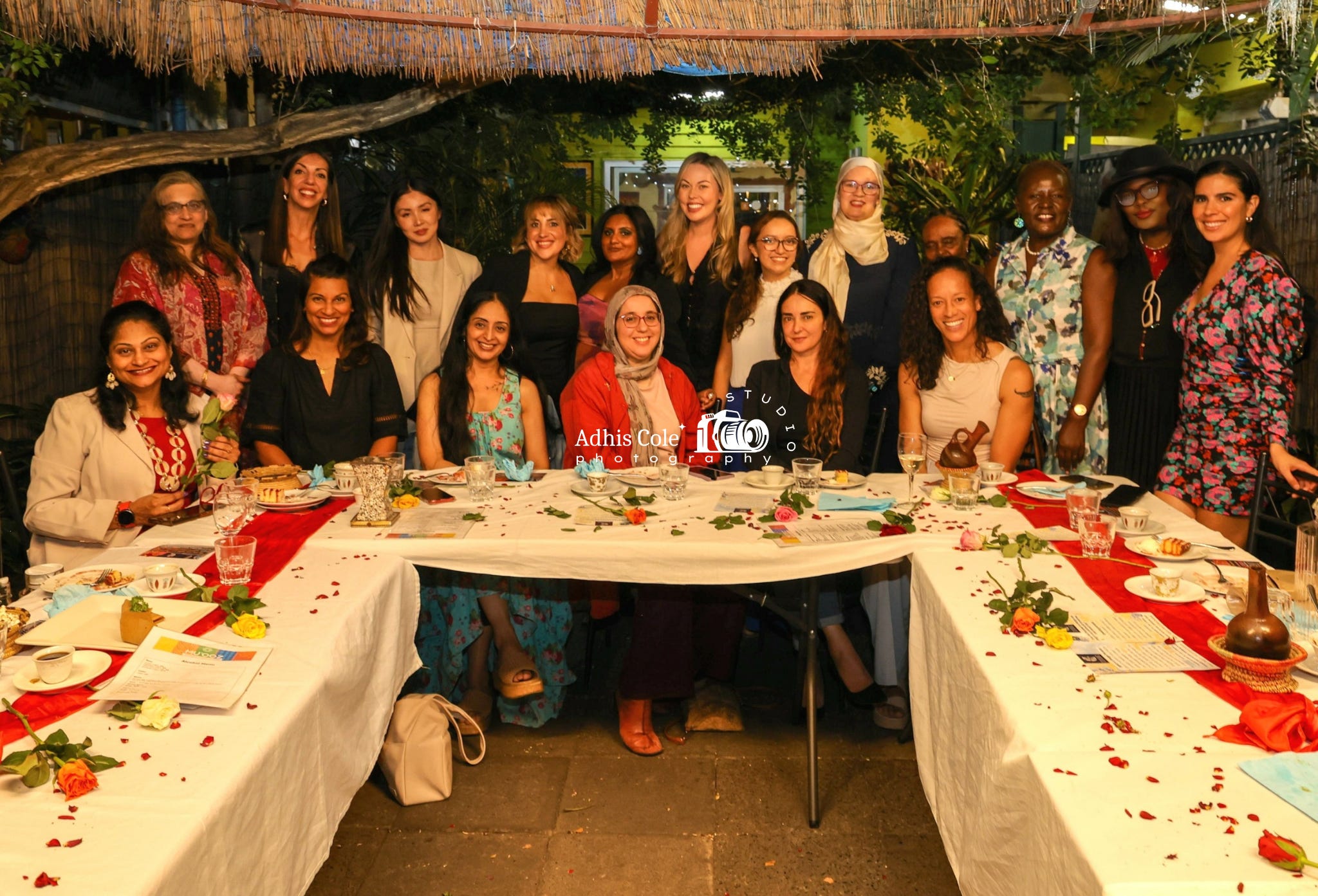
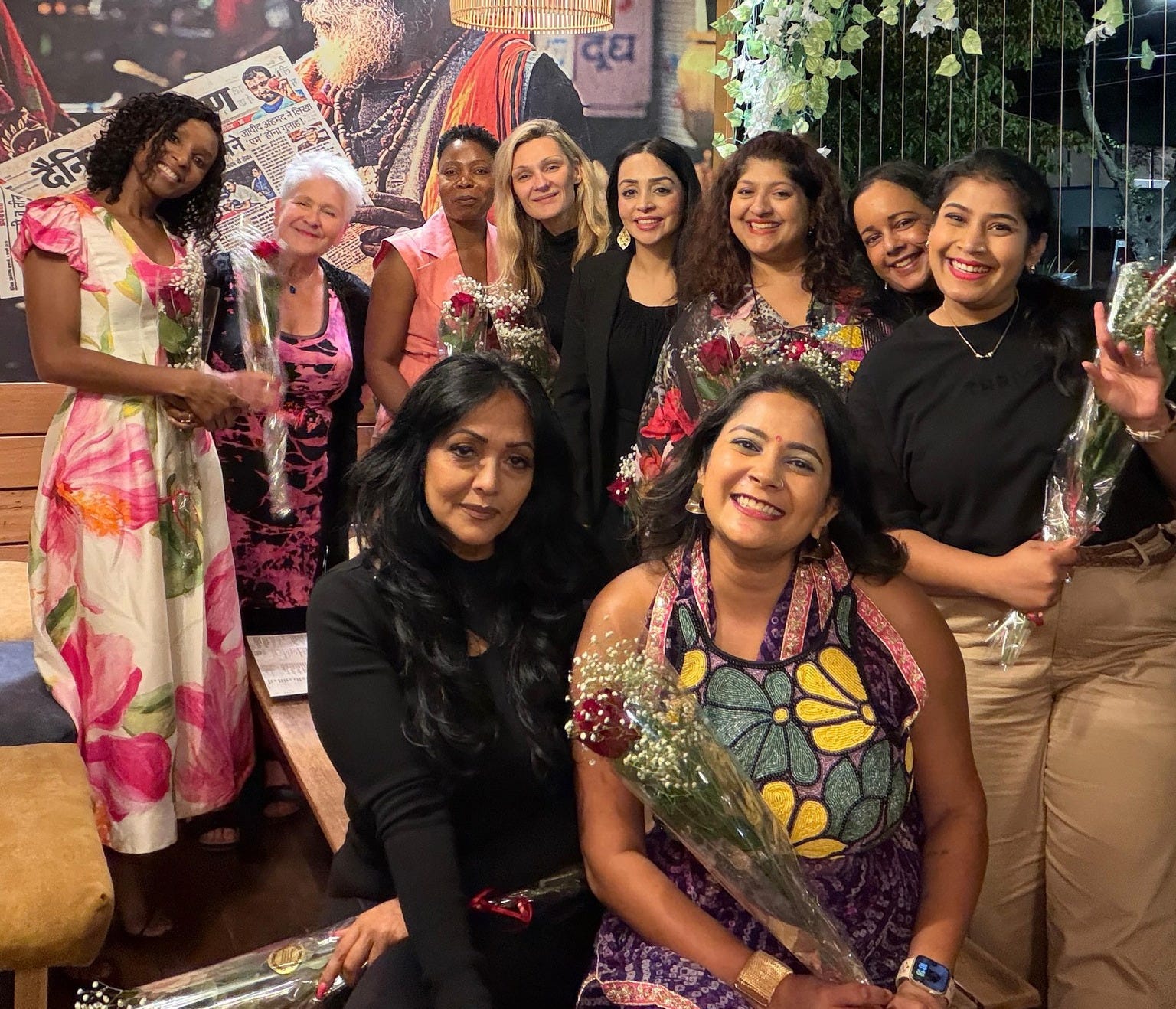
Here’s a sneak peak at the women in our network:
WHAT IS POWER IN PRACTICE PROGRAM?
Power in Practice is MULTICULTURAL WHIP‘s flagship political candidate training program.
Not inspiration. Not vision boards. The real, substantive grounding in how Australian political systems actually work from the inside — who holds power, how decisions are made, how to build the relationships and institutional literacy that let you move in these spaces with confidence and credibility.
Because knowing that representation matters isn’t the same as knowing how to get there. Power in Practice is the roadmap.
Join us at our launch event to learn more!
Sources and data referenced
COMPELL — Australian Federal Election 2025: Culturally Diverse Candidates
UN Women — Women in Politics 2026 (March 2026)
IPU — Women in Parliament 2025 report
ANU Global Institute for Women’s Leadership — The Glass Cliff Report (2025)
Pathways to Politics — Gender Scorecard 2025
The Conversation — Three years after the Jenkins Report
Australian Greens — Faruqi, Thorpe & Payman demand action on Senate racism
Comments
Nothing yet. Say the first thing.
Sign in to join the conversation.