
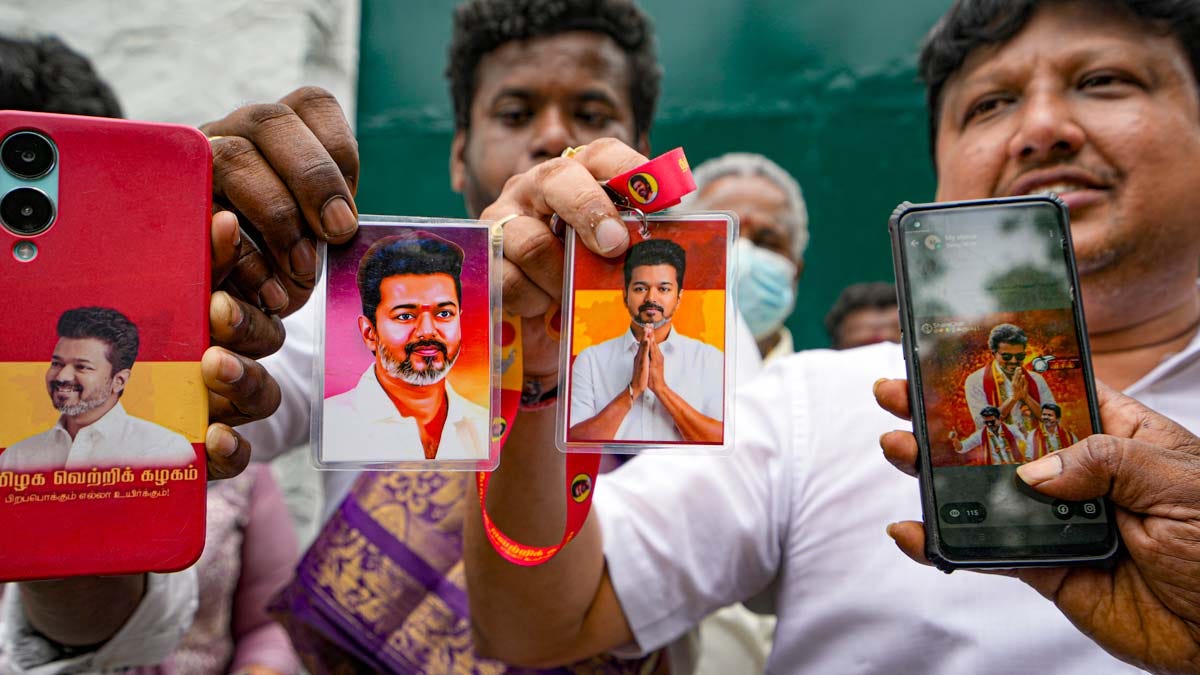
The most under-examined assumption in current major-party engagement with the Indian-Australian community is that it can be addressed as a single community at all. Both Labor and the Coalition operate on a strategic shorthand — Hindi-language centric community engagement, Hindu festival presence, an organising centre of gravity that sits in BJP-friendly diaspora bodies and Modi-friendly diplomatic posture — that reaches one slice of the diaspora and assumes that slice represents the whole.
It does not. It never has.
And in the past month, the assumption has been made publicly indefensible by a political event in southern India that almost no Australian commentary has yet read for what it actually means.

On 4 May 2026, the Election Commission of India declared the result of the Tamil Nadu Legislative Assembly election . The Tamilaga Vettri Kazhagam (TVK), founded in February 2024 by the Tamil film actor C. Joseph Vijay, won 108 of the 234 seats in the assembly with approximately 35% of the popular vote, finishing above both the Dravida Munnetra Kazhagam (DMK) and the All India Anna Dravida Munnetra Kazhagam (AIADMK), thus ending a 59-year period in which the 2 Dravidian parties had alternated in power. TVK fell ten seats short of an outright majority and formed government in alliance with the Indian National Congress and smaller partners. Reporting on the alliance negotiations indicates that the Congress conditioned its support on TVK on never aligning with the BJP. Vijay personally contested two seats and won both. He was sworn in as Chief Minister of Tamil Nadu on 10 May 2026 and won a floor test on 13 May. The election recorded an 85.1% voter turnout — the highest in Tamil Nadu’s history.
TVK has positioned itself within a political tradition drawing on civil rights and social justice leaders, B. R. Ambedkar, Periyar and Kamaraj, with an explicit centre-left framing, and has publicly named the BJP as an “ideological opponent”. Whether that positioning will hold up under the pressure of government is an empirical question that the next 12 months will answer.
What can be said now and what matters most for the Australian argument that follows — The new Tamil Nadu government has defined itself against Modi's BJP and against the kind of Modi-friendly engagement Australian political parties have built their outreach to "the Indian community" around.
I am writing this a month after Vijay was sworn in. The Indian and Tamil-language press has had its moment. The Indian-Australian diaspora press has had its. The Australian political class — the party strategists, the multicultural engagement teams in both major parties, the polling and analytics shops, the Australian commentariat that covers “the Indian-Australian vote” as a single category — has, in the same month, largely missed what this result means inside Australia. That gap is what this piece is about.
The argument I want to make here is not about Vijay. It is about Australia. Vijay’s win is one of several pieces of evidence that should now force Australian political parties to retire a mental model that has guided their engagement with the Indian-Australian community for at least a decade — and to retire it before the November Victorian election makes the cost of holding it visible.
3 readings of Vijay’s win have dominated the coverage I have followed in the 4 weeks since the count.
The first is the celebrity-politics frame, beloved of Western coverage: a film star with a vast existing fan base converted on-screen charisma into electoral arithmetic, in a state where the MGR-Jayalalithaa (famous actors tuned politicians) template has already established that Tamil cinema is a viable pipeline to the chief ministership. That reading is true. It is also boring.
The second frame is the digital-mobilisation frame, beloved of the technology and politics press: TVK ran a digital-first campaign that mobilised young Tamil voters at unprecedented scale, and the 85.1% turnout reflects the success of that strategy. The BBC has described the campaign as a major shift towards digital-first political mobilisation in India. That reading is also true. It explains some of the mechanics but not the ideological substance.
The third frame, dominant in some Indian-diaspora media in Australia, is the diaspora-pride frame: a Tamil-language political party, run by a Tamil cultural icon, has taken government in the historical and cultural heart of one of the largest non-Hindi-speaking populations in the Indian-Australian diaspora. That reading is honestly held and not wrong as far as it goes. But it treats the diaspora as a single audience receiving the news, when the more analytically useful question is what the news now requires of the diaspora’s political conduct inside Australia and what it requires of the Australian parties trying to engage that diaspora.
All 3 frames are accurate observations. None of them is a structural reading.
The structural reading — the one I want to put on the table — is about what Vijay’s win reveals about a mental model that has been guiding Australian campaigning for years and that has, until now, faced no obvious public test.
According to figures cited across recent federal-election sector coverage, Australians born in India now make up approximately 3.4% of the population, with the Indian-born resident population having grown from around 411,000 in 2014 to around 971,020 in 2025. Over 780,000 Australians claim Indian ancestry, and approximately 50 Indian-origin candidates contested the 2025 federal election across both major parties and the crossbench. This is, on any reasonable measure, the largest non-Anglo country-of-birth cohort in the country, the second-largest non-Anglo demographic bloc in metropolitan Australia, and the most numerically consequential migration flow of the last decade.
The Australian political class has responded to that scale with a strategic shorthand which is, in my view, the most under-examined assumption in current major-party campaigning: that this population can be addressed as “the Indian-Australian community,” that there are common cultural and political reference points across that community, and that engagement strategies built around Hindi-language centric community engagement, Hindu festivals, BJP-friendly diaspora organisations, and Modi-friendly diplomatic posturing will reach the Indian-Australian vote as a whole. This is not a partisan failing, it is a bipartisan one. Both major Australian parties have made the same shorthand. The shorthand was always wrong. Vijay’s win is one event in a longer sequence that is making it electorally legible.
The 971,020 Indian-born Australians are not a single political community. They are, at minimum, 4 overlapping but distinct political-identity formations:
a Punjabi-Sikh formation with its own homeland-political reference points (the farmers’ movement, the Khalistan question, the Modi-government tensions of the past 3 years),
a Gujarati and Hindi-belt formation that has been the demographic and rhetorical anchor of BJP-friendly diaspora politics globally,
a Bengali and Eastern formation with its own historical and political trajectory, and,
a South Indian formation (of which I am a part of) — Tamil, Telugu, Kannada, Malayali — that has, on average, been more politically heterogeneous, more linguistically distinctive, and less centred on the Hindi-Hindu organising frame that has dominated Australian engagement with “the Indian community” since the early 2010s. This group is largely resistant to northern Indian political narratives.
The point about Vijay’s win, for this argument, is narrower than it first appears. The win does not, on its own, transform Indian-Australian politics. What it does is provide a piece of public evidence — alongside the Punjabi-Sikh farmers’ movement, alongside the ongoing tensions between Australian Hindu and Australian Sikh community organisations, alongside the demonstrable plurality of Indian-origin candidate profiles in 2025 — that the single-community model was always factually wrong. The parties that built engagement infrastructure on the assumption that Indian-Australians read Indian politics through a single lens have just been given another data point that says otherwise.
Vijay’s win does not transform Tamil-Australian voters into a single political bloc. It does the opposite. It is one more piece of public evidence that the bloc the Australian political class has been engaging never existed.
The Tamil-speaking population in Australia is estimated at around 150,000 as of 2023, with 95,404 people reporting Tamil as the language spoken at home in the 2021 ABS Census. By state, the largest concentrations of Tamil speakers are in New South Wales (38,446) and Victoria (approx. 32,000), with significant, rapidly growing communities in Western Australia, Queensland, South Australia, and the ACT. The Sydney clusters include Wentworthville, Pendle Hill, Girraween, Toongabbie, Westmead, Strathfield, Auburn, Lidcombe and Homebush. The Melbourne clusters include Glen Waverley, Dandenong and Dandenong North. Any major-party engagement strategy that treats Tamil-Australians as a NSW phenomenon — as much current outreach does — is missing the Victorian half of the community.
The community is plural along several axes simultaneously. The most analytically important is country of origin. Tamil-Australians are of Indian, Sri Lankan, Singaporean, Malaysian and other heritage. The composition is changing: at the 2011 census, the largest single origin group was Sri Lankan-born (around 40%), followed by Indian-born (around 35%) and Australian-born (around 13%), The more recent picture, as documented in current diaspora research, is that Indian Tamils have now overtaken Sri Lankan Tamils as the majority within the Australian Tamil community — a shift attributed to a decade of accelerated skilled migration from Tamil Nadu and other southern Indian states. The Sri Lankan Tamil component remains very substantial. The Indian Tamil component is now slightly larger and growing faster.
That demographic shift matters directly for how Vijay’s win will land. For the Indian Tamil component of the community, which is now the larger group, the formation of an explicitly Tamil-language, Ambedkar-Periyar-Kamaraj-tradition, anti-BJP government in the historical and cultural heart of the Tamil world reads as identity affirmation. The instinct will be to organise more visibly as Tamil rather than as “Indian generally,” to insist on Tamil-language outreach from political parties in seats where the community is concentrated, and to refuse to be aggregated into a generic Indian-Australian engagement strategy. That is a plausible hypothesis. It is also a testable one, and at the time of writing I do not have polling or focus-group evidence to confirm it.
For the Sri Lankan Tamil component of the community, the reading is more complicated. Sri Lankan Tamil diaspora organising in Australia, led most visibly by the Australian Tamil Congress, has for 2 decades focused on accountability for the final phase of the Sri Lankan civil war, the post-2009 displacement and human-rights situation of Tamils in Sri Lanka, and the broader question of Tamil cultural and political survival in a Sinhalese-majority state. Vijay’s TVK is an Indian Tamil party. It does not directly speak to those questions. To collapse the Sri Lankan Tamil response to Vijay’s win into the Indian Tamil response would repeat, inside the Tamil-Australian community itself, exactly the kind of identity aggregation that the broader Indian-Australian framing has long imposed on its constituent communities.
The honest description is that the Tamil-Australian community is plural — in country of origin, in religious composition (predominantly Hindu but with significant Christian, Muslim, and secular components), in political history, in engagement priorities. The Vijay win is significant for the Indian Tamil component. It is significant in different ways, and to different degrees, for the Sri Lankan Tamil component. The Malaysian, Singaporean and Fijian Tamil components carry their own histories. Honest political engagement requires holding all of those facts at once.
I want to be careful in this section about the difference between what is documented and what is predicted. The structural argument I have made so far rests on documented facts: TVK formed government in Tamil Nadu on the demonstrable terms above, the Indian-Australian diaspora is demonstrably plural along the lines described, and that the Australian major-party engagement model has demonstrably treated it as singular. Those facts are publicly verifiable.
The strategic implication — that Australian political parties courting an “Indian-Australian vote” via Hindi-Hindu engagement will, beginning sometime in the 2026-2028 election cycle, discover that the frame loses them measurable support among Tamil-Australian voters — is a hypothesis. It is a defensible hypothesis. It is the hypothesis the structural facts point toward. It is not yet a measured finding. Confirming or refuting it requires polling, focus-group work, and post-election seat-level analysis that has not yet been published, and that I would encourage Redbridge, JWS Research, and the major-party internal analytics shops to undertake before they assume the existing engagement model still works.
If the hypothesis is correct, the implications are concrete. Tamil-language community engagement becomes important in seats with significant Tamil populations — in NSW that means parts of Western Sydney (around Wentworthville, Pendle Hill, Girraween, Toongabbie, Westmead and Strathfield) and parts of Sydney’s inner west (around Strathfield and Homebush). In Victoria it means the Glen Waverley corridor and the Dandenong/Dandenong North area. Federal seats where Tamil populations are concentrated include Reid, Bennelong, Parramatta, and parts of Chisholm and Bruce. The assumption that Hindi-language and Hindu festival outreach reaches Tamil-Australians is, on the demographic data alone, an assumption that should be tested and not relied on. Partisan positioning on Indian foreign-policy questions — Modi-government alignment, BJP-friendly diplomatic posture — now carries a domestic Australian electoral cost that did not exist before there was an explicit centre-left South Indian governmental alternative for diaspora voters to reference.
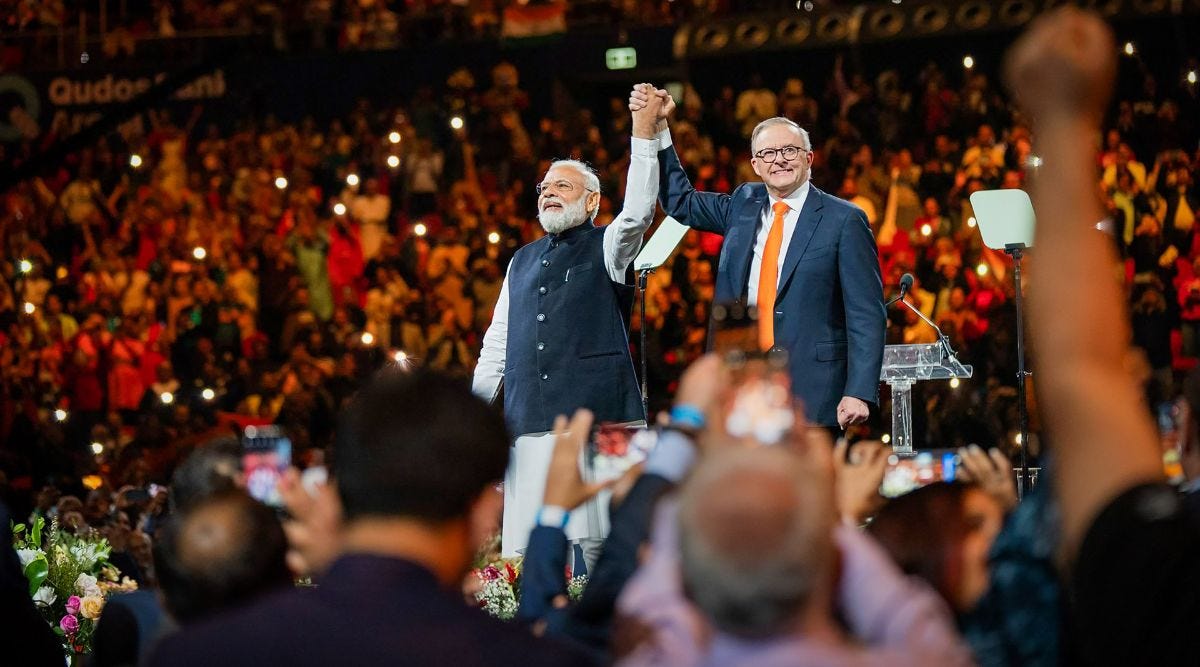
A second implication, less commented on but more strategically interesting, is that the diaspora-press infrastructure Australian campaigns have used to reach Indian-Australian voters — Indian Link, The Indian Sun, SBS Hindi, and so on — is itself plural. Tamil-Australian readers operate substantially in a distinct ecosystem, including SBS Tamil, Tamil-language community radio, Tamil diaspora YouTube and the Tamil-specific suburban press in Sydney and Melbourne. Major-party engagement teams that have built relationships with Hindi-language outlets do not, on present evidence, have parallel relationships with Tamil-language outlets at the same depth. That is an addressable gap.
None of this is a partisan claim. Both major Australian parties are exposed to the same blind spot. Labor’s 2025 federal campaign engagement with Indian-Australian communities was heavily anchored in Hindi-language engagement and Hindu festival presence and the Coalition’s was similar in shape. Neither party invested in a parallel Tamil-language engagement infrastructure of comparable depth. Whichever party recognises the gap first and builds out a Tamil-language, Tamil-press, Tamil-community engagement strategy that does not treat Tamil voters as a sub-set of generic Indian-Australian outreach, stands to gain the structural advantage if the hypothesis above proves correct in the 2026, 2027 and federal election cycles.
The structural fact is documented: there is no single “Indian-Australian vote.” The strategic claim is hypothesis: Vijay’s win is the event that will, if tested, make the structural fact electorally legible. Polling has not yet been done. Doing it is the next move worth funding.
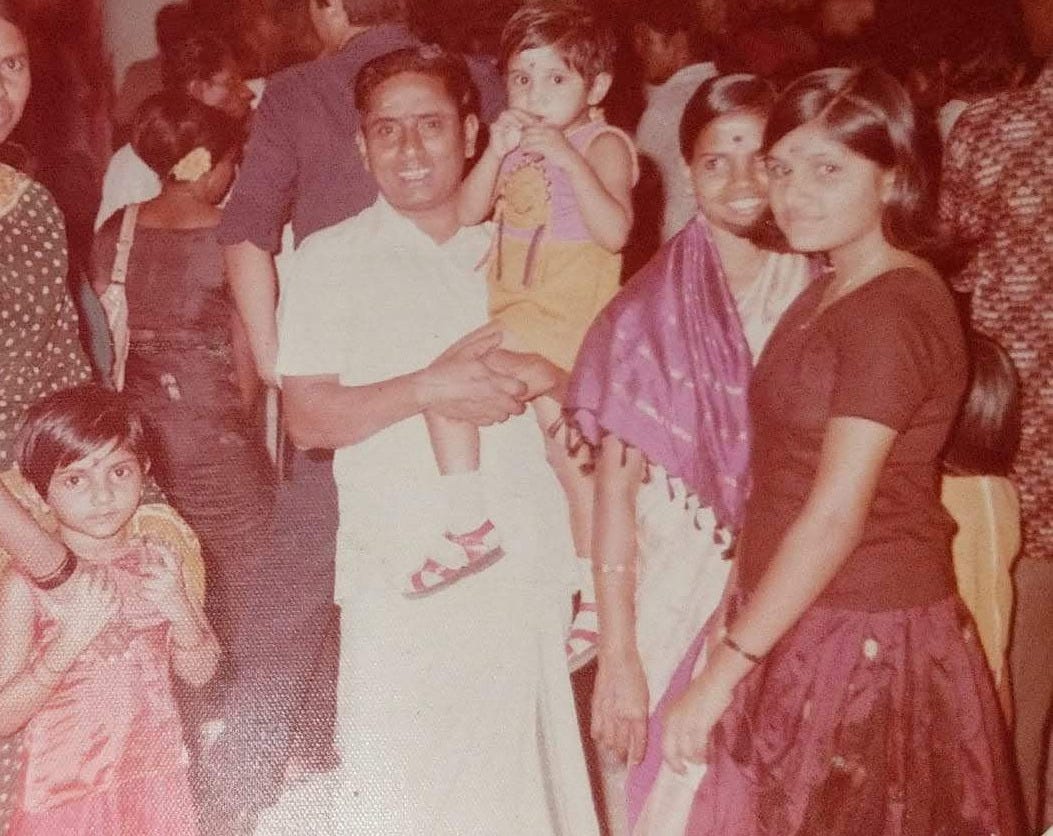
A few honest limits to close on. My parents origins come from what is described as the Sourashtra-Tamil community from Kumbakonam in Tamilnadu. Although I was born in Singapore, we still retain deep connections to our south Indian community and we speak both Palkar (sourashtrian language) and Tamil fluently. This isn’t something captured by any census done so far.
While I cannot speak for what Tamil-Australians, of any origin, will do politically in response to Vijay’s win, I can however argue, from the standpoint of a multicultural peak body that has watched the diaspora-engagement strategies of both major Australian parties for several electoral cycles, that those strategies are calibrated on a model of the Indian-Australian community that has always been too coarse. The structural facts of the past month make the coarseness more visible than it has been before. Whether the coarseness becomes electorally costly, and how fast, is a question for the next 18 months of fieldwork to answer.
The work for Tamil-Australian community leaders, and for the peak bodies that engage with them, is to use this moment to insist on disaggregation: to refuse to be treated as a sub-clause of a generic Indian-Australian community, to insist on Tamil-language outreach where Tamil populations exist, to maintain the careful distinction between the Indian Tamil and Sri Lankan Tamil components of the community rather than collapsing them, and to engage Australian political parties on a footing that treats Tamil identity as politically substantive in its own right.
The work for Australian political parties, if they want to take the next 10 years of Australian electoral demography seriously, is to dismantle the Indian-Australian community model that has guided their engagement and rebuild it around the linguistic, religious, and homeland-political sub-formations that actually exist on the ground. That is a slower, more expensive, more relationship-intensive form of engagement than the festival-photo-op model. It is also the only one that will survive the next decade of demographic change.
Vijay won 108 seats in Tamil Nadu. The arithmetic of his win has nothing to do with the seat of Werribee, or Parramatta, or Bennelong, or Reid. The political reference point his win provides, alongside half a dozen other reference points that are quietly piling up, has everything to do with them. The structural argument stands on the documented facts. The strategic implication stands on a testable hypothesis. The most useful next step in the conversation is to fund the testing.
Tharini Rouwette is CEO of Allies in Colour, an independent multicultural peak body, and of COMPELL.
Comments
Nothing yet. Say the first thing.
Sign in to join the conversation.