
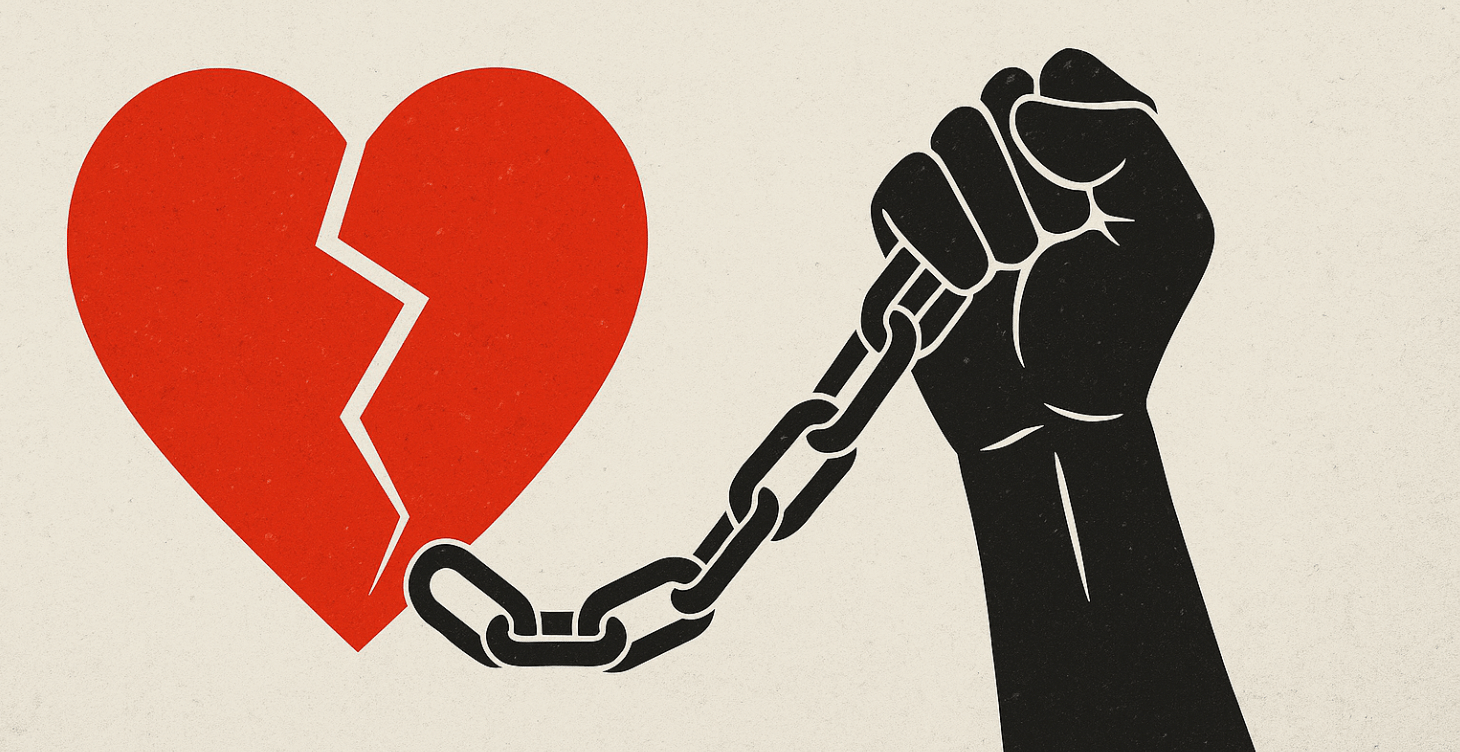
Love shouldn’t be a contest of power. Yet somewhere along the way, control became confused with strength. Many men were taught that to lead, you must dominate and being in charge means keeping others beneath you. It’s a belief deeply rooted in modern masculinity culture and amplified by the online “manosphere,” where dominance is marketed as confidence and manipulation is dressed up as strategy.
At first glance, this message sounds appealing. Who doesn’t want to feel in control of their life, their career, their relationships? But the promise is hollow. What the manosphere sells as empowerment is really fear in disguise. It teaches men to suppress empathy, mistrust emotion, and measure their worth by authority over others.
The result isn’t strength, it’s disconnection. And the same mindset that fractures intimacy at home eventually spills into how we lead, how we work, and how we participate in society.
Controlling someone may create the temporary feeling of security, but it’s counterfeit certainty. You can make a person comply, but you cannot make them really love you long term. When power becomes the goal, love becomes a transaction: “I’ll keep you around as long as you do what I say.”
This illusion plays out in subtle ways. Maybe it’s reading your partner’s messages, tracking their movements, or insisting decisions always go your way. You justify it as protection or leadership, but underneath is fear of being replaced, rejected, or unseen.
Control is rooted in anxiety, not confidence. It keeps you scanning for threats instead of building trust. And like any anxiety pattern, it eventually becomes unsustainable. People who feel controlled stop sharing their truth. They withdraw, avoid conflict, and quietly detach. You get silence instead of honesty, performance instead of presence. That’s not partnership. That’s captivity.
What happens in one arena of life rarely stays there. A man who learns to lead through domination in his personal life often brings that same energy to work or vice versa. The behaviors look different—interrupting colleagues, taking credit for others’ ideas, micromanaging, but the root is identical: the need to prove superiority.
The manosphere glorifies this approach. It calls it “alpha behavior,” but in professional settings, it reads as authoritarian leadership. These are the managers who confuse fear for respect. They demand compliance, not collaboration. They talk more than they listen, give orders instead of guidance, and create workplaces filled with anxiety instead of inspiration.
You can see how easily the lines blur. The same man who polices his partner’s emotions becomes the boss who polices his team’s creativity. He believes control keeps things efficient, but it really stifles trust and growth. When people are afraid to make mistakes, innovation dies. When they’re afraid to speak honestly, communication collapses.
Domination works only in the short term. You might get obedience, but never loyalty. You might get results but never respect. In both love and leadership, the cost is the same: genuine connection.
We live in a cultural moment where authoritarianism is on the rise in workplaces in politics, media, and community life. It’s no coincidence.
The same fear that drives a man to control his partner also fuels a leader’s desire to control a population. It’s the same belief system playing out on a larger scale: “If I can’t guarantee loyalty, I’ll demand it.”
The manosphere feeds that narrative. It paints vulnerability as weakness and equality as chaos. But equality isn’t chaos, it’s collaboration. It’s the recognition that power shared is power multiplied.
Healthy masculinity doesn’t need to dominate to feel secure. It influences through steadiness, listens before responding, and uses its strength to protect dignity, not erode it.
When control becomes your default language, you don’t just lose intimacy, you contribute to a culture of fear. And fear has never been fertile soil for love, creativity, or democracy.
True strength isn’t loud or controlling. It’s the quiet confidence that doesn’t need to prove itself. It’s knowing that your value isn’t dependent on dominance, but on integrity.
Strong men can sit in discomfort without resorting to threats. They can admit when they’re wrong without losing authority. They can love deeply without losing themselves.
In relationships, that strength looks like curiosity instead of accusation. It’s choosing to ask, “Help me understand what you’re feeling,” instead of declaring, “You’re overreacting.” It’s the willingness to pause before reacting, to listen even when it’s uncomfortable, and to repair when you’ve done harm.
In the workplace, that same strength creates cultures of trust. Employees thrive under leaders who value their voices. Teams follow leaders who balance accountability with compassion. People give their best when they feel respected, not when they’re afraid.
Leadership, whether at home or at work, is about presence, not power.
The irony is that control promises security but guarantees instability. The more you tighten your grip, the more everything slips through your fingers.
When you dominate your partner, you teach them that love is conditional. When you dominate your team, you teach them that their best ideas aren’t safe. In both cases, you create the very distance you were trying to prevent.
Connection doesn’t come from control; it comes from trust. And trust can only exist between equals.
If you want people to follow you willingly, they have to believe you see them and not as subordinates, but as autonomous human beings whose experiences matter. The moment they feel objectified, they disengage.
That’s why the most powerful relationships—romantic, professional, or otherwise are built on shared respect. They’re partnerships, not power plays.
The men who inspire real loyalty share one trait: they don’t need to dominate to feel secure. They create space for others to be real. They use influence, not intimidation. They understand that compassion is not the opposite of strength, it’s the evidence of it.
That kind of man doesn’t run from emotion; he regulates it. He doesn’t micromanage; he mentors. He doesn’t confuse leadership with ownership. He knows that control doesn’t protect love, it strangles it.
The manosphere promises shortcuts to respect. But real respect can’t be demanded; it’s earned through consistency, empathy, and courage.
Shifting away from control isn’t easy…
Comments
Nothing yet. Say the first thing.
Sign in to join the conversation.