
Stephen Baskerville’s daring and brilliant new book is subtitled Why the United States Went “Communist” and What To Do about It. The book is not the defense of conservative thought one might expect from the title or from the author’s previous work. Hard-hitting and concise, Who Lost America takes a close look at both sides of America’s political battle. Left and Right are adept at attacking their enemies but do not scrutinize their own flaws. Baskerville criticizes those on the Right who, in his view, could and should be doing a better job.

Baskerville puts “Communist” in quotation marks and uses it as a label for the ideology that inspired the race riots of 2020 and that drives the Left today. He characterizes the violence of 2020 as a radical coup d’état. We must understand not only “what the Left did,” he writes, “but also what the rest of us failed to do” (p. xiii). If the Left succeeded, we need do know how and why the rest of us let this happen.

The book makes its case in seven parts. The first describes what he calls the “Iron Law of Washington,” which ensures that every progressive social measure increases the problem it set out to solve. The second explains how the welfare state created the “deep state.” Criminalizing the population is the focus of the third section; failure to counteract the drift of universities and colleges to the left is the topic of the fourth. The fifth section takes up the surprising connections Baskerville finds that link NATO, nuclear war, the military, and feminism. The sixth chapter describes the emasculation of America, with a focus on professions now dominated by women and on the ways in which women’s power is used to trivialize and sideline men.
The most exciting part of this book is the seventh, the conclusion, “The Way Out” (pp. 195-216). Since he finds plenty to criticize in both Left and Right, Baskerville knows that he owes his readers some kind of map to a better world. He turns to men, not to men as actors in the political fray but instead to men as men. “Men alone can rescue first themselves and then everyone else,” he writes (p. 201). He urges men to do this by embracing citizenship. This requires decisiveness, assertiveness, and action, masculine virtues that the woke deplore. “Citizens must take matters into their own hands,” he writes, “and they must do it soon” (p. 196). That’s because so much is being taken out of our hands.
Baskerville ties the race riots of 2020 to the COVID-19 crisis. Together these events helped to bring about newly “authoritarian government powers over private life” that demanded “mass citizen docility” (p. xxi). This language describes the ongoing agenda of progressives, specially the drive to with replace citizen initiative with government control.
Those who questioned the violence of 2020 and the pandemic-related suppression of free speech were shamed and then harassed by the legal system; those who backed the Left’s causes were rewarded with power. Massive cash outlays ensued—bread to go with the circuses, wasteful spending that has damaged the U.S. economy ever since. The spending also boosted expectations among the radicals that their every whim would be subsidized and that, again thanks to the pandemic, they would be paid without ever having to go to work. Work, which is fundamental to masculine identity, is one of the institutions that the radical coup d’état helped to corrupt. Today, the many men who don’t want to work are evidence of the Left’s emasculating triumph.
Baskerville disagrees with one of my favorite writers, Victor David Hanson, who has noted that the Left never criticizes itself. The Left has no need to do that, Baskerville, says, since they have won; Hanson himself does not criticize the Republicans who let them do so (p. xvii; see also xxvi-xvii) . Both Janice Fiamengo and Christopher Rufo, brilliant critics of the Left, pass Baskerville’s muster. He does not discuss the work of Jack Donovan, spiritualist, men’s advocate, and formidable weightlifter who has, for years, been encouraging men to be more active (Baskerville does cite someone who disapproves of Donovan’s handling of gangs, p. 153).
Baskerville shows that the right deferred to the innovations of those whom we now describe as progressives. Instead of protecting families in 1960s and 1970s, conservatives remained silent about the vast new welfare state then taking shape. Those who did not support the new welfare state—Phyllis Shaffley, for example (p. 22)—were dismissed as extremists motivated by old-fashioned intolerance. Baskerville argues that Shaffley herself did not go far enough, for she failed to see that by turning the government into the chief provider for a considerable swathe of the population, Americans were undermining the family and elevating fatherless homes as the new norm.
Those on both Left and Right have supported reform because they believe that such action gets results. Baskerville explains this delusion, and the Left’s success at sustaining it, by using the “Iron Law of Washington” (ch. 1). The “Iron Law” holds that the proposed solution to a problem will perpetuate the problem, not solve it. That’s repetition disguised as progress. Federal and state bureaucracies do not want problems to go away. If the problems went away, these vast organizations would have nothing to do.
For the Left, more government control is always good. So long as the Left controls the government, government will grow. Baskerville’s book was published before the 2024 elections, and some of the problems and injustices he describes are being addressed and are provoking predictable woke protest. Trump’s and Musk’s determination to reduce government waste is absolutely new to American politics. When was the last time a president called for smaller government? Now that Washington is full of empty offices whose former occupants are not-working from home, the problem has never been more apparent.
Trump is moving on other fronts as well. He threatened to withhold $400 million from Columbia University unless administrators corrected the indifference that allowed anti-Semitic rioters to terrorize Jewish students. Columbia (seen below) agreed to Trump’s demands, and other schools have taken note. The University of Michigan has canceled its huge DEI program in an effort to stay on Trump’s good side.

How has the change at Columbia University been received? Wall Street Journal writers Douglas Belkin and Liz Essley Whyte deplored this cooperation between government and academia, claiming that Columbia was being pushed “to appease Trump.” But “appeasing” Trump merely meant that the school would start to do what it had been assumed to have been doing all along—for example, following its rules about student safety and equal treatment, keeping peace on campus, and preventing rioters from hiding behind masks so that they could escape the consequences of the havoc they create. (“Columbia Nears Acquiescing to Trump,” WSJ, March 10, 2025, p. A3).

(I felt that I had to disrupt the Antifa logo, in the Antifa spirit)
The students borrowed the tactics of Antifa and Black Lives Matter. The administration thought that was just fine, an admirable exercise of free speech. By forcing the university to do better, Trump had, in the minds of the writers for the Journal, Trump taken away the “moral authority” of the university. Good for them for raising the point. Too bad that they fail to ask what kind of “moral authority” we would discover in a university whose administration and faculty allowed violent anti-Semites to terrorize Jewish students and keep them from attending class.
Trump was forcing Columbia to exercise the moral authority it claimed but refused to exercise. The reporters took it upon themselves to interpret this as compromising the school’s independence. Remember that $400 million in government funding was at stake. How independent is Columbia? If the WSJ writers want to get paid, I presume they have to do their job. If Columbia University and its kin want to be paid, it has to do its job as well.
Baskerville supports Jeffrey Tucker’s view that the institutions that traditionally guarded discourse and protected our rights and liberties have been “captured” by the left. These institutions—and not only universities—are now “tools of the regime” and are controlled by the progressive establishment (p. 1). It is also clear that the right has been intimidated into silence. Where were the defenders of Jewish students and their rights when anti-Semites at Columbia, Cornell, and elsewhere rioted against them and called for the victory of Hamas “by any means necessary”?
For the new Left, resistance has become an end in itself. The goal of resistance is not remediation of society’s problems. The goals is the transformation of democratic society into a totalitarian state that bows to the radical Left and its revered leaders, Bernie Sanders, Elizabeth Warren, Alexandria Ocasio-Cortez (or AOC, who is now up there now with FDR in the Democrat Pantheon); Rashida Tlaib; and more. Their main tools, Baskerville observes, are race, sex, and environmentalism (p. xxviii).
Regarding race, the radicals have no solutions. They don’t want them. Any progress that can be seen is dismissed as inadequate. The result of endless conflict is a decline in the quality of Black life. Baskerville cites Marie Gottschalk, whose 2006 book on imprisonment shows that in the 1920s fewer than one prisoner in three was Black. After the welfare boom of the 1960s, the majority of prisoners were, for the first time in American history, Black (p. 77). Welfare programs designed to improve the condition of Blacks produced more people dependent on the state. The “state,” for many Black men, meant the prison system, not a better life.
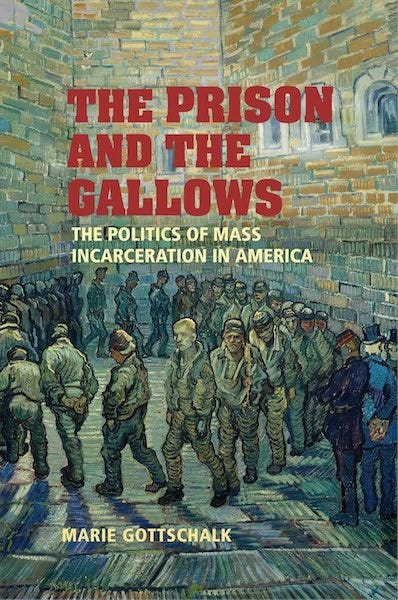
What is the government doing in response to Black criminal convictions? We in Chicago know from the work of Cook County State’s Attorney Kimberley Foxx (2016-2024) that the answer is to arrest fewer Black men and, when they are arrested, ensure that they get light sentences. The law no longer protects Blacks and whites equally. What happens when Black men see that they will not be punished for their offenses? The answer is more violence and crime, most of it concentrated in the Black community. That in turn guarantees the growth of the legal and penal system: the Iron Law of Washington works in Chicago too.
What about the sexual morality? Today the focus is transgender rights. These rights exist mainly to shame those who believe in biological sex and the family. A child’s sexuality, according to the Left, should be handled by teachers in elementary schools.
The aim is to diminish support for the family. No thought is given to the aftermath of sex change operations, drugs, and similar therapies that teachers are encouraged to promote to their students, usually without the parents’ knowledge. During the COVID-19 shutdowns, parents saw and heard what teachers teach and began to resist the educational system’s resistors. Teaches were outraged to discover that parents cared about what their children were taught. If there is good news here, it is that the teachers’ progressive goal of sidelining mothers and fathers increased parental awareness of how feminist-dominated schools exploit childhood sexuality.
On the environment, the left’s hypocrisy is especially glaring. Comfortable in their heated or cooled homes, and busy flying hither and yon, the left soaks up the benefits of fossil fuels. These radicals ignore the dependence of green projects, such as electric vehicles and wind turbines, which could not be created without fossil fuels. Their Mecca is World Economic Forum, which meets annually at elite Swiss resort. The richest people in the world travel on their own jets to discuss air pollution and global warming. John Kerry and Barack Obama are regulars at Davos. So is George Clooney. The WEF claims to be “improving the state of the world,” a nice pun on “state.” The WEF is really out to turn the world into “a state” it can govern.
One major difference between the radical generation of sixty years ago and today’s radical generation is the dysfunctional culture in which today’s Left has grown up. This begins with the family and continues in education. Baskerville points out that many of the activists who have been swept up in the violent agenda of Black Lives Matter, Marxism, and radical feminism, come from broken, dysfunctional, or fatherless homes.
Today’s activists are products of the welfare state of the 1960s. Welfare created the “deep state,” a mass of welfare programs that fuel wasteful spending and breed citizen dependence on the government. The most welfare-dependent families are those without husbands and fathers. That’s why the left prizes and seeks to promote fatherless homes. All studies show, as we well know, that single-parent homes are those that produce the most crime and violence. The Left’s crude socialism promotes crime, leading the Left to demand funding to solve a problem of the Left’s own making. Recall Gottschalk’s research (above), which shows that after the welfare boon of the 1960s, the majority of prisoners were, for the first time, Black (p. 77).
Instead of families, the Left wants “villages.” Contempt for the traditional family was boosted by Hilary Clinton’s vacuous ideal of the “village” needed to raise children. She was not thinking of thatched cottages and small shops, of course. She was thinking of Stalinist buildings in Washington, D.C., headquarters for Social Services writ large. Today her mighty “village” is a cluster of empty offices whose workers Zoom all day and dispense funds from the comfort of their homes.

The Clinton Village would consist of many of these.
One reason that protective institutions have declined so rapidly is the decline of educational rigor that prepared adults for citizenship and society. This involves more than the disappearances of courses in American history and government. After the 1960s, education at upper levels became less about scholarly discipline and more about social relevance.
The old curriculum, which included Latin, foreign languages, history, and geography, was discounted as unnecessary for modern life. In universities, the whole of premodern (i.e., pre-Renaissance) history and learning was dismissed as irrelevant. The new aim of education was advocacy for the causes of the Left, which became the new goal of a liberal education.
To promote advocacy, education had to change its subjects. In higher education, the tradition of language and historical distribution requirements (which today are unthinkable) were replaced with requirements for courses in critical theory and feminism. Whereas once you could not get a Ph.D. without knowing Latin, now you could not get a Ph.D. without knowing the Left-wing take on post-colonialism and feminism.
Curiously but significantly, as the educated left enshrined multiculturalism, it dispensed with instruction in foreign languages. Anyone who wants to understand a culture at more than a tourist level knows that the beating heart of a culture is its language. As a GI from 1969 to 1972, I spent a year in Korean language school and then a year in Korea. Once there, I discovered how little I had learned about either the language or the culture. But I also knew that I was having a richer experience than GIs who knew no Korean except what they might have picked up from the women they dated. My Korean friends laughed at and corrected my many mistakes, but they also understood that I was doing what I could to meet them on their terms.
I taught some classes in basic English to students in a one-room school and predictably learned more Korean than they did English, but I loved it.

Today’s schools teach multiculturalism under the name of cultural diversity without teaching anything about what culture is or how culture is expressed. DEI, as it is known, is chiefly a mechanism for shaming white and elevating minorities. This, as Baskerville notes, widens cultural gaps instead of narrows them, making more pedagogical intervention necessary—the Iron Law of Washington at work. DEI began losing favor when businesses saw that it exacerbated divisions and resentment. Seminars on racial and gender sensitivity created hostility rather than social harmony.
At the heart of Baskerville’s trenchant critique is the right’s willingness to abandon the institutions that once protected people from social disorder. These included churches, neighborhoods, responsible citizenship, and other institutions and practices once maintained by people who understood that citizenship involves sacrifice.
Baskerville defines masculinity in terms of married men who are property owners and who are willing to bear arms (p. 202). As an unmarried man who owns property and has carried arms in the service of his country, I have invested some effort in calling attention to the deplorable state of modern masculinity (Modern Masculinity; Boxing and Masculinity). So I might dispute the completeness of this masculine model, but I see with the common sense behind it.
The goals Baskerville outlines for men include promoting marriage and family; curbing divorce; motivating young men to work and to serve their country; and others. He divides this list into such categories as military strength and religious faith (pp. 208-13). I found these pages inspiring and visionary. I see them as a road map to a better America, a better life for the family, and, especially, a better life for masculine men who embrace the work of good citizenship.
We are responsible for ourselves. We can’t change many things, but we can change who we are and how we approach citizenship. Movements, marches, tweets, and social media platforms are no substitute for a life well lived. To me, that means living a socially responsible life, caring for others, building personal and professional relationships and networks; and staying informed.
In Boxing and Masculinity I quote a seventeenth-century proverb: “Living well is the best revenge” (p. xix). Masculine men do not confuse living well with living easy. Theodore Roosevelt urged citizens to take up “the rough work of a workaday world.” There is no better way to prepare for the rough workaday world than by physical effort and physical competition. We need more than good ideas to become better men. If you are looking for good reading on men’s roles in our culture, take a look at the website of the Mankind Project. The group’s motto is “Changing the world, one man at a time.” Nobody could put it better than that.
Baskerville’s book a rich collection of important ideas. Don’t just lament the Left. Do something to improve the Right. Help to remedy the sad state of American life and politics. Start by reading this powerful and practical book. Then work to realize some of its promise.
April 2025
Comments
Nothing yet. Say the first thing.
Sign in to join the conversation.