
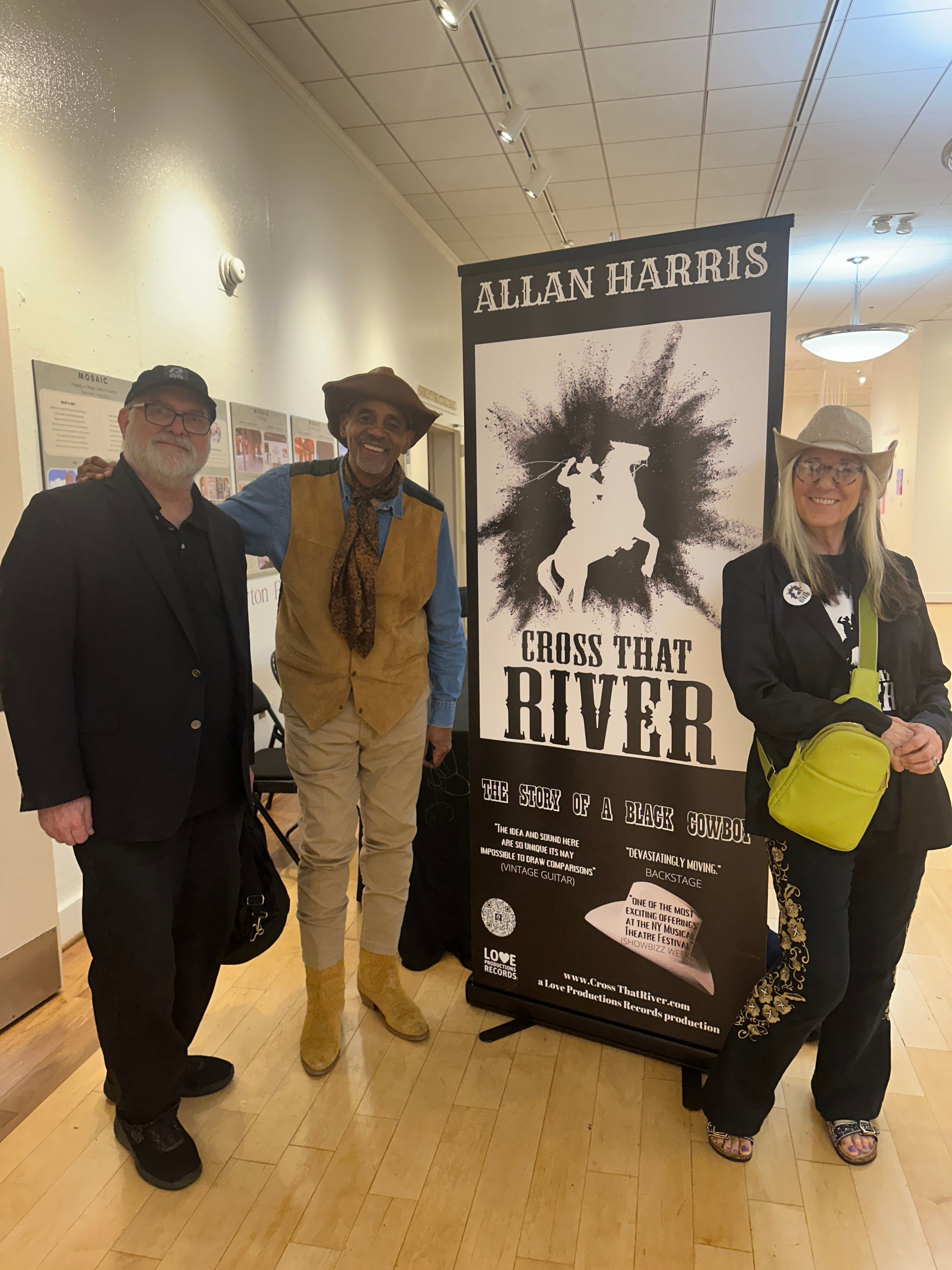
Wow. What an amazing time we had at the International Black Theatre Festival! And what a great review (click below):
All four performances of Cross That River were sold out, and the audiences gave us such beautiful responses. Each performance ended with a standing ovation, and that never gets old.
One of the most challenging aspects of the production was adapting to a performance space that was never intended to function as a traditional theater. We were assigned to perform in a recital hall rather than a theater, and that presented some real obstacles. They had to bring in additional lighting, and the team had to build a set specifically for a space that it wasn’t designed for. But everyone pulled together.. especially Bill Soleau, our director, and my wife, co-writer and producer Pat Harris. Together, we put on the best performance possible with the resources we had.
A big shout-out to Artistic Director Jackie Alexander, and Tech Director Arthur Reese who both run a tight ship and worked hard to made sure everything came together.
We had wanted to bring Cross That River to the International Black Theatre Festival for a long time. It is the perfect place for this story to be seen by people of color and, especially, for us to honor an important part of our history in this country.
Whenever I hear people talk about immigrants and sending people “back to where they came from,” it infuriates me. My people were brought here in chains. And then somehow we’re expected to accept the idea that we were simply immigrants.
America has never quite known what to do with Black people. It has never fully confronted the obligations that came with enslaving an entire group of people, then granting them freedom without providing the resources they needed to build a life. And when Black communities did manage to create something for themselves, too often those achievements were met with jealousy, violence, and destruction.
That history is complicated, painful, and unfinished.
I wrote Cross That River to shine a light on one important part of what Black Americans have added to the fabric of this nation. That has always been a source of tremendous pride for me.
The very idea of the cowboy is specifically American.
Cowboys have always been one of the most recognizable symbols of America around the world. But when most people picture a cowboy, they don’t picture a Black man. Which is why I wrote “White hat, white horse, white face” in the beginning of the show.
And there is another part of this story that matters to me personally. Many Black Americans don’t necessarily see themselves reflected in the traditional “Cowboys and Indians” mythology that so many of our white counterparts grew up with. For many of us, the Western story can feel like somebody else’s story.
But it isn’t. Black people were there, and our role on the Western frontier was pivotal.
Black cowboys brought an extraordinary work ethic and tremendous skill with animals, particularly horses and cattle. They performed difficult, demanding work that was essential to the development of the American West. They knew how to ride, how to handle livestock, how to survive in difficult conditions, and how to get the job done.
They also brought a different perspective to their encounters with Native Americans. Our experiences with oppression, displacement, and being treated as less than human meant that we didn’t necessarily see Native people through the same lens as white Americans did.
The settling of the West came at an enormous cost to Native Americans, and Black cowboys were sometimes participants in that process. We can’t ignore that reality. But neither should we erase the Black men and women who were part of this extraordinary chapter in American history.
For me, discovering Black cowboys at a young age gave me a sense of pride. It was the one place I saw Black people doing hard, skilled, and dignified work in a profession that has become one of the foundations of American identity. And that’s what I want Black children—and their families—to take away from Cross That River.
I want them to see themselves in the American West and understand that they were not simply spectators in the building of this country. They were workers, horsemen, ranchers, cowboys, pioneers, and people who helped make this nation what it became.
They brought skill, determination, intelligence, and dignity to a difficult way of life.
When children can see that part of themselves reflected in American history, it changes something. It gives them a sense of belonging. It gives them something to be proud of. I want Black children to know that they have every right to see themselves in that image, too.
And then there are the Buffalo Soldiers.
Imagine living your entire life in slavery, without shoes, denied an education, denied even the basic knowledge and customs that many people take for granted. You were considered chattel. You had been told, every day of your life, that you were less than human.
And then suddenly, during the Civil War, you’re handed a gun, a horse, and a uniform and told that you are now a soldier. You have the authority to fight—and even shoot—the very people who had enslaved you. I can only imagine what that must have felt like.
Years ago, when we were invited to perform Cross That River in San Angelo, Texas, at the historic Fort Concho, the setting itself became part of the story. We performed on a stage built inside the original stables where the Buffalo Soldiers once kept their horses. Standing in that space, we learned more about the regiments who served there and about Henry Flipper, the first Black graduate of West Point, who later served with the 10th Cavalry.
Fort Concho also has a fascinating connection to Hollywood. John Ford filmed his 1960 Western Sergeant Rutledge there, starring Woody Strode as a Buffalo Soldier accused of a terrible crime. So here we were, performing Cross That River in the very place where the history of Black soldiers in the American West had actually unfolded—and where that history had later been brought to the screen.
And then came one of the most moving moments of all: during our performance, descendants of the Buffalo Soldiers marched. Imagine seeing the descendants of those men walking through the very place where their ancestors had once served. For me, it was a powerful reminder that this isn’t simply history. These were real men with families, descendants, and stories that continue to this day.Despite their military service and accomplishments, these soldiers were still treated as second-class citizens.
They were forced to live in the stables with the horses. They were given inferior rations, and their horses were often old, unhealthy, and poorly equipped. They had to work twice as hard as their white counterparts.
And still, they served. But their story becomes even more complicated when we consider the people they were sent to confront.
Native Americans had lived freely on those lands for thousands of years. Then came a government determined to take that land from them, confine them, and hold them in captivity. And some of the men sent to enforce that policy were Black soldiers who had only recently emerged from slavery themselves.
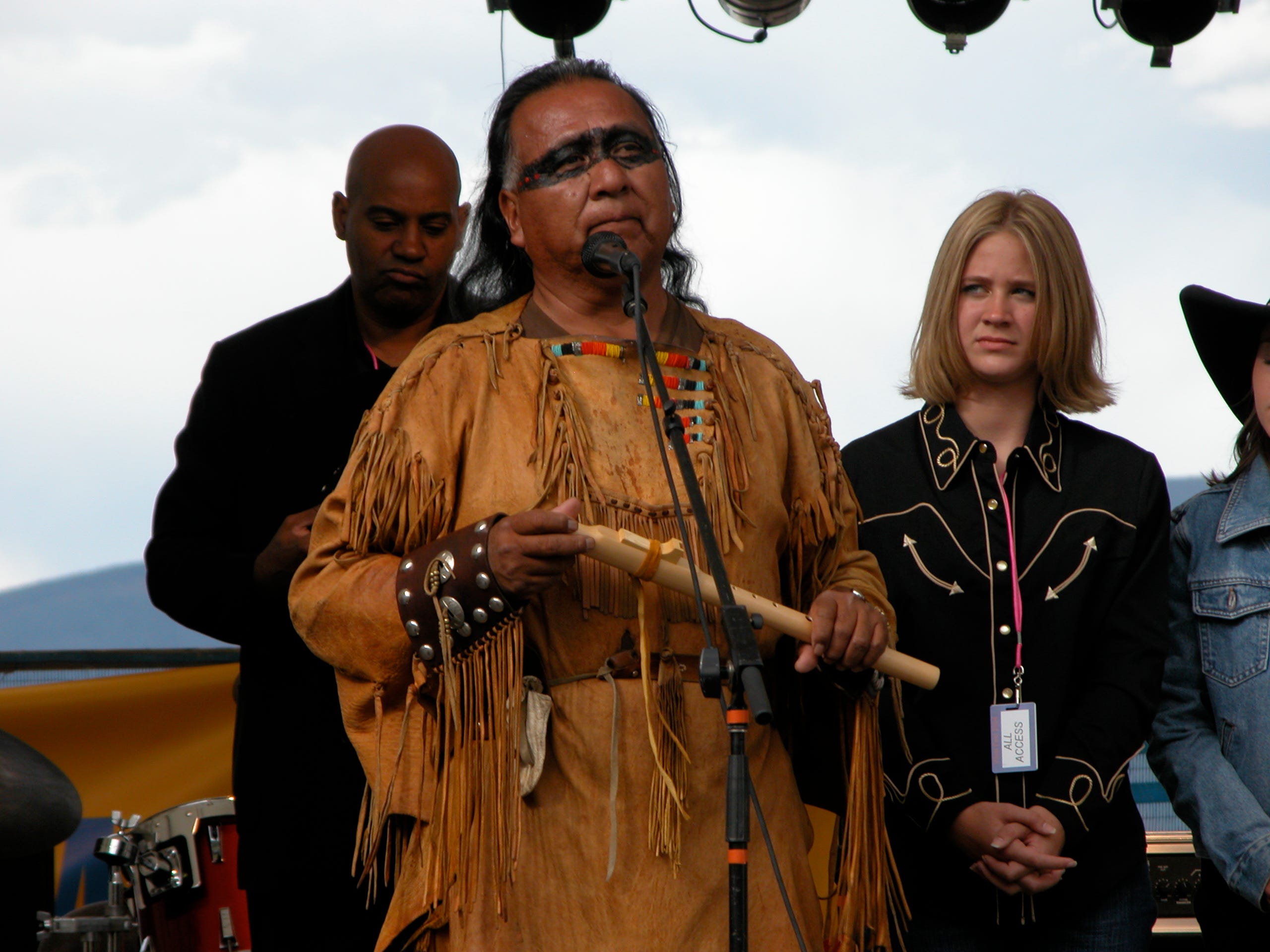
That contradiction has always troubled me.
That is why I wrote Cry of the Thunderbird—as an apology from the Buffalo Soldiers to the Native Americans they were ordered to confront, people who were being held captive in a land they had roamed freely for thousands of years.
I wanted to imagine what those Black soldiers might have felt as they found themselves caught between two histories: having experienced oppression themselves while being ordered to participate in the oppression of another people.
It doesn’t erase what happened, and it doesn’t excuse anyone’s actions. But I believe we have to be willing to look at the humanity and the contradictions within these stories.
These were men who had come through slavery or its immediate aftermath and were asked to serve a country that was still struggling to recognize their humanity.
Yet they put on that uniform, mounted those horses, and did the job.
The cowboy and the Buffalo Soldier are part of the same larger story for me. They represent Black people who were present in the building of the American West, even when the country did not fully recognize their value.
That is the story I want to make visible.
And now we’re turning from the theater to something else I’m very excited about: the release of my second single and my new recording, Swingin’ Love Songs.
Next Friday, I’m Hooked on You will be released. But here’s something special for my Substack family: if you subscribe, I’m going to send you I’m Hooked on You as a free download before the rest of the world gets to hear it. It’s my way of saying thank you for being here and for helping me bring this beautiful “lost” recording back into the spotlight.
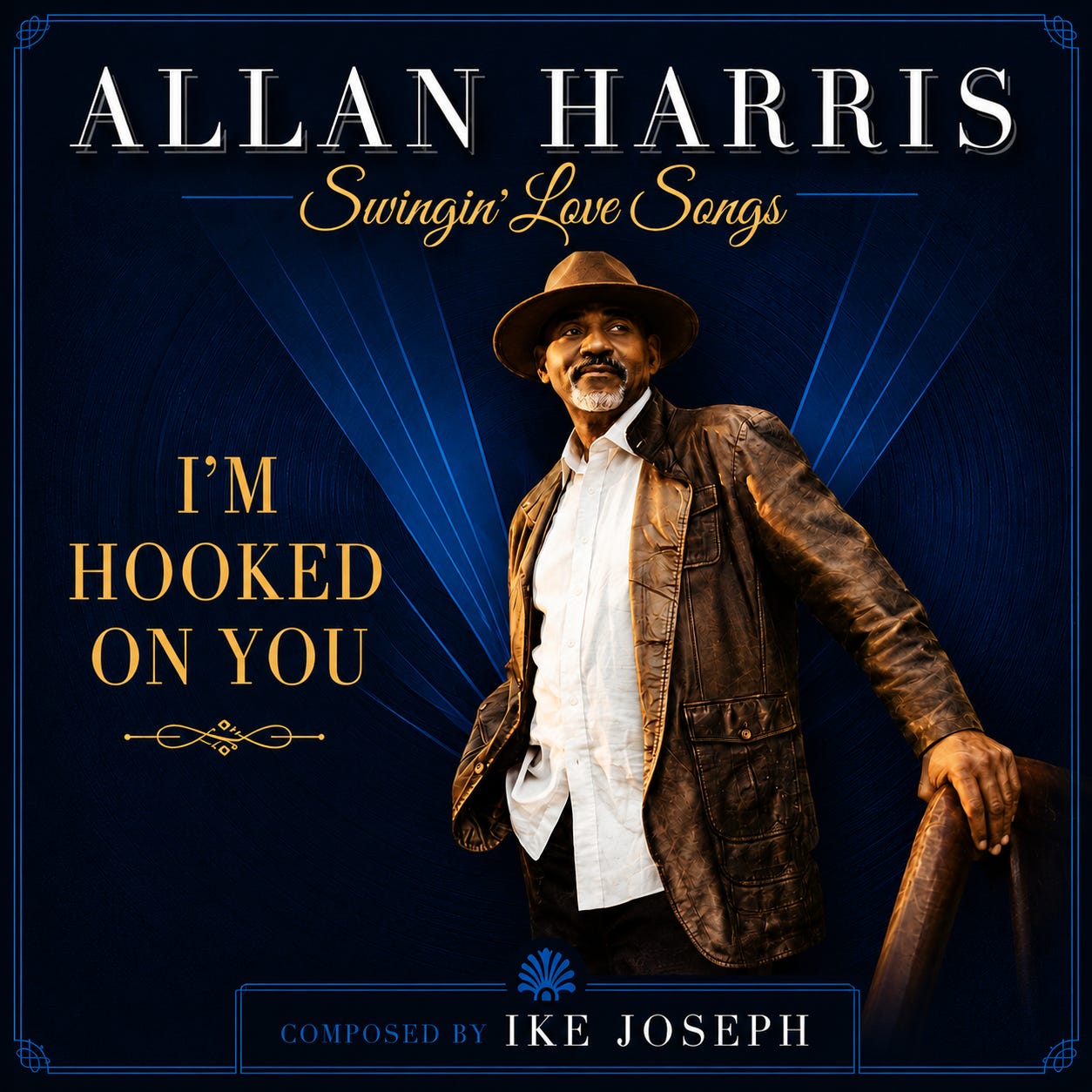
So if you want to hear it first, think about subscribing to my Substack family and get your copy before everyone else!
The songs on the recording, all composed by Ike Joseph, who was one of the writers from the great New York City songwriting tradition of the Brill Building. Those songwriters were like an assembly line of hitmakers, crafting hook-driven songs that became standards. Each one of these songs could become a standard in its own right, and I’m honored to have the opportunity to introduce them to a new audience.
Ike passed away around 2003. My wife, Pat, and I searched everywhere until, through funeral homes, we finally found our way to one of Ike’s nieces, one of his only living relatives. She gave us permission to release the recordings.
We were enormously relieved to have her blessing because Ike’s greatest wish was to release this material while he was still alive. I just hope he’s celebrating somewhere in heaven, because we’re certainly keeping his songs alive down here on earth.
I’m also heading out to California to debut the new material on the West Coast during the Western Arts Alliance conference. I’ll be doing a live afternoon performance at KCSM in San Mateo, on September 10 which will be broadcast via the Internet. Then, on August 11, I’ll be at Piedmont Piano in Oakland, California, a very cool spot.
This week I’m heading out to our Pennsylvania farm to spend some time with my father and start exhaling a little bit. There’s something about the country, the rolling hills on Pennsylvania, the clean air, the slower pace, that makes it easier to relax. And speaking of time, I can’t believe how quickly this summer is passing.
Whether I’m standing on a stage telling the story of Black cowboys, or singing songs written by a songwriter who never got the chance to see his music released, or watching a young person recognize themselves in something they never knew was part of their history, I feel like I’m shining a light where there wasn’t enough light before.
Wishing everyone a swingin’ summer.
Until next week,

Comments
Nothing yet. Say the first thing.
Sign in to join the conversation.