
Have you been captured by love? Wounded by it? Are you a slave to it? Have you pined for it? Been unable to sleep? To eat? Suffered for it? Have you felt like you could die for it?
Your longing, I’m afraid, is not original. It was engineered by the ancient Romans.
Humans have always loved of course, but the way we describe that love, perhaps even the way we experience it, is the product of a long history of accretion. Layers of love poetry, love letters, love songs, plays, novels, fairy-tales, Disney films, rom-coms, advice columns, gossip columns, cliches, and truisms combine from childhood to teach us how to think about being in love.
Scholars have often placed the invention of Western romance in the Middle Ages, but some of our most enduring — and most dangerous — romantic tropes were actually established by a group of love poets working in Rome in the mid to late 1st century BC. As the Republic buckled into civil war, and then as a new Imperial autocracy was created around them, Catullus, Propertius, Tibullus, and Ovid formulated a poetic world of wounded lovers, unrequited longing, and toxic affairs.
Their ideas about how love feels, how the lover should behave, and what the point of love might be continue to impact our art and our relationships today.
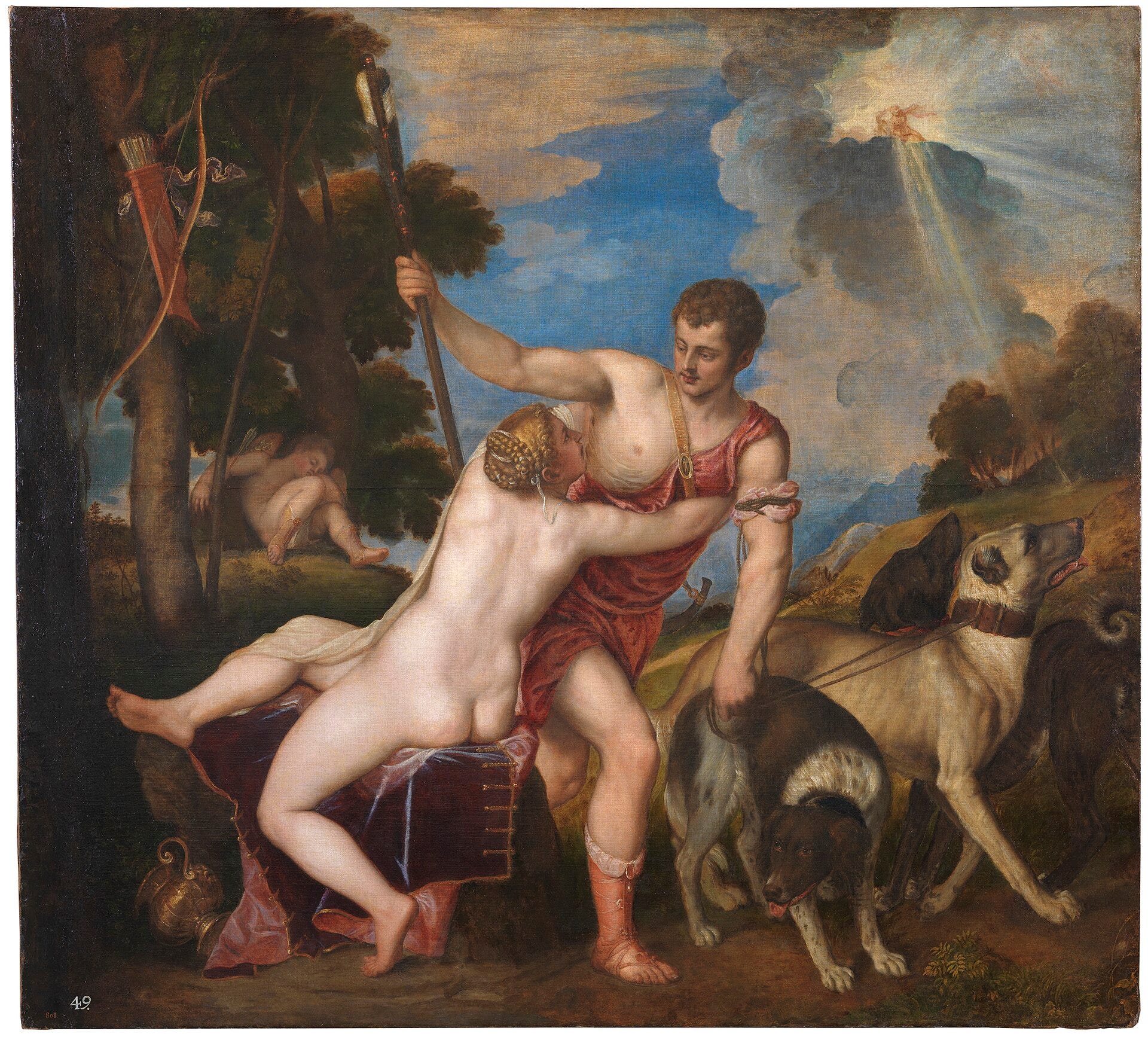
The Feeling of Love
The Ancients described the moment one falls in love using a cliche we are yet to shake off — the lover has been struck by cupid’s arrow. The Latin love elegists, however, develop the metaphor into a whole vocabulary of exquisite violence. The lover has been vanquished in battle, captured in war, trodden under the foot of love.
“Cynthia captured me first off with her eyes,
rendered me wretched, who’d been untouched by want till then.
Then Love hurled down my gaze of steadfast pride
and crushed my head beneath his thrust down feet.”
- Propertius 1.1
The pain of the elegist’s love doesn’t abate after the initial sting. Instead it settles into a roiling madness.
“My bed seems so hard, and my sheets won’t stay on the mattress,
and I pass through the night, such a long one, sleepless,
and the drained bones of my tossing body ache.”
- Ovid, Amores, 1.2
And who’s to blame for all this torment? The object of the poet’s desire of course. And so begins a healthy and mutually fulfilling relationship.
Or perhaps not.
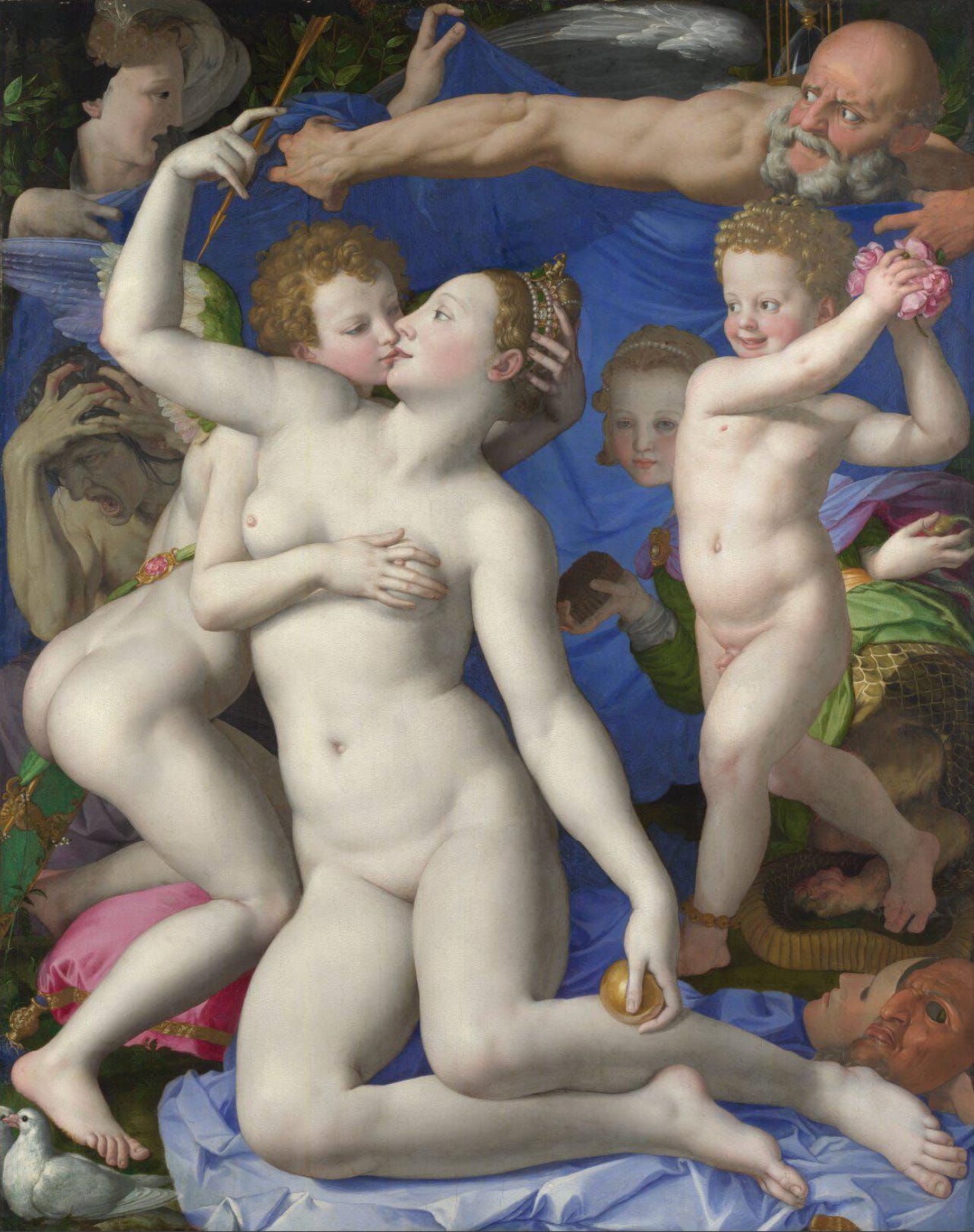
The Game of Love
The imagery of vanquishment and wounding sets up a sense of love as a contest — and a violent one at that — that does not end with the poet’s initial “capture”.
At the start of book three of his Art of Love — the first volume of his tongue-in-cheek erotic manual addressed to women — Ovid promises to “arm” his female readers just as, in books one and two, he has armed the men. They’ll need it, he says.
“It is unjust for armed men to charge against bare women,
Men, a victory so snatched would be a shameful thing.”
- Ovid, Ars Amatoria, 3.1-6.
The idea that love is emotional conflict suffuses every stage of the poetic relationship. In this world, even sex is war.
“If, with her clothes torn off, she wrestles naked with me
then truly we two write long Iliads…
We whirl our battles in the narrow bed.”
- Propertius, 2.1
And because this is a war, any stratagem, however destructive, is justifiable. Propertius and Tibullus beg their lovers (almost always described as married in Latin elegy) to deceive their husbands.
“Venus teaches how to creep secretly from the soft bed,
how to place the foot so as to make no sound,
how in the husband’s presence to swap speaking nods,
and conceal seductive words in sedate code.”
- Tibullus, 1.2
And in the Ars Amatoria Ovid instructs his pupils in the arts of deceit and manipulation as well as flirtation. Mingle gifts and letters, he suggests, with fake tears; make promises without thought to their fulfilment; pursue them, then make them jealous. At one time, he said, love had been a natural thing, but these days it required games of strategy.
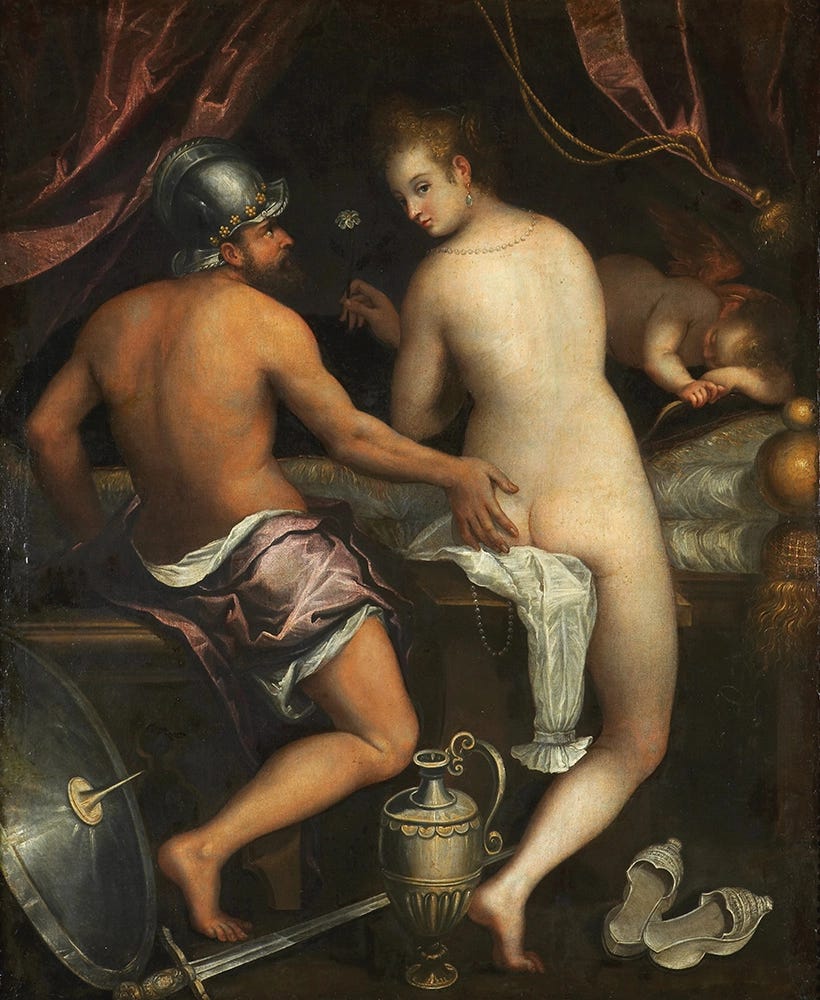
There could be terrible consequences to this. Jealousy, in particular, plagues the love elegists, who universally describe their lovers as unfaithful.
“So the nets are spread for me; now secretly sly Delia
warms I know not who in the silence of the night.
She denies it on oath, but it is hard to believe her…
It was I, wretched, who taught her how to trick her set-on guards
and now I - oh god - am sunk by my own art.”
- Tibullus, 1.6
But there is also much to be won. There is the heady thrill of flirtation — especially a forbidden one. The whispers, letters, secret signs, the words traced on tables in wine. The feeling of leaning a little against your lover at dinner, of drinking from the same cup and placing your lips on the spot their lips have left.
And then there is the sex. Ovid describes an afternoon spent with his lover in a soft-lit room.
“It was sultry, and past the midhour of the day
I laid my limbs to rest in the middle of my bed…
Corinna comes, draped in a tied-round gown,
combed-out hair covering her pale white neck…
She stood before my eyes, her robe laid off…
I pressed her naked body to my bare one.
What else need be said? Tired, we both rested.
May I see many more middays like this.”
- Ovid, Amores, 1.5
But perhaps above all, what these poetic affairs offered was the promise of a romanticised, intensified life. In the right mood, Latin poets made their lovers into goddesses.
“It is not Calliope, not Apollo that make me sing:
my girl herself makes my art.
If I saw her burn in glittering Coan silks,
a whole volume would come from that Coan gown.
If I saw stray hairs misbehaving on her brow,
she joys to walk off proud with celebrated hair.”
- Propertius, 2.1
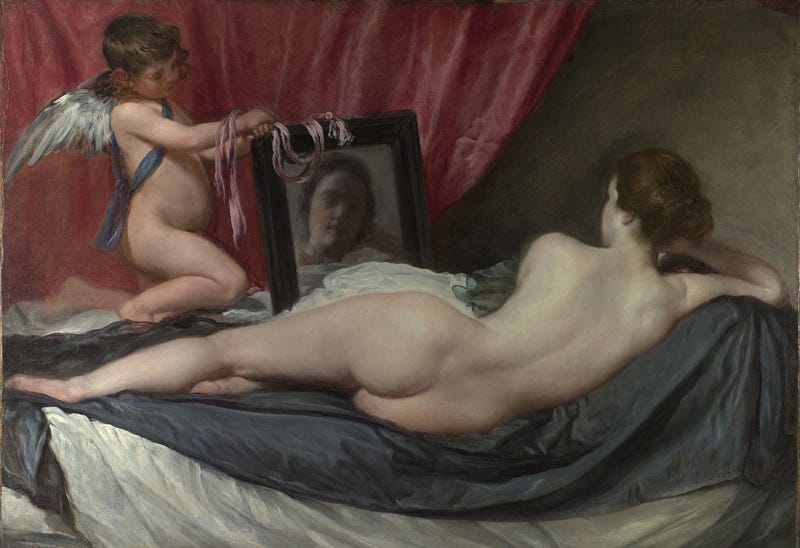
The Ends of Love
There were transitory prizes then. But the game, in Latin love poetry, is ultimately unwinnable. The poet, devoted to the point of masochism, wants to possess his beloved completely and exclusively — and his beloved is always unfaithful or out of reach.
The relationships of Latin love elegy, riven with obstacles and jealousies, are always on and off. Short successions of poems cycle through desire, betrayal, schism, and joyful reconciliation.
Catullus, a progenitor of the genre, sums up the horrible excitement of these conflicts more simply and sincerely than the writers who come after him.
“I hate and I love. Perhaps you wonder why I do it.
I don’t know, but I feel it and I am racked.”
- Catullus, 85.
Such destructive love, we’re told, is something to be avoided. “I warn you,” Propertius addresses his reader, “flee this torment”. Ovid writes a whole book, the Remedia Amoris, on love’s “cures”.
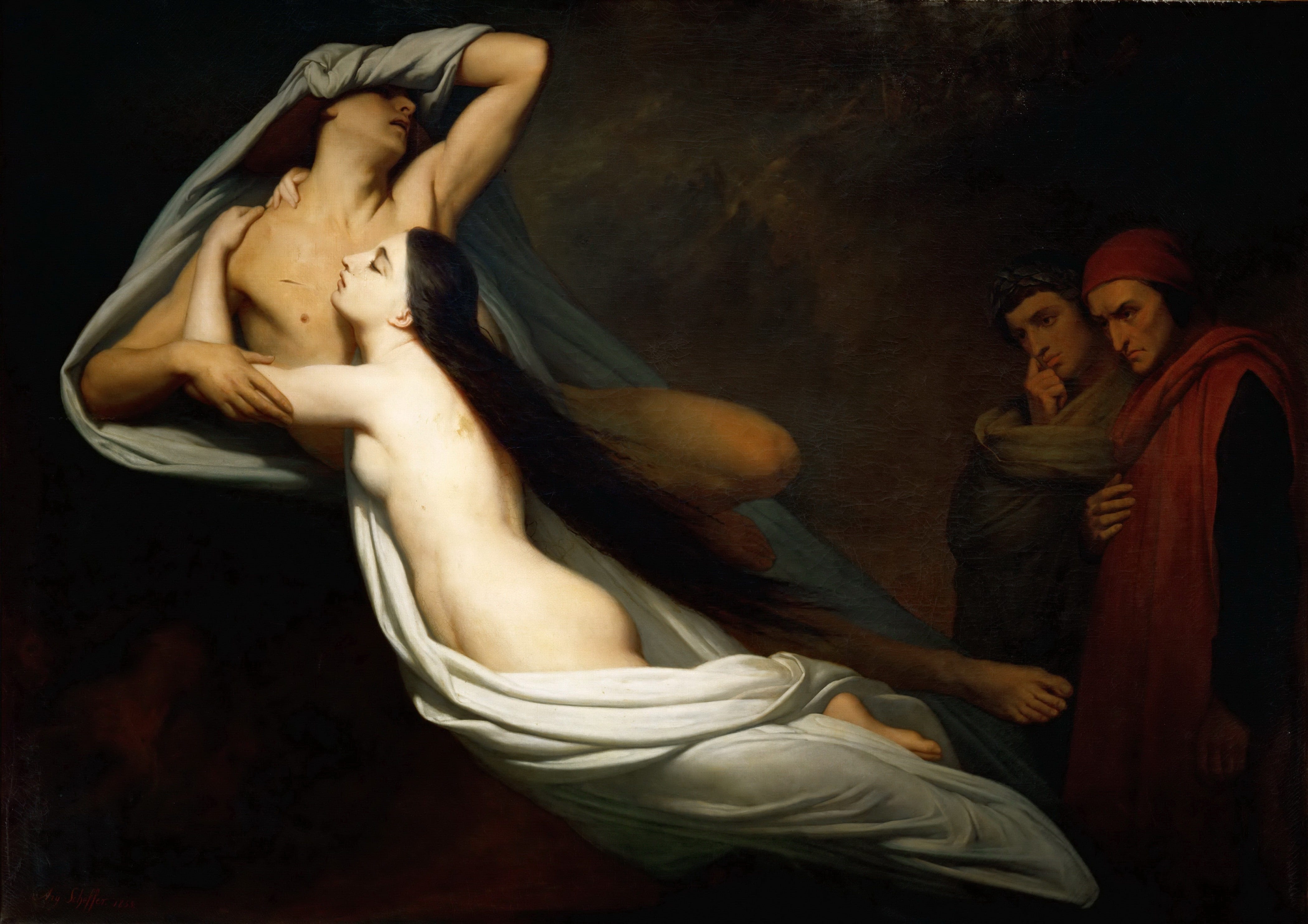
But, of course, love isn’t really to be run from. Not even in the world of elegy. In these poems jealousy is proof of love and pain is proof of life. These men are proud to show us just how much they’re suffering — they’re writing whole books about it.
“It is glory to die in love: another glory
if we can love but once…
Because one woman has pillaged my senses
My funeral procession will set forth from her door.”
- Propertius, 2.1
Ovid — as much a social satirist as he was a love elegist — lays bare the hypocrisy of these tropes even as he helps to fashion them. After many couplets spent wishing his rivals dead, Ovid suddenly admits that they play a necessary role in his fascinations.
“If you, fool, feel no urge to guard your girl,
still stand guard for me, that I might crave her more.
What is licit always starts to cloy for me
The banned alone inflames so bitterly.”
- Ovid, Amores, 2.19
It is the intensity of the elegist’s jealousy, of his constant vacillation between hope and despair, the variety of rupture and reconciliation, that sustains the initial madness of Latin love poetry. Latin love poetry can have no “happy ending”. The longing, the pain, the impermanence of satisfaction — these are ends in themselves.
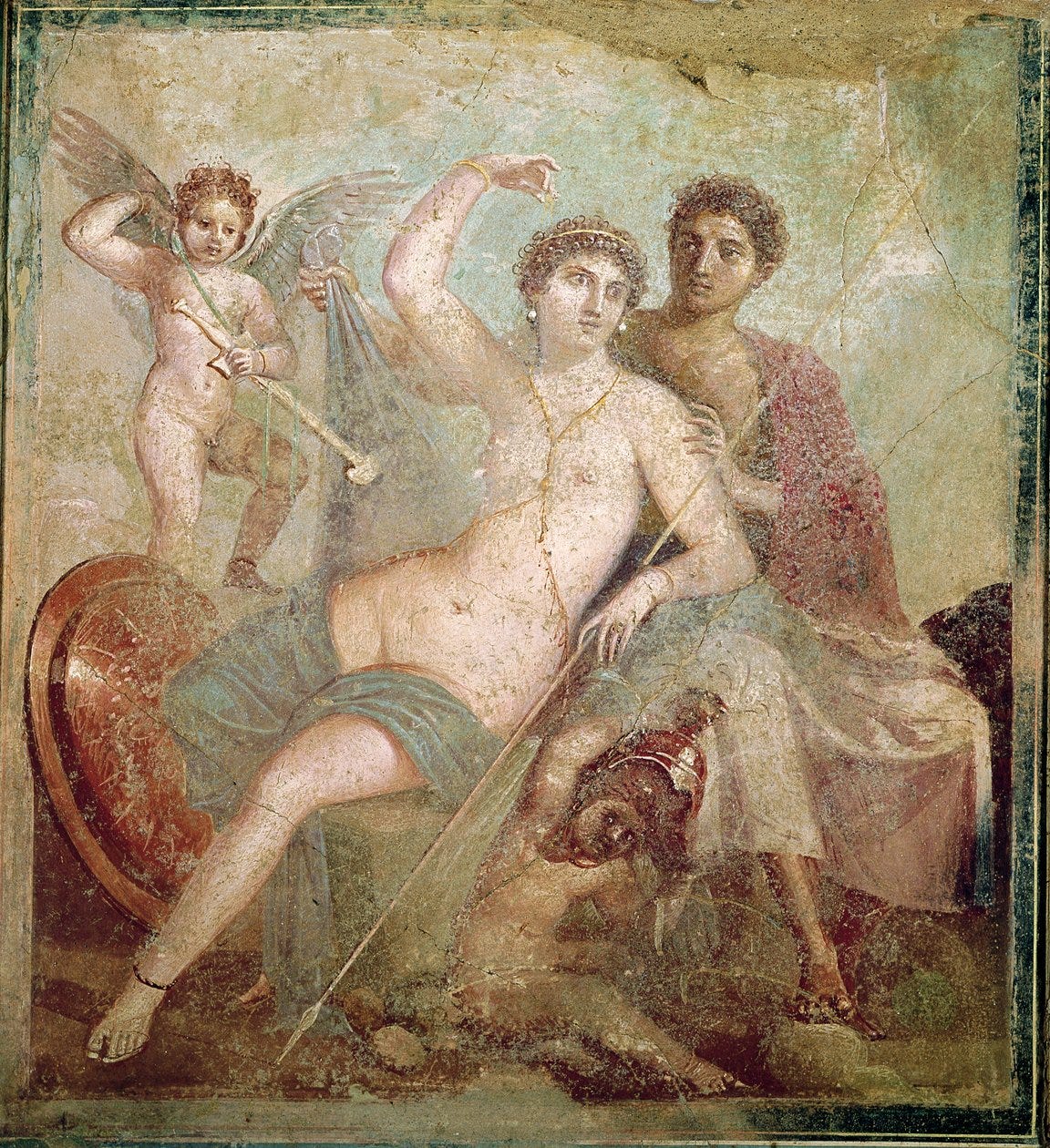
These poets — Catullus, Propertius, Tibullus, Ovid — came to be acknowledged as part of a golden age in Latin literature. As such, their work was copied and recopied and preserved in a manuscript tradition ready for widespread rediscovery in the Renaissance.
From the 16th century on, they were central to the shaping of Romantic writing in English. Christopher Marlowe translated Ovid directly, while Ben Johnson, John Donne, and John Milton all wrote takes on Latin love elegy. It’s through them that the Roman poets worked themselves into our Romantic imagination.
So, next time you find yourself tempted to play toxic games, to romanticise jealousy, to go back to your worst ex, or to wallow in unrequited longing, don’t go to therapy, just blame the Romans.
Comments
Nothing yet. Say the first thing.
Sign in to join the conversation.