
Tuesday Evening on Earth. Summer on social media has a rhythm of its own; a less algorithmic and more heuristic period, at least for the luckiest among us.
Every summer, social media users who have barely expressed themselves all year seem to wake up. As if they had finally recovered some cognitive availability. They post a beach story, a sunset, the sea. Nothing extraordinary at first glance.
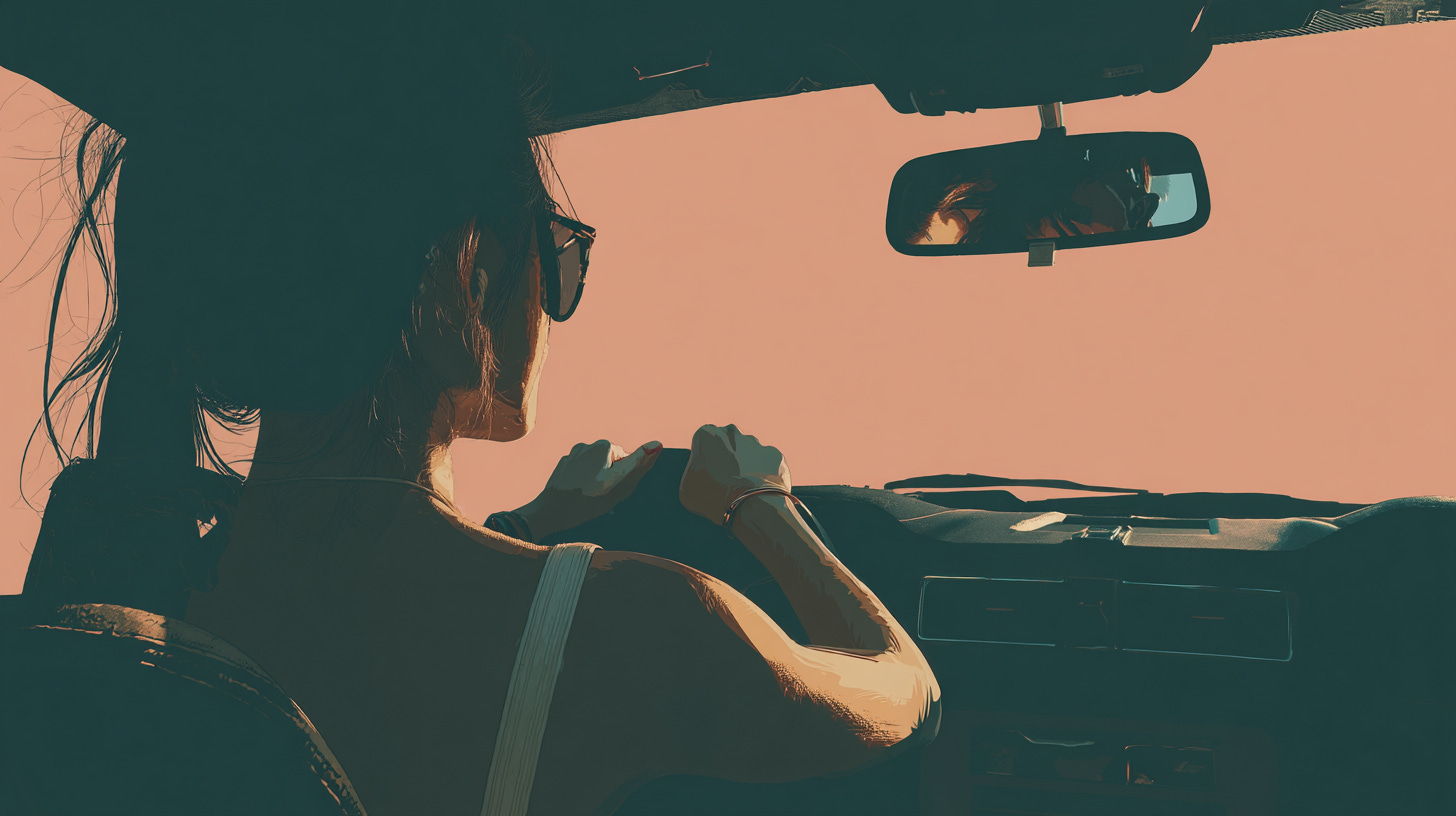
And yet these ‘Summer-Shift Posters’ remind us that real social time still has a hold over digital time.
Universal validation, zero risk
In Internet culture, we often refer to the 1-9-90 rule: 1% of creators, 9% of occasional contributors, 90% of silent spectators, the lurkers.
Posting all year round requires a staging effort. You have to accept being seen, and often judged.
This effort is all the more visible now that social media has entered a phase of saturation. Time spent no longer grows mechanically everywhere. Users are still there, but often differently: more passive, more cautious, more silent. They watch, save, share privately, but interact less publicly.
In summer, we witness a new economy of presence, where lurkers temporarily allow themselves to shift over to the contributor side. Because summer offers content that is already validated in advance. A sunset does not ask for an opinion. A turquoise sea polarizes no one. These images are universally readable. The content is almost risk-free, because it does not require strong social validation. Yet it remains culturally powerful, because it touches a shared emotional state.
Strategist Natalie Podaima sheds light on this phenomenon through her idea of “low-demand media” in The principle: attention is not binary, but made up of hundreds of nuances and contexts. We are not simply focused or distracted, present or absent. Some forms of content may seem unsophisticated, but they accompany our lives, like a refrain. They do not demand intense interpretation; they settle into a rhythm, a ritual, an atmosphere.
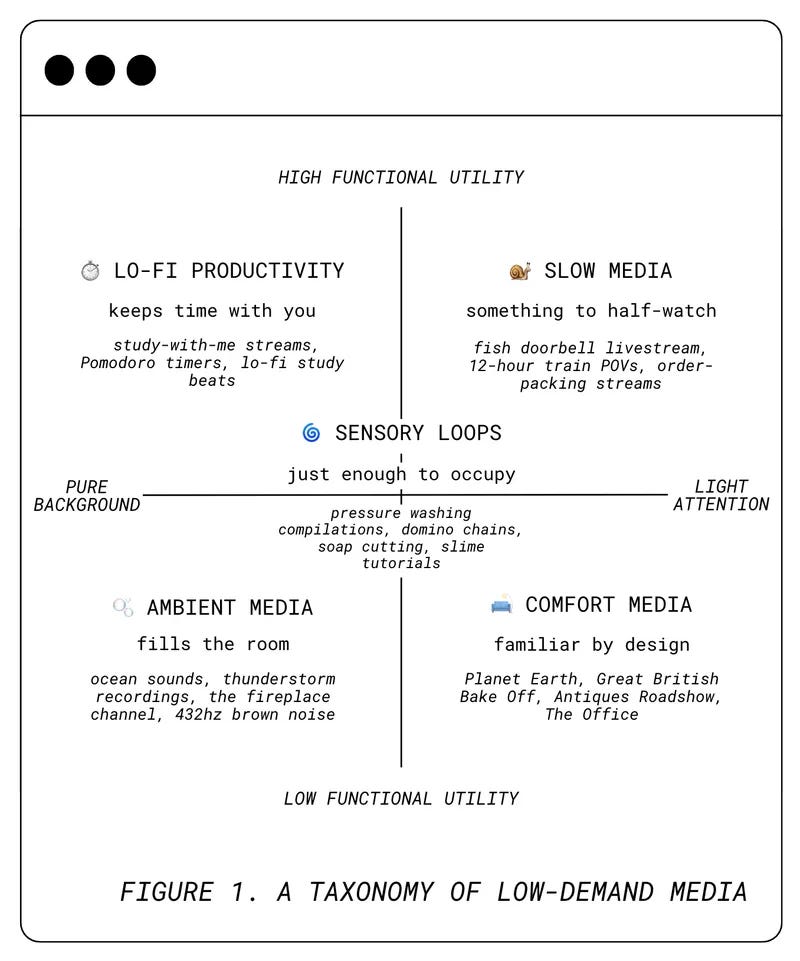
These low-demand media benefit from summer: the routine of work and everyday life breaks open, making space for a time that is, in theory, more idle. The psychological threshold for posting is therefore lowered in summer, because the gesture feels less performative and more consensual. It allows summer-shift posters to signal that they are still there, to enter a more universal social time without having to expose themselves too much. Exposure becomes, paradoxically, more collective. For them, these contents play a phatic role: they mainly serve to bring digital presence back into circulation, to check that the social bond still exists. Liveness, in short.
Even in its more pop and political expressions, this logic of softening is at work. This is probably the genius of Charli XCX with Brat Summer: she turned digital summer into a participation protocol. A word, a color, an attitude, a soundtrack: little enough for anyone to step into it, recognizable enough to produce an immediate sense of belonging. Brat Summer did not merely name an aesthetic. It gave people a light social costume, almost without instructions. An ephemeral, available, low-intensity identity that was nevertheless highly impactful, while belonging to a clear paracommunity.
In short, summer works as a great softening of speech. For a few weeks, posting no longer necessarily means producing content, but inscribing oneself into a shared social timeline.
Summer therapy
But this summer speech is not only a matter of content; it is also dictated by a profound modification of our biological and aesthetic rhythms. This is where “summer therapy” comes in.
Summer-shift posters also belong to particular aesthetics and states of mind, first of all because of a temporal shift. In summer, sunset happens later. And engagement data shows that summer audience hours become more fragmented while concentrating heavily in the late evening. The moment when people see the sunset corresponds exactly to the moment when they open their apps to decompress, especially if they are travelling or spending more of the day outdoors.
This is where the logic of cinematic therapy takes hold on TikTok: turning an ordinary scene into a film sequence. A car ride, a bedroom lit by golden hour, a walk through the city, a table still full after dinner. Everyday life becomes montage. Life watches itself with a soundtrack.
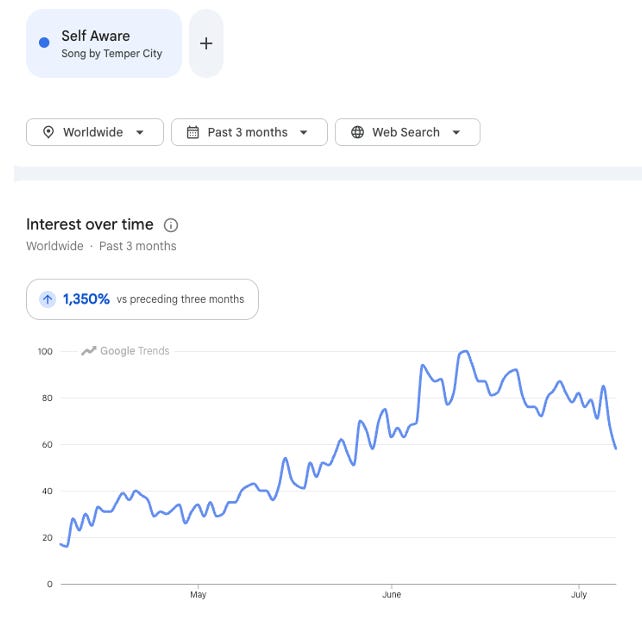
The success of sounds such as Self Aware by Temper City says something about this aesthetic: a light melancholy, a feeling of suspension, the impression of being both inside your life and watching it from the outside.
A form of identification with an atmosphere marked by both melancholy and weightlessness, specific to the summer of adolescence.
No wonder, then, that teenagers and young adults share highly cinematic introspective content every summer: night drives, sunsets filmed from a car, silhouettes from behind, blurry friends, existential text overlays. These videos do not tell an event. They tell a state: the desire for one’s life to finally look like a scene from a movie. Not out of pure narcissism, but because summer sometimes gives the strange feeling of being closer to oneself. As if, for a few weeks, everyday life agreed to become a little more dreamlike.

 Tiktok failed to load.
Enable 3rd party cookies or use another browser
A certain reality takes back control of the digital
Summer-shift posters are interesting because they contradict an overly simple idea: that digital time is entirely governed by platforms. Some researchers had already demonstrated this differently by proving a correlation between extreme weather conditions and social media activity. Weather partly dictates our algorithmic moods: studies have shown that people tweet more aggressively during extreme heatwaves, but share more positive and contemplative content when the climate softens during summer evenings.
Of course, algorithms organize visibility. Of course, formats dictate part of our behavior. But summer reminds us that our digital presences are still indexed to very concrete phenomena: light, holidays, mental availability, bodies outside, late conversations, landscapes.

This return to physicality creates a rare synchronicity. For the length of a summer, the digital world starts breathing again at the same rhythm as the physical world, recreating a shared narrative outside the anxious news cycles of the year.
Digital summer is therefore not merely an individual parenthesis; it promises a genuine collective benefit by encouraging open-mindedness, the diversity of encounters, and the creativity of tomorrow’s society.
On one condition, of course: having access to that summer.
Because not all summers are equal. There are those who travel and those who stay. Those who can disconnect and those who keep working. Those who have landscapes to post and those for whom heat is first and foremost fatigue, constraint, sometimes danger.
This may be the political limit of summer-shift posters: they show that reality is taking back control of the digital, but also that this reality is never distributed equally.
Even lightness has material conditions.
If you’d like to support my work, feel free to forward this letter to someone who might enjoy it. Every new subscriber means a lot. You can also read me in French.
To go further:
The study of the week: Semrush’s AI Visibility Index
Semrush has just published a study comparing the different sources used by various AI systems, such as ChatGPT, Gemini, and others. Among its many conclusions: each AI has its preferred sources, over-indexing on certain platforms. Gemini overvalues YouTube, while ChatGPT relies heavily on Reddit. The real strategic battleground is having databases that cannot be easily absorbed and then replicated by AI systems — in other words, being an “information-maker.” Finally, maintaining as much coherence as possible across one’s different digital presences helps content rise higher in results.
Amazing links
MØRNING Presents: Hardware (2026) ( in Burn After Reading)
Background brands (Protein)
Parafaith (Dazed Studio)
If you want to support me, feel free to share this newsletter, like, comment, or keep sending me emails: these notifications are a joy.
Comments
Nothing yet. Say the first thing.
Sign in to join the conversation.