
most founders don’t think about taxes.
not because they don’t care.
but because, in the early days, taxes feel like a solved problem.
you make money → you pay tax → done.
simple.
but this is only true if your business stays local.
and the internet doesn’t allow businesses to stay local anymore.
you launch something small.
a shopify store.
a saas product.
maybe an online course.
first few customers are from your city.
then another state.
then another country.
you feel like things are working.
revenue is growing.
life is good.
but something else is happening in the background.
something you don’t see.
something nobody tells you.
you’re slowly entering multiple tax systems at the same time.
we’ve been told this simple story:
“you pay tax where your business is based”
that story is outdated.
today, you can owe taxes in places:
where you don’t live
where you don’t work
where you’ve never even been
and the trigger?
selling too much to people in that place.
not opening an office.
not hiring employees.
not registering a company.
just… selling.
in 2018, something subtle happened.
not a big headline.
not something founders talk about.
but it completely changed how taxes work online.
governments realised something obvious:
“if businesses can sell everywhere… we should be able to tax them everywhere.”
so they introduced rules where:
if you cross a certain number of sales in a region…
you now owe taxes there.
this is where things start getting weird.
because “selling successfully” becomes the same thing as “creating tax obligations.”
growth = complexity.
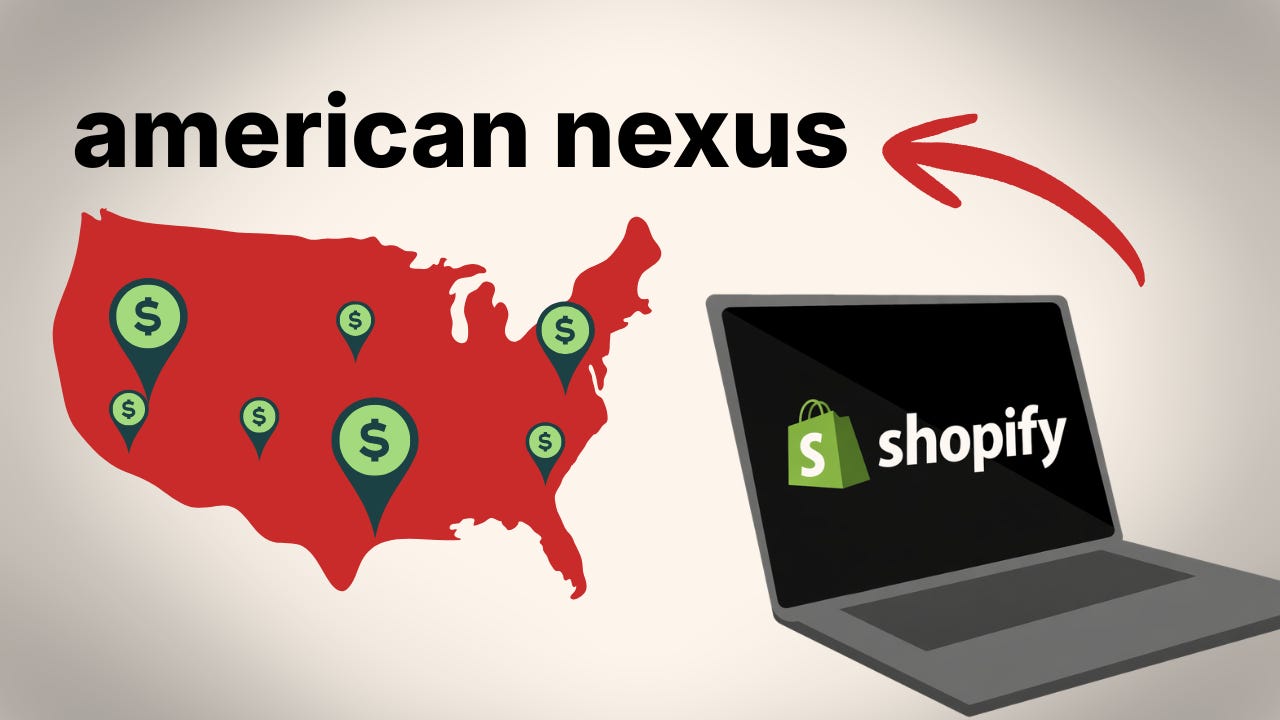
if you want to see how broken this system is, look at the US.
most countries have one tax system.
the US has… thousands.
not exaggerating.
states have taxes.
cities have taxes.
counties have taxes.
sometimes even smaller districts.
the same product can be taxed differently depending on:
the state
the city
the zip code
imagine building a global company…
and needing to understand 12,000+ variations of tax rules.
that’s not a finance problem.
that’s a systems problem.
a lot of people think:
“i sell software / courses / digital stuff… this probably doesn’t apply to me”
wrong.
different places treat digital products differently.
some tax them.
some don’t.
some partially do.
there is no universal rule.
so two founders selling the same product can have completely different obligations…
just because their customers live in different places.
this system was never designed for the internet.
it was designed for a world where:
businesses were physical
customers were local
governments had clear boundaries
the internet broke all three.
but instead of redesigning the system…
we just layered new rules on top of old ones.
so now we have:
a global economy running on local tax systems.
and founders are the ones stuck in between.
this isn’t just about paying tax.
it’s about not knowing what you owe.
and that’s dangerous.
because in many cases:
you’re expected to collect tax
if you don’t, you still owe it
and you find out later
this is how “small oversight” turns into:
unexpected liabilities
compliance issues
or worse problems during acquisition or scaling
and the craziest part?
most founders don’t even realize this is happening.
whenever something becomes this complex…
a new layer of infrastructure appears.
we saw it with payments.
before stripe, accepting payments globally was painful.
after stripe, it became a few lines of code.
the same thing is now starting to happen with taxes.
tools are emerging that:
track where your customers are
detect where you owe taxes
automate compliance
one example is Kintsugi.
not as a “tax tool”
but as infrastructure for something that has become too complex to manage manually.
this is part of a larger pattern.
the internet is global.
but regulation is still local.
and instead of systems adapting to the internet…
the internet is being forced to adapt to systems.
this creates friction.
and where there is friction…
there is opportunity.
if you’re building a global business, this is not optional knowledge.
you don’t need to become a tax expert.
but you do need to understand:
the moment your business starts scaling globally…
you’re entering systems that were never designed for you.
and ignoring that doesn’t make it go away.
it just delays the moment you find out.
if you’re already selling online, especially internationally…
it’s worth checking where you might have exposure.
you can do that here: https://www.trykintsugi.com
not because you need to “fix everything immediately”
but because awareness is the real edge here.
the internet made it possible for anyone to build a global business.
but it also quietly made every business… a global compliance problem.
most people haven’t caught up to that yet.
the ones who do early will have a massive advantage.
Comments
Nothing yet. Say the first thing.
Sign in to join the conversation.