
Thanks for reading gotham girl! This is a free post, so please share it on social media; just be sure to include a link. Sincerest thanks to every single paid subscriber. You are keeping the lights on around here, and I can’t thank you enough for it.
Okay, because I missed Analog Fall entirely, I decided to take a proper analog break between Christmas and New Year’s.
A real one.
A sincere one.
An Analog Betwixtmas™.
Mostly, this did not work.
At 5:00 a.m. on Christmas morning, I received a panicked author text informing me that our distribution in France was down.
For the record, here (again) is my early-morning stance on the French: (Word of Warning: it’s loud and annoying! Cut to: “Yes! Yes! I win, Frenchies!”)
Just kidding. I love France. I adore the French.
I mean—hello? A country with over 400 cheeses?
What’s not to love?
And the sheer number of biscuit-colored houses alone should qualify the entire nation for a cultural immunity passport.
There is a phrase in French that has become essential to my survival:
C’est un processus.
It translates roughly to: It’s a process.
But spiritually, it means: This is happening, no one is in charge, and we must all make peace with that.
To say it properly, you must:
Let your eyeballs roll wildly up into your brain
Shrug with your entire being
Smile in a way that suggests you’ve already surrendered
This is the correct response to angry French people on Christmas morning.
And say what you will about AI, but as long as authors remain emotionally complex and operationally needy, my job is safe!
Every day of my “break” featured a fresh non-crisis-crisis:
Some regulatory signing thingy, some grown-up company rite of passage, some thrilling new adult-business responsibility like 401(k)s. We’re transitioning our ebook distribution, printing, and logistics—shedding skin because soon, we run.
Still. I did something radical.
I put an OOO on ALL my emails—even to my family.
My first ever.
I watched actual movies instead of compulsively self-soothing with BritBox and old episodes of Lucy Worsley Investigates on GBH, which is my usual coping mechanism when the world feels… autocratic.
Yes, my nervous system has been so pummeled this year that I now require the BBC to whisper the news to me if I want to know things.
I loved One Battle After Another. Leo was at his wincing, sheepish best. Most of all, the camera work was extraordinary—freewheeling, playful misery. Boys still indulge car chases for far too long (I say this from my former life as a commercial director who loves chasing things on foot with a Steadicam), but motion—true motion—never goes straight. It’s full of mischief. It flays. It arcs. It misbehaves. In this, you could tell they were having so much fun.
Here’s a decent supercut:
I also finally watched Weapons, which cracked something deeply Gen X in me—kids running like missiles through sprinklers, arms rigid, imagining flight. That exact childhood physics is imprinted on me. Like Stomp Rockets. It was the way cartoon superheroes and bad guys always flew. The way all our backyard Super 8 kidhood movies played out.
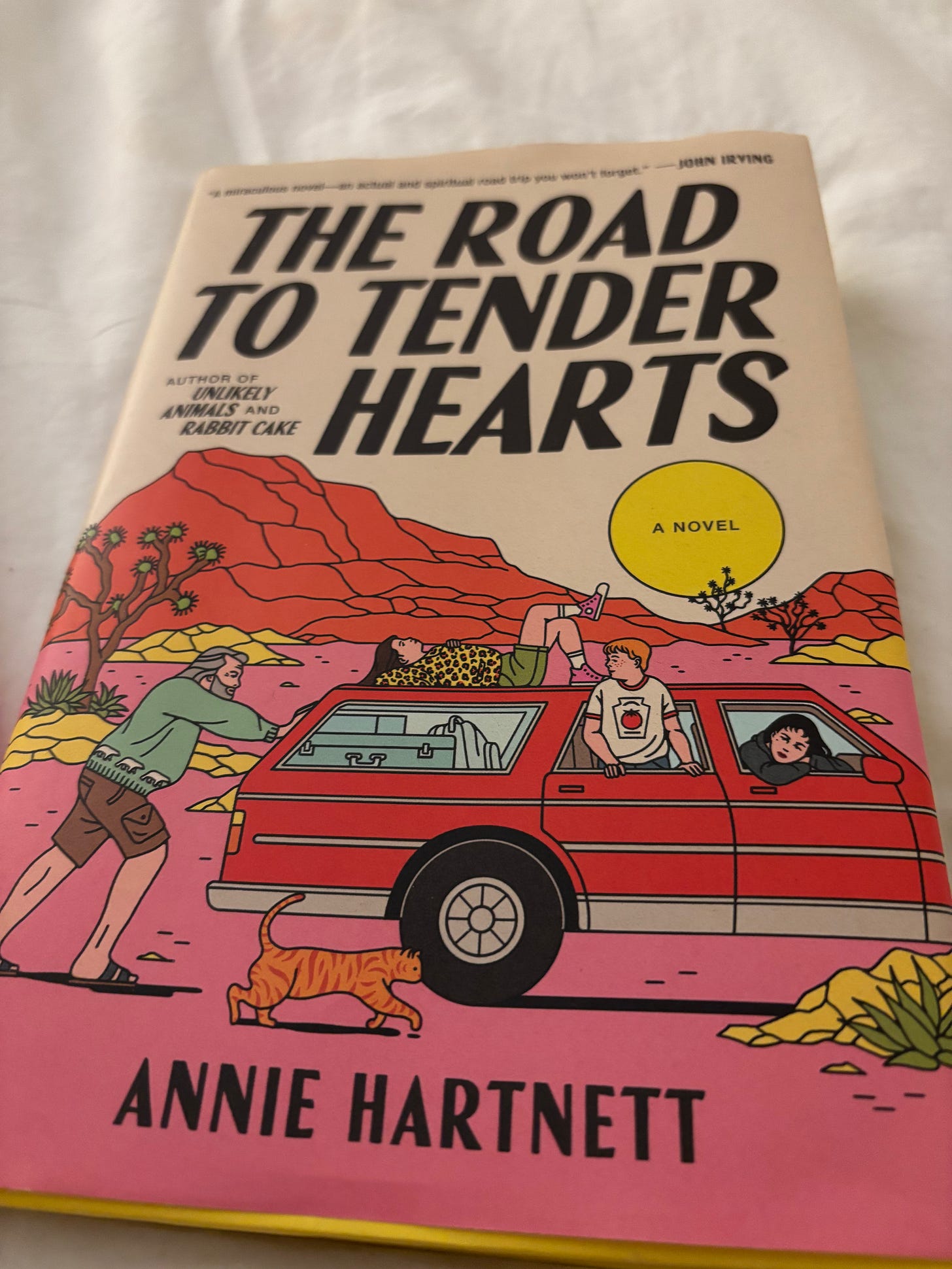
Next, I read a real paper book by a fabulous author Annie Hartnett we don’t publish (tragically), The Road to Tender Hearts. Her whole backlist is great. There is a cat named Pancakes who is (spoiler alert) an agent of death! I love this. Everyone gets to f*ck up repeatedly and with such abandon. There is so much forgiveness. It’s almost holy. You’d think Josh O’Connor was going to waltz in from Knives Out: Wake Up Dead Man (another film I watched) and absolve everyone! I missed them ALL at the end—I just wanted to keep hanging out with these lovely randos from Pondville, MA.
After that, what could I do? I cleaned my house myself. This made me feel righteous.
I purged drawers. And boxes.
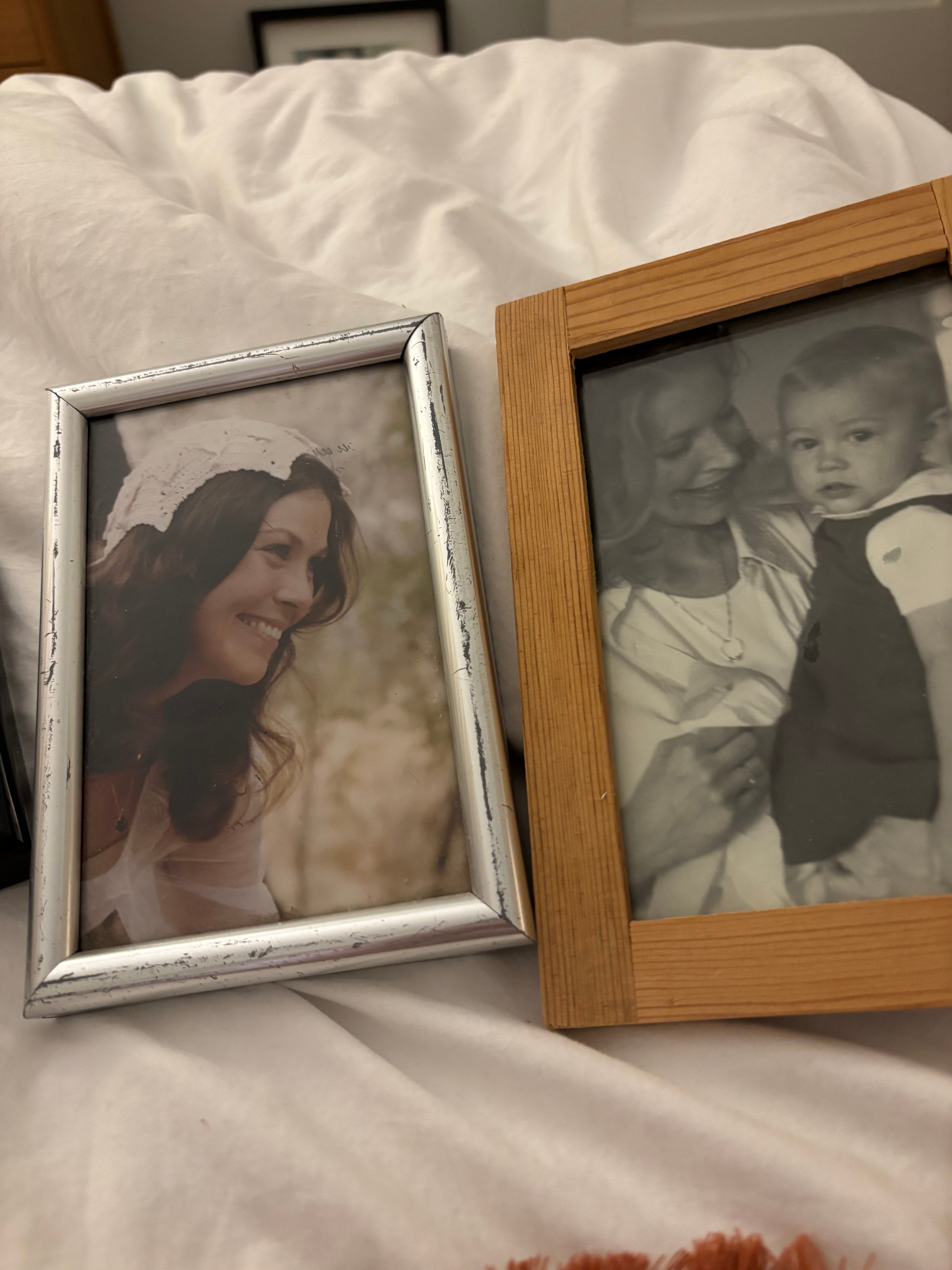
I unpacked precious things from the move.
I am still a walking dust bunny. In truth, I shed so much hair these days, cats choke at the sight of me. Only when the pro squad comes in will it be truly Alisa-clean.
And now—back at my desk, trying to finish this book—the same thing happens that always happens.
The moment I sit down, life starts talking to me.
Which brings me to our comedy lesson of the week.
Or: Comedy Begins With Paying Uncomfortable Attention
Core Principle
Funny writers don’t invent humour.
They notice it—and then refuse to look away.
Here is the first rule of comedy, handed down through generations of women who knew better than to waste a good observation:
Tell the truth before it’s polite.
The funniest lines are almost always the ones we hesitate to say.
The ones we soften.
The ones we explain away with, Well, maybe it’s just me…
(It is never just you.)
This is where Nora Ephron made her living—by stating the obvious thing everyone else was desperately pretending not to see. She didn’t shout it. She didn’t underline it. She just set it down gently on the table and let it glow. The reader laughed because the reader thought, Oh, thank God, someone noticed.
And this is where Carol Burnett did something equally radical with her body and face: she stayed in the moment a beat longer than was comfortable. She let the truth land. Then—only then—came the laugh.
Comedy lives in that beat.
The moment of recognition.
The shared understanding that this is absurd and we are all colluding.
A small example from life—because life is endlessly generous if you’re paying attention.
We were trying to finalize a renovation plan with our handyman, Bob, in Vermont— specifically pronounced “Baab” in Vermontese. Which is already comedy.
Every time we tried to schedule projects, there was a reason no one could come. (And it wasn’t us because we were super nice and willing to pony up!) It was…
Agh, that’s deer season.
Agh, that’s bear season.
Agh, that’s squirrel season.
At a certain point, I was like:
“Baab? Is there… a work season?”
That wasn’t a joke I invented.
That was simply the moment I stopped politely nodding and allowed the truth to finish its sentence.
That’s the muscle you’re building here.
Another time—years ago—I went with my college boyfriend’s family to a very formal Rosh Hashanah celebration on the Upper West Side. They brought out the apples and honey and placed them right in the center of the table. I squinted. And then I saw it.
A giant pube, glistening atop the center apple in the candlelight.
I’m sure my face dropped—or did something equally unhinged (HOLY CATS!)—because Sam (my then-beau) kicked me hard under the table. And immediately, my very-Larry David brain kicked in, already negotiating with reality: Okay. So. Is this a test? Like, spiritually? Do I eat the pube apple? What’s the etiquette here? I mean, even if it’s sacred, surely there’s a workaround. Can I take one from the side? Is that allowed? Is there a pube exemption?
Comedy doesn’t require cleverness.
It requires extreme attention.
Specifically, attention to the thing that makes you think:
Wait, just a minute here—why is it this way, again?
Write down the thing you noticed today that made you stop and think, Why is it this way, again? Congratulations. That’s a joke.
Don’t fix it.
Don’t explain it.
Don’t make it nice.
Just notice it.
And refuse to look away.
That’s where comedy begins.

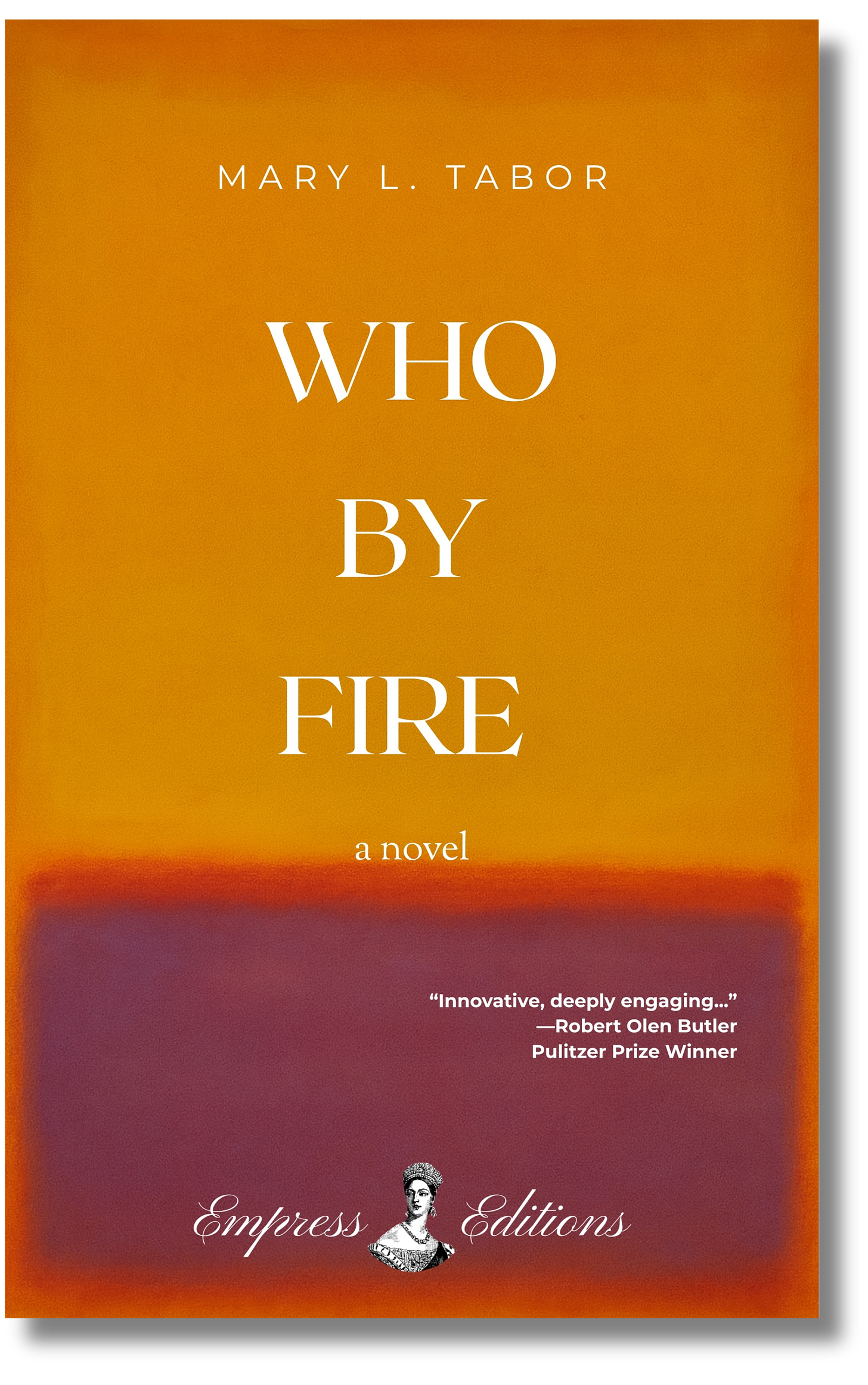
Over in the Empress Editions Universe, <Mary L. Tabor>’s Cuskian masterpiece Who By Fire went to press last week, and it is so beautiful—inside and out. The endpapers alone (by Dave McLaughlin) are beyond gorgeous.

Stay safe out there - xoxo - gotham girl
PS - I am a human typo. Amnesty appreciated.
No posts
Comments
Nothing yet. Say the first thing.
Sign in to join the conversation.