
Thanks for reading gotham girl. This is a free post, so please share it on social media; just be sure to include a link. Sincerest thanks to every single paid subscriber. You are keeping the lights on around here, and I can’t thank you enough for it.
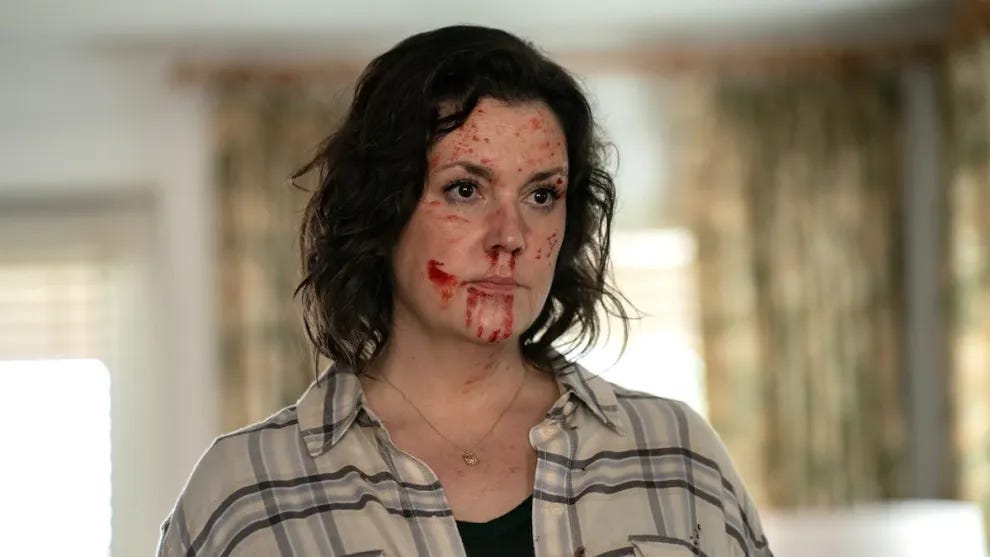
Hello, lovelies, how the hell are you?
Sorry for the radio silence—the last tour did me in and my body now manufactures its own Ozempic straight from stress! At this rate, I’ll be Jane Birkin by next Thursday.
Today’s post is about the wonderful comedy of “No!” It gives a writer so many marvelous opportunities and tools.
Of course, we begin with the OG man of “No!” My dad. The guy who reprogrammed the Alexa at his house to respond only to Star Trek commands.
His jowly mug is looming large on the big TV in the living room. We seldom use it. I have plugged in the HDMI cord so that we can all Zoom with him. This is a mistake, as he now casts an Orwellian glow on the children’s faces—like that 1984 Apple ad from the Super Bowl. I am worried for us.
I have been explaining and explaining that, due to a glitch in our building’s new AI leasing system, our apartment—basically a 700-square-foot freezer box above our Empress offices—has been leased to some new tech bros from Kalshi. So now, we need to move downstairs to a new apartment in five days. The problem is that the AI agent has just informed me that even though I’ve paid off three mortgages, one massive student loan, and have zero credit card debt, because I don’t own a car or any tangible assets, aside from a bunch of books at Hachette, I don’t actually qualify as a rentworthy human. It’s so unsettling.
I talk to a human, but she says she has to obey the AI—that it’s procedure. The only way we can have the apartment below us is with a co-signer. It’s like being back in grad school all over again, when my mother co-signed for my studio in the West Village.
“You girls need to learn to stand on your own two feet!” My dad bellows at such volume, I almost feel my hair blow back.
Suddenly, the girls are shouting:
“OUTSIDE?”
“IN THE SNOW?”
“WHAT DO YOU KNOW ABOUT STANDING ANYMORE?”
“You do know that Mom is like old now?!”
“IT’S A CITY, GRANDPA. There are nefarious types!”
I even get one in: “I WOULD SIGN FOR YOU, (you old fart)!”
And then he starts geezering—this is a loud Yosemite Sam-meets-Archie Bunker garble amid a stream of hands waving and vague, non-word protestations.
At that very moment, my phone dings. It’s for Chad—my tech bro doppelganger—the one whose texts somehow show up on my phone from all his friends—Chad has an invitation for a GALA in SF. Oooh, it looks fun. I want to go. “Put me down for a TABLE!” I text back.
Can Chad co-sign for me?
The girls are still shouting, but it’s no use. No amount of reasoning, yelling, or pleading will do. The man lives for “I told you so.”
“Girls, Grandpa is canceled,” I announce. “Pack for the Marriott!”
The youngest slams the laptop shut on my still-lecturing father. And I don’t know how we are going to live.
Suddenly, I’m feeling very Laurie Metcalfe. Don’t get me wrong, I love her as a performer, but man, she is so not my brand. I cannot rock a bowl cut, and I do not have the patience for misery that she clearly does—Hoo boy.
Let’s back up to how we got here...
I got home from a book tour. This is me for every book tour… Did you see my out with R. Eric Roberts last week, cheering in the streets with the masses over Ann Patchett’s new novel? I’m the Cambridge President of The Surprisingly Vice-Free Ann Patchett Fan Club. This is my jam, people!
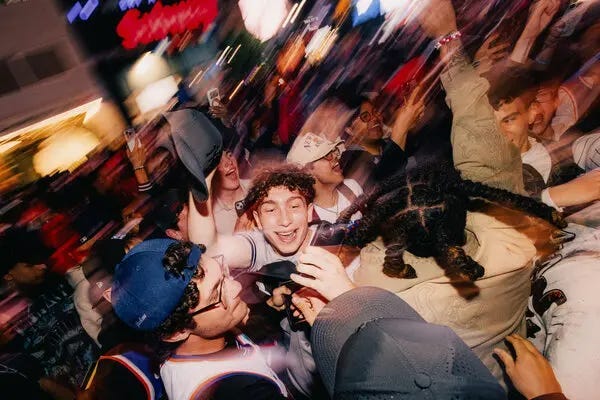
I love to celebrate a good yarn, within modest means, because we are a small press. That said, we are creative. And I have worked with some divas in my many decades, cosplaying Don Draper (in drag) to our top clients and authors, but none like the latest.
I’ll spare you the gory bits, but after spending roughly $65k to launch a book, shipping inventory everywhere (panicked), surviving pneumonia (that I mistook for allergies—whoopsy!) while enduring daily bullying about rights reversions, fielding declarations that “all the authors hate you, Alisa,” and being informed in approximately sixteen different ways by our own investors that Empress should cease to exist immediately, I have arrived at two conclusions:
No one ever liked Rupert Murdoch and he’s still in business.
AND I would not print another copy of that book… Not even on loo roll.
Not even if the paper was free.
Not even if the ghost of Virginia Woolf herself appeared in the night and demanded it with chains and Scooby-Doo paraphernalia.1
This is not because I harbor any ill will. On the contrary, I wish everyone good health, great happiness, massive literary acclaim, and a tasteful window display. It’s simply that there comes a moment when a publisher must acknowledge reality.
We championed the work. We spent money we absolutely did not have. We got completely kicked in the teeth for it, and learned one more hard lesson: certain folks can spend years asking you to believe in them, and then become deeply offended when you do it imperfectly.
And so that experience was already the worst thing ever.
Now, somewhere in between the spreadsheets, two rewrites due to editorial malfeasance, and the tortious interference complaints we’re filing, my dad unequivocally refusing to sign off on me as a human feels beyond absurd.
Even though he was there and responsible for it, for me. The irony of his “no” is made all the more robust when I realize that he was one of the early nerds to work on AI.
In a moment like this, I want to shout, “Ghaaaaagh! at the universe, But I don’t. I make a plan.
The next day, I’m househunting and coughing. No one wants to let consumptive-me live anywhere, and I don’t blame them. I sound terrible. So La Boheme! And I have no confidence at all because my interior credit rating is at a negative 400 because of my mad relations and the recent mean-girl pile-on. Still, I’m just like Hilary here, thinking, “Why on earth would anyone paint over that exposed brick? But can I please live here?” Nope.
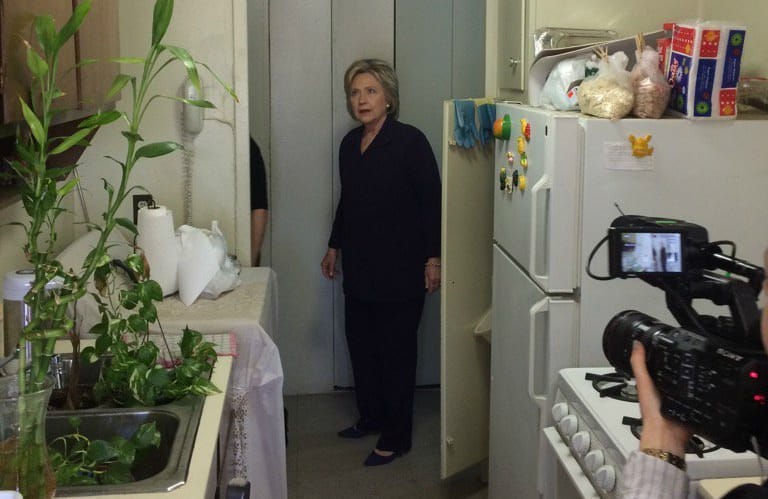
Because of course, it turns out that there are almost zero landlords or roomies who want to take on a single, midlife, self-employed, Mary Tyler Moore-ish publisher-lady with epilepsy and her two highly opinionated daughters. Which is how I end up here…
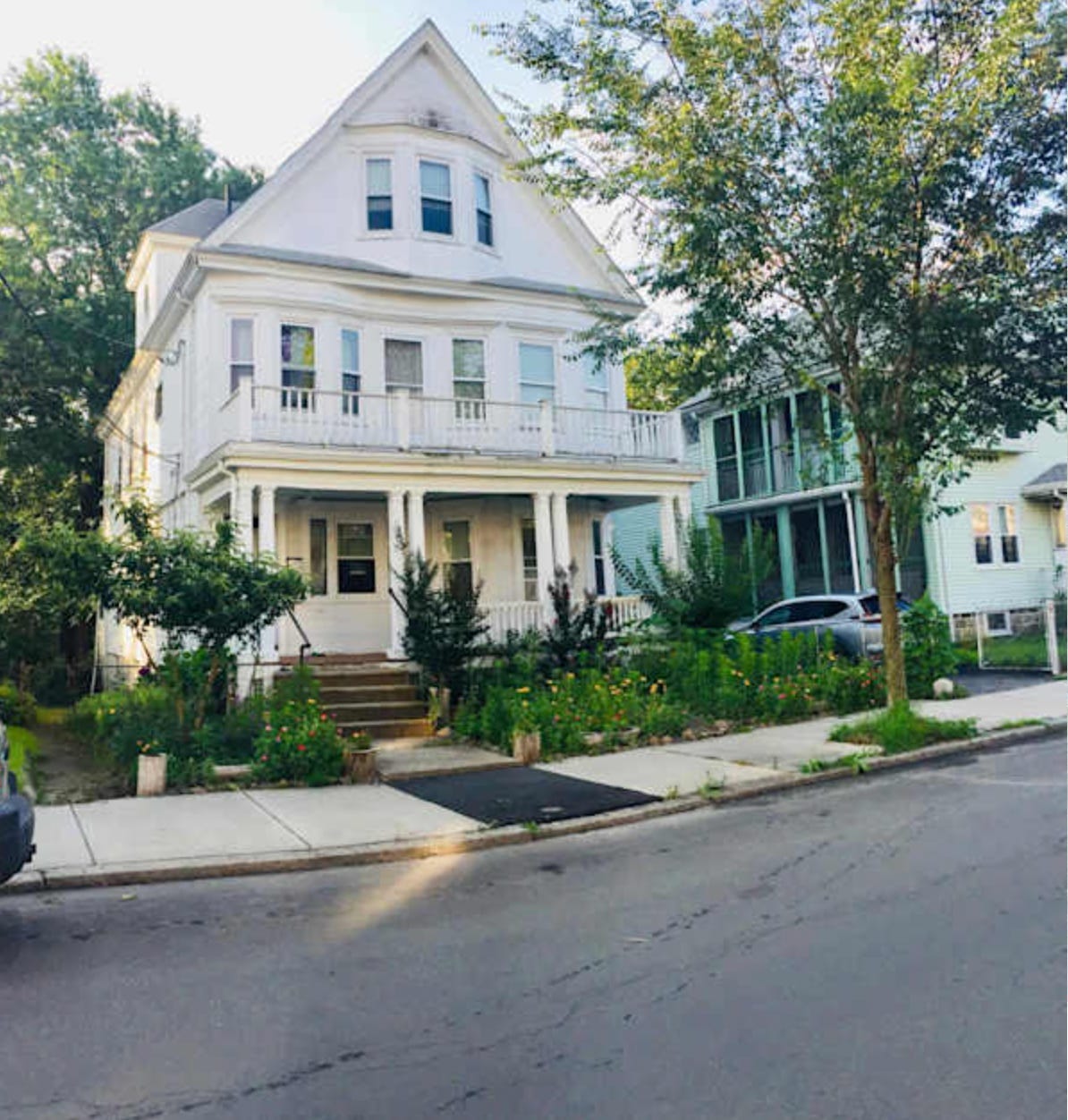
Yes, the garden looks lovely-ish, but the house itself is definitely giving some bigtime Shirley Jackson as it moans during storms! And there are creepy Widow’s Bay-style crawlspaces and strangely shaped closets with nine corners that could either be repurposed for cool reading nooks with pillows and fairy lights or used for, you know, storing the odd dead body—or ten. I managed to dig a window unit out of the attic and get it working and wouldn’t you know it… Someone must have spilled Sancerre into it because now whenever it blows—it smells exactly like a freshly chilled vintage straight from the eastern Loire. It’s so weird, but oddly pleasant?
The house also comes with a full cast of characters I will introduce in my next post. Essentially, I am Wendy to a crowd of five middle-aged Lost Boys. They all have a certain Big Lebowski charm. One of them is most definitely "Garrett from Widow’s Bay, which is adorable for about the length of the show until you realize you might need your old life back because living in Widow’s Bay is funny, but also scary. 😂
Suffice it to say, the comedic craft lessons of “no” are ripe and plenty—especially in the realm of observational comedy. Let’s break them down… There are three types of “no” in comedic writing:
The No you receive (conflict).
The No you hide (betrayal).
The No you finally learn to give (character growth).
The Simple No
With this first “no”, you have so many ways to respond to heighten a scene through shock, indignation, accusation, deflection, banter, argument, bargaining, shouting at Zoom (as we did), or twisting yourself and the situation into the shape of a “yes” by agreeing to such ridiculous terms that you are now on a crazed mission in service of the “yes.” (Example, my househunt.)
“No” is the engine of all comedic joy. There’s a reason our “absolutely not” cap sells out every week. There’s a reason Bob Newhart’s “Stop it!” sketch is perennially funny across decades. The “DealBreaker” episode of 30 Rock? It’s all based on the comedy of “no.” The setup is simple. Propose the absurd/banal/completely strange strange, and then shut it down.
A subcategory of this, is the “comedy of constraint,” where all little “no’s” coalesce into a situation nearly impossible to navigate. The Invite does this gorgeously:
Betrayal
With the comedy of betrayal, this is the sophisticated one because no one in the room says “no.” Instead they say, “Of course, I support you, sweetie.” Meanwhile... They’ve already decided no. The main mechanism for the comedy of betrayal is the reversal.
Your audience always needs to discover the truth before (or at the exact moment) your protagonist does. Why? Because now every earlier scene now gets relitigated and shifts meaning. Every smile, compliment, or reassurance was secretly a “no.” That’s betrayal, and there’s so much comedic meat in each of those micro-realizations. Widow’s Bay does a great job of this with Tom across practically all the episodes. It raises the stakes a millionfold, emotionally. Because secret no’s hurt far more than honest ones.
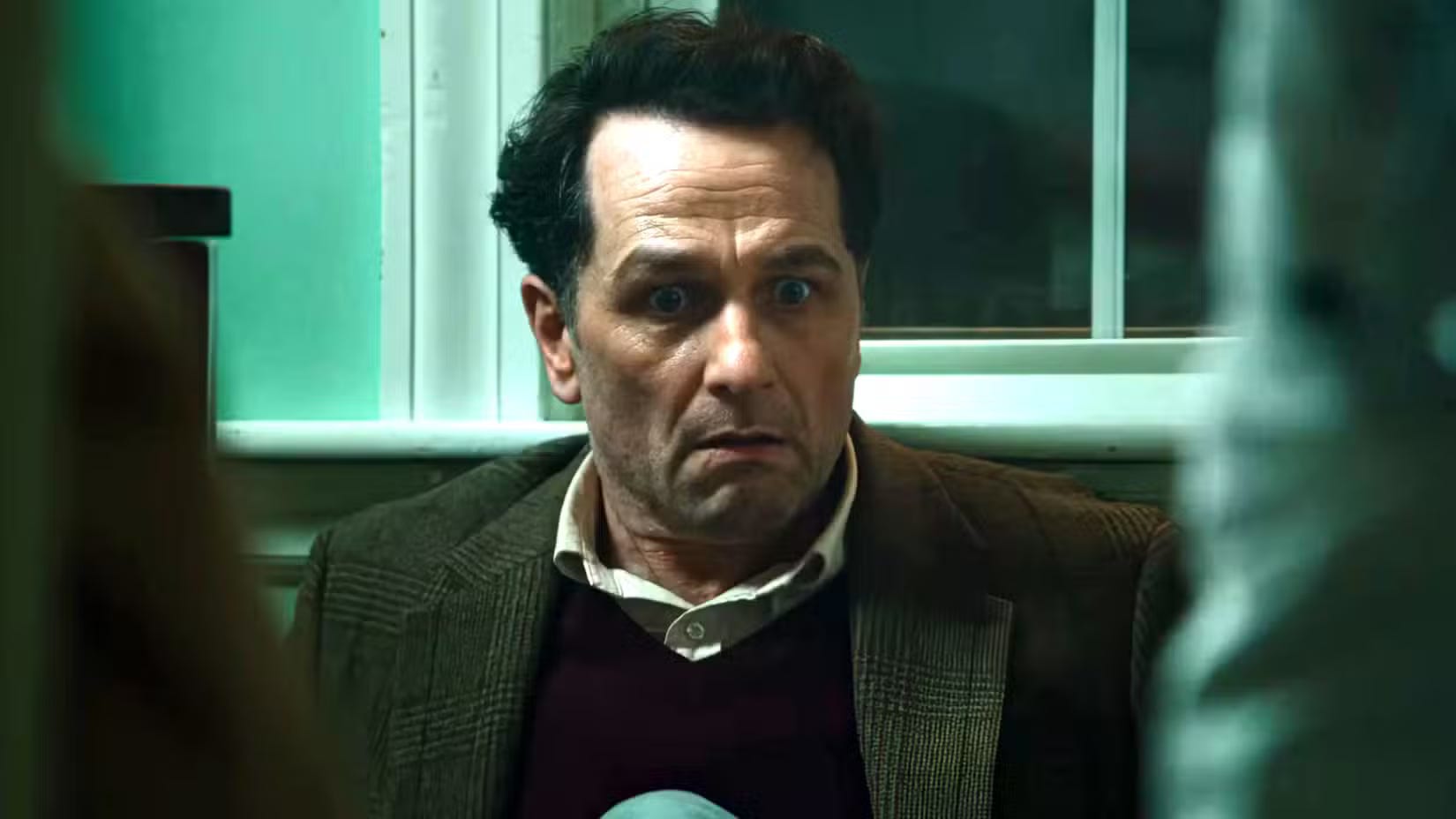
Another thing: the nicer or more morally conflicted you can make your betrayer, by forcing them almost unwittingly to keep their “no” a secret—the more nuanced, tension-filled, and hilarious the reveal can become. Here’s another from 30 Rock: the flu shot episode. Here the set up is to let the heart be in conflict with itself; when you want to be/do Y, but you just can’t because a deep longing for X won’t let you. The suffering of the betrayer in this scenario is key.
And if your character is on the receiving end of the betrayal, there are so many places to go with this—especially if the reactions track to a recognizable arc. It could be the stages of grief, or the character’s version of flight-or-fight; do they have a penchant for revenge, or are they the queen of the epic spiral—complete with snacks? Betrayal brings out all kinds of great scenes—especially once the character gets beyond the processing and is hit with an idea of how to make things right again.
Serving No
The “no” you finally learn to give, which signals character growth, can be a joyous thing to write—especially if you are a woman. As women, we live in the “no.” But comedy isn’t just about reacting to “no”; it’s about who gets to say it because this type of comedy changes the ending.
As the receiver of the “no,” the apartment, your dad, the landlord, and the universe all say “no” to you and this invites desperation, conflict and action. As the giver of the “Yes,” you keep believing in people, funding the impossible, and saying “yes” when you probably shouldn’t. As the giver of the “no,” there comes a moment when someone with great self-presumed authority tells you you have to do something, in our case, to shut down and be compliant because they hold all the wisdom and power—and you discover they actually don’t.
That reversal is incredibly satisfying—not because it’s revenge, but because it’s unexpected. And unexpected is always funny. So you get a scene of an investor leaning in on Zoom from his porch in the Hamptons where, after explaining—in the calm, reassuring voice one normally reserves for discussing hospice care—that Empress has no future, no value, and really ought to be put out of its misery, he finally asks:
“What would it take for you to stop with Empress?”
The question is delivered with complete confidence as though you have misunderstood reality.
And that’s when you might lean in and say, “Um. Nothing. We have thousands of orders and tours and prizes and an audiobook coming out next week?” But, as a writer, you can also chart a completely different comedic course for how things might play out because the “no” has just changed hands. How?
Status Reversal. From the Greeks to Shakespeare to SNL, comedy loves a reversal of hierarchy. All at once, the character who had been cornered has crazy possibilities. The person who seemed untouchable suddenly has to tap dance. Readers love watching certainty dissolve. Discomfort is everything!
Calm Becomes Funny. One of Nora’s favorite moves is to make the person who suddenly now has the power boringly calm. No big speech. No revenge, just “no.” Maybe a wink. Confidence is always funnier than indignation.
Dead Pan’s Big Open Door. Once your character has the power, you no longer need big dramatic language. Deadpan is where the funniest lines live.
Let’s rewrite the scene:
Investor: “What would it take for you to shut Empress down?”
Me: “Ebola?”
Pause.
“Maybe an asteroid?”
Pause.
“Certainly not a Zoom.”
Pause
“Oh! A time machine!”
Investor: “To when?”
“Yesterday!” (beat) “Before we sold all these books.” Smile and wink.
Underreaction is always funnier when power changes hands. Nora knew this. Big loud victory isn’t as funny unless you’ve got a character where the physicality and gestures are already established in the book.
There’s another lesson here: the audience always expects the FMC to spend the whole story chasing the “yes.” When she finally realizes she has the freedom to say “no” herself, the story doesn’t just become funnier—it becomes about agency.
So, hold this loosely in your mind when writing:
Your first “no” drives conflict. Your second one creates comedy.
The other big takeaway from this whole comedic arc is, at the beginning, your character might have needed everyone’s approval. By the end... She doesn’t, and it’s terribly satisfying because it’s earned. Every joke, every scene needs to do this.
Speaking of which, here’s something that feels earned… We’re so happy to have Monarch, Scary Mommy, and Menopause Rocks(tm) as partners. I think this calls for a song:

Find out more at menopause.live! Ticketing starts August 1.
Ok, that’s what I’ve got this week. Hope you have a wonderful rest of the weekend.
xoxo - Gotham Girl 🖤
PS - I am a human typo. Amnesty appreciated.
Just kidding, if Viginia Woolf comes back from the dead insisting this book or readers do, of course, want it, we’ll keep printing however many copies the world asks for. It’s our duty, but we need to laugh off the absurdity of this one, if only to survive it.
Comments
Nothing yet. Say the first thing.
Sign in to join the conversation.