
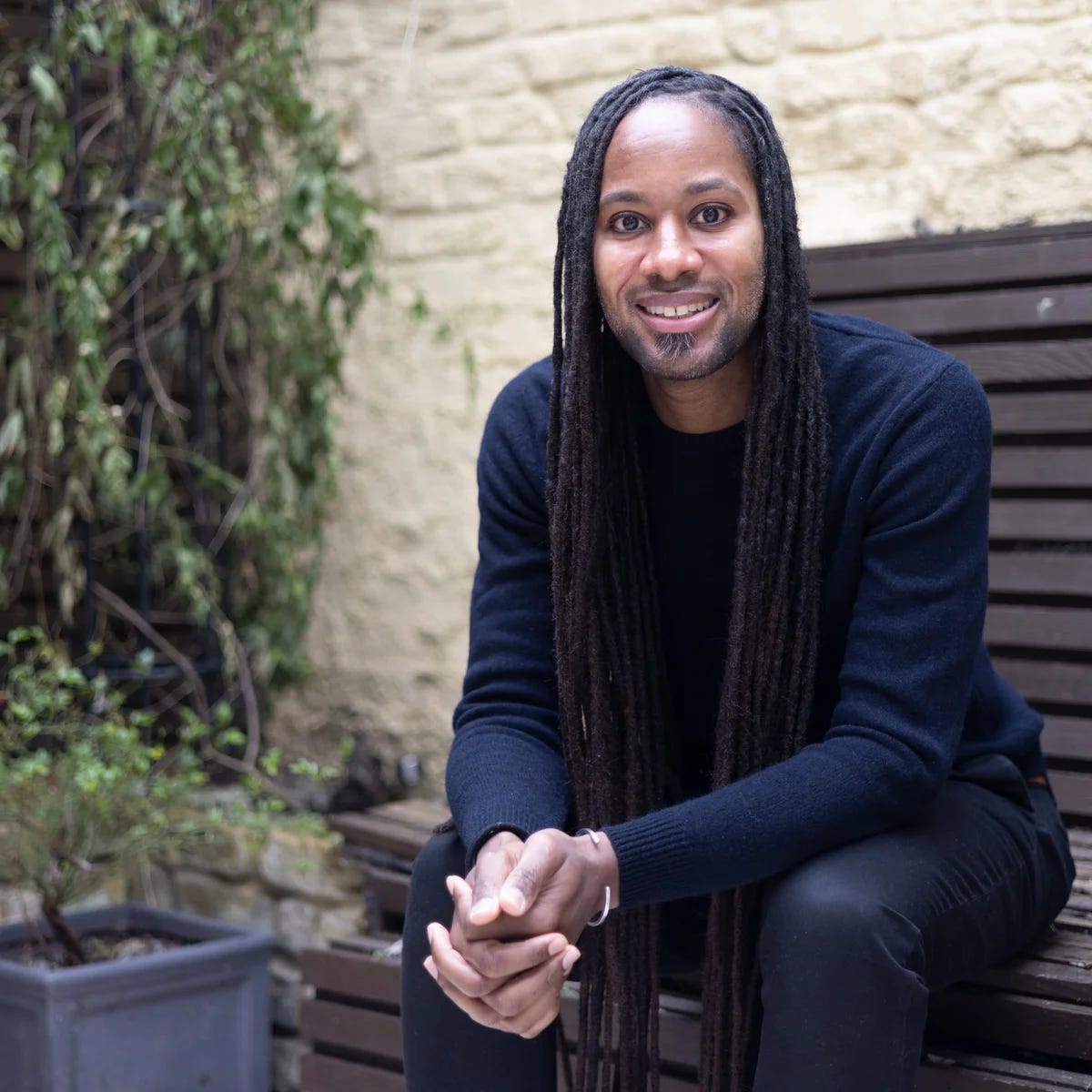
Dr Jason Arday spent his career studying how British education distributes money, employment, legitimacy and intellectual authority.
In July and August 2026, an unnamed Cambridge source handed allegations about Dr Arday to Nathan Cofnas. Cofnas framed him as a “DEI hire”. The Telegraph called him Cambridge’s “diversity poster boy”. Fifteen media outlets then published 249 articles about him in 22 days.
Dr Arday resigned on 5 August.
He died nine days later.
His family described a campaign of sustained abuse and misinformation that became too much for him.
This document asks who initiated that campaign, who supplied the material, what Cambridge and the publishers knew, what they omitted, how they assessed the foreseeable harm and what they did while the coverage accelerated.
These questions require documents, dates, names and decisions.
A statement of regret is not an answer.
A description of institutional procedure is not an answer.
A public-relations summary is not an answer.
On what date did Cambridge first receive a complaint, allegation or warning concerning Jason Arday’s publications, qualifications, appointments or personal history?
Who received each complaint?
Who supplied each complaint?
What documents accompanied each complaint?
Which complaints came from Cambridge employees, fellows, students, former employees or college members?
Did any Cambridge employee or affiliate contact Nathan Cofnas about Jason Arday?
Has Cambridge investigated who contacted Cofnas on 13 June 2026?
If not, why not?
Did the person contact Cofnas using a Cambridge email account, device, office, network or document system?
Did that person send Cofnas documents, drafts, correspondence, personnel information or allegations held by Cambridge?
Did Cambridge authorise that disclosure?
Has Cambridge asked Cofnas to identify the source?
Has Cambridge obtained or preserved the correspondence between the source and Cofnas?
Did the source contact any newspaper, broadcaster, journalist, campaign group or other publisher?
Did Cambridge staff circulate the description “plagiarist and fabulist” before Cofnas published it?
Did Cambridge staff describe Jason Arday internally as a “DEI hire” or equivalent?
Which staff members knew that Cofnas intended to publish “DEI Fraud and Cover-Up at Cambridge” before 21 July 2026?
Which staff members knew that the Telegraph intended to publish “Cambridge’s diversity poster boy in plagiarism row” before 24 July?
Provide all Cambridge correspondence with Cofnas, the Telegraph, the Times, Times Higher Education, the Guardian, the Observer, the Daily Mail, the Spectator, the BBC, GB News, the Sun, the Express and the Independent concerning Jason Arday.
When did Cambridge first learn that Cofnas advocated a “hereditarian revolution”?
When did Cambridge first learn that he advocated barriers between races?
When did Cambridge first learn that he claimed Black professors at Harvard would approach zero under meritocracy?
When did Cambridge first learn that he claimed Black people would disappear from almost all high-profile positions outside sport and entertainment?
Did Cambridge tell any publisher using Cofnas’s allegations that he had made those statements?
If not, why not?
Did Cambridge tell those publishers that its own complaints process found parts of Cofnas’s blog could potentially encourage or incite discrimination against Black students and staff?
Did Cambridge tell those publishers that Cofnas’s three-year Cambridge post had been funded by the Leverhulme Trust?
Did Cambridge tell those publishers that the Leverhulme Trust receives tens of millions of pounds in annual Unilever dividends?
Did Cambridge assess the racial motivation or foreseeable racial impact of a campaign initiated by Cofnas against its youngest Black professor?
Who carried out that assessment?
Produce it.
Did the University understand, when it appointed Jason Arday, that his research examined Black doctoral funding, precarious academic employment, Black mental health, curriculum, neurodiversity, the Black professoriate and routes to intellectual authority in Britain’s former colonial university system?
Did Cambridge assess whether attacks on his appointment were also attacks on the legitimacy of Black professors and equality programmes?
Did Cambridge monitor racist abuse directed at him from the date of his appointment?
How many racist, threatening or abusive communications concerning Jason did Cambridge record between his appointment and his death?
How many were reported to police?
How many were referred to safeguarding, security, human resources or occupational health?
Did Cambridge screen Jason’s email because of racist abuse?
When did screening begin?
Who reviewed the screened material?
Where are those records now?
Which body investigated the thesis allegations before July 2026?
What was the exact finding?
On what evidence did Cambridge state on 24 July that Jason had been cleared of wrongdoing?
Who approved the words “victim of a vile campaign to undermine his credibility”?
What changed between that statement and the announcement of a new investigation on 5 August?
Identify every item of “new information”.
Who supplied each item?
On what date?
Had any of it already been considered by Liverpool John Moores University, a journal or another institution?
Why did Cambridge publicly announce a new investigation before completing a welfare assessment of the person subjected to the campaign?
Did Cambridge consider delaying public announcement until it had secured Jason’s safety and support?
Who decided not to?
Did Cambridge give Jason advance notice of the announcement?
How much notice?
Who spoke with him before and after publication?
Who held operational responsibility for Jason’s welfare between 24 July and 14 August?
Did Cambridge appoint a single senior duty-of-care lead?
If not, why not?
Did Cambridge conduct a written risk assessment after the Telegraph’s first article?
Did it conduct another after his resignation?
Did it assess the cumulative impact of hundreds of articles, racial abuse, disability scrutiny and loss of employment?
Did Cambridge know that fifteen outlets had produced 249 articles in 22 days?
Did it ask any publisher to stop contacting Jason?
Did it ask any publisher to stop contacting his family?
Did it issue any public warning about racist abuse, harassment or the volume of coverage?
Did it offer Jason independent legal support?
Did it offer independent clinical support?
Did it offer security support?
Did it offer paid leave rather than resignation?
Did it offer to suspend the investigation while he received support?
Did any Cambridge employee speak with Jason on 14 August?
Give the name, time and record of every contact.
When did Cambridge learn that he had died?
What action did it take in the first hour?
Did it order immediate preservation of all records?
Produce the preservation notice.
How many Cambridge academics have faced plagiarism, authorship theft, data fabrication or research-integrity allegations since 2015?
How many remained employed while investigations continued?
How many investigations lasted more than one year?
How many findings were never published?
How many senior academics continued teaching, examining or supervising after an adverse or provisional finding?
Why did the provisional finding that a senior Cambridge academic plagiarised a doctoral student not trigger a public institutional review comparable to the review announced in Jason’s case?
Why did Cambridge allow its appointment of one Black professor to become a public referendum on equality, while treating other misconduct cases as confidential individual matters?
Will Cambridge identify the faculty member who contacted Cofnas?
Will it publish the full chronology of the campaign?
Will it publish all investigation findings concerning Jason, including findings that cleared him?
Will it publish its correspondence with the press?
Will it publish its duty-of-care records?
Will the independent inquiry examine the role of racism, ableism, media amplification and the anonymous Cambridge source?
Who chose the inquiry chair?
Can Cambridge management restrict the evidence, witnesses, findings or publication?
Will Jason’s family have independent representation in the inquiry?
Will Black staff and students have independent representation?
On what date will the full report be published?
These questions apply separately to the Telegraph, Times, Sunday Times, Daily Mail, MailOnline, Guardian, Observer, Independent, Spectator, Daily Express, Sun, GB News, BBC News, Times Higher Education, Sky News, Metro, Daily Mirror and Channel 4 News.
On what date and at what time did your organisation first receive information concerning Jason Arday?
Who supplied it?
Did the source work for, study at or hold an affiliation with Cambridge?
Did the source identify Nathan Cofnas?
Did Cofnas contact your organisation?
Who contacted whom first?
Provide the date, time and method of every communication.
What documents, screenshots, spreadsheets, comparison tables, plagiarism reports, correspondence or personal information did you receive?
Provide the original file names and metadata.
Did you receive material that had not appeared in Cofnas’s Substack?
Did you receive any part of Jack Grove’s 63-page Times Higher Education dossier?
Did you receive material from the same source who contacted Plagiarism Today?
Did you agree to anonymity?
Who approved anonymity?
What public-interest test did you apply?
Did the source have a personal, professional, political or employment dispute with Jason?
Did the source express opposition to diversity, equity and inclusion?
Did the source describe Jason as a “DEI hire”, “diversity hire”, “fabulist”, “fraud” or similar before publication?
Did any source receive payment, expenses, publication support, legal support or another benefit?
Did your organisation coordinate publication timing with Cofnas or another outlet?
Before publication, did editors know Cofnas called himself a race realist?
Did editors know he called for a “hereditarian revolution”?
Did editors know he advocated barriers between races?
Did editors know he claimed Black professors at Harvard would approach zero under meritocracy?
Did editors know he claimed Black people would disappear from almost all high-profile positions outside sport and entertainment?
Did editors know he described Jason as a DEI hire?
Did editors know his Cambridge post had been funded by the Leverhulme Trust?
Did editors know Leverhulme held more than £2 billion in Unilever shares?
Did editors know Cambridge had found parts of his blog capable of encouraging discrimination against Black students and staff?
Which of those facts appeared in your first article?
Explain each omission.
Did your organisation describe Jason through diversity, DEI, race, “poster boy”, “fantasist”, “disgraced”, “plagiarism prof” or equivalent language?
Who wrote each headline?
Who approved it?
What evidence supported presenting an allegation as an established identity?
Why was Jason’s race or symbolic position relevant to the headline?
Why was Cofnas’s racial programme not equally prominent?
Did editors consider that “diversity poster boy” converted an individual allegation into an attack on Black academic advancement?
Produce the headline discussion and approval record.
How many articles, columns, editorials, videos, live-blog entries, podcasts and social posts did your organisation publish about Jason between 24 July and 14 August?
How many journalists were assigned?
How many pieces were commissioned after his resignation?
How many were commissioned on 14 August?
Who authorised continued publication?
Did the organisation maintain a cumulative count?
Did anyone assess whether the volume had become harassment?
Did anyone assess foreseeable harm to Jason or his family?
Produce every welfare, safeguarding, editorial-standards or duty-of-care assessment.
If none exists, explain why.
Did your reporting state that Liverpool John Moores University had examined the thesis allegations?
Did it state the result?
Did it state that Jason’s PhD still stood?
Did it distinguish journal corrections from retractions?
Did it distinguish allegations from findings?
Did it publish Jason’s responses with equal prominence?
Did it correct social posts that presented allegations as fact?
Did it tell readers that senior Cambridge academics had faced plagiarism or authorship-appropriation findings without comparable coverage?
If not, why was that institutional context omitted?
Why did your organisation investigate Jason’s childhood, speech, literacy, disability, school friendships, family and mental health?
What public interest required each intrusion?
Who approved contacting childhood acquaintances?
Who approved psychiatric speculation about a person the writer had never examined?
Did the organisation consult disability specialists?
Did it consult racism specialists?
Did it assess the cumulative impact of challenging every element of a Black disabled person’s life in national media?
Produce that assessment.
List every item about Jason published or updated on 14 August, with its exact publication time.
When did your newsroom learn he had been found unresponsive?
When did it learn he had died?
Which scheduled pieces were stopped?
Which were allowed to publish?
Which were edited after the newsroom learned of his death?
Which were deleted?
Who made each decision?
Did your organisation contact the family that day?
How many times?
Did it continue contacting them after they asked the press to stop?
Did editors review previous coverage immediately after learning of the death?
Did they identify inaccuracies, unsupported conjecture, degrading language or excessive intrusion?
What corrections or editor’s notes followed?
If none followed, why not?
Does your organisation accept that its coverage contributed to the sustained public pressure experienced by Jason?
Does it accept the family’s statement that the campaign of misinformation was “too much for Jason”?
If it disputes the family’s account, state precisely what it disputes and the evidence for doing so.
Does it accept that the source’s racial ideology was material information readers needed?
Does it accept that omission of that ideology distorted the story?
Does it accept that the volume of publication became part of the event being reported?
Will it publish its internal review?
Will it publish the source chronology?
Will it release the content-management history of deleted or altered articles?
Will it preserve all records for the coroner, regulators, litigation and public inquiry?
Why did the 24 July article call Jason Cambridge’s “diversity poster boy”?
Why did it not name Cofnas?
When did Gordon Rayner or another Telegraph journalist first communicate with Cofnas?
What material did Cofnas supply?
What material came from a Cambridge source?
Who commissioned the statistical analysis of Jason’s thesis?
Who selected the texts and comparison method?
Was the analysis independently peer reviewed?
Why did the paper publish “The Cambridge fantasist” before an adverse institutional finding?
Who approved the 3.11pm article about Jason’s childhood disability on 14 August?
When did the Telegraph learn that emergency services were at his address?
Why does that article remain unannotated?
Who approved the AI-detector story about Jason’s resignation letter?
What evidence established that detector output could identify authorship reliably?
Who approved “Jason Arday may want to get himself a nice pair of orange trousers” at 6.12pm on 14 August?
When did the newsroom learn that Jason had died?
Who deleted the article?
Why was it deleted without a correction, explanation or editor’s note?
Provide the full article, revision history, publication log, deletion log and decision record.
Who commissioned the psychiatric-speculation column published at 1.01am on 14 August?
What evidence justified diagnosing or explaining Jason’s behaviour without examining him?
Why did the Mail publish 30 items between his resignation and death?
Who monitored cumulative harm?
What podcast was deleted on 6 August?
Who deleted it and why?
What did the Guardian know about Cofnas before 1 August?
Why did its full account of Cofnas’s racism, Cambridge dismissal, lawsuit and funding appear only after Jason’s death?
Why did the 12 August article continue interrogating Jason’s childhood disability after weeks of escalating coverage?
What welfare warnings did editors receive?
Will the Guardian add editor’s notes to earlier articles explaining Cofnas’s role and funding?
The BBC identified Cofnas as a self-described race realist. Why did it not investigate the Leverhulme and Unilever funding behind his Cambridge authority?
Did the BBC receive material from Cofnas or the anonymous Cambridge source?
Did it share documents or findings with other outlets?
What assessment did it make of the racialised framing used elsewhere?
Who supplied the original tip-offs to Jack Grove?
What did the 63-page dossier contain?
Who received copies?
Did any part reach Cofnas, the Telegraph or another publisher?
Why was the investigation abandoned?
What did Carter-Ruck’s letter say?
Why did THE wait until 3 August 2026 to explain that it had held the story since 2025?
Why did the editor’s note not identify Cofnas or the wider document-distribution network?
What independent reporting did your organisation conduct?
Which claims were copied or derived from other outlets?
What evidence justified “gift that keeps on giving”, “fantastical truth”, “Plagiarism prof”, “Disgraced” and “DEI gone mad”?
Who assessed the racial meaning of those labels?
Who assessed their cumulative effect?
Demand the following records from Cambridge and every publisher:
complete source chronology;
all communications with Cofnas;
all communications with Cambridge employees or affiliates;
all documents and attachments received;
original metadata and file hashes;
commissioning records;
headline drafts and approvals;
legal review logs;
welfare and safeguarding assessments;
publication and update timestamps;
content-management revision histories;
deletion records;
complaints received;
correction discussions;
record-preservation notices;
internal post-death reviews;
correspondence with Jason and his representatives;
correspondence with his family;
correspondence with police, the coroner, regulators and Cambridge;
the identity and role of every person who approved publication on 14 August.
Jason’s family said he had faced “a campaign of sustained abuse for more than three years” and that “the campaign of misinformation was too much for Jason.” (Associated Press, 15 August 2026)
Fifteen outlets published 249 articles in 22 days, including 188 between resignation and death. (NewsCord, The Jason Arday Pile-On)
Cofnas said a Cambridge faculty member contacted him on 13 June and described Jason as a “plagiarist and fabulist”. (Retraction Watch, 27 July 2026)
Cofnas framed Jason as an education professor and “DEI hire” before publishing. (Cofnas interview)
The Telegraph’s first national article called Jason Cambridge’s “diversity poster boy” and did not identify Cofnas. (The Telegraph, 24 July 2026)
Cambridge’s own process found that parts of Cofnas’s blog could potentially encourage discrimination against Black students and staff. (County Court at Cambridge, Cofnas v Emmanuel College, 13 March 2026)
Cambridge first called Jason the victim of a “vile campaign”, then announced a new investigation and he resigned. (University of Cambridge, 2 August 2026; University of Cambridge, 5 August 2026)
Freedom of Information:
foi@admin.cam.ac.uk
Postal address:
Information Compliance Office
Governance and Compliance Division
University of Cambridge
The Old Schools
Trinity Lane
Cambridge CB2 1TN
Cambridge Information Compliance Office[information-compliance.admin.cam.ac]
Grants:
grants@leverhulme.ac.uk
Early Career Fellowship contact:
Andreas Heiner
020 7042 9863
Postal address:
The Leverhulme Trust
1 Pemberton Row
London EC4A 3BG
Leverhulme Trust contacts[leverhulme.ac]
Email:
administrator@newtontrust.cam.ac.uk
Postal address:
Isaac Newton Trust
105 Eddington Place
Cambridge CB3 1AS
Isaac Newton Trust accounts and contact page[newtontrust.cam.ac]
Send the Cambridge questions to:
the Vice-Chancellor’s Office;
Cambridge Legal Services;
the Information Compliance Office;
the Committee on Benefactions and External and Legal Affairs;
the Faculty of Education;
the Faculty of Philosophy;
Emmanuel College;
the Isaac Newton Trust;
the Leverhulme Trust.
Send each publisher’s questions to its editorial complaints or readers’ editor address. Send the publisher-specific questions separately rather than placing every outlet into one shared email.
Copy Cambridge’s Legal Services and Information Compliance Office on requests to preserve correspondence, source records, device records, metadata and investigation files.
Copy the relevant parent-company complaints address where a publisher belongs to Reach plc, News UK or dmg media.
Printed and online newspapers: IPSO where the publication is a member.
Television and broadcast output: Ofcom after completing the broadcaster’s own complaints process.
BBC: BBC complaints, then the BBC Executive Complaints Unit, then Ofcom where applicable.
Guardian: the Guardian Readers’ Editor.
Observer: the Observer Readers’ Editor.
Independent: its managing editor and internal complaints process.
Press accountability support: Hacked Off.
No organisation has been contacted and no complaint has been submitted.
vice-chancellor@admin.cam.ac.uk;
vco.enquiries@admin.cam.ac.uk;
legal@admin.cam.ac.uk;
foi@admin.cam.ac.uk;
data.protection@admin.cam.ac.uk;
communications@admin.cam.ac.uk;
cbela@admin.cam.ac.uk;
GCDEnquiries@admin.cam.ac.uk;
reception@educ.cam.ac.uk;
research-office@educ.cam.ac.uk;
philadmin@phil.cam.ac.uk;
hrassistants@admin.cam.ac.uk;
academic.secretaryWBdisclosure@admin.cam.ac.uk;
registraryWBdisclosure@admin.cam.ac.uk;
communications@emma.cam.ac.uk;
masterspa@emma.cam.ac.uk;
foi@trin.cam.ac.uk;
director@newtontrust.cam.ac.uk;
administrator@newtontrust.cam.ac.uk;
grants@newtontrust.cam.ac.uk;
grants@leverhulme.ac.uk;
grants@leverhulme-trade.org.uk
telegraphenquiries@telegraph.co.uk;
feedback@thetimes.co.uk;
editorialcomplaints@the-sun.co.uk;
corrections@dailymail.co.uk;
guardian.readers@theguardian.com;
readers@observer.co.uk;
newsdesk@independent.co.uk;
managingeditor@independent.co.uk;
editor@spectator.co.uk;
theeditor@spectator.co.uk;
letters@spectator.co.uk;
geoff.maynard@express.co.uk;
complaints@reachplc.com;
readercomplaints@reachplc.com;
webhomepage@mirror.co.uk;
feedback@mirror.co.uk;
news@dailystar.co.uk;
starletters@dailystar.co.uk;
gbviews@gbnews.com;
media@timeshighereducation.com;
webmaster@timeshighereducation.com;
viewerR@sky.uk;
news@skynews.com;
corrections@metro.co.uk;
correct@ukmetro.co.uk;
Deborah.Arthurs@metro.co.uk;
inquiries@ipso.co.uk;
advice@ipso.co.uk;
campaign@hackinginquiry.org;
press@hackinginquiry.org
Comments
Nothing yet. Say the first thing.
Sign in to join the conversation.