
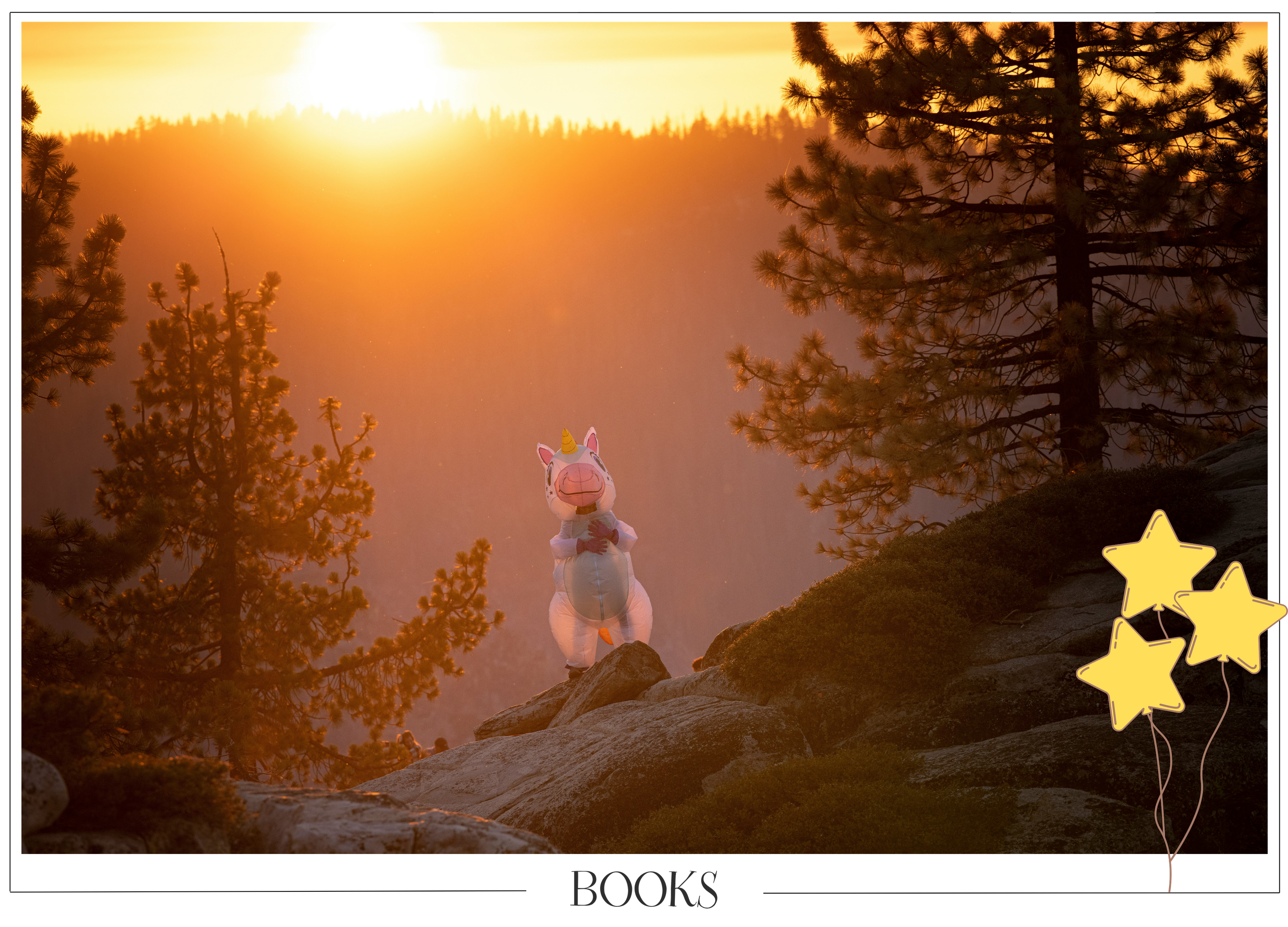
People come into the indie bookstore where I work all the time asking for recommendations for “light” novels that are written well (i.e.: quality literary fiction that isn’t depressing). My coworker friends often direct these seekers to me, because they know I have a ready imagination, an abiding love of long fiction, a low tolerance for terror and destruction and despair, and a fondness for things that ultimately uplift—but that also, as a writer, I’m very fussy about the quality of the writing (garbage in, garbage out!). 📝
Even if I really need a pick-me-up, I’m not willing to read even the loveliest story if it’s poorly written, and my standards, evidently, are high. Shabby writing, to me, is categorically unlovely. And wow, you guys? There is a LOT of shabbily-written “light” fiction out there.
Let’s talk about it!
(They aren’t actually that high! Maybe they’re high. I don’t really know.)
As a reader, I need room to participate and discover. I want to be involved! I want to care enough to invest in the story and its world and characters, and that means having the freedom, incentive, and opportunity to make it my own. Many writers of “light fiction” end up turning sensitive readers off and blocking us out by making it too easy, not interesting enough, and trying to exert too much control over the reader’s imagination. Spoon-feeding it to us, we could say, in the name of painting a picture.
What these writers miss, in my opinion, is that in order to really invest in the imagined world, readers need to paint the picture ourselves. 🎨
Being crowded out by unnecessary/uninteresting minutiae in fiction is like getting shot in the imagination with a tranquilizer dart, which is the opposite thing we were probably hoping for when we showed up at this party. We want to co-create the story, supplying plenty of stuff from our own memories/experiences/inner worlds to bring the tale to life.
When it comes to visual information, especially, readers need enough to connect the dots in the right places, but we connect the most when we imagine, and we need room for that.
Stephen King (in his iconic memoir/craft hybrid On Writing) put it beautifully:
I’d rather let the reader supply the faces, the builds, and the clothing as well. If I tell you that Carrie White is a high school outcast with a bad complexion and a fashion-victim wardrobe, I think you can do the rest, can’t you? We all remember one or more high school losers, after all; if I describe mine, it freezes out yours. . . Description begins in the writer’s imagination, but should finish in the reader’s.
He trusts us to invent the story along with him.
As an artist, Zen practitioner, and positive psychology crusader, and hopeful human living in the world, this is a big one for me.
Managing day-to-day fears and anxieties is challenging for all of us, and reading should be an opportunity to escape into and experience life’s good stuff, too, not just more of the bad (or worse!). When we fall into a story, it’s comforting to feel the camaraderie of knowing we’re not alone in our experiences, and also exciting to feel the novelty (sometimes revelation!) of walking a little while in someone else’s shoes to experience something different.
Reading, and especially the creative immersion and space-time-character-travel kind that often happens with narrative, strengthens our capacity for empathy—and empathy may very well be the secret ingredient to fixing the whole world. But there’s more to the world than what needs to be fixed; we all know it’s not all tragedy and darkness and doom. There’s plenty of hope, humor, music, magic, and grace in life and in living, and we need to honor and empathize with each other’s joy, too, if we really want to relate to, understand, and ultimately support one another.
It’s a bit of popular trickery to think that “being real” means focusing the majority of our attention on the negative. But ACTUALLY being “real” means acknowledging more than just what’s regularly pressing our panic buttons, more than the loudest voice, the baddest apple, or the squeakiest wheel, and having the courage to hold diverse perspectives and different realities in our hearts simultaneously.
I want stories (and styles) that honor it all.
So I’m constantly looking for fiction that is a collection of some seemingly opposite things. Low enough stress and high enough stakes. Humor and heartbreak. Ruin and redemption. Dark and light. Leaning hard into the light.
Both poles, sure—but I want the light to prevail. Why?
BECAUSE I WANT THE LIGHT TO PREVAIL. ✨
I want it in fiction because I want it in life. My life, your life, this extraordinary, wild ride of a life we’re all sharing. Our life.
Reading can rattle and disturb or comfort and inspire us like nothing else can, because we’re the ones making it real. In our heads. The author gives you words; you bring it to life, animating it on a stage of your own design in the inner sanctuary of your own mind, mostly with your own materials. (See? I mean it when I say reading is magic. It very clearly is! I’m never going to stop saying it! 🪄 I’m with my old pal LeVar on this one and I always have been.)
But you don’t have to take. . . my word for it. 🦋🌈 📖)
Quality, light(ish) literary fiction isn’t all I ever want to read, but too often when I do want to read it, I have a harder time than I want finding it. (And not for nothing, but I’m a veteran bookseller! This is my area of expertise. Finding books is my actual job; they pay me for it.) And sometimes the fact that I’m more generally having a hard time is exactly why I’m looking for it in the first place, so you can see how this is a problem!
I know I’m not alone here, because I talk to readers all the time who are in the exact same predicament. We want fiction that does this – but please not that. And does this – but also, hopefully, that. We want it to be meaningful. We want it to break our hearts then mend them, suffuse them with light. We want it to make us laugh. We want it to make sense and to matter, but not be preoccupied with why, exactly, it does either. We want to truly enjoy the experience of reading it. We want it to matter to us.
✨ Not utopian, so-what fluff – but also not dystopian, hostile, or excessively bleak
✨ Nonviolent — nobody has been (or is about to be) extensively bullied, assaulted, or murdered, but compelling and mysterious things are afoot
✨ Conflict enough to keep it interesting – but overall more uplifting than depressing
✨ Not frivolous or unnecessarily silly – but has some (even small or subtle) degree of humor
✨ Feels authentic and true – even if it’s about aliens or elves
✨ Well-written, re: language – creative and engaging, inventive but also accessible and fun to read
✨ Well-written, re: story – believable, absorbing, suspenseful, with great characters who I care about
✨ Well-written, re: theme – ultimately interesting and meaningful – but without trying (or having) to be soberly consequential or profound
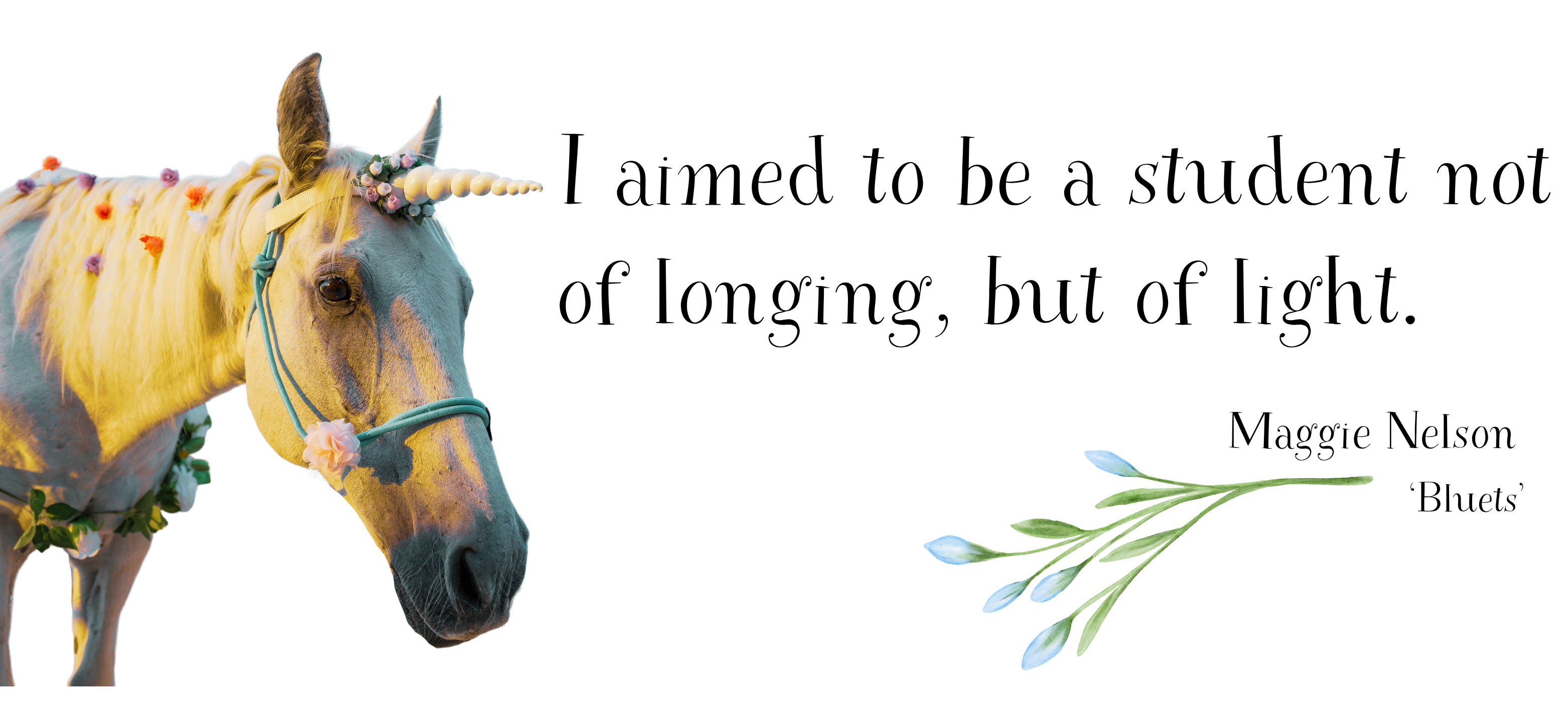
Novels that fit this profile are, in my experience, relatively rare. They are unicorns in the plain pony world of long fiction. (And don’t get me started on poetry – I’ll save that for another time!) No shade on actual ponies, either—actual ponies are darling and we adore them. These novels are just much harder to find than I think they should be for how many of us want to read them, which (I think) means that more of us need to be writing them.
So if words and characters and problems and places are your imaginative materials of choice and any of this rings some bells in your heart, tuck that laundry list into your back pocket for the road.
And of course our different takes and tastes are what make us such an interesting collection of characters, so a lot of this is, obviously, at least somewhat (or entirely) relative. But if you came here looking for a unicorn, lucky you!
I have encountered quite a few in the wild.
Here are 22 quality, light-ish literary novels that I adored, in no particular order, plus a bonus series. This is in no way an exhaustive list of titles that fit that profile; just a list of books I have personally read and loved and can vouch for.


1. Fight Night, by Miriam Toews
2. The Flying Troutmans, by Miriam Toews
3. Lessons in Chemistry, by Bonnie Garmus
4. Jacket Weather, by Mike DeCapite
5. Where’d You Go, Bernadette? by Maria Semple
6. The Guernsey Literary and Potato Peel Pie Society, by Mary Ann Shaffer & Annie Barrows
7. My Grandmother Asked Me to Tell You She’s Sorry, by Fredrik Backman
8. Landline, by Rainbow Rowell
9. Attachments, by Rainbow Rowell
10. Goodbye, Vitamin, by Rachel Khong
11. Darling, by Indigo Knight
12. The Wedding People, by Alison Espach
13. Sorrow and Bliss, by Meg Mason
14. Nothing to See Here, by Kevin Wilson
15. Run for the Hills, by Kevin Wilson
16. Ghosts, by Dolly Alderton
17. Good Material, by Dolly Alderton
18. The Girls’ Guide to Hunting and Fishing, by Melissa Bank
19. So Far Gone, by Jess Walter
20. We All Want Impossible Things, by Catherine Newman
21. Not Working, by Lisa Owens
22. This is Where I Leave You, by Jonathan Tropper
And a bonus series:
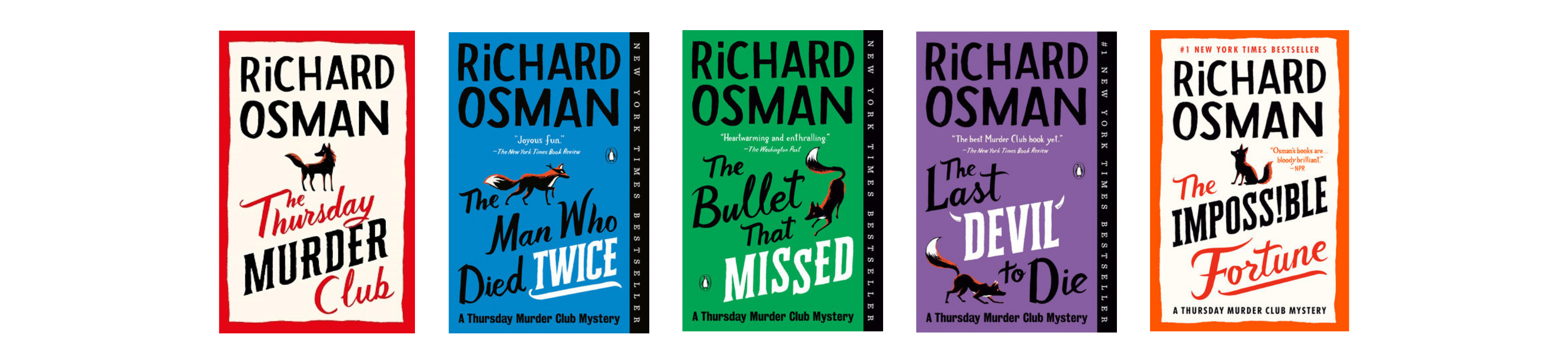
23-27. Thursday Murder Club, by Richard Osman ~ and okay, yes. People do get murdered in these; it’s right there in the title. But they are populated with such an original cast of delightful characters, are so well-written with such freshness and buoyancy, and are so genuinely, endearingly funny that I’m willing to forgive the homicide. So these are a good reminder that there are exceptions to every rule!
And ironically, because they’re often subverting the norms, the exceptions are sometimes the best of the bunch.
If you have thoughts or wonderings about any of these, please feel welcome to drop a note in our well below or message me directly! I’ve been a bookseller for over a decade and there’s almost nothing I love more than talking about books and writing. (Dogs, maybe. But almost nothing more!). And if you have any titles to add to this list, please let me (& all of us) know in the comments.
Happy reading! (Pun! Intended! Ha!)
Love & light from the margins,
ali ✨
Star in the Margin is free and open to all, but does require lots of time, love, and energy! If you’re into the vibe and want to cheer me on. . .
Related reading:
Proof of Magic
·
October 6, 2025
One of the most widely quoted lines from Stephen King’s first and so-far-only book of nonfiction, On Writing, is: Books are a uniquely portable magic. I love this quote as much as everyone else, for the simple yet extraordinary truth of it. You don’t even have to be an avid reader or writer to get it, either; anyone who’s ever been moved or transported …
Comments
Nothing yet. Say the first thing.
Sign in to join the conversation.