
Two weeks ago, my family received the news that my grandmother in Lebanon had passed away in her sleep. She was the last of my grandparents remaining, and with her passing a generation ends.
Put simply, my family were shattered. But her death was different to the passing of other grandparents who lived near us, and whom we visited almost daily. The vast distance between us and my grandmother amplified our pain, and brought home the reality of ghurbat.
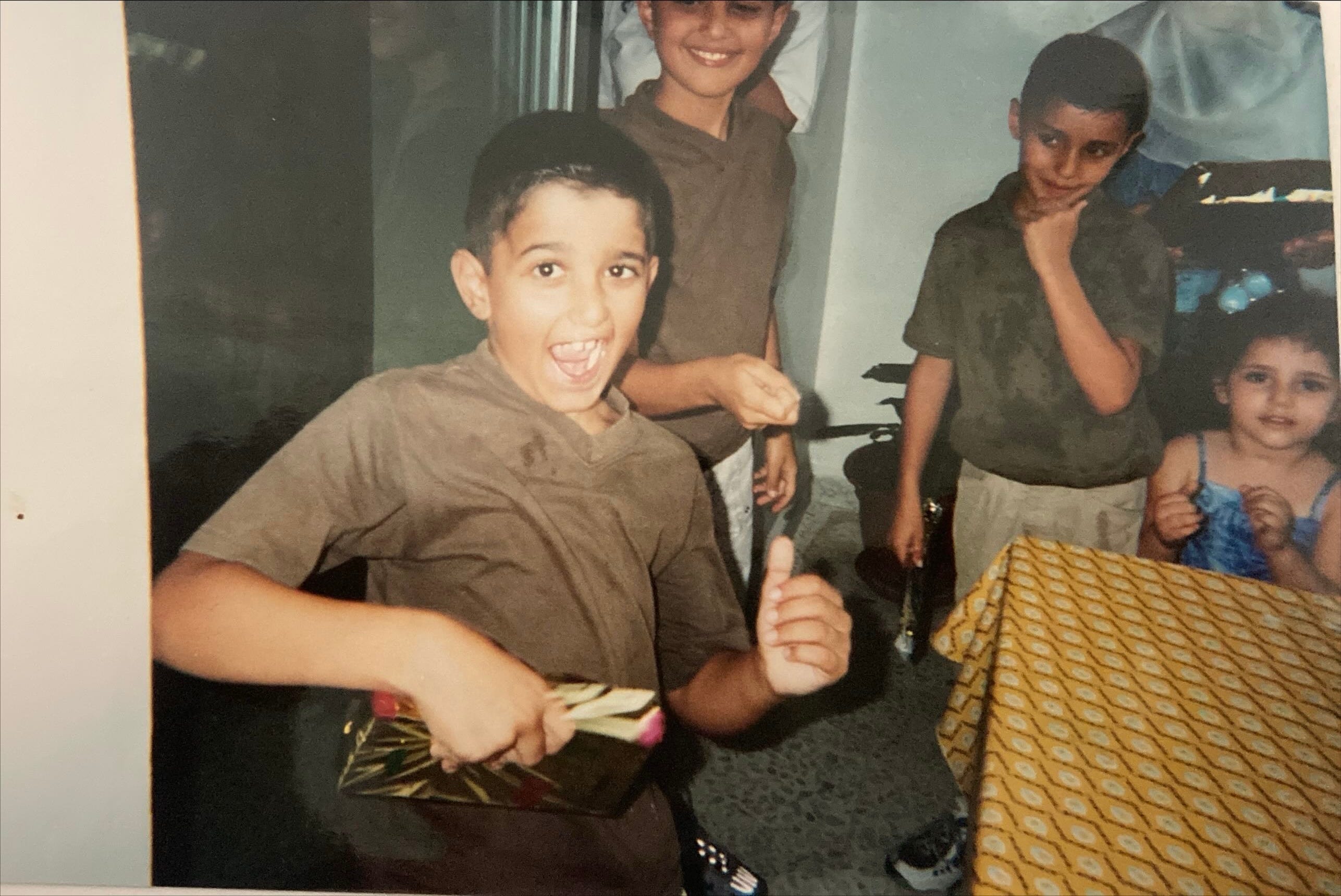
Ghurbat is one of those words that mocks any effort to translate it. The Steingass Persian-English Dictionary offers some of the following definitions, all of which fall far short in capturing this state of being:
being far from country and friends;
distance from home;
exile;
(the state or) condition of a stranger (or foreigner).
To be in a state of ghurbat means that you occupy a liminal space; it means that you are a permanent resident of a barzakh realm between two potential homes.
I was born in Australia and — bar one year — have lived here my whole life, yet I will never be viewed as ‘fully’ Australian: as mainstream media would say, I’m a ‘man of Middle-Eastern appearance.’ In Lebanon, I am never fully Lebanese: I am Ali al-Australi (the Australian), always slightly behind in understanding jokes or inferences; who knows enough to know that he doesn’t fully get it.
Don’t get me wrong, I certainly don’t suffer from some early 00s’ Muslim identity crisis of not ‘belonging’ to my country. I know exactly who I am and what I believe, and have come to revel in that liminal space that my upbringing has afforded me.
But it is in moments like this when I peer over the fence of my comfortable liminal nest and gaze at what Lebanon may have been for me.
Garbed in the garment of ghurbat, I mourn not only the grandmother I knew, but the grandmother I never got to truly know. I mourn the life I would’ve had if my parents never left Lebanon: the friendships I would’ve forged, the memories I would’ve made, the languages I would’ve learnt. In short, the person I would’ve been, with all the wondrous (and not so wondrous) possibilities. For some people, it may not make sense to mourn something that never was, but that is precisely the point: ghurbat mourns that which never came to fruition.
I am eternally grateful for the blessings that my life has provided me, but it is in moments like this that I realise what I have lost. It is then that ghurbat hits hard.
The poem below was written by Muhammad-Reza Shafiei Kadkani, one of the greatest contemporary professors of Persian literature, and a noted poet in his own right. Though the sentiments are different to what I currently feel, there is something in the poem that I am certain will find great resonance with those living in the diaspora:
Text within this block will maintain its original spacing when published
Happy Journeys - Muhammad-Reza Shafiei Kadkani
Translated by Dick Davis
"Where are you going in such a hurry?"
              the desert-thorn asked the wind.
"My heart's in torment here -
        don't you want to get away
From this dusty desert?"
"It's all I long for, but
        what can I do, with my feet tied like this . . ."
"Where are you going in such a hurry?"
"Wherever it may be, except here, where I am."
"Travel safely then! But my friend, I beg you,
When you have passed safely from this brutal wasteland,
And reached blossoms, and the rain,
Greet them for me."
No posts
Comments
Nothing yet. Say the first thing.
Sign in to join the conversation.