
And if you’d like to support my writing on youth rights, self-directed education and carework - topics that imo as as important as ever right now - please consider becoming a paid subscriber.
This month, we will be reading Grow the World Together: Parenting Towards Abolition, edited by Kim Wilson and Maya Schenwar.
Zoom link is below:
Join Zoom Meeting
https://us02web.zoom.us/j/89865290066?pwd=18azjjbynzvqvm824ILXIvjcqWkHtJ.1
Meeting ID: 898 6529 0066
Passcode: 581950
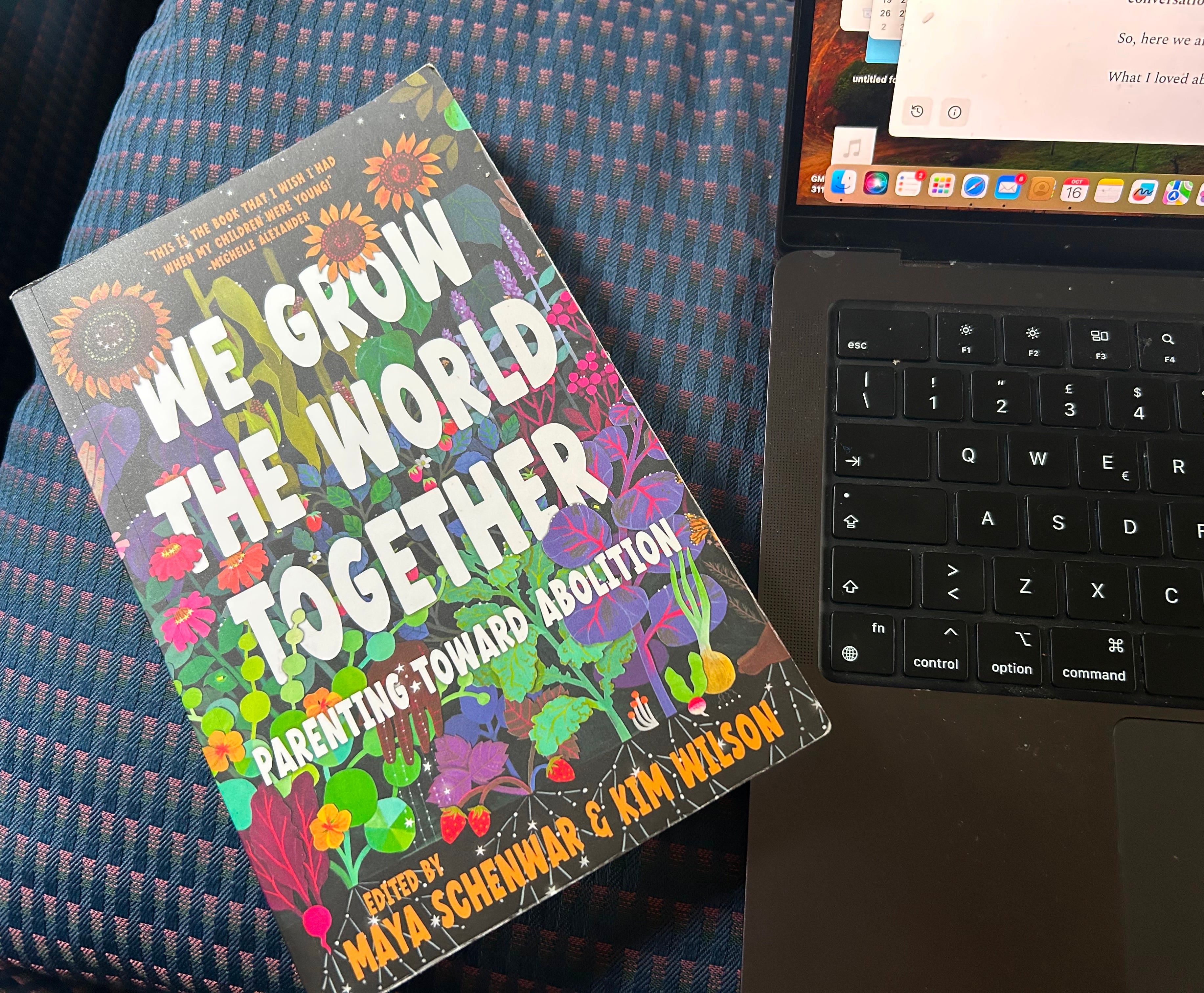
Let’s use this post as a preliminary chat about the book!
My first thought when I started making this post was: I am entirely ill-equipped to hold a book group about this book, AND this book is really important and needs to be read by people, including you all, and me, so I don’t want to NOT discuss it just because I’m not an expert on abolition and I don’t have enough lived experience.
I’m making this month free for all because it doesn’t feel right to paywall a conversation about this book.
So, here we are.
What I loved about this book was learning from people who grew up steeped in a culture of care, abolition and activism, and who are also raising their children to know what this looks like. If this is you and you’re reading this, I would love to know what you thought of this book.
Here are some questions that came up for me that I thought we could chat about in comments, and in the zoom later this month.
If you are a white mother/parent, what is your relationship to abolition? Like, do you undertand it, agree with it, struggle with it, etc? What are the parts that feel hard, what are the questions?
Is choosing our own freedom also, inevitably, choosing another’s freedom?
How do you feel about freedom as the ultimate goal, rather than happiness?
What does parenting as an abolitionist mean, to you, after reading this book? Did you have a previous conception that perhaps has changed, or do you have a brand new idea of what it might be? (very big question I realise!)
How do YOU disrupt systems of punishment, colonisation, and supremacy in your home (and beyond)?
How do we practice collective care and interdependence when (if? I’m speaking for myself) we were raised in a society hell-bent on praising individualism and independence as the pinnacle of human existence?
Was there anything in the book that helped you reframe punishment or hierarchy in your home? Do you have any questions, things you were curious about, or felt uncomfortable with?
Love to you all,
Fran x
Comments
Nothing yet. Say the first thing.
Sign in to join the conversation.