
I’ve said that my next book, In Every Possible Way, is very Before Sunrise-inspired.
I can’t even remember when I first saw the movie, to be honest. It definitely wasn’t until long after it had come out — long after its sequel, Before Sunset (my favorite one), was already out. Even though I’m a big Ethan Hawke fan, I was a little scared of these movies because everyone I knew who was into film in any way either obsessively loved the movies, or else they hated them and thought them meandering, pretentious, pointless, whatever. I didn’t know how I was going to feel, but one part of my personality is that even if I think I will love something, that sometimes means I put off engaging with it for even longer. Who knows.
In today’s newsletter I’m going to recap Before Sunrise, so here’s your warning if you haven’t seen it and don’t want spoilers.
I also normally save this for the end, but since you literally only have a FEW DAYS left to do this: if you’re interested in preordering In Every Possible Way from Tombolo Books, now’s the time!!! The book comes out Tuesday! I’m going in to sign very soon!
For those of you unfamiliar, Before Sunrise came out in 1995, the sequel Before Sunset came out about 9 years after that, and then the final part of the trilogy Before Midnight came out about 9 years after that. Richard Linklater loves to do this kind of shit, and I love him for it. The movies follow the same couple — Jesse (Ethan Hawke) and Céline (Julie Delpy) at different stages in their lives.
At the start of Before Sunrise, we’re on a train rolling through some part of Europe, passing by rivers and forests and countryside dotted with idyllic white houses. There’s a middle-aged German couple on the train who start arguing — my college German is extremely out of practice and you don’t get subtitles, but IMDb trivia tells me that he basically calls her an alcoholic and she says yeah, I’d have to be, to deal with you.
Other people on the train have to put up with this, including Céline, who’s trying to read a book, and Jesse, who seems to have given up on his book and is mostly staring out the window. When the woman violently slaps the newspaper out of the man’s hands, that’s enough to send Céline grabbing her luggage to move to another seat on the train. I would’ve done the same. I love traveling by train but man, some people are wild with what they will do, especially in this age of cell phones where people will be on Facetime with full speaker audio on the entire ride, no shame at all.
The seat Céline moves to happens to be on the other side of the row from Jesse, who definitely sits up a little straighter and takes notice of this beautiful woman. You can actually see this look on his face at one point, an almost exasperated, well what am I supposed to do with this? He knows there’s a moment and just isn’t sure how he’ll rise to it. He is immediately extremely interested. Céline, for her part, also notices him, but seems to have less of a problem just going back to her book. I mention this only because, at least to me, this dynamic kind of plays out through the entire trilogy in various ways.
The German couple eventually get up and make their way through the train, still bickering. Jesse sees his opportunity and takes it — he exchanges a look with Céline, then asks, “Do you have any idea what they were arguing about?” Ethan Hawke’s voice is always so good to me. The rasp in it. He could ask me anything in that voice tbh.
And Céline is just . . . she really is something else. She’s luminous, with her golden hair and her wide smile. She confirms in French-accented English that she does speak English, but that her German isn’t very good, so she has no idea what the couple was saying. She then asks Jesse if he’s ever heard that, as couples age, they get worse at hearing each other. Men lose their hearing for higher frequencies, and women the lower ones. Jesse cynically suggests maybe that’s nature’s way of allowing couples to grow old together without killing each other.
They compare books and then Jesse suggests that they go to the lounge car and get something to eat. One thing that Ethan Hawke plays extremely well, I think, is that kind of flirty bravado of someone who really wants to impress, who is almost hyperconscious of everything they’re doing and saying as they try to connect with this other person. Even the way he hits the door for the train car and gestures her through it, you can just tell, he is on his best First Date kind of behavior.
He asks her how she speaks such good English and she says she lived in London for a while, and how does he speak such good English. She pretends to be shocked that he’s American, and he seems to legitimately not know that she’s joking for a second. It really is such good classic First Date stuff, honestly — that dancing around that you’re doing, the misunderstandings, the jokes that are flying over your head because you’re just a little too nervous/uptight to get them. He starts telling a story about how he did try to learn French, but embarrassed himself at a Parisian metro station when he tried to order a ticket, and Céline MORTIFYINGLY corrects his pronunciation even in his story, which would honestly be just about the end of me. I wouldn’t be able to talk again for at least 30 minutes, in any language.
Céline says she goes to school at the Sorbonne, and is on her way back there from Budapest, where she was visiting her grandmother. Jesse, meanwhile, is on his way to Vienna, where he’s flying out the next day. He’s a little squirrelly about what exactly he’s been doing in Europe — he had a friend in Madrid, he says, and then has just been riding the train around for a few weeks. He says that it’s actually been pretty great, just staring out the window, that he’s been having all sorts of ideas that he wouldn’t normally have.
Well, of course Céline wants to know just what kind of ideas. Give an example.
Jesse says that one was for a TV show, which would follow people 24 hours a day, 365 days of the year. You’d get 365 different people to each chronicle their days, and when you put it together, you’d have this amazing collection of stories. Céline doesn’t know how popular livestreaming is about to get, so she’s basically like, “All those mundane boring things everybody has to do every day of their fucking life?” Jesse’s like well I was going to call it the poetry of everyday life, but sure. He says why should a dog sleeping in the sun be beautiful and a man standing at the ATM be stupid.
It’s very meta, of course, because that’s a lot of what this movie is. The relatively mundane experience of just walking and talking with someone you’re getting to know, but elevated to something sacred and special because it is.
Céline still can’t see the vision, and says it would just be a bunch of boring stuff and then a 3-minute sex scene where he falls asleep right after. You can tell that Jesse is low-key thrilled that Céline even mentioned sex, that she brought it there, that now it’s a topic on the table.
An apathetic waiter finally drops off some menus, and Jesse makes the admittedly very American observation that Europe is “not very service-oriented.”
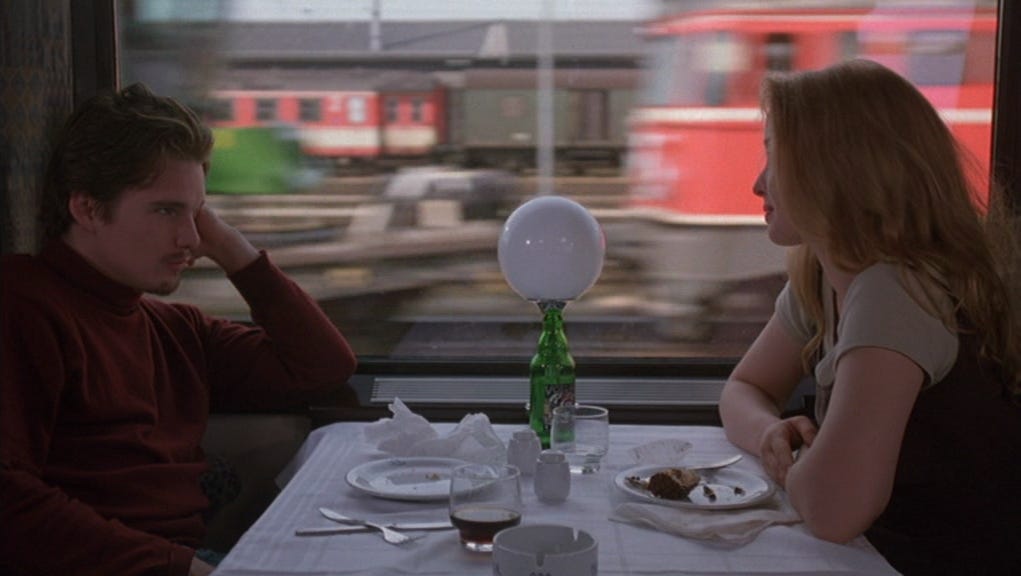
Some time has clearly passed while they’ve been eating and drinking, and Céline is telling Jesse about how her parents were always so achievement-oriented. They never mentioned her getting married and having a family — it was always about her job. And even then, they’d steer her away from anything that was too creative or whimsical. She shouldn’t be a writer, she should be a journalist. She shouldn’t start a cat rescue, she should be a veterinarian. That kind of thing.
Jesse says he always had a good bullshit detector as a kid. He never really listened to anyone else’s ambitions for him. Céline points out that it’s almost worse when your parents seem supportive on the surface, because then you can’t even complain.
Jesse says overall, though, he remembers childhood as a magical time. Then he tells this story that’s honestly one of the main things that sticks with me about this movie — I think about it all the time. He says when he was about 3 or so, his great-grandmother had just died, and he was in the backyard playing with the garden hose, spraying it and making a rainbow. And through the mist, he could see his grandmother. She looked at him and smiled, and he looked at her, until eventually he dropped the nozzle and let go of the hose. And she disappeared.
Of course his parents sat him down and talked to him about death, and told him he’d just been imagining it, but he knows what he saw.
One reason I think about this story a lot is that I had a very intense dream the night my own grandmother died. She’d been sick for a while — hospice had come, it wasn’t like we didn’t know that time was upon us. So you could make the argument that of course I had this dream, it was something that was on my mind in general. But that night, I dreamed about being at her house, and wanting to go outside, and her telling me to put a coat on because it was cold. And then I woke up to the phone ringing and my mother telling me that she was gone. I don’t know, man. It’s very powerful to me.
I think the fact that this movie makes us reflect on stuff like that is one of its own superpowers, honestly. And it was something I was very conscious of when I wrote In Every Possible Way — that, in part, it’s meant to make you think about the world, the way we treat each other, the way we want and find and practice love. I’ll leave it up to you as to whether or not I did that, but it was on my mind as I wrote the book. I wrote it in the months immediately following the 2024 election! It was on my mind a lot.
Céline says that’s a lovely way to look at death, because she’s terrified of it. It’s the reason she’s on a train at all — she could’ve flown, but she’s too scared of a potential plane crash, of those seconds before you’re about to die when you know you’re about to die.
On that morbid note, the train pulls into Vienna. Jesse and Céline both say that they wish they’d met earlier, that they’d had more time to talk. The train is stopped, and Jesse goes to gather up his stuff, but he comes back to Céline still sitting in the lounge car. “All right, I have an admittedly insane idea,” he says, “but if I don’t ask you this it’s going to haunt me the rest of my life.” He says he’s been enjoying talking to her, he wants to keep doing it, he feels like they have a real connection. Céline doesn’t even try to play coy about it, which I appreciate — she’s like, yeah, me too.
So he proposes she get off the train and walk around Vienna with him. He has to catch a fly at 9:30 the next morning, but he didn’t have money for a hotel, so he was planning to just hang out and see what he could see, and it would be more fun to do it with her.
She laughs, obviously not totally sold, so he tries another tack.
“Think of it like this,” he says. “Jump ahead. Ten, twenty years, okay, and you’re married. Only your marriage doesn’t have that same energy that it used to have. You start to blame your husband. You start to think about all those guys you’ve met in your life, and what might’ve happened if you picked up with one of them. Right? Well, I’m one of those guys. That’s me. So think of this as time travel from then to now, to find out what you’re missing out on. See, what this really could be is a gigantic favor to both you and your future husband to find out that you’re not missing out on anything. I’m just as big a loser as he is, totally unmotivated, totally boring, and you made the right choice and you’re really happy.”
Another piece of trivia I read about this movie was that Ethan Hawke and Julie Delpy did some “controlled improvs” to try to come up with what he could say to her that would actually get her off that train. She said that she’d only come if the person was funny and smart, and when they landed on the time traveler idea, she was like, okay that, yes, I would get off the train for that.
They also apparently rewrote a lot of the script but weren’t credited on this movie, although they were on the two subsequent ones. The movie is very scripted, they’ve both said, and although people think they’re ad-libbing or improving a lot because of how natural the dialogue feels, how it meanders and overlaps each other, that’s really just a testament to the script and how well they acted it.
Anyway — we already know she gets off the train. Of course she does!
This is also where they exchange names, and you realize that this whole time they’ve been talking, they never even introduced themselves to each other! She got off that train not even knowing his name! He asked her, not even knowing hers! You know I love name shit, so I always love this fact. His is technically James, by the way, but everyone calls him Jesse.
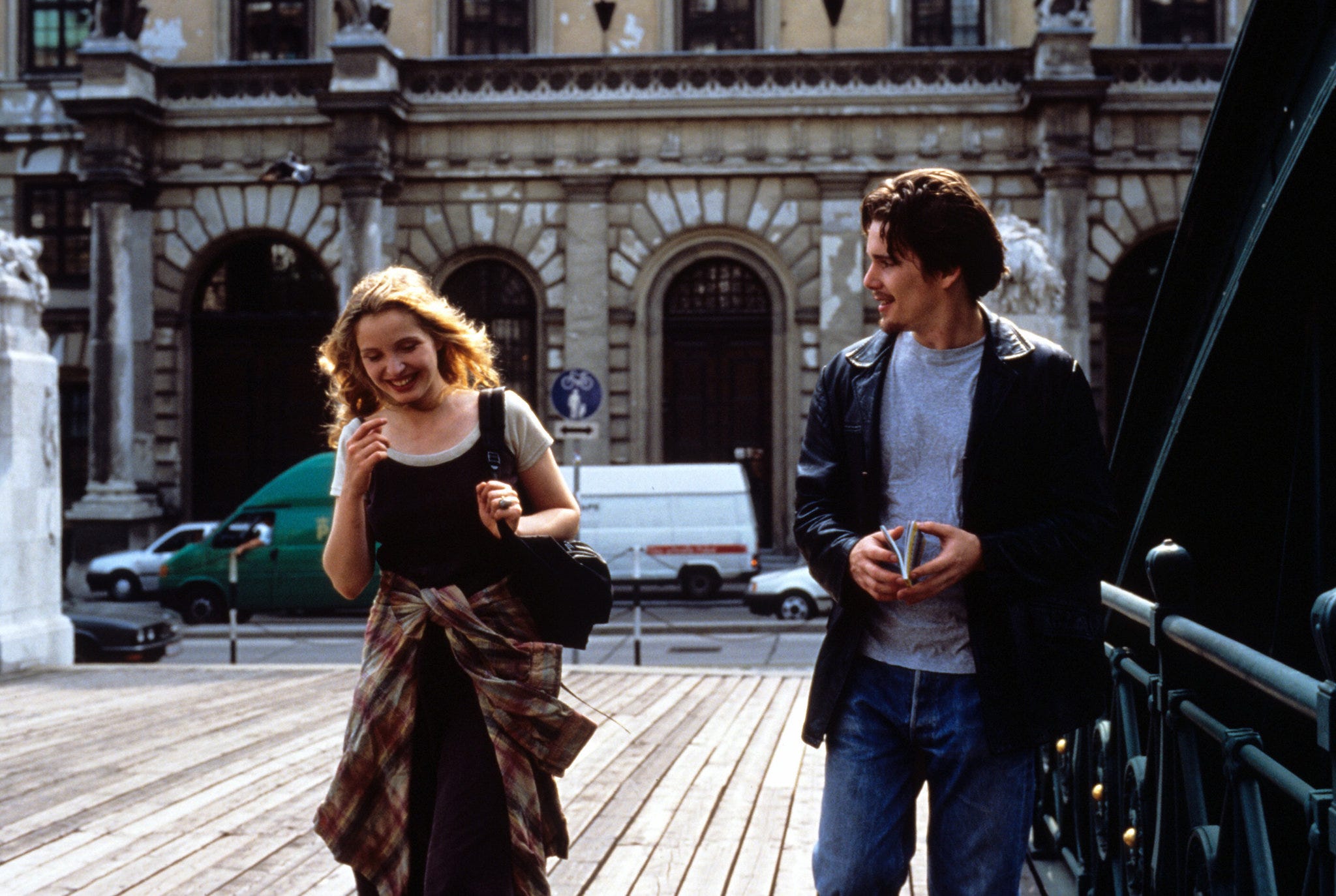
I’ve mentioned this before, but one thing I always love about movies that take place in a short amount of time is that the characters’ outfits become so iconic. I’d love to be a costume designer where I just dressed everyday people in everyday clothes. I find it so fascinating.
For Céline, she’s wearing a grayish ribbed t-shirt under a brown spaghetti strap dress, a plaid flannel for when she’s cold or it tied around her waist when she’s not. It’s such a delightfully ‘90s look. We were always layering t-shirts under spaghetti straps and you know what, we were right to do it. It looks great.
Jesse was in quite the pretentious little maroon turtleneck, but thankfully he must’ve changed at the train station because now he’s in a simple gray t-shirt, jeans, and a leather jacket. Classic. You can look at this outfit the whole movie and not get sick of it. It never goes out of style. His hair also looks more natural and isn’t so swept up and back the way it was on the train.
Once they’re out in the city, they have that moment of being like . . . wait, this is a little weird. Right? We barely even know each other. But they’re two young people in Vienna, they’re determined to find some cool stuff to do. Jesse has a guidebook with him, but he wants to ask these two guys they come across on a bridge instead for any suggestions. I feel like you can really feel Jesse’s “I want a big adventure and I want it to happen organically” type of energy, which I’m not mad at! I’ve totally been there. You don’t want to just do what the tour guide says to do, you want to get out on the streets and live.
The two bespectacled gentlemen are a little nonplussed at first, which is one of those words where I don’t fully know if I’m using it correctly but I love it so oh well. (It’s supposed to mean “surprised or confused,” but then so many people used it to mean basically the opposite, like an absence of any reaction, that it now has two acceptable and diametrically opposed meanings. In the case of these gentlemen, I would say they seem both a bit surprised and confused and also like they don’t care, so it fits.)
One is already snide about Jesse’s question as to whether they speak English, asking why he couldn’t just speak German for a change. Céline says they’d be interested in museums, exhibitions, you know, something fun to do, and the one who wanted Jesse to speak German is like “But museums are not that funny anymore, these days.” I feel like there’s a lot to unpack in that sentence, but luckily the other one just points out that everything is closing right now and asks how long they’re in town.
The snide one is totally flummoxed when they say only for one night. “Why did you come to Vienna, what could you be expecting?” He’s so negative for almost no reason lol.
Céline sees an opportunity to have a little fun, so she says they’re on honeymoon. Jesse riffs off that, saying that she got pregnant and they had to get married, but the snide one is like, I don’t believe you, you’re a bad liar.
It loosens the bespectacled gentlemen up, though, and they invite Jesse and Céline out to see their play, about a cow and the Indians searching for it. There are also politicians, Mexicans, Russians, communists. There’s not a real cow — it’s the snide guy in a cow costume, and the cow is a “bit weird.” She fetches sticks like a dog and she smokes cigarettes with her hooves.
“Will you be there?” the snide one asks. “I’m the cow.” He does a hilarious little pantomime of horns on his head. Honestly (spoiler alert) my only complaint about this movie is that we never get to see this play, because Jesse and Céline don’t make it out. That’s too bad because it sounds incredible. I also have this part of my personality that would find it so hard to bail on this play even if I only vaguely promised to be there, even if these people didn’t know me and would never know if I did or did not come, even if one of them was kind of snide to me. If I said I would be at that play, I’d probably be antsy at dinner later, checking my watch like, fuck, we’re going to miss that cow play if we don’t leave now.
Jesse and Céline hop on a tram, and Jesse says it’s “Q&A time,” aka one of my favorite microtropes in a romance novel. You know, the classic, you ask me a question, then I ask you one, and we go back and forth. It always hits! I want them to get to know each other in a very deliberate way, ratcheting up the intimacy past where natural organic conversation would want it to go!
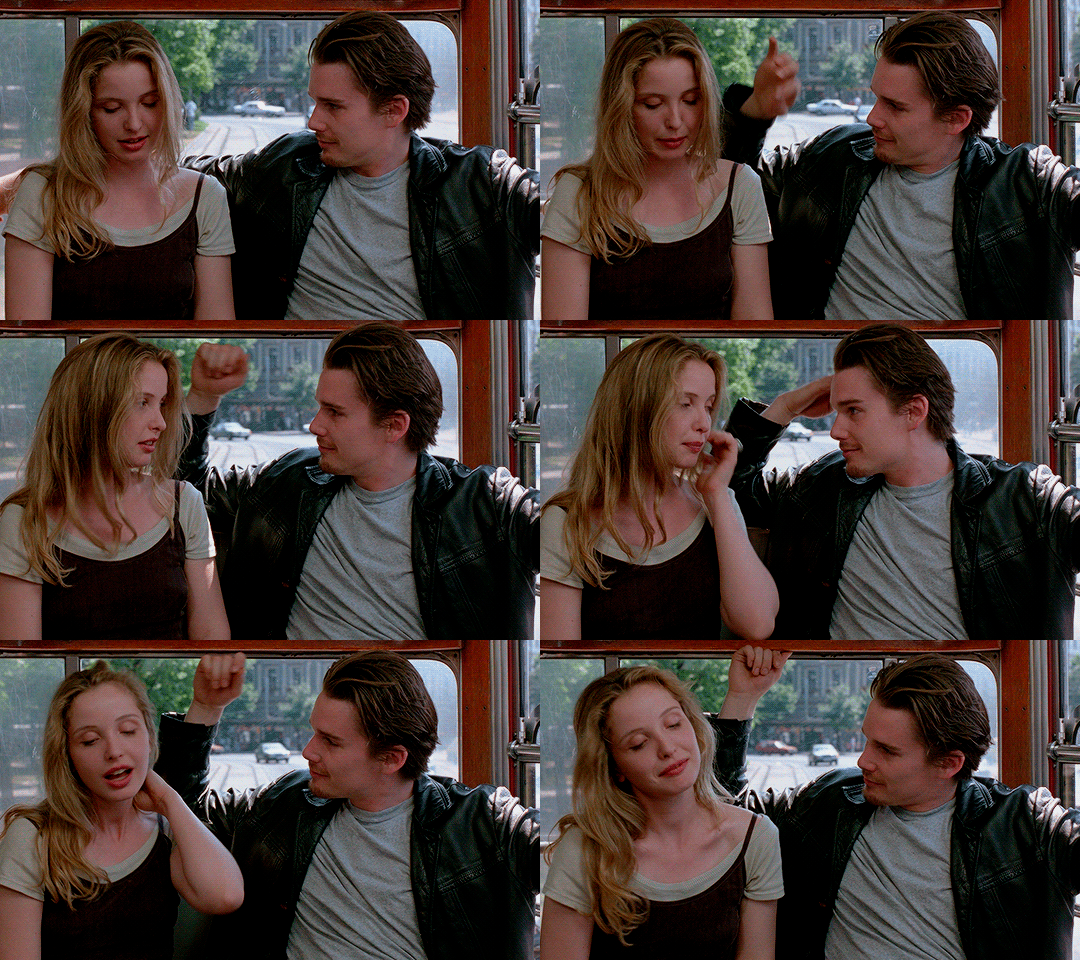
Jesse puts on a funny little accent to ask her to describe her first sexual feelings towards a person. And okay, I know I’ve said it, I know I’ll keep saying it, but this is exactly why I love this movie, because the way he asks it is just so REAL, down to that goofy accent. He obviously wants to know, he’s taking the conversation immediately in that direction, but he’s also just shy enough or immature enough or uncertain enough or whatever that he has to do the goofy accent in order to get the question out. It’s such a boyish, half-endearing, half eyeroll-worthy, thing to do.
She tells him about a swimmer she was into, a guy with bleach blond hair and green eyes, who used to shave all his arm and leg hair to improve his times. I love joking about shaving off all my body hair to improve my times, and I don’t even know where I got that joke from — this movie or something else. I just like to joke about it.
She describes him as a “gorgeous dolphin,” and says that eventually they started dating but at first she didn’t even know what to do. At the end of the summer, they promised to keep in touch, but of course they didn’t. A pretty classic story of first innocent puppy love, to be honest.
Jesse does have this way of turning the conversation back to himself — it’s fine, it’s natural, it’s what you do, but once you notice it I think it becomes very apparent, and watching the later movies you see how some of their dynamics were always there, but I’m getting ahead of myself — and so he says that it just so happens he’s an excellent swimmer.
For her turn, Céline asks if he’s ever been in love. He lets a beat of silence pass, then says, “Yes. Next question.” But of course she’s not going to let him get away with that! She’s like no, no, wait, you can’t just give one-word answers, especially after she gave so many private details about her first sexual feelings. Jesse says, sure, but that question’s different, he could’ve answered that question. Meanwhile, what would she have said about love? She admits she would’ve lied, but at least she would’ve told a story.
He says that he’s told someone he loved them before, and he even meant it, but was it an unselfish, giving, beautiful kind of thing? Not really. Céline seems a little disappointed with his answer, or sad maybe, thinking about something from her own life. But she says she gets it.
Jesse’s eager to return to the sexual feelings question, and starts talking about his obsession with Playboy’s Miss July 1978. Oh boy. I gotta be honest, I’m not sure I would’ve bothered returning to that question just to tell someone about the centerfold I was super into as a teenager lol but hey, they’re bonding.
“Tell me something that really pisses you off,” he asks next, and now we’re cooking with gas. Unzip me!! I could go on for days! Céline is a woman after my own heart and says everything pisses her off, and he says go for it, list a couple. She hates being told by strange men on the street to smile. She hates that 300km from there is a war going on and people don’t know what to do, or don’t give a shit. She hates that the media is trying to control our minds. She hates being in a foreign country — especially America — where if she wears black or loses her temper people are like, oh, that’s so French.
Her next question for him is, “What’s a problem for you?” and he says, “You, probably” before laughing and giving his real answer. It’s another of those Train Thoughts — basically, well, does she believe in reincarnation? (She does, she thinks.) He’s been thinking about it, and if our population is expanding at such an incredible rate, and each person has a soul . . . where are all these souls coming from? How are they multiplying like this? Does that mean that modern souls are only a fraction of original souls?
“At best we’re like these tiny fractions of people, you know, walking —” he starts to say, doing a cute little hand gesture to denote, I guess, people bopping around the earth. “I mean, is that why we’re all so scattered? Is that why we’re all so specialized?”
Céline isn’t totally sure she gets it, but they laugh together, and decide to get off the tram. And again, this is one of the beauties of this movie, I think. It’s a little . . . I don’t even know what the word is for it, but it is kind of pretentious to be asked about a problem and answer with this whole theory about fractions of souls. It really does read like that One Guy in College, the one who carried a folded up copy of Howl in his back pocket or quoted Nietzsche unironically or told you some underground punk band would change your life. And yet it’s also kind of charming, and thoughtful, and interesting, and damned if you wouldn’t still be thinking about what that guy said years later. Does this make sense? These are the kinds of conversations that sometimes make you cringe to remember them but in the moment, nothing feels more interesting and alive and important.
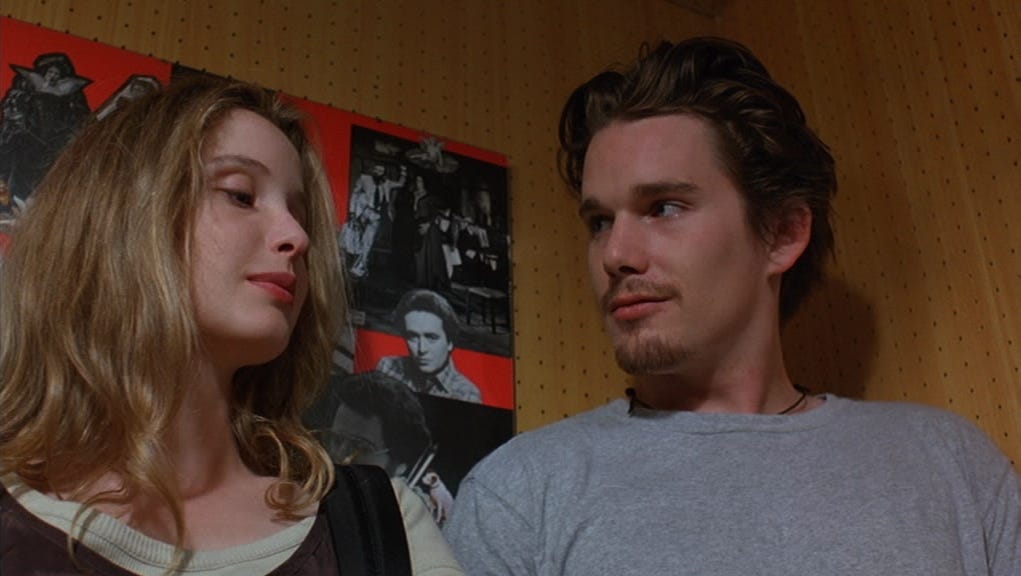
They find a record store and browse through the records, until Céline finds a Kath Bloom record and they go to a listening room to hear it together. This is the scene I linked to at the very beginning of this newsletter, so I encourage you to go back and watch it, if you want. It’s a really beautiful scene of just this haunting, evocative song, and then the play of emotions across Jesse’s and Céline’s faces. He looks at her, she catches his eye and looks away. She looks at him, he can’t keep the smile off his face. She tries to studiously focus on the wall, but she can’t help but look back at him. He doesn’t even try to hide that he’s watching her. You feel everything in this moment. All their yearning and this sense of magic of being here, in this time, in this place, with someone you didn’t even know that morning and yet suddenly seems like the most meaningful relationship in your life.
The song continues to play while they walk through a park, admire the architecture, jump back on the tram and are out of breath and swaying toward each other, laughing. They end up at the Cemetery of the Nameless, which has a bunch of graves of people who washed up on the Danube and were never identified. Some from boat accidents, some maybe from suicides. Céline says that she visited when she was a teenager, and she always liked the idea of these lost dead people, like maybe if you died but no one knew it would be like you hadn’t died at all.
They come to Céline’s favorite grave (such an emo teenager move, to have a favorite!), for Elisabeth who was 13 when she died, the same age as Céline when she first saw the grave. Now Céline is 10 years older but Elisabeth is still 13. “That’s funny,” Céline says quietly.
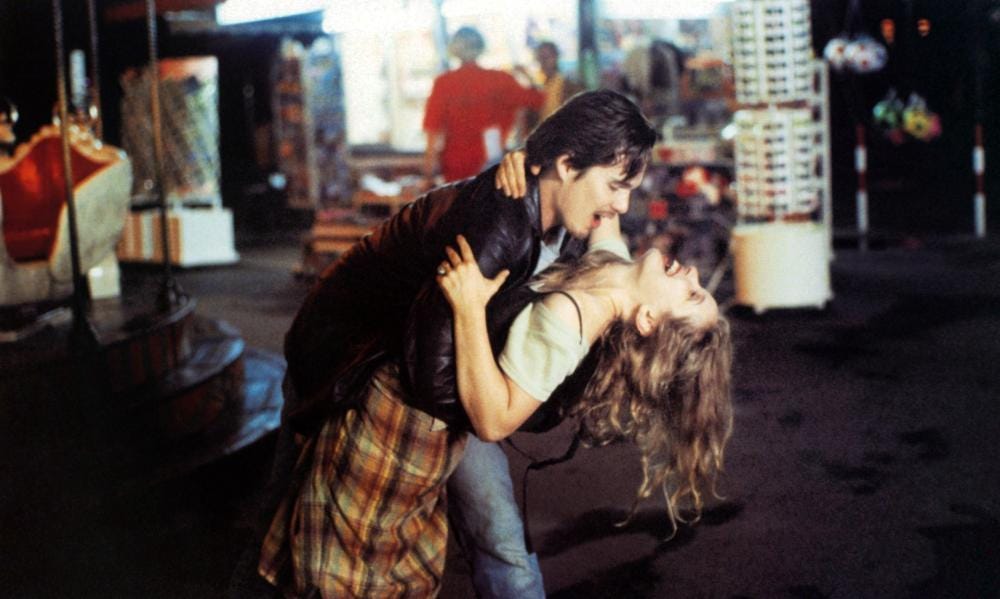
They go up in the giant ferris wheel at Prater, looking out over the Danube and the city as the sun sets. Jesse knows a moment when he sees one, but he still can’t quite bring himself to ask Céline for a kiss, so she puts her arms around his neck and does the job for him. “Are you trying to say you want to kiss me?” she asks, and he nods an enthusiastic, silent, boyishly sweet yes.
So they make out a little in the ferris wheel and then they just hug, overcome by the moment.
It’s fully dark now, and they hang out in the park, which is like a giant outdoor carnival. They’re back to having some of their big conversations, and this time Céline is telling him about her parents, who were these May ‘68 people who used to revolt at everything, and now her dad is this big architect and they’ve traveled all over and she knows she can’t complain about anything, that she’s being raised with all the love and freedom they fought for, and yet she feels like we’re still in the same old fight we just don’t know who or what the enemy is.
Jesse says that everyone’s parents fuck them up, whether with too much or too little of whatever — attention, money, you name it. His parents, for example, are two people who don’t even like each other very much who got married and had a kid and now they try to be nice to him. He does one of those jaunty little gestures that is meant to say, This is a funny story but often kinda says the opposite. He says they finally divorced after staying together for him and his sister for a while, and if you watch all three of the movies in this trilogy, I feel like this story pays some dividends because it maybe explains a lot.
He says that once he overheard his parents arguing about how much his dad didn’t want him when he was born, how angry he was to find out that the mom was pregnant. Jesse says that really informed his life view growing up, but not in a sad way, more like it made him decide that his life was his own doing, like he was crashing a big party. Again I think this actually explains some of his bohemian, ride-the-train-through-Europe, fuck-it-let’s-explore-Vienna-together type of nature.
Céline asks him if he knows anyone who’s in a happy relationship, and Jesse says yes but he thinks maybe they lie to each other. Céline tells him that she always thought her grandmother had a very uncomplicated story, but then she just found out that her grandmother had actually been in love with another man but settled to be with the grandfather. That’s so sad to Céline, but also she loves that her grandmother obviously had all these emotions and experiences beyond what she ever might’ve imagined for her.
“If she’d ever got to know him, I’m sure he would’ve disappointed her eventually,” Jesse points out, and Céline is offended. How can he say that, when he doesn’t even know the guy?
A lot of the friction between Jesse and Céline, when it happens, I think stems from this very thing. One of them takes a more romantic view; the other more cynical. And you can see it catch them up in the moment, this idea of almost like, “How can I be falling for you if you feel like this?” or “Does this mean that my heart isn’t safe with you, if this is your idea of love?” Again, if you watch all three movies, you can start seeing the way this theme plays out a lot.
She mocks him a bit for being so romantic up there in the ferris wheel, wanting a kiss as the sun sets, and it’s pretty hilarious. Jesse is like all right, all right, let’s go back to talking about your grandmother.
They find a little cafe to sit at outside, doing some of the classic people-watching things that characters do in movies, where they make up stories for strangers walking down the street or narrate pretend conversations.
“Can I tell you a secret?” Jesse asks, and then gestures for Céline to lean in closer. When she’s close enough, he kisses her. The sound design of his leather jacket creaking all the time is exquisite, I gotta say. It’s been the soundtrack to both of their kisses so far. Kiss a man in a leather jacket and people are going to know about it. Can’t keep that stealth.
Céline makes eye contact with a palm reader who’s going around to the tables, which means she comes over to them. The woman quotes a price and then starts rubbing Céline’s palm, saying, “You have been on a journey, and you are a stranger to this place. You are an adventurer, a seeker, an adventurer in your mind.” Céline likes that, you can tell. “You are interested in the power of the woman, in a woman’s deep strength and creativity. You are becoming this woman. You need to resign yourself to the awkwardness of life. Only if you find peace within yourself will you find true connection with others.” That makes Céline think.
“He’s a stranger to you?” the palm reader asks, gesturing toward Jesse. She grabs his palm, examines it for a minute, then says to Céline, “You’ll be all right. He’s learning.”
After that, she’s really just interested in her money, but as she walks away she gives them one final bit of advice. “You’re both stars. Don’t forget. When the stars exploded billions of years ago, they formed everything that is this world. Everything we know is stardust, so don’t forget you are stardust.”
Again their romanticism vs. cynicism comes out again, because Jesse is immediately like, okay that was cool and all, but don’t tell me you took any of that seriously. Meanwhile Céline is totally sold — she knew they were on vacation, she knew they’d just met. I don’t know why I keep bringing up my grandmother (maybe because grandmothers come up a lot in this movie?) but once I had my aura photo taken and read and the woman said something to me about this life-size doll my grandmother had given me once and it really floored me! My grandmother was an artist, and she did in fact make this cloth doll for me once, where she’d painted on the face and sewn the clothes and everything! It was big enough to sit in a little kid’s rocking chair in my room. That aura reading really did get to me, even if there were probably twenty other things she said that I’ve already forgotten because they were too vague or didn’t resonate at all.
Jesse continues doing an imitation of what a truthful fortune teller might sound like, one who would tell you just that your future will be a tedious collection of days just like every other, and Céline is laughing but you can also tell she’s a little like, ahhh okay so you’re that guy. We all know this guy! Has to be negative and cynical about every little thing even if we’re trying to enjoy it. God forbid I hear something about my future that makes me glow a little. Just let her have it, Jesse, come on.
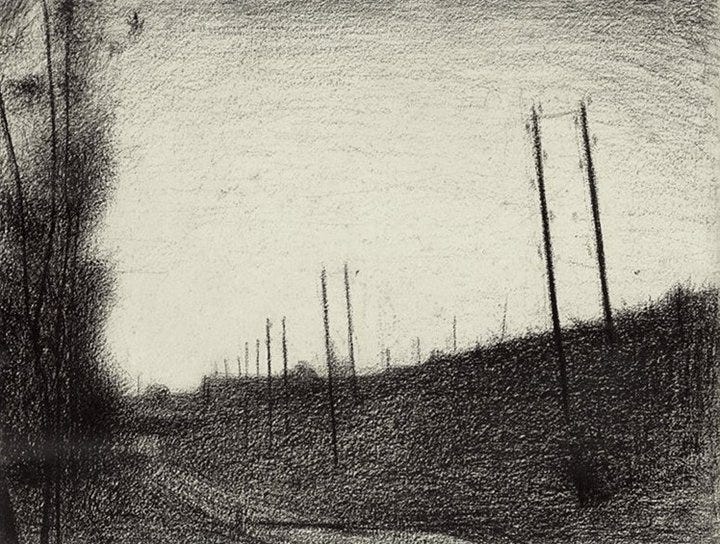
They keep walking and they see posters for an art exhibition, but it won’t be there until next week so they’ll miss it. Céline points at one of the artworks on the poster and says she saw it in person once and stood in front of it for like 45 minutes, just staring. This is the art, La voie ferrée by Georges Seurat, in case you want to do the same:
It’s making me a little anxious that it’s well past dark and they’re clearly missing the cow play, but whatever!!! We can’t all be on top of these things.
They stop in an old, beautiful church, and Céline marvels that she was in a church just like it only a few days ago in Budapest. She says that even though she rejects religion, she can’t believe how much pain and happiness can be housed in one building, for so many generations. Jesse asks if she’s close with her grandmother and she says yes, maybe because she feels like an old woman herself, laying down to die, like her whole life is just memories. Céline has some dark thoughts, let me tell you. I’m into it.
Jesse says that’s wild because meanwhile, he feels like a 13-year-old boy, taking notes for his life, almost like he’s in a junior high dress rehearsal. These movies are a lot about gender, I think — the roles expected from men and women in relationships, the way men and women see the world differently, etc. Even here, I think this gets at that.
“That’s funny,” Céline says, laughing. “Then up there in the ferris wheel it was like this very old woman kissing this very young boy. Right?”
Jesse tells her about this Quaker wedding he went to once, where the couple just kneel down and stare at each other, and nobody says anything unless God moves them to speak. Then after an hour of staring at each other, they’re married. Jesse’s making such intense eye contact with her that you know he’s thinking, if only for a moment, that that’s basically them. Getting married in this church.
Then Jesse tells this story about a time he was driving with his friend, and they saw a homeless guy out of the car window. The friend rolled the window down and held a hundred dollar bill out of it, asking, “Do you believe in God?” But when the homeless man said yes, the friend said wrong answer and drove away. “That’s mean, no?” Céline asks. “Yeah,” Jesse agrees. Why does he tell this particular story? I always wonder.
They walk along the river, holding hands and talking about what they’d be doing right at that moment if they hadn’t gotten off the train together in Vienna. Jesse says he’d be at the airport, reading old magazines and crying into his coffee that she hadn’t come with him. She jokes that she’d probably have gotten off the train in Salzburg with someone else.
But Céline says she likes that nobody knows that she’s there with him, and that nobody she knows even knows him, so they can’t tell her all any bad stuff about him. She says she feels like the general of an army when she starts dating a guy, always strategizing, maneuvering, trying to figure out his weak points or how to seduce him. And that’s before social media! Think about how much work you had to do!
“If we were around each other all the time,” Céline says, “what do you think would be the first thing about me that would drive you mad?” Ohhhh Jesse, don’t answer this one. Seriously, it’s a trap. Jesse knows this — he says he used to date a girl who asked him stuff like that. She’d ask what about her bugged him, and when he finally said she didn’t handle criticism well, she flew into a rage and broke up with him. Ha. This is like a stand-up bit.
He says that all she wanted was to have an excuse to tell him what was wrong with him. So is that what Céline wants? She’s like no, no, but in that way where you’re like . . . ah, you’re thinking of something, Céline, just say it. She finally admits that she didn’t love his reaction to the palm reader back there. She says he was like a “rooster prick,” which is a fantastic combination of words. She says he was like a little boy upset because his mom wouldn’t buy him a milkshake. She’s reading him to filth tbh.
A guy sitting by the side of the river stops them, speaking at first in German before switching to English. “May I ask you a question?” he says. He says he doesn’t want to just beg for money — instead, he’ll ask for a word, any word, and then he’ll put it inside a poem. “Milkshake,” Céline suggests and Jesse’s like, ah, good, I was going to say “rooster prick.”
While they wait for the poem, Jesse asks if they were just having their first fight. Céline is like, no, but then she says even if they were, why is conflict so bad? Jesse says that he always thought if he could just accept that life is supposed to be difficult, then maybe he wouldn’t be so pissed off if things didn’t go his way all the time. He says we have such competitiveness ingrained in us, even when you’re trying to just enjoy yourself, suddenly that instinct comes over you. I really relate to this, as someone who is notoriously not great at games but does get that competitive fire when I play them. It’s an unpleasant combo!
Céline asks, “Is that why you tried to get me off the train? Competitiveness?” but Jesse doesn’t have time to answer before the poem is ready:
Daydream delusion
Limousine eyelash
Oh, baby, with your pretty face
Drop a tear in my wineglass
Look at those big eyes
See what you mean to me
Sweet cakes and milkshakes
I’m a delusion angel
I’m a fantasy parade
I want you to know what I think
Don’t want you to guess anymore
You have no idea where I came from
You have no idea where we’re going
Lodged in life, like branches in the river
Flowing downstream, caught in the current
I’ll carry you
You’ll carry me
That’s how it could be
Don’t you know me?
Don’t you know me by now?
Not bad, honestly. Certainly better than I could do in five minutes. And of course there are parts that really resonate with Jesse and Céline, with their story. I’d like to be the person on set who got to write a poem like that, where it doesn’t have to be good, it just has to be a little strange and poignant in some weird way. What a fun assignment.
Céline thinks it’s great, but Jesse can’t help himself. As they walk away, he’s like, you know he probably didn’t just write that, right? He probably has a template and just plugs that word in. But then he backs off because at least now he realizes that he’s doing it again, the way he was with the palm reader. Once again I’m just going to say that one reason why the whole trilogy is brilliant is because some of these same dynamics play out in their relationship 9, 18 years later.
Jesse is way ahead of the AI debate because he starts talking about how everyone always says that technology saves all this time, but what use is it if all that time is just filled with more busy work. It’s not like you take the time you save with your word processor and go hang out in a Zen monastery.
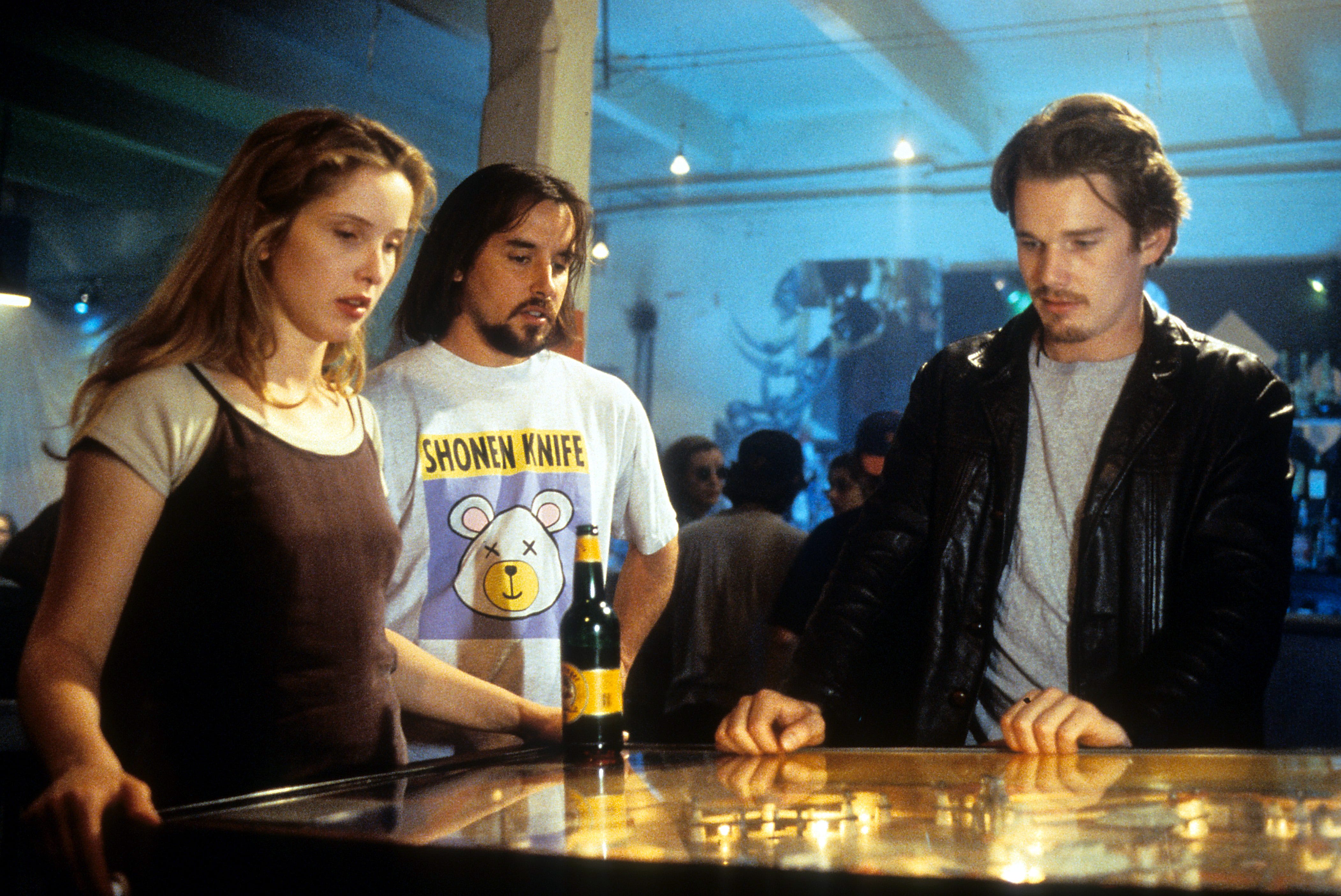
They find a little club to dip into to get a beer. A guy on the stage with an acoustic guitar is singing Feel my life pumpin’ through me over and over. Then he says some stuff in German that I can’t understand because I basically only remember Was essen Sie am liebsten and stuff like that.
They play some pinball, and Céline obviously has that competitive spirit, too, because she gets pretty heated when the game doesn’t go her way, slamming the machine and yelling merde. Jesse decides there’s no better opening to ask if she’s seeing anyone back in Paris. She says no, but she did have a boyfriend before they broke up about six months ago. She said she had high hopes for that one because he was “very stupid, ugly, bad in bad, alcoholic . . .” Which, yeah. I can see why you were so optimistic?
She says that she was definitely doing him the favor, but he’s the one who broke it off, saying that she loved him too much and was blocking his artistic expression. She was totally obsessed with him, so she went and saw a shrink, where it came out that she’d written a whole story about a woman killing her boyfriend with all the detailed plans and everything.
“She was going to kill her boyfriend?” Jesse clarifies.
“It was nothing I would do,” Céline says, laughing, “it was just some writing.”
“Right, no, I understand,” Jesse says, but he gives her this really cute eyebrow-raised look like whoa.
The shrink said she had to call the police, and that was Céline’s first and last session with her. She says that, ultimately, she got over the guy, but sometimes she’s still paranoid that something will happen to him even 1,000km away and she’ll end up being the one accused.
Céline turns the question back on Jesse: is he with anyone? He’s immediately kind of squirrelly (the same way he was on the train about his “friend” in Madrid, I’m giving it away a little early here, but c’mon). He says it’s funny they managed to avoid this subject for so long, but that he sees love as this escape for two people who don’t know how to be alone. He says that people think of love as this “unselfish, giving thing” (funny how that’s the exact combo of words he used back on the bus) but if you think about it, there’s nothing more selfish.
Which is all SUCH a fuckboi answer, since he still hasn’t directly answered her question! Céline sees through him, though, and is more generous than I am, because she immediately assumes that he’s just been broken up with and that’s why he sounds so hurt.
So he finally comes clean: he didn’t just come to Europe to read Hemingway in Paris. He saved up all spring just so he could come spend the summer in Madrid with his girlfriend, who’s been in an “asinine art history program” for the last year. (Genuinely wonder what makes it asinine?? Other than the fact that it took her away from him?)
When he arrived in Madrid, the girlfriend basically did everything to avoid spending time with him alone. They would have dinner with six of her friends, that kind of thing. It became pretty clear that she wished he hadn’t come. I gotta say, I’ve been in this exact situation before (well, not exact, mine was a Bat Mitzvah out of town that my childhood best friend definitely didn’t give a shit if I was there or not, and I realized it had been her mother who’d really pushed for me to be there). It is uncomfortable.
Jesse says the worst thing about when someone breaks up with you is that it makes you think about how little you thought about the people you broke up with, and you realize that’s how little they’re thinking about you. Damn. That’s so painful and true.
Céline passes along her shrink’s advice to her for getting over a breakup, which was to look at bright colors. I am pro-therapy but you gotta admit that sometimes even professionals be saying the wildest shit.
Jesse and Céline are back to walking the streets, and Jesse is telling her about these monkeys that just have sex all the time. They turn out to be the least violent, the most happy, so maybe that shows that fooling around isn’t so bad. Céline is like haha I know a line when I hear one. She shares that she had a paranoid thought that feminism was invented by men so that women would feel more sexually free and fool around with them more. See what I mean about how these movies are a lot about gender? Sometimes in the most explicit ways.
Jesse says maybe there are some biological things at work here, which is always one of those, uh oh here we go type of arguments. He says that on an island of 99 women and only 1 man, you could end up with 99 babies, whereas on an island of 99 men and only 1 woman, you’d only have 1 baby. Céline says actually, on that island there’d only be like 43 of the men left because they would’ve all killed each other trying to fuck this one poor woman. And meanwhile on the other island there’d be 99 women and 99 babies and not a single man, because they would’ve all eaten him alive.
He says there’s probably something to that, because on some level a woman doesn’t mind destroying a man. Like once he was walking down the street with his ex-girlfriend, and she got cat-called. Jesse was going to be cool about it, not get too uptight, but then she turns around and tells them to fuck off, so now who’s on the front line? Who has to defend her honor? He says that women say they hate it when a man gets all territorial and possessive, but then when he doesn’t she’ll say he’s wimpy or unmanly.
I think these conversations are interesting mostly because a) they feel very much like those kinds of Big Conversations you have late at night with someone you’re getting to know, where everything feels smart and fascinating even when you’re just like . . . repeating the same tired talking points people have discussed forever; b) again, watch this movie and then watch especially Before Midnight where (spoiler alert) Jesse and Céline are together but their marriage seems a little tense, and tell me you don’t see all the parallels and threads; and c) frankly, a lot of these conversations are especially relevant in the romance space which is often about gender roles in explicit or implicit ways.
Céline tries to make an additional point, about how really it’s men who more often destroy women, or have the power to destroy women, and then she’s like actually I hate this let’s stop talking about it.
“Every couple’s been having this conversation forever,” Jesse agrees, and he’s right! It also firmly cements them as a “couple,” placing them in context of all the ones who have come before and will come after, still debating these topics.
They stop to watch a belly dancer who’s doing a “birth dance” (Céline watched a documentary on it once), and Jesse reluctantly tosses a couple coins in her tip jar. “Everything that’s interesting costs a little bit of money,” he says, and you know what? I’ve been hard on Jesse for his cynicism, but I hate spending money so much that I’m actually way more on his side than Céline’s lol. Like I think if you pay for a palm reader you should get to just enjoy it, but I also could see myself being like, “That’s such a waste of money” from the get and not wanting to do it.
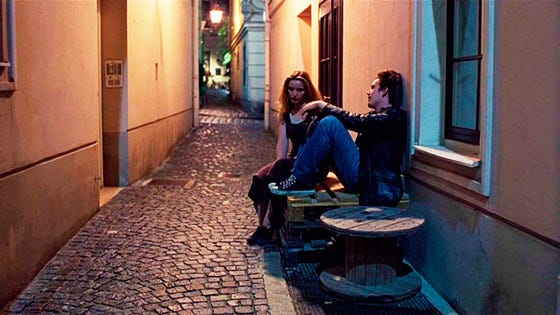
Céline is telling him about the birth dance as they walk away, but my attention always gets drawn to these two guys smoking in the foreground, who watch Céline pass by and then kinda nudge each other and laugh.
Céline says she loves the idea of dance as this communal thing that everyone does together, and Jesse says that he heard about this old guy once who watched young people dance and said, “How beautiful. They’re trying to shake off their genitals and become angels.” He wants to know what the men do, while the women do their birth dance — are they just not needed? (I mean, no, probably not?) She says that they’re just lucky women let them live, since some insects bite the male’s head off after mating. He’s like, you sure do bring up stuff like that a lot . . . and I gotta say, especially after her revelation about her homicidal ex-boyfriend story, he’s not wrong.
But she gets serious. She says that it’s always important to her, to be a strong icon of womanhood, to not have her life revolve around some guy. “But loving someone, and being loved, means so much to me,” she says. “I always make fun of it and stuff. But isn’t everything we dream in live a way to be loved a little more?”
Goddamn.
Honestly, that’s my argument for romance novels, in a nutshell. To anyone who thinks they’re stupid or pointless or too low-stakes or whatever, I’m like . . . what could possibly be more important? Higher stakes? Than finding that person you can connect with in that way. Our entire lives revolve around connections. They’re important! I love that Céline says this, because I do think that a lot of us can relate to that desire to be our own person and achieve things in our career and on and on but . . . we do still want to love, and be loved. It’s hard to sublimate that away.
Jesse says that sometimes he dreams about being a good father and a good husband, and that seems really close. But then other times it feels like that would ruin his whole life. He says that if he’s being honest with himself, he thinks he’d rather die being able to say that he was really good at something than that he was in a nice, caring relationship. I see we’ve reached the portion of the night where we’re being so honest and vulnerable that we’re saying things we maybe shouldn’t, to a person we’re thinking about romantically. I don’t mean that in a bad way. I mean literally, earlier in the day he would’ve never said that shit to her, he was too busy trying to be funny and charming and interesting.
Céline talks about an older man she worked for who had always focused on his career, and then one day he realized he had given nothing of himself. It was all for no one and nothing. She says, “I believe if there’s any kind of god, it wouldn’t be in any of us. Not you or me, but just this little space in between. If there’s any kind of magic in this world, it must be in the attempt of understanding someone, sharing something.” You know, I think I agree with that. Julie Delpy looks so beautiful, Ethan Hawke is looking at her like he’s already all the way in love with her, and they both look so tired from this night of wandering around.
Jesse and Céline find a restaurant to stop in, and we see a bunch of the other patrons. Two men talking, a woman trying to read a book, an American couple complaining about the service and how in New York their waitress would be out of a job.
Then comes one of the most iconic scenes in the whole movie, where they each mime a phone call while sitting across from each other at a restaurant. First, Céline “calls” her friend in Paris, who she’s supposed to have lunch with in 8 hours.
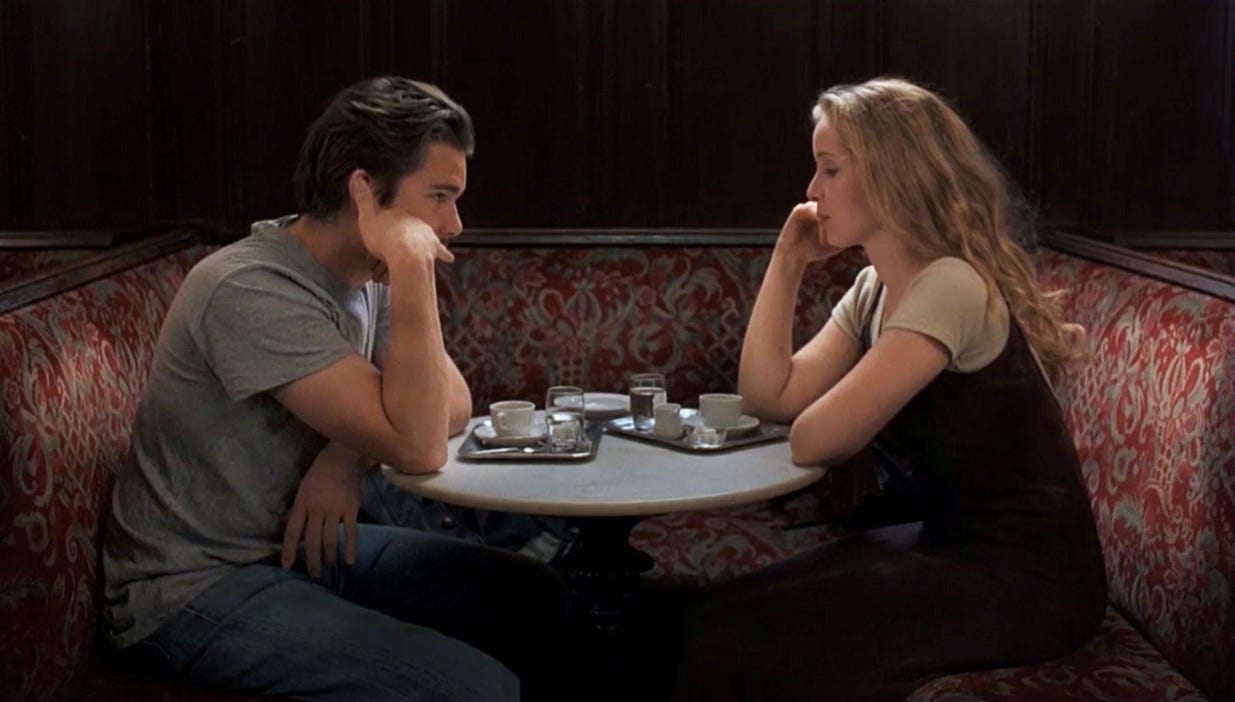
She makes Jesse play her friend, and immediately launches into a bunch of French before he’s like, you know what, I’ve been working on my English, what if we switched to that? She tells her friend that she can’t make lunch because she met a guy on the train and is hanging out with him in Vienna. “Are you crazy?” Jesse as her “friend” asks. “Probably,” Céline admits. Of course, Jesse can’t resist the chance to ask her why she even got off the train with this guy in the first place. Céline admits that she was probably ready to get off the train after talking to him for only a short while. “He was so sweet,” she says, and then tells the story of him as a little boy seeing his dead grandmother’s ghost.
“I think that’s when I fell for him,” she says. “Just the idea of this little boy with all these beautiful dreams.”
She describes him as cute, with blue eyes, nice pink lips, and greasy hair. He’s tall and a little clumsy. Honestly, she’s nailing him. “I like to feel his eyes on me when I look away,” she says, and then says he kind of kisses like an adolescent, it’s cute. “What?” Jesse asks, probably breaking character for a minute.
Céline says she just hopes he isn’t scared of her, because she’s harmless. The only person she could hurt is herself. Jesse says he doesn’t think the guy is scared, he thinks he’s crazy about her. “You gonna see him again?” he asks, and Céline says they haven’t talked about that yet.
Then she hangs up, and says it’s his turn to call a friend. “Hi, dude, what’s up?” Céline answers the phone in a hilarious masculine “American” accent. She asks how Madrid was, and Jesse says that it sucked. He was actually only there for a couple days, but he didn’t want to come home right after, he didn’t want to see anyone he knew, he wanted to be a ghost, completely anonymous. But! don’t worry about him. He’s rapturous. Can you believe he met a girl his last night in Europe?
“And you know how they say we’re all each others demons and angels?” Jesse says. “Well, she was literally a Botticelli angel, just telling me that everything was gonna be okay.”
He tells his “friend” about how they met on the train, how she didn’t like him very much at first, but she’s super smart and passionate and beautiful. He says he was so unsure of himself, he thought everything he said was stupid.
You can tell he’s fishing a little bit here. Céline jumps in as his “friend” and says he shouldn’t worry about that, she probably wasn’t judging him. And she came and sat next to him, no? I love that she still keeps her very French “no?” even when she’s trying to play an American, and I love that we find out that maybe she wasn’t quite as cool as she seemed right from the start, maybe she did notice him as much as he noticed her.
She says she just doesn’t understand women. They’re so strange. Aren’t they? Jesse drops the “phone” bit for a second with his hand but then puts it back. “Yeah,” he agrees.
They’re back outside, and who knows what time it is, but if she was going to have lunch in 8 hours I’d guess like . . . 4am? He says it feels like a dream world, and she says it’s like their time together is just theirs, their own creation, like they’re in each other’s dreams. Jesse points out that everything that’s happened shouldn’t really be happening, and Céline says that’s why it feels so otherworldly. If there’s two things I really took from this movie when I was crafting In Every Possible Way, they were both the really practical, grounded experience of just walking around a city with someone as you got to know them; and then this feeling, of being in a kind of liminal dream state, where everything felt heightened and yet vaguely unreal.
He leans down to kiss her and you do hear that leather jacket again. I’m sorry to keep pointing it out I just enjoy the detail.
They find a riverboat restaurant — do those really run all night? I guess they must? — and Jesse is telling her a story about a friend of his who was watching his baby be born. He watched the baby take its first breath, but he couldn’t get it out of his head that the baby would die someday. And Jesse says that’s so true, our time is finite, but isn’t that what makes all the little moments so meaningful? I kinda would’ve loved to have arrived at that point without having to think about babies dying, but yeah, I do see his point.
She says it’s the same for them, though. Like after tonight, they’ll probably never see each other again. They’re at the part of the night where they’re realizing how impossible this relationship might actually be. He lives in the U.S., she lives in Paris, she hates to fly . . . he starts trying to plan out the logistics when she interrupts him and is like, maybe it’s better this way. If we exchange numbers or addresses, this would probably just fizzle out, and wouldn’t that be worse?
“Why do you think everybody thinks relationships are supposed to last forever anyway?” he asks.
I do agree with a canonical HEA for a romance, but I see the appeal of these kinds of romantic stories, too! The ones about someone who’s just in your life for a little while, who made an outsized impact for the time you had together. There’s something romantic about that in another, more bittersweet way.
So they agree that tonight will be it. They do a handshake on it. “To our one and only night together,” Jesse says. “And the hours in between.” They agree to say their goodbyes now, so they don’t have to worry about it in the morning.
They head down into Christian Grey’s Red Room — not really, it’s just a very red-lit club. The plan is to try to score a bottle of wine and a couple glasses. Céline is going the old-fashioned stealing route for the glasses, but Jesse decides to charm the bartender, telling him his situation and promising he’ll send him the money once he gets back home. The bartender actually goes for it. They shake on it, and the bartender gives him a bottle of red. “For the greatest night of your life,” he says. I guess that guy’s a romantic!
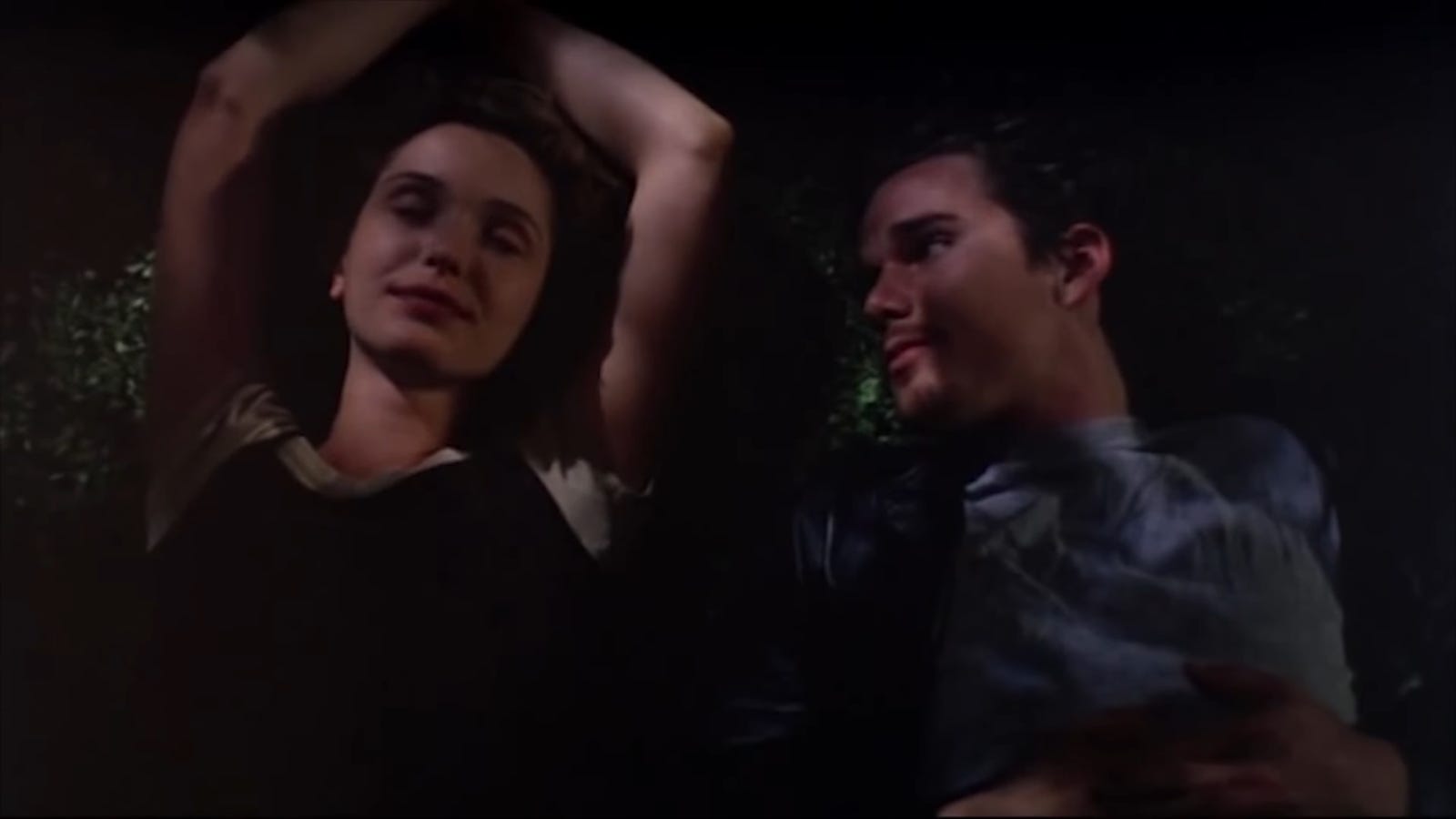
Jesse and Céline find a park to lie down in and drink their wine. Céline says that throughout her life, she’s had this moment where she knew it was special even as it was happening. But it also felt wrong, because she’d wish she was with someone else. Someone who would be able to understand what she was feeling, what was so important about that moment.
“But I’m happy to be with you,” she says.
She says it’s a great morning and he agrees, asking if she thinks they’ll have others like this. She’s like haha have you already forgotten the very adult, rational decision we made, that tonight would be it? She obviously has a point.
Jesse says he knows what she means about wishing someone wasn’t in a moment, but that usually it’s himself he wishes he could get away from. “I’ve never been anywhere that I haven’t been,” he says. These are stoner thoughts, late-night punch-drunk thoughts, but he’s so right. He points out that over time, she’d start to hate some of his mannerisms. The way that when they had people over, he’d get a little drunk and insecure. The way he tells the same stupid pseudo-intellectual story again and again.
This self-loathing is too real, honestly. It’s a curse to be so aware of yourself sometimes!
“Being with you,” he says, “has made me feel like I was somebody else.” And the only other way to feel like that is dancing, alcohol, drugs, stuff like that.
“Fucking?” Céline puts in. It’s very cute in her French accent.
Well, he wasn’t going to say it, but he’s glad she did. I think he was somewhat baiting it.
She says she wants to be kissed, so he kisses her. The leather jacket is just starting to creak so we know we’re getting somewhere, but then she breaks it off, saying that she doesn’t think they should sleep together. If they only have that night, it’ll make her feel bad later, to wonder who else he’s with, to miss him.
He says fine, let’s see each other again. She laughs and accuses him of breaking his vow just to get laid but he says, no, he’s serious. She just thinks it’s too much of a male fantasy, meeting some French girl on the train and getting to fuck her.
They go back to lying there, obviously thinking about the implications of all that, when she says, “You don’t want to see me again?” He says, “No, of course I do. Listen, if somebody gave me the choice right now to never see you again or marry you, I would marry you.” That’s a great line. Céline thinks so, too. She says she thinks she decided to sleep with him the moment they got off the train, but now that they’ve talked so much she’s not sure. “Why do we make everything so complicated?” she asks between kisses. They start making out in earnest, hands in hair, hands roaming over bodies, rolling over in the grass. You never do find out definitively if they sleep together or not.
(At least in this movie. You do find out later.)
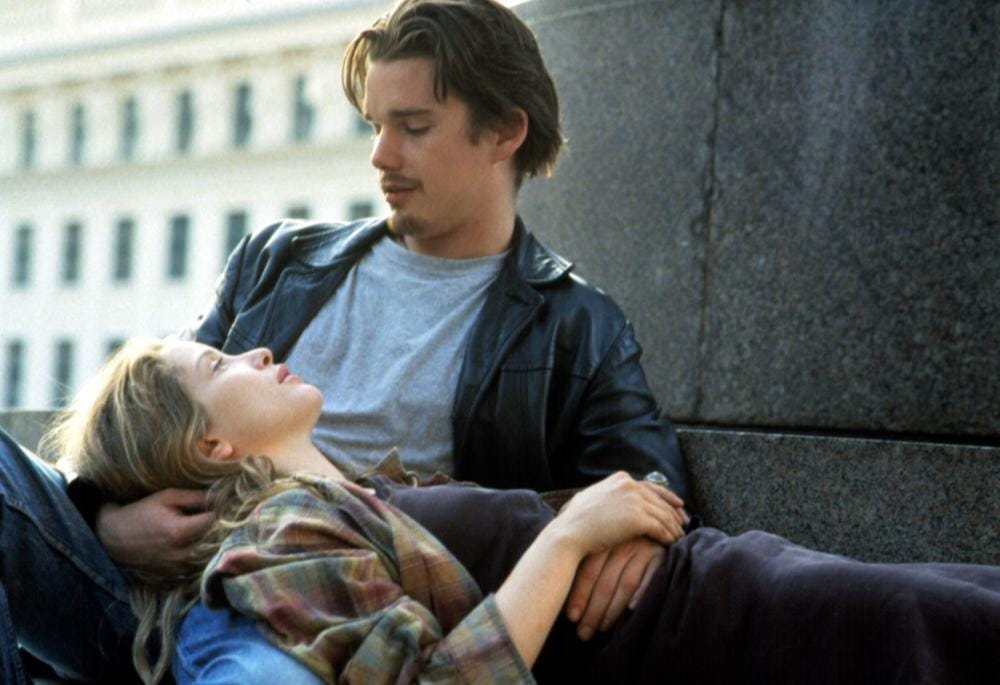
They wake up to blue sky and birds chirping. They walk hand-in-hand down the streets of Vienna, now in daylight, Céline wearing just the brown spaghetti strap dress without the shirt underneath and her hair in two loose braids. He wants to know the first thing she’ll do when she gets to Paris and she says call her parents. He says he’ll probably go pick up his dog, who’s been staying with a friend of his. You can tell she has this moment where she’s like, you have a dog, how am I just learning this, I really don’t know you at all.
A man is playing the harpsichord inside a house, and they linger for a while outside the window, watching and listening to him play. Jesse twirls her around and then stops her to take a mental picture. He says he doesn’t want to forget her or everything about that night. They stare at each other for a few moments before they start to kiss.
Later, they’re resting together, Céline lying with her head in Jesse’s lap, when Jesse quotes, “The years shall run like rabbits.” Which is a W.H. Auden quote, and I guess now is as good a time as any to tell you that there are also a lot of Ulysses connections with this film — it’s supposed to take place on Bloomsday (June 16), the same date that is made famous in Ulysses for being the day that the entire events of the whole book take place. That’s one reason why I chose to write this newsletter today! Ulysses is referenced a lot in In Every Possible Way, as well, because of the Irish connection, and my original pub date was supposed to be June 16 until it got changed, which is something I’m not bitter about at all! Especially because the reason was such a good one! But let’s get back to the movie, it’s almost over.
Jesse starts to do an impression of this recording he has of Dylan Thomas reading a W.H. Auden poem, which I find highly relatable because if there’s one thing I love to do, it’s my impression of Sylvia Plath reading “Daddy.”
Céline wants to go back to what Jesse has been saying about how couples get sick of each other after a few years. She says she thinks it would be the opposite for her — she can really fall in love when she knows everything about someone. They just look at each other. They’re at least halfway in love with each other and they know it, we know it, it’s written all over their faces.
Jesse FINALLY brings up the play and says that they didn’t go to those guys’ cow play. At least they’re showing some respect!
They’re back at the train station and you can already tell that the anxiety of goodbye is sinking in. This is it, back to reality. There are questions about whether he knows what bus he’s taking to the airport, they’ve gotten their luggage from the locker they rented at the station, it’s starting to feel like it’s over. I hate this part of a trip, when you have to check in for your flight home and talk about how early you have to wake up the next day and whether you’ll need a ride or take public transport or what. It does always feel a little sad, even though I get homesick easily, and I almost never end a trip not wanting very much to just be home.
Even though they said they wouldn’t say their goodbyes, you know those pre-goodbyes never work. You still want to say something in those last moments!
“Have a great life,” Céline says. “Have fun with everything you’re gonna do.” Jesse tells her good luck with school and all that. They kiss passionately one last time. They hate this, but the train is about to leave. Jesse says you know that bullshit about not seeing each other again? I don’t want to do that. Céline agrees — she doesn’t want to do that, either.
She suggests that they meet back up in five years. “Five years?” Jesse says incredulously. “That’s a long time.” (Buddy, you don’t even know.) She says okay, how about one year. He says six months. She points out that it’ll be freezing, but he doesn’t care. He says six months from last night, so that means they’ll meet at Track 9, December 16, at 6pm. He does remind her that it’s only a train ride for her but it’s an international flight for him, so he’s going to be there and she better be, too. They agree not to call or have any other contact in between. “It’s depressing,” he says.
So she says au revoir, he says later, and she has to get on the train. There’s a nice shot of him touching the train as he walks away, and a shot of her inside the train finding her car, a mirror of a shot at the very beginning of the movie where you saw a woman doing the same thing. Some of the last shots of the movie are all the places they’d been without them — the bridge where they met the bespectacled gentlemen, the riverboat restaurant, they alley and the Cemetery of the Nameless, the ferris wheel and the park, where they left their empty wine bottle and wine glasses. (Come on, guys . . . you couldn’t carry those to a trash can?)
The last shots of the movie are of Jesse on his bus, leaning his head back to rest, unable to help the smile that keeps tugging at the corner of his mouth. And Céline on her train, a book open in her lap but she’s just staring out the window, an answering smile blooming on her own face until she closes her eyes to go to sleep.
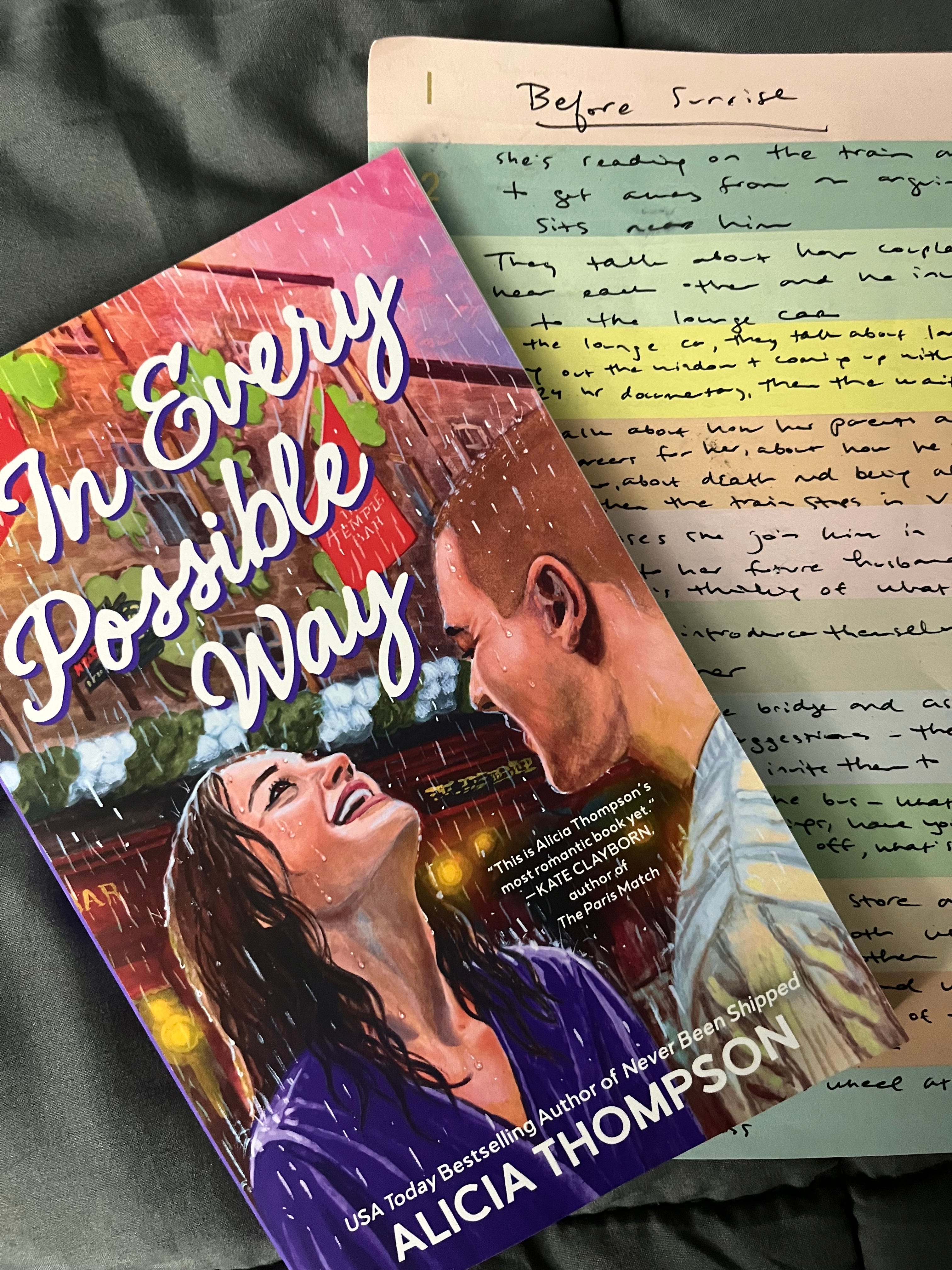
Okay. Wow. I love this movie, if that’s not clear. Thank you for letting me recap it for you so thoroughly and lovingly. It really was a big part of my inspiration for In Every Possible Way, and this isn’t even the first time I took a bunch of notes on it in service of this novel. At one point while I was writing, I really wanted to get a feel for how a true walking-and-talking movie went, just the beats of it, the kinds of conversations they had, how it managed to tell a complete story even in its truncated time. So I watched the movie and wrote a bunch of notes down, as you can see from a sample page in the above picture.
“You take notes the way a fish breathes underwater,” my husband once said to me haha and it’s so true. I love taking notes on things. He also once said living with me was like “living with a Ferrari” because I type so fast. But I’ll stop using his words to brag on myself.
Again, the book comes out IN LESS THAN A WEEK! You can still preorder In Every Possible Way from Tombolo Books to get all the swag and a personalized copy if you do it in the next couple of days. I’ve been doing a few podcasts and other interviews about the book, including the one I linked above. And I’ll be going on tour, so if you’re local, please come see me at any of these stops:
June 23 at 7pm - Tombolo Books (St. Pete, FL) in conversation with Dr. Jessica Cook
June 24 at 7pm - Flutter Romance (Austin, TX) in conversation with Ehigbor Okosun
June 25 at 7pm - Half Price Books (Dallas, TX) in conversation with Alexa Martin
June 26 at 6pm - Barnes & Noble (Orlando, FL) in conversation with Amy Buchanan
Some of those events are ticketed, so make sure you get those in advance!! I’m so excited to see everyone and to talk about this book, which is very special to me!
Currently reading . . . I’m going to keep these sections short because I’m feeling self-conscious. I listened to Famesick by Lena Dunham on audio because sometimes when there’s a lot of discourse I want to go right to the source! I want to know what’s going on!
watching . . . And that led me to a rewatch of Girls which I’m honestly having a lot of fun with. There is no better song performed on TV than “Hannah’s Diary” when Marni’s boyfriend sings out insulting words he read about himself in the titular diary, and the dawning horror on Hannah and Marni’s faces when they realize what’s happening. There is no worse song performed on TV than when Marni sings a Kanye cover at a techbro party where absolutely nobody wanted her to do that.
listening to . . . I’m really shaken and sad by the Oliver Tree news! Weirdly, I’d been listening to “Cash Machine” quite a bit these last few weeks, because it’s on a playlist I like to run to.
No posts
Comments
Nothing yet. Say the first thing.
Sign in to join the conversation.