
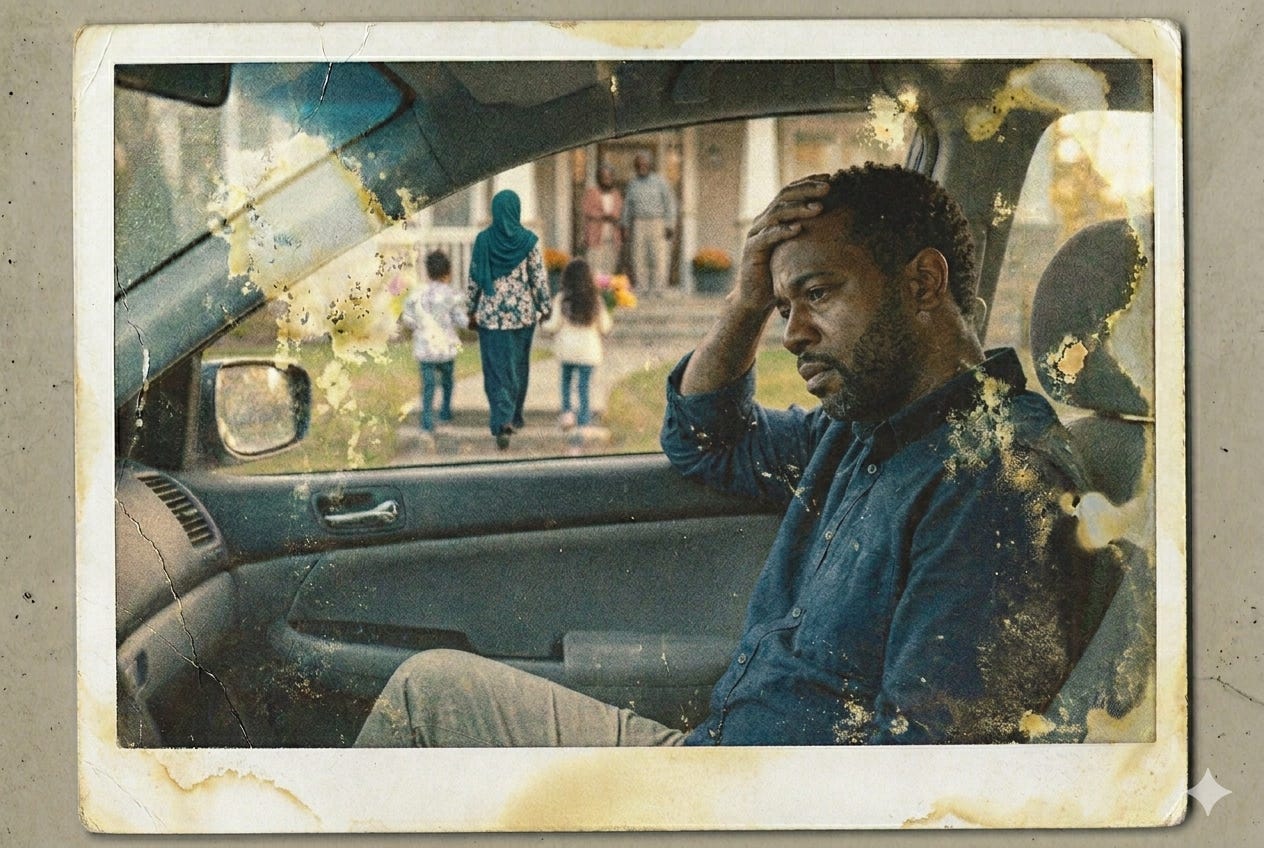
Today the world turns soft and golden As it should.
Flowers appear on tables. Phones light up with photographs, brunch plates, bouquets, women with their arms around grown children who still lean into them the way they did at five years old. The captions read my first love and my everything and the strongest woman I know, and for a few hours the world seems to reach a kind of consensus about what mothers are and what they mean and what they deserve.
And somewhere in the middle of all of that, you go quiet.
Not because you are ungrateful. Not because you don't understand love or don't want to celebrate it. Not because something is fundamentally wrong with you, though you may have spent years, maybe decades, quietly wondering if something was. You go quiet because the Mother's Day the world is celebrating is not the one you lived. The warmth in the room doesn't reach you, and you have learned, over many years, not to say so out loud.
I want to speak to you directly today, and I want to do it without softening what I'm about to say, because the softening is part of what has kept this particular grief invisible for so long.
Some of us did not grow up with mothers who were simply imperfect. That distinction matters. Every mother is imperfect, every human being is, and the ordinary friction of family life, the misunderstandings and shortcomings and moments of failure that most people carry from childhood, is not what we are naming here. The world is generous with space for that story. That story gets told, and processed, and usually lands somewhere that includes love alongside the difficulty.
What we are naming is something that sits further along the spectrum, somewhere the ordinary vocabulary of imperfection does not reach. We are talking about mothers who were absent, not simply busy or preoccupied, but genuinely unreachable in the ways that mattered most, present in the same room and somehow completely unavailable.
Mothers whose love, if it came at all, arrived on unpredictable terms that required constant vigilance to anticipate. Mothers who used affection as a reward system and withdrawal as a punishment, so that love itself became a source of anxiety rather than safety.
Mothers who were critical in ways that accumulated over years into something that changed how you understood your own worth. Mothers who were controlling in ways that reached past your behavior and into your sense of self, your perception of reality, your capacity to trust your own experience as legitimate.
Some mothers weaponized religion, framing compliance as faithfulness and any expression of hurt or need as evidence of spiritual deficiency. Some deployed the community, the extended family, the church, the network of people whose good opinion you also needed, in ways that made the weight of the relationship feel like the weight of the world. Some were simply and devastatingly absent, physically or emotionally, in ways that left a child reaching toward something that was never going to come.
We are talking about harm. Consistent, patterned harm, across years, from the person the world told you to love unconditionally and without reservation, and who the world is, today, celebrating.
If that is the story you carry, there is something I want you to understand clearly and without qualification.
What you experienced was real. The confusion you felt as a child, the way you kept trying to earn something that was never quite given, the way you loved someone who couldn't receive that love cleanly or return it consistently, the way you turned the failure of the relationship inward and concluded that the problem must be you, all of that made complete sense given what you were navigating. You were a child trying to survive an environment that required you to distrust your own perception in order to remain in relationship with the person you needed most. That is not a character flaw. That is what the human attachment system does when it has no other option.
The grief that surfaces on days like today, the low-grade dread that sets in as the holiday approaches, the hollow feeling that sits underneath you while everyone else seems to be participating in something you don't have access to, the complicated ache of loving someone and also having been genuinely hurt by them, sometimes in ways you are still only beginning to name, that grief is legitimate. It doesn't require an asterisk. It doesn't need to be balanced against a list of the things your mother did do right before you're permitted to feel it. You are allowed to feel it fully, without apology and without rush, because it is the appropriate response to something real that happened to you.
There is a particular weight that falls on those of us who are Muslim, or who have come to Islam, and who find that the tradition we love seems to leave no room for this conversation.
The hadith is cited often and with conviction: paradise lies at the feet of the mother. Honor your parents. The mother is mentioned three times before the father. These are real narrations. They carry real authority. And for many people, they point toward something genuinely beautiful about the Islamic understanding of family, sacrifice, and the weight of what a mother bears in bringing a child into the world and raising them through it.
But the tradition also says that obedience is due only in what is recognized as good, that no created being is owed obedience in what constitutes harm or injustice, and that the command to honor does not dissolve the individual's accountability before God for their own integrity and their own capacity to witness truthfully to their own experience. Islamic ethics has never required a person to affirm a narrative that is false, or to perform gratitude for something that caused them damage, or to silence the testimony of their own life in deference to a cultural expectation dressed in religious language.
If you are Muslim, and Mother's Day arrives with more grief than celebration, you are not in violation of your deen. You are not failing a religious obligation by holding honestly what your relationship with your mother actually was, and what it cost you. The tradition has room for this, even when the community does not always make that room visible. Honoring a parent does not require dishonoring yourself. And the God who knows what was done to you in private does not ask you to publicly perform a peace you have not been given the conditions to reach.
For those who are celebrating today, that is a genuine gift, and it deserves the warmth it is receiving. But for those who cannot, that too is a legitimate place to stand. Both are true at the same time, and one does not cancel the other.
At the same time, there is something worth saying about hope, not the kind of hope that papers over what happened or asks you to arrive at a destination you haven't reached yet, but a more honest kind. The kind that has to do with direction rather than conclusion.
For those of you who are parents now, who find yourselves watching your own children and feeling the full weight of what was missing in your own upbringing, the work you are doing matters. The questions you are asking, the patterns you are trying to understand, the willingness to feel the grief rather than pass it along sealed and unexamined, all of it matters. The patterns that form in one generation are not inevitable in the next. They can be interrupted. People do this work, and it changes things, not only for themselves but for the children who are watching them do it. That is not a small thing.
For those of you who are still in the middle of it, still trying to find language for what happened, still unsure whether your experience is serious enough to deserve the weight you feel it carrying, still catching yourself constructing explanations that protect the person who hurt you at the expense of your own clarity, this is worth saying plainly: you are not disloyal for telling the truth about your own life
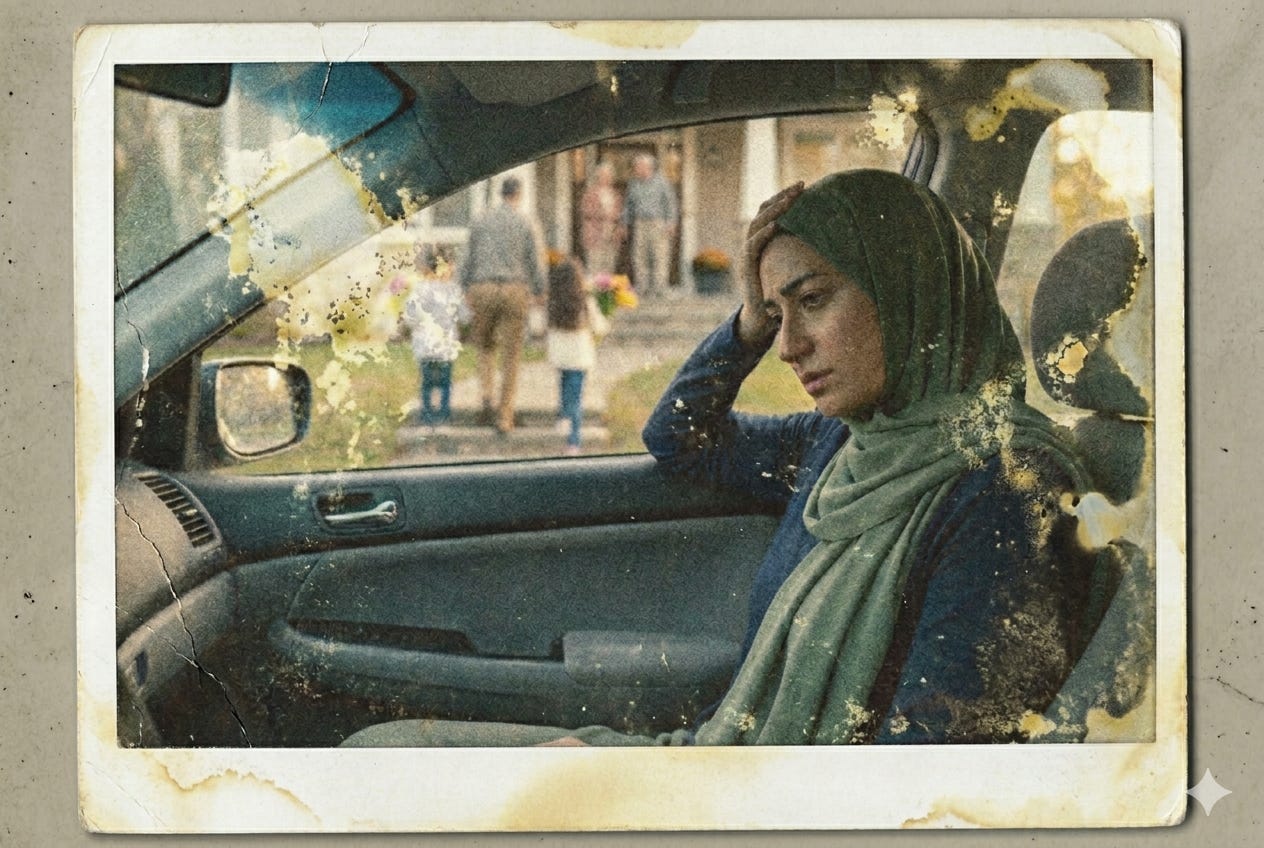
You are not ungrateful for having needed more than you received. You are not breaking something sacred by acknowledging that what was given to you fell short of what a child deserves. The silence that surrounds maternal harm is not evidence that the harm didn't happen. It is evidence of how effectively we have all been taught that this particular truth is not safe to speak.
Today the world is not making room for your experience. The tributes will keep coming, and most of them are genuine, and most of the people posting them are not trying to erase you. They simply don't know you're there, quiet in the middle of their celebration, carrying something they have never had to carry. But your grief is real, and your story is real, and you are not as alone in it as the silence of this particular day tends to suggest.
There are more of us than the noise allows you to hear.
And the silence, as it turns out, has never been the same thing as peace.
Comments
Nothing yet. Say the first thing.
Sign in to join the conversation.