
This portfolio combines two variations of the classic Turnaround Tuesday effect across multiple indices and timeframes. One captures slower daily panic-reversion moves. The other exploits shorter intraday weakness and recovery behavior.
Same core edge.
Different execution profiles.
And that difference matters more than most traders realize.
In this post, we’ll break down why combining these systems makes sense, how the portfolio behaves across regimes and why small variations of the same edge can still diversify surprisingly well.
This is a collaboration with Alpha Algo Trading Research, where the daily Turnaround Tuesday system is their contribution, combined with Algomatic Trading’s intraday variation.
The Turnaround Tuesday phenomenon is well-documented in quantitative research: equity indices have a statistically meaningful tendency to reverse upward early in the week, particularly after a weak Monday or a multi-day pullback. The edge is rooted in institutional rebalancing flows, short-covering, and mean-reversion tendencies in broadly oversold conditions.
What makes this portfolio interesting is that it doesn’t just apply that edge once, it applies it twice, with different parameters, capturing slightly different expressions of the same underlying behaviour. Most portfolios diversify across strategies, assets and timeframes. Here, the focus is different: mostly assets, and just two variations of the same idea.
Markets: Wall Street (DOW) & Russell2000
Timeframe: Daily
Direction: Long only
Core Edge: Mean-reversion following weakness in a negative trend
This system buys when the market has dropped on Monday or Tuesday, with 2 other criteria confirming a weakness. It exits the next trading day. The stop is set at 2× ATR below entry, giving trades room to breathe while capping downside.
When it performs best: Volatile, choppy markets with frequent Monday pullbacks. Performs particularly well during broad risk-off phases where indices sell off early in the week and snap back.
Markets: US Tech 100 (Nasdaq 100), DAX40, FTSE, CAC40
Timeframe: 1-Hour
Direction: Long only
Core Edge: Intraweek momentum reversals
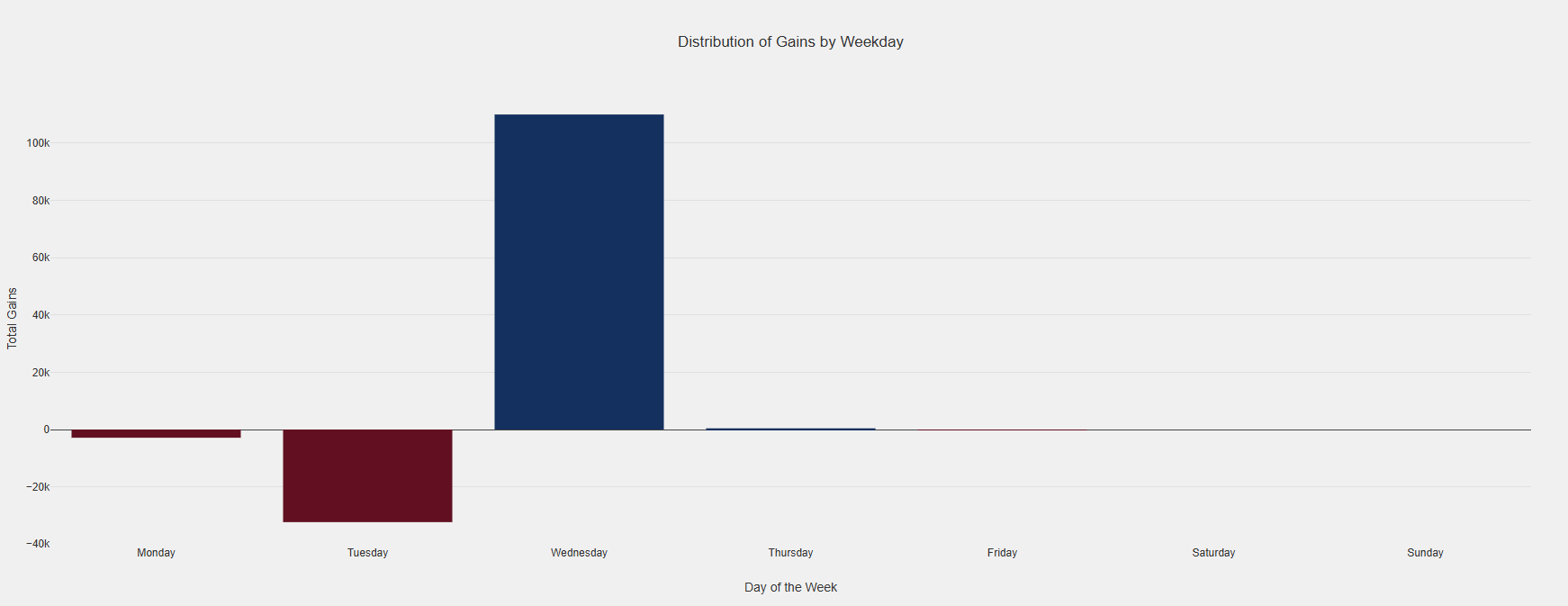
This system enters on Monday when price is trading below its moving average, a filter that ensures you’re buying into weakness, not chasing strength. It holds to Wednesday with a stop that is a percentage-based loss limit.
When it performs best: Trending-down markets on a weekly basis where Tuesdays consistently produce intraweek reversals. The longer hold window means it captures more of the snap-back move than the daily version.
The interesting part is that this intraday version behaves very differently from the daily system despite exploiting the same underlying phenomenon.
1. Same edge, different resolution
Both systems exploit reversal dynamics, but the daily system reacts to day-close signals while the hourly system reacts to intraday structure. They don’t compete they catch different slices of the same move and sometimes both fire on the same week with minimal overlap.
2. Timeframe diversification reduces whipsaw
The daily system’s one-night exit means it’s rarely in the market when the hourly system enters and vice versa. Capital is deployed across two distinct trade lifecycles, smoothing out the equity curve across weeks rather than compressing all risk into a single window.
3. Multi-instrument coverage
Spreading across NQ, DAX, FTSE, Russell and Wall Street means the portfolio isn’t dependent on any single index having a good Tuesday. If the Nasdaq is quiet, the DAX may trigger.
4. ATR-based and percentage-based dynamic sizing
Both systems scale position size to volatility one via ATR (daily), one via percentage stop. This means neither system over-bets during high-volatility regimes. Risk stays proportional to market conditions, not fixed to a single number.
Based on combined backtested results across both systems and all instruments, using 2% risk per trade (with added ATR sizing) and a €20,000 base portfolio.
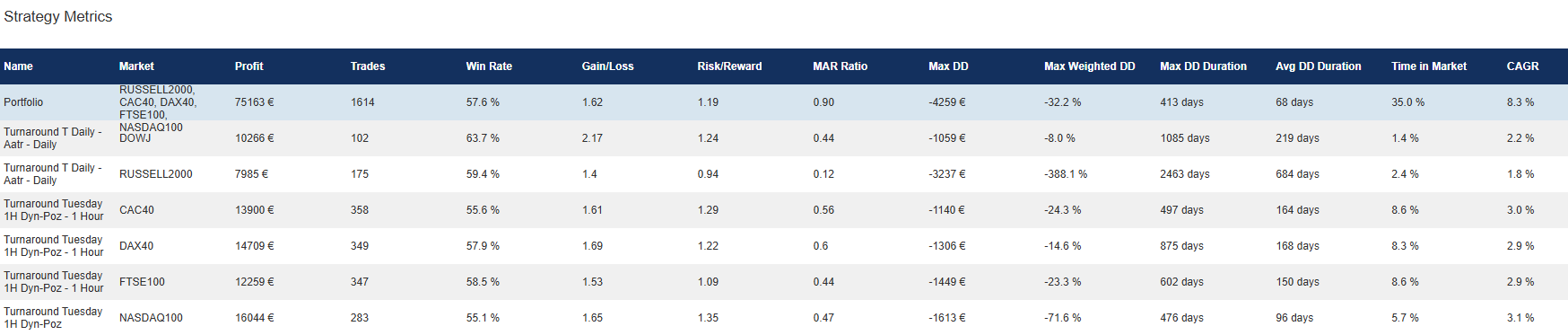
CAGR: 8.3%
MAR Ratio (CAGR / Max DD): 0.9
Max Drawdown: -9.2%
Win Rate: 57.6%
Risk/Reward: 1.19
Gain/Loss Ratio: 1.62
Avg Drawdown Duration: 68 days
Each strategy in isolation generates modest but consistent returns typically in the 1–4% CAGR range per instrument. But combined across two timeframes and multiple indices, the equity curve compounds to the 8–9% range while the maximum drawdown stays contained.
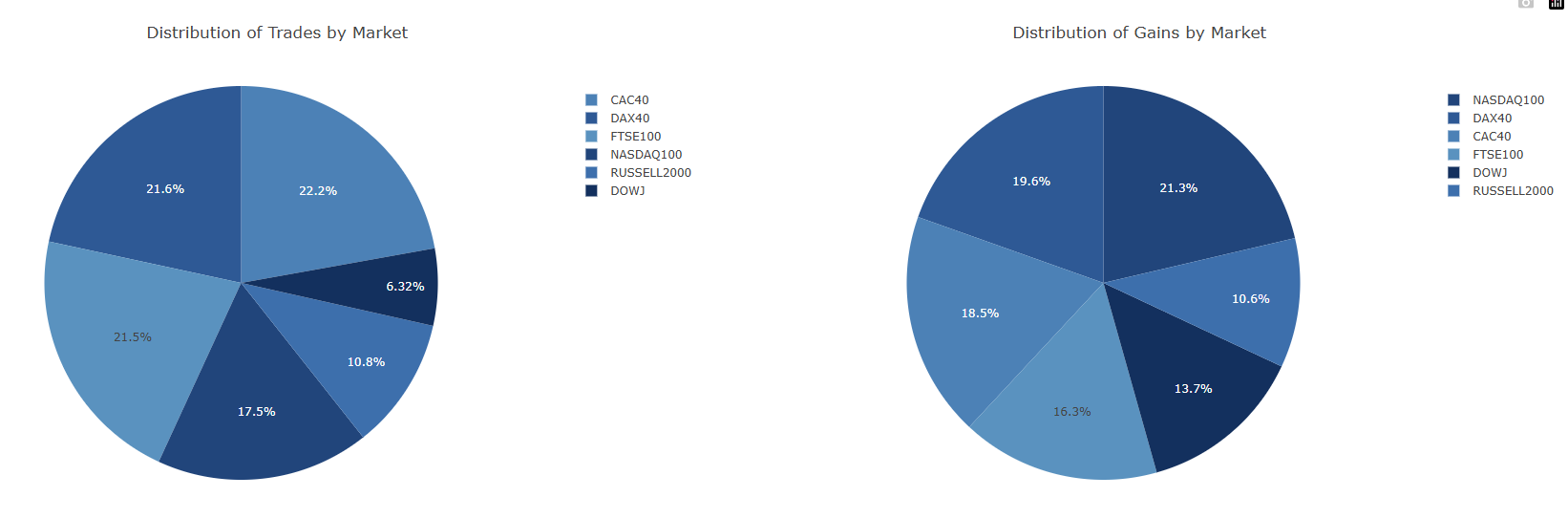
This portfolio is intentionally simple.
The goal isn’t to present a finished product, but to demonstrate how much diversification can be created from small variations of the same edge. It also wouldn’t take much to make this portfolio genuinely tradable, a few commodities and trend-following strategies like the Strategy #8: Donchian Channel Breakout could make this portfolio really good.
The individual equity curves for each system have their own rough patches. The daily version occasionally chops through a stretch of low-volatility Mondays where the setup never triggers cleanly. The hourly version has periods where the MA filter keeps it out of trades that would have worked, both systems can experience extended flat periods and would probably be best combined with some other strategies as well.
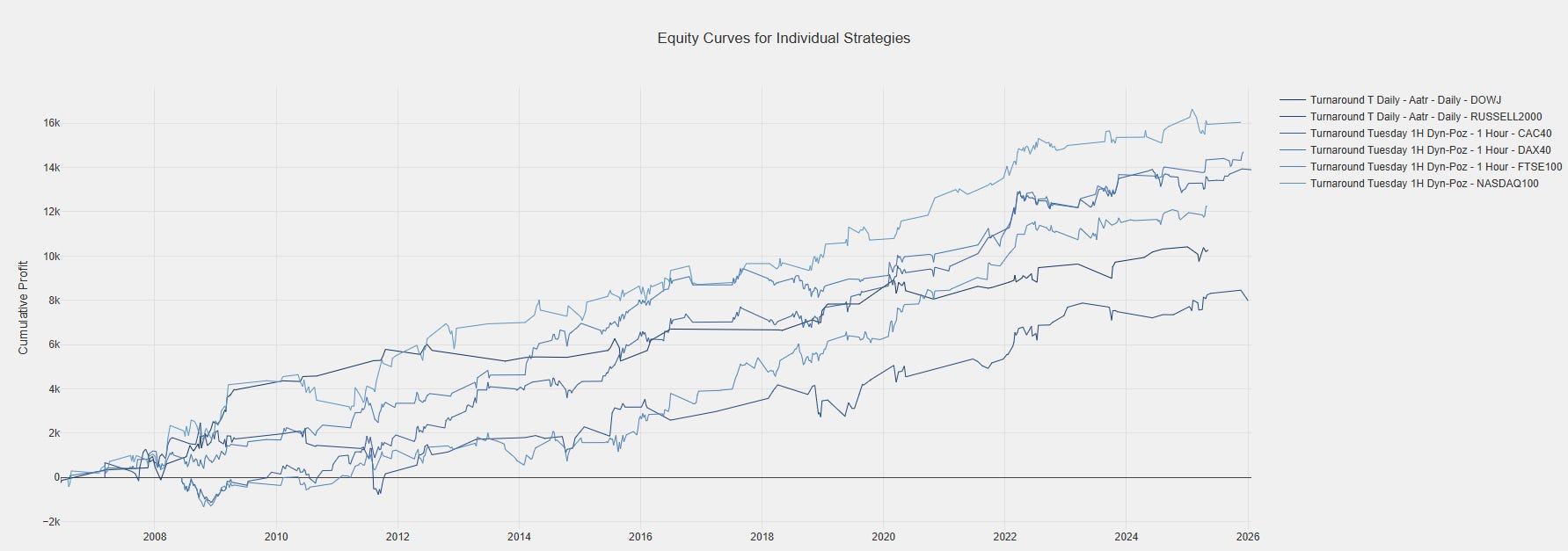
But these rough patches rarely coincide.
When the daily system is grinding through a quiet period, the hourly version’s longer hold window is often capturing a multi-session reversal. When European indices are trending steadily and the daily system on the DAX is misfiring, the NQ-focused hourly system may be in a productive run.
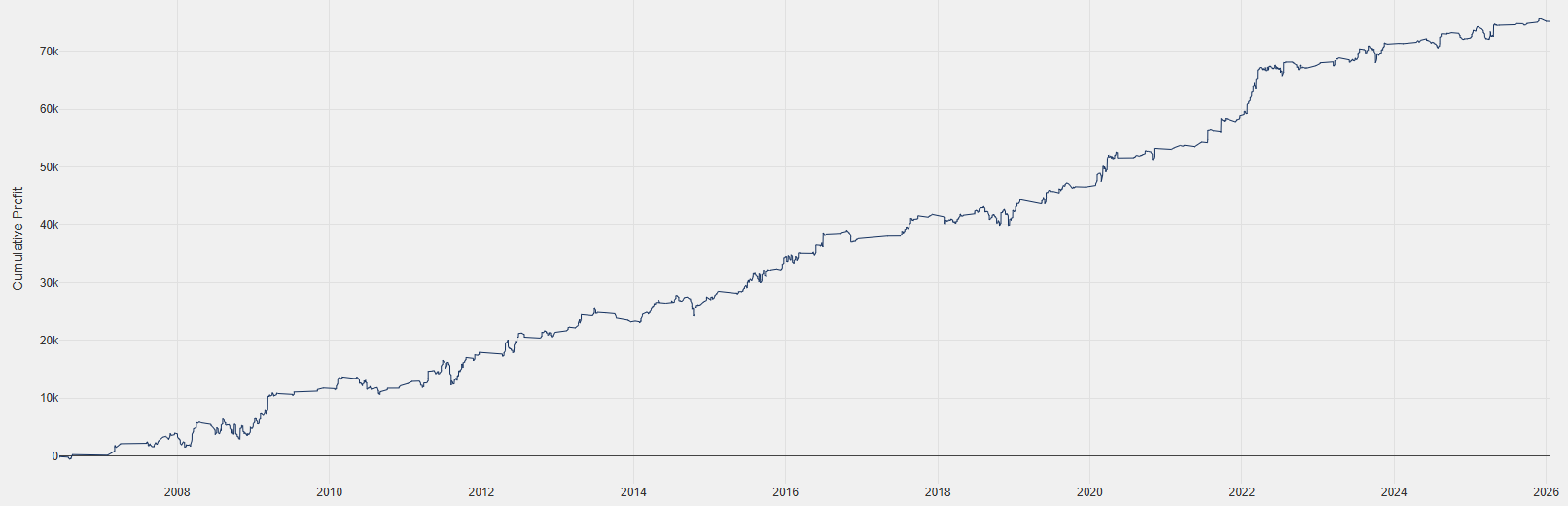
This is regime rotation in practice. Not just in theory. The composite equity curve is visibly smoother than either component fewer deep drawdowns, faster recoveries, and a more consistent upward slope across the 19-year backtest window. This is how professionals think about portfolio construction: not “which system is best” but “which systems offset each other’s weaknesses.”
The same edge is worth running twice if the timeframe and entry logic are distinct enough, two systems sharing an underlying idea can still be meaningfully uncorrelated.
Multi-instrument exposure is free diversification, running a Tuesday reversal strategy across 5 indices costs nothing extra and dramatically improves the opportunity set.
Timeframe diversification beats parameter optimization, instead of endlessly tuning one system, consider deploying the same concept for multiple timeframes.
Dynamic position sizing is non-negotiable, ATR-based and percentage-based stops ensure neither system takes outsized bets during volatile regimes.
Simplicity scales, both systems have fewer than 20 lines of logic. The edge doesn’t come from complexity, it comes from consistency and combination.
Collaboration Strategy: Turnaround Tuesday (Daily) - Alpha Algo Trading Research
A mean-reversion system for NQ, Wall Street, Russell, DAX, and FTSE. Buys early-week weakness when the quarterly trend is negative and the RSI confirms oversold conditions. Exits the next day. ATR-based stop loss.
Strategy #2 — Turnaround Tuesday (1-Hour) - Algomatic Trading
An intraweek reversal system for Nasdaq 100, DAX40, and FTSE. Enters Monday evening below the MA, exits Wednesday afternoon. Percentage-based dynamic stop. Access via Premium subscription.
Disclaimer: I am not a financial advisor and I don’t recommend you to trade my strategies. This article is for informational and educational purposes only. Trading involves risk, and you can lose money. Always do your own research.
No posts
Comments
Nothing yet. Say the first thing.
Sign in to join the conversation.