
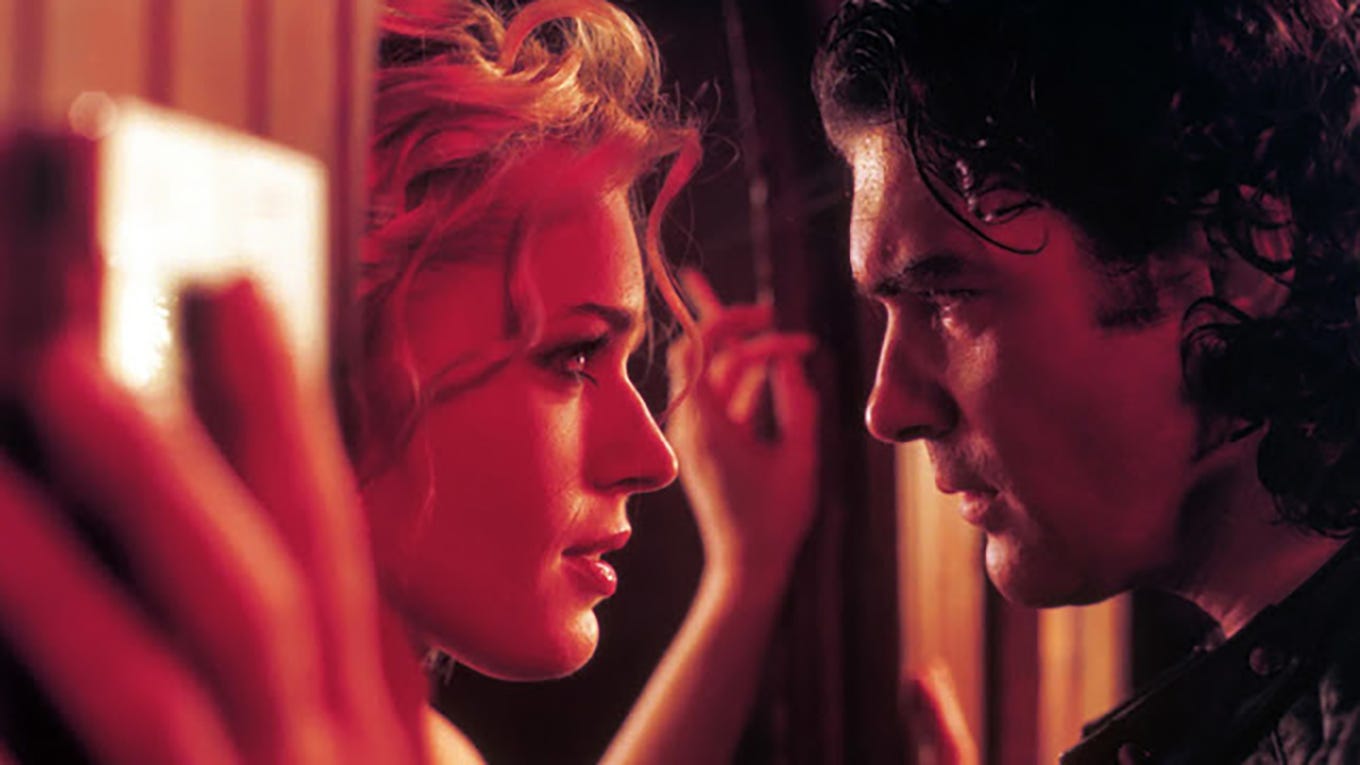
“Sex and murder captured something fundamental about desire—its connection to both pleasure and pain, vulnerability and aggression.” - Beatrice Loayza
There’s a moment in John Carney’s new movie, Power Ballad, where middle-aged songwriter Rick (Paul Rudd) plays a demo of his latest love ballad for his teenage daughter. Unimpressed, she informs him that women are no longer interested in romance. When he asks what interests them instead, she replies: “Revenge.”
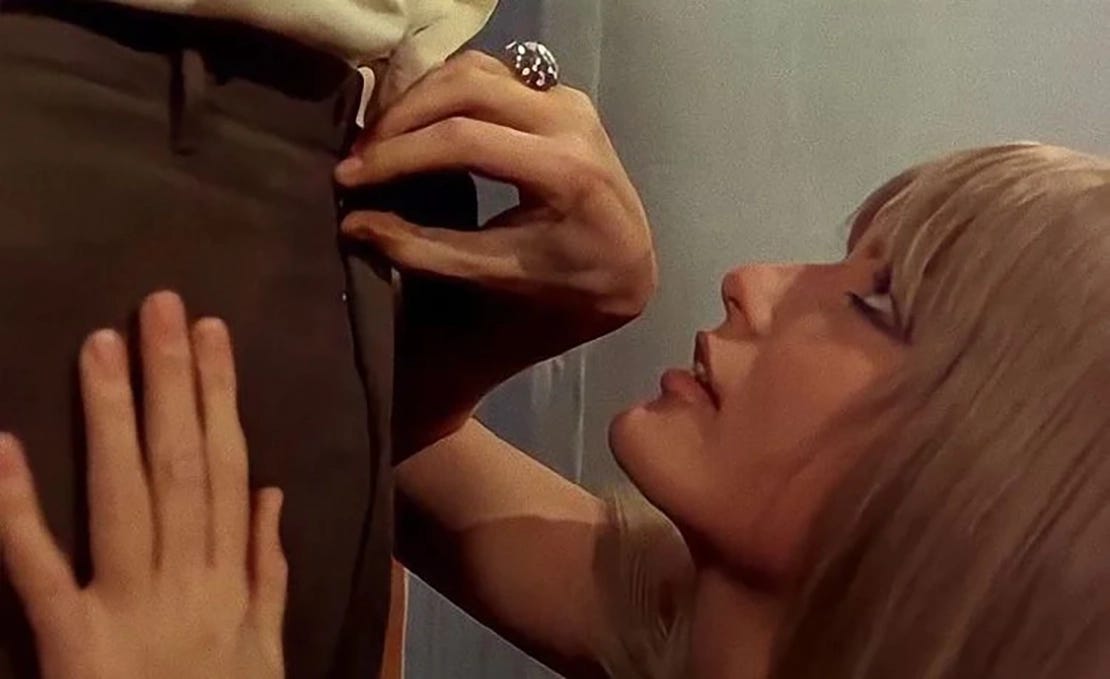
In the ‘80s and ‘90s, there was a film genre that indulged both revenge and romance. The erotic thriller, a lovechild of film noir, European arthouse, and 1970s pornography, seduced audiences with steamy, dreamy fantasies that curdled into cautionary nightmares. Some drew inspiration from ancient Greek tragedies like Medea, where ill-gotten power inevitably leads to ruin.
The blockbuster success of seminal erotic thrillers Fatal Attraction (1987) and Basic Instinct (1992) spawned a wave of imitators across both decades. Though the genre was often unreliable at the box office, it was massively profitable on home video. In a little over a decade, more than 700 erotic thrillers were produced, making it one of the largest American film movements in history. Then, quite suddenly, they disappeared.
Who - or what - killed the erotic thriller?
Underexposed is a weekly ad-free film publication celebrating great underseen cinema and moviegoing culture. Paid subscribers get exclusive essays, videos, and more - while supporting the future of movie culture.
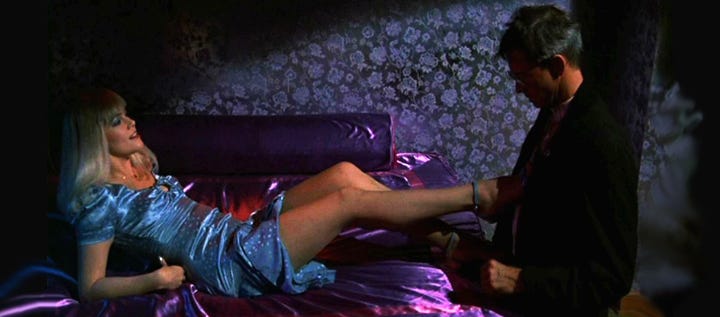
We have a rogue’s gallery of suspects to interrogate - starting with Stanley Kubrick. The spectacular commercial failure of Eyes Wide Shut (1999) was a Heaven’s Gate moment for the genre, some claim. Others point instead to the rise of internet pornography and decline of the home video market. Still more contend that audiences grew weary of the leering male gaze, lack of diversity, and rank misogyny that pervaded the genre, with its hapless male “victims” of conniving femme fatales. More recently, accusations have been hurled in the opposite direction - at the cultural reckoning of the #MeToo movement and the adoption of on-set intimacy coordinators.
And yet, while each of these “suspects” may have played a role in the death of the erotic thriller, and eroticism more broadly, they may also be seen as symptoms rather than causes. The deeper culprit, I would argue, is the end of privacy.
Social media and smartphones have connected us to the wider world - professionally, socially, and yes, sexually. But they have also transformed everyday life into a kind of panopticon, where fear of online judgment performs the disciplinary function once exercised by religious institutions and older moral codes.
This shift has produced undeniable benefits. Abusive behavior that once remained hidden can now be documented and condemned. Conversations about consent and exploitation have become more visible.
Yet for all of our hashtagging about judgment-free self-expression, the connection between desire and fear that erotic thrillers explored remains as potent as ever. The difference now is that we’ve lost spaces in which to examine it, both within culture, and increasingly, within the privacy of the self.
“Punishing strangers for their perceived perversion is a form of compensation for a process that is already completed: the erosion of erotic and emotional privacy through internet-driven surveillance practices, practices we have since turned inward on ourselves.” - Kate Wagner
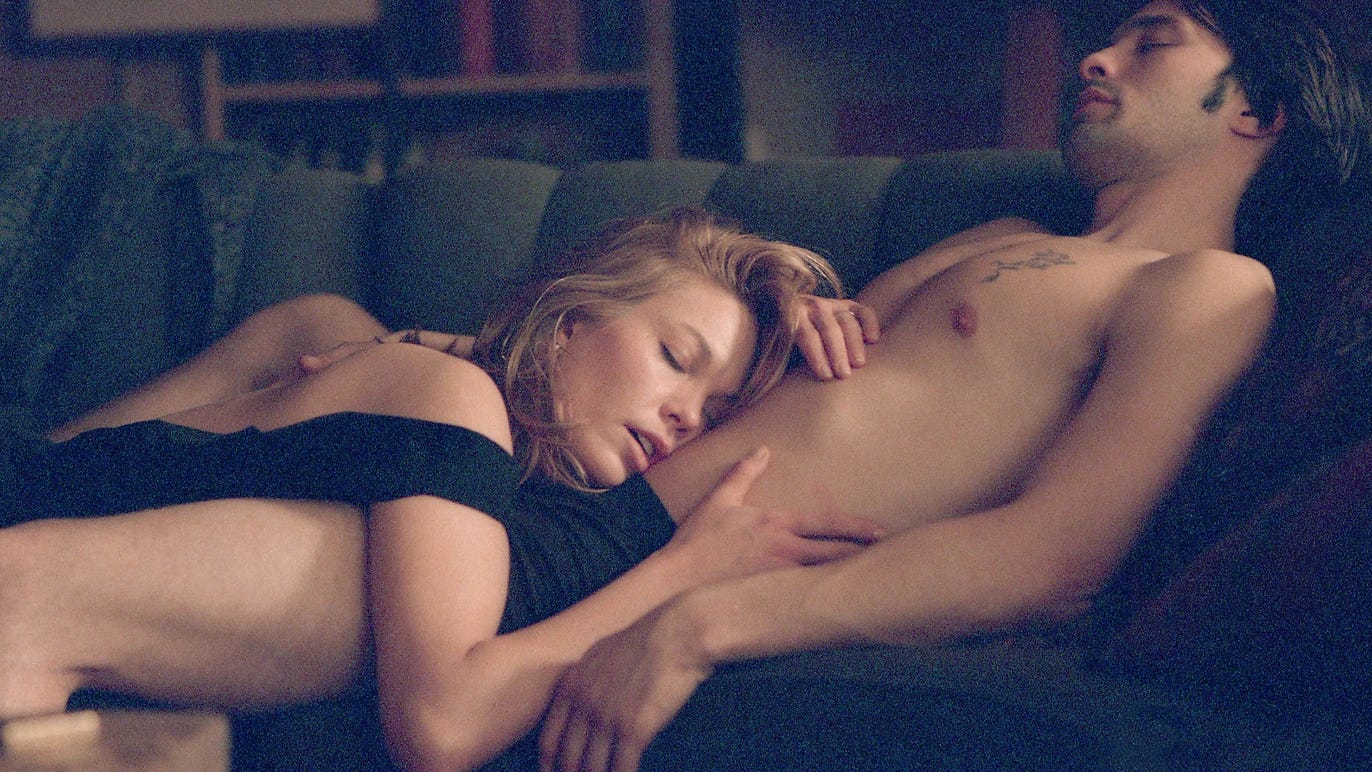
A great deal of blame has been laid at the feet of Millennials and Gen Z, and their prudish discomfort with anything “cringe” or “problematic.” We hear about their aversion to sex in movies, and their reluctance to dance, flirt, or risk making fools of themselves in public. To me, this is blaming the prisoners for the crimes of the jailers.
For most of human history, desire bloomed in the dark cracks between what was felt and what was revealed. One could experiment, make mistakes, pursue fantasies, and trust that these clumsy dalliances would remain unknown to most. Now, they exist forever as evidence.
“The human spirit is prey to the most astounding impulses. Man goes constantly in fear of himself. His erotic urges terrify him. The cohesion of the human spirit whose potentialities range from the ascetic to the voluptuous may nevertheless be sought.”
― Georges Bataille, Erotism: Death and Sensuality
Eroticism requires ambiguity, vulnerability, and mystery - exactly what we’ve lost in the current era. And this is why we desperately need a new wave of erotic thrillers, told from fresh perspectives. You might say it has already arrived: What is Obsession but a dark reflection on modern solipsistic desire?
The filmmakers who succeed will embrace genuine vulnerability, not merely perform it for clicks. They will leave behind the ogling Skinemax heteronormativity of the past, as well as the over-managed safe spaces and winking aesthetics that have hamstrung recent attempts to reboot eroticism for the 21st century. Above all, they will risk humiliation - and by doing so, help liberate the rest of us from the fear of it.
More Empathy Please. Amanda Sweikow makes a smashing good case for why filmmakers who cultivate empathy are needed now more than ever: “Humanist cinema invites us to feel with someone else, and in doing so, it expands our capacity to recognize the humanity in people whose lives may look nothing like our own.”
Hollywood’s Mass Exodus: Why Film and TV Production Is Fleeing L.A. and What Can Be Done About It. From Gene Maddaus in Variety: “Since the end of the streaming bubble in 2022, America has lost 73,000 production jobs — two-thirds of them in Los Angeles — bringing the issue of foreign competition to a rapid boil. […] Federal intervention cannot come fast enough in Los Angeles, where the post-peak era has rippled across the local economy. Crews are out of work, but so are white-collar executives and those who work in ancillary businesses.”
The Inexplicable Suicide of Hollywood. Coast Enjoyer has a spicy take: “There really isn’t one single cause, but the ones you don’t hear are probative. You’ll never hear that the content just sucks; that we just haven’t been producing entertainment that’s widely enjoyed. And that we’re willing to let Hollywood die before re-focusing from politics and morals to art and commerce.” I would push back: There are many great films being made today, but fewer are reaching the awareness of a fractured audience. That’s why I started Underexposed.
“It is part of the fecundity and power of Wiseman’s films that they give birth to reactions in the viewer that are not foreseeable or determinable in advance, that have lives of their own,” writes Lorna Finlayson in an essay for The Point, Frederick Wiseman’s 1973 documentary Juvenile Court.
An exotic coupling of erotic thrillers you should seek out
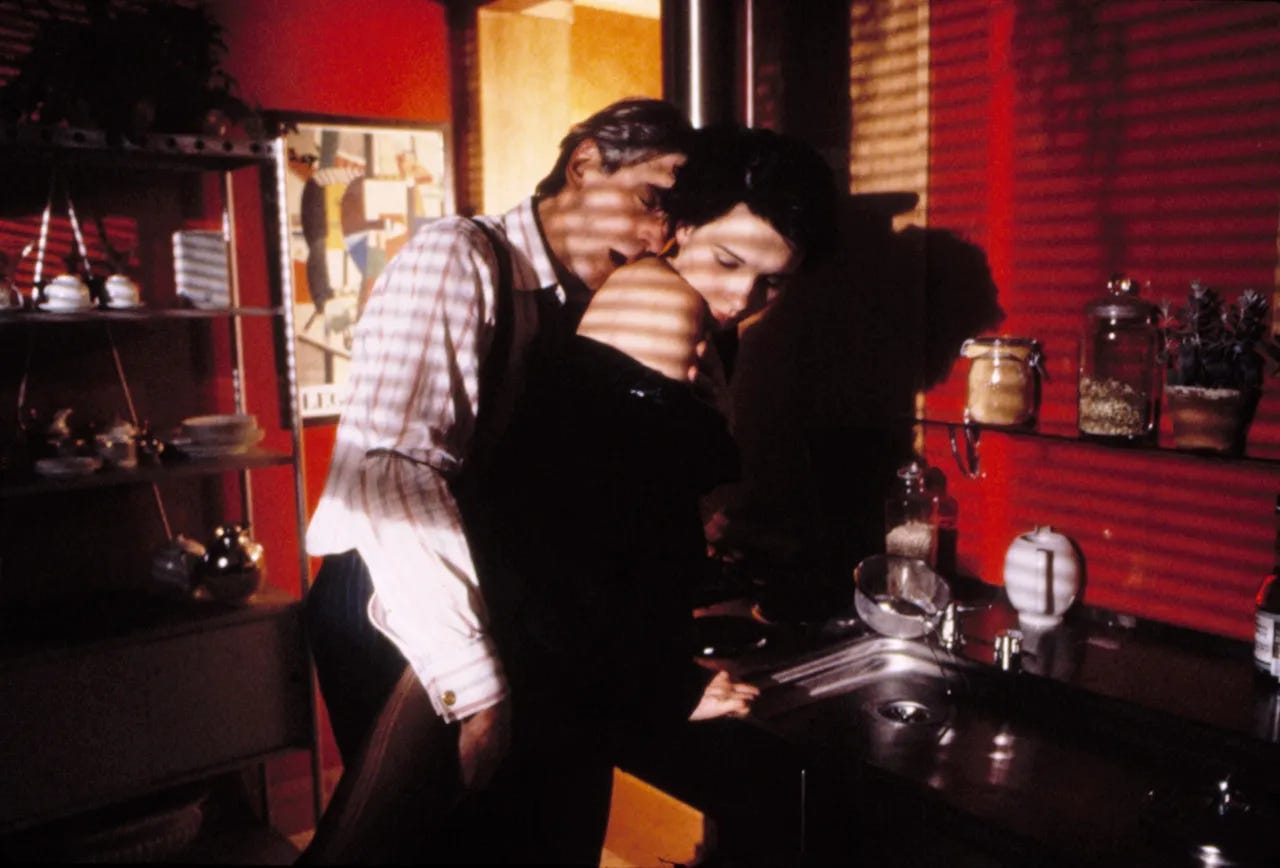
A dark cocktail of carnal obsession and self-willed destruction, Damage generated controversy from its first days of filming. Adapted from Josephine Hart’s novel, it follows a British parliamentarian (Jeremy Irons) who embarks on a secret love affair with the daughter of a British diplomat (Juliet Binoche) - who also happens to be his son’s fiancée.
Malle called Damage “the most difficult film I’ve ever made.” Alongside reports of friction with the actors, an exhausting four-month shoot, and health issues that culminated in open-heart surgery, Malle also had to battle the MPAA, who forced him to make cuts to avoid an NC-17 rating. “Sex scenes are always a director’s worst nightmare,” Malle confided. “But the audience must glimpse Anna and Stephen’s strange, dark, and rather violent relationship to understand the story.”
I saw this movie at the Quad on a 35mm print, having never even heard of it. I have not forgotten it since - especially the ending. You can rent Damage here.
Comments
Nothing yet. Say the first thing.
Sign in to join the conversation.