
“There are thirty-two ways to write a story, and I’ve used every one, but there is only one plot – things are not as they seem.”― Jim Thompson
The trouble kicks off as it often does: with a crime.
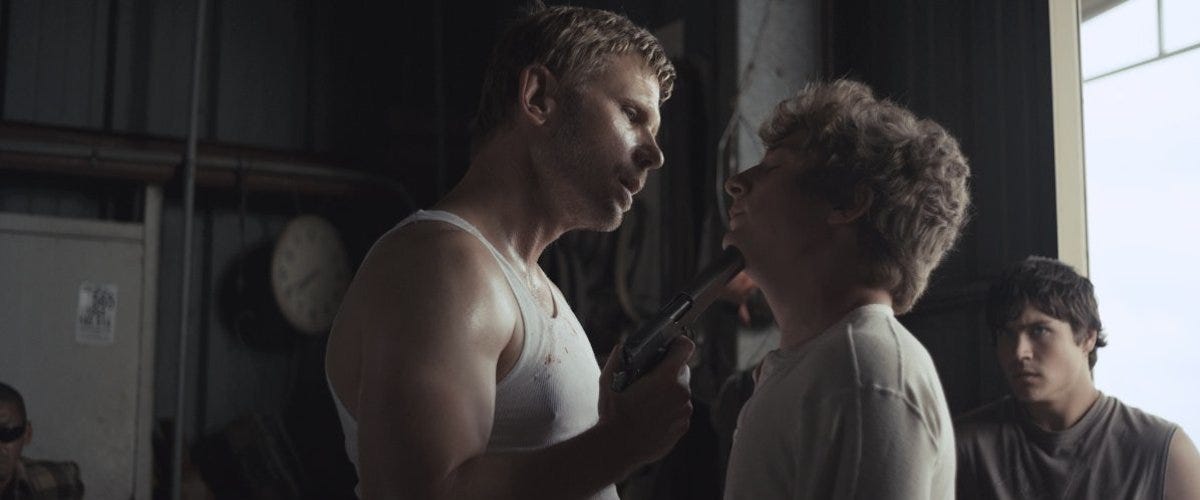
B.J., a hot-blooded high school burnout, recklessly swipes twenty large from his boss’s safe to party with best friends, Bobby and Sue. It’s the last night before Bobby and Sue escape their dead-end cotton gin town, off to college.
The happy vibes curdle fast. When Giff, the boss, finds his safe light, he blames his Mexican security guard, beating him within an inch of his life - while B.J. and Bobby are forced to watch.
Desperate to stop it, Bobby breaks - “confessing” to the theft, and offering himself up in the man’s place. Giff kills the guard anyway.
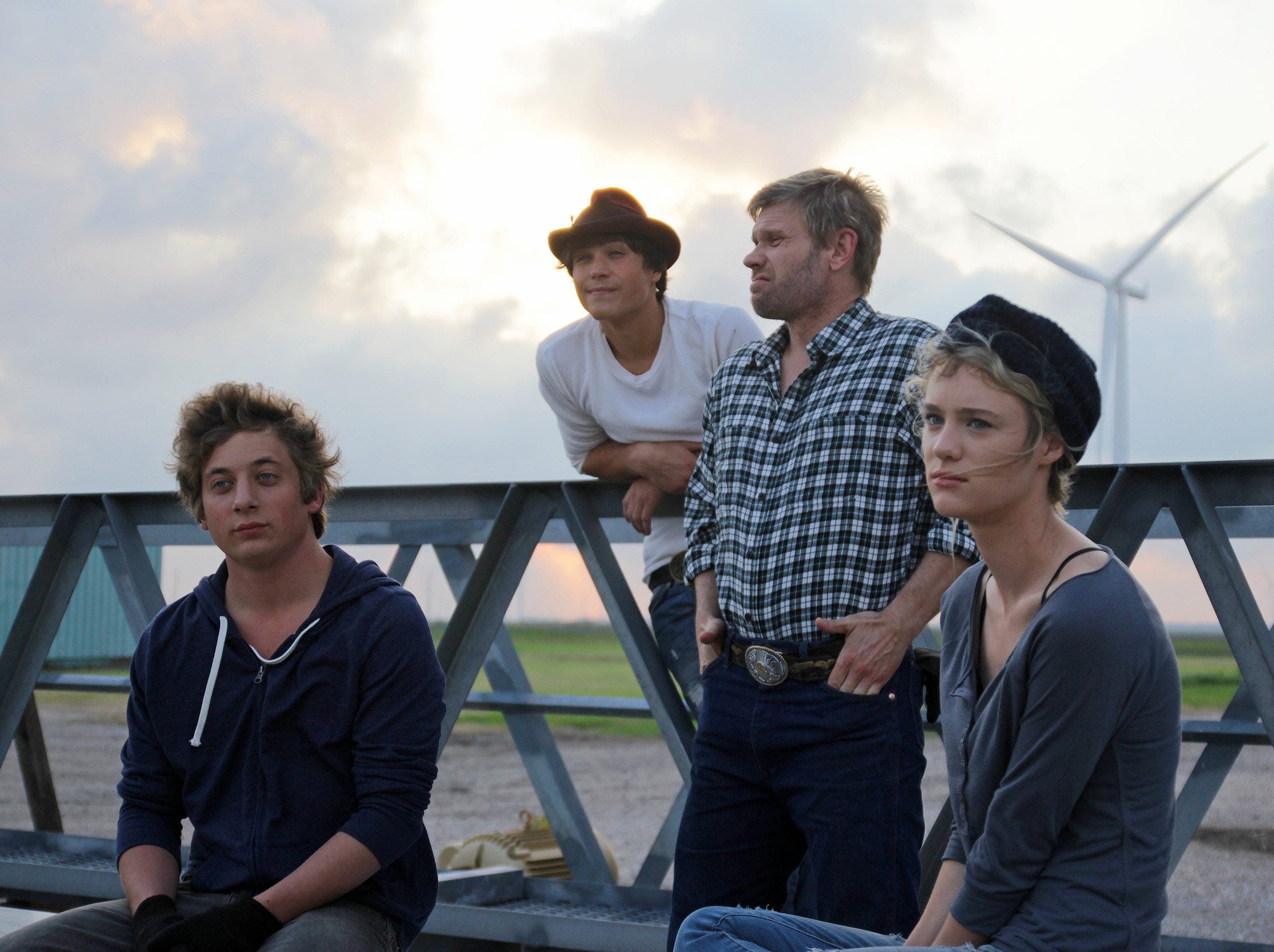
So it goes in the ruthless, sun-scorched world of Bad Turn Worse, a criminally underseen 2013 crime drama starring Jeremy Allen White (The Bear), Mackenzie Davis (Black Mirror, Terminator: Dark Fate), Logan Huffman (V) and Mark Pellegrino (Mulholland Drive).
“Texas noir” is a nasty little sub-genre. Notable titles include the Coen Brothers’ seminal Blood Simple, James Foley’s lusty, dusty After Dark, My Sweet (a Jim Thompson adaptation), John Sayles’ undeniable Lone Star (1996), the Taylor Sheridan-scribed Hell or High Water, and the Coens again with the grandaddy of them all: No Country for Old Men.
In 2013, another directing duo of brothers, Zeke and Simon Hawkins, threw their hats in that dusty ring. Like the Coens, the Hawkins aren’t native hill country boys - they’re from Darien, Connecticut - but you wouldn’t know it watching Bad Turn Worse. For a first feature, it’s steady-handed as they come.
I’ve known Zeke and Simon for a long time. After working on the movie Capote together as assistants, Zeke and I became roommates in the East Village. Simon, studying film nearby at NYU, was always around. Over the years, I watched both brothers hone their craft. Zeke sharpened his eye at AFI (where his short Equestrian Sexual Response pulled a Student Oscar nod), while Simon built a name as an editor in LA.
I had a chance to catch up with Zeke and Simon to talk Bad Turn Worse. You can watch it, or read a condensed transcript, below.
Underexposed is a weekly ad-free film publication celebrating great underseen cinema and moviegoing culture. Paid subscribers get exclusive essays, videos, and more - while supporting the future of movie culture.
“You want to follow your emotions, because if you intellectualize it too much, you’re going to come up with, like, a recipe on how to make a movie. Trust wherever your gut takes you.”
- Zeke Hawkins
Edited for length and clarity.
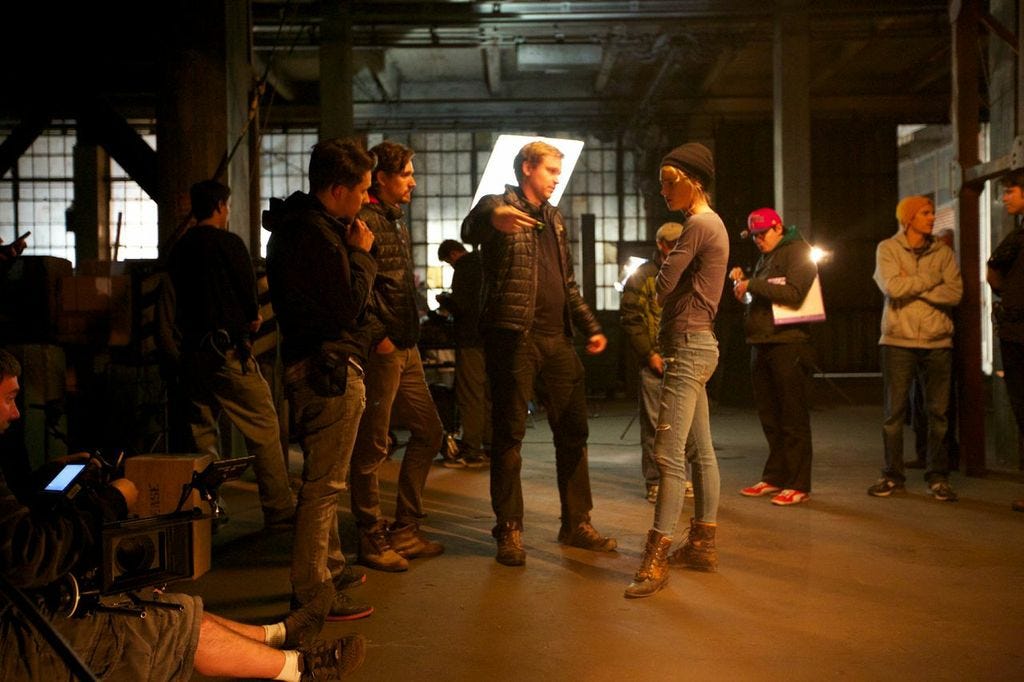
Alex Rollins Berg: It's so exciting to have you here on Underexposed. This movie is amazing.
Zeke Hawkins: Well, Alex, good to see you. And thanks for having me. It’s nice to have a host who’s both brilliant and handsome. It’s, you know, it’s overwhelming.
Alex Rollins Berg: [strikes a dashing pose] For those who haven’t seen the movie, tell us what it’s about.
Zeke Hawkins: Bad Turn Worse is a crime drama set in South Texas. It follows three teens stuck in a love triangle. One of them steals from the wrong person, and then all hell breaks loose.
Alex Rollins Berg: People will quickly recognize how amazing the cast is that you assembled for this movie: Jeremy Allen White, Mackenzie Davis, Logan Huffman, and then you've got some great character actors in the mix as well. But we'll start with the leads. Tell me how you found these amazing actors.
Zeke Hawkins: So this was a while ago, and we had two incredible casting directors, Angela Demo and Barbara McCarthy. We just started seeing people, open auditions. All three of them were kind of tough parts to cast.
The female lead, Sue, you need to believe that she works for her family, who are mechanics, that she lives in South Texas, that she’s smart enough to become a writer someday in New York, and you also need to believe that two boys would fall in love with her pretty much instantly. So we saw a ton of young women that auditioned for the part, and Mackenzie came in through her boyfriend at the time. He had auditioned for the movie, and she was reading with him, just as his reader. And the more she read it, she was like, “I want to audition for this part. I need to play this part.” So she contacted her reps, she came in and, and even the very first audition, we pretty much knew she was good to go. Her success afterwards was sort of undeniable even in the first audition. And I think even what she wore to that first audition is one of her main wardrobe pieces in the movie.
Jeremy had done maybe one or two seasons of Shameless. I’d never seen Shameless at the time. And once again, he just came in for an audition. And the thing I would say he had that was different than everyone else - we saw a number of really strong actors, but most of the people we were seeing, they had been child actors. They felt like they had an acting background. And I just remember when Jeremy walked in the room, I was like, oh, this kid could have grown up in South Texas. He could have been knocked around. He could have played some middle school football and gotten beaten up a little bit.
And then Logan, once again, Logan had been the lead on, a Fox network show, “V.” It was like an alien invasion show or something, but I had never seen it. Once again, that part, B.J., was so hard to cast. It had to be someone who does pretty brutal things. But you also have to love him and care for him. And Logan had a quality where you understood his pain and his anger, but you also kind of loved him even when he did really shitty things, you know? And I think all the three actors we found were all uniquely right for those roles.
Alex Rollins Berg: I think so, too. Let's go back a little bit further to how you got into directing. What got you interested?
Zeke Hawkins: I just loved movies so much. When I got out of college, I just wanted to have the experience of working on movies. And so I worked on two films. I worked on this movie called The Motel, directed by someone named Michael Kang. It was a Sundance film. And then I worked on Capote with you. I worked for Bennett Miller, I was an assistant. I’m running around doing every job under the sun, you know, getting coffee or whatever. And it was just so clear to me - the director was the one in the middle of the action, and I wanted to be that person.
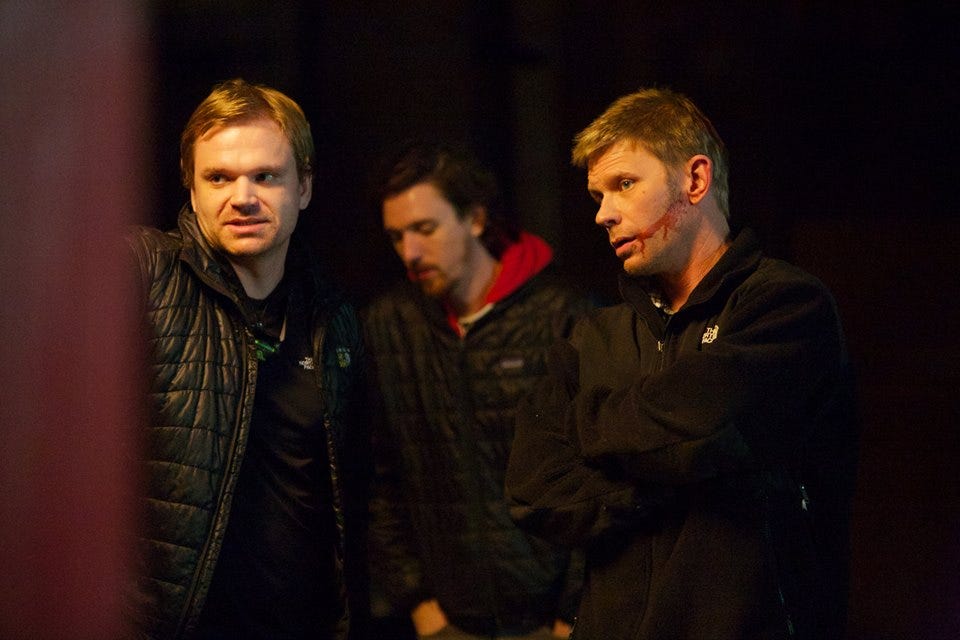
So my thesis film at AFI was called Equestrian Sexual Response, that was nominated for a student Oscar and we had a screening at the DGA because of that. There I met the producer, Brian Udovich. He’d gone to AFI a number of years before me, and he had produced a bunch of films.
So he introduced himself. We met and just became friends. Over that next year, he started developing the initial seed of the idea for this film with a producing partner, Justin Dupree, who was actually from South Texas. So they started developing a crime thriller around things they had access to in South Texas. The cotton gin where we shot is where Justin Dupree’s family - that’s their cotton gin.
We eventually met again and sort of hit it off talking about this. And honestly, I thought he was working with other people, so I wasn’t nervous or taking our meetings too seriously. And then it all sort of came together and worked out. We came on board in September and we were shooting the following March.
The conversation continues below. But first -
The US box office reached $1.77 billion in the first quarter of 2026. That’s the best start to the year at the domestic box office since the COVID-19 pandemic.
Indie Film (Distributors) Are Dead; Long Live Indie Film (Distributors)! So crows Anthony Kaufman this week at news of reported problems at Row K Entertainment. Less than eight months after launching, the new Hollywood distribution label is mired in concerns about its finances. Says Kaufman: “If the new distribution companies are going to save [critic-driven festival favorites directed by emerging filmmakers], it’s likely going to be from elsewhere. For instance, if Sumerian Pictures can pull off a win with Sundance Grand Jury Prize winner “Josephine” or Rich Spirit can identify audiences for its Sundance acquisitions “Hot Water” and “If I Go Will They Miss Me” […] then we’ll be onto something. But until then, no one has shown that they’re better or worse than anyone else at this.”
Why Horror Movies Actually Help Anxiety (And the Science to Back It Up). Jeff Rauseo reports: “Researchers at Aarhus University’s Recreational Fear Lab have found that horror movies may provide a context in which people can practice emotional regulation — getting better at managing their own fear and anxiety through engaging with recreational fear. Even more interesting: a study of horror fans found that they reported less psychological distress than non-fans during the COVID-19 lockdowns — suggesting the genre builds a kind of emotional resilience over time.”
“An honest living is not about sacrifice. It’s not a rejection of money or a refusal to engage with the realities of the industry. It is simply the choice to make work that is yours. Work that is driven by your specific way of seeing the world. By your voice. That choice is harder right now than it has been in a while. But it is still a choice. And I’d argue it’s the only one that compounds (financial pun intended), the only one where the work you did five years ago is still working for you, not because an algorithm is running in the background, but because somewhere out there, someone still thinks about it.” - “An Honest Living,” Rebecca Green’s must-read essay in Dear Producer.
Need more movie recs? Who doesn’t? Vee from ReleasesTV has been covering TV - which I understand some of you watch? - for five years. Now, he’s launching Movie Mondays, with fresh recs dropping every week. Check him out here.
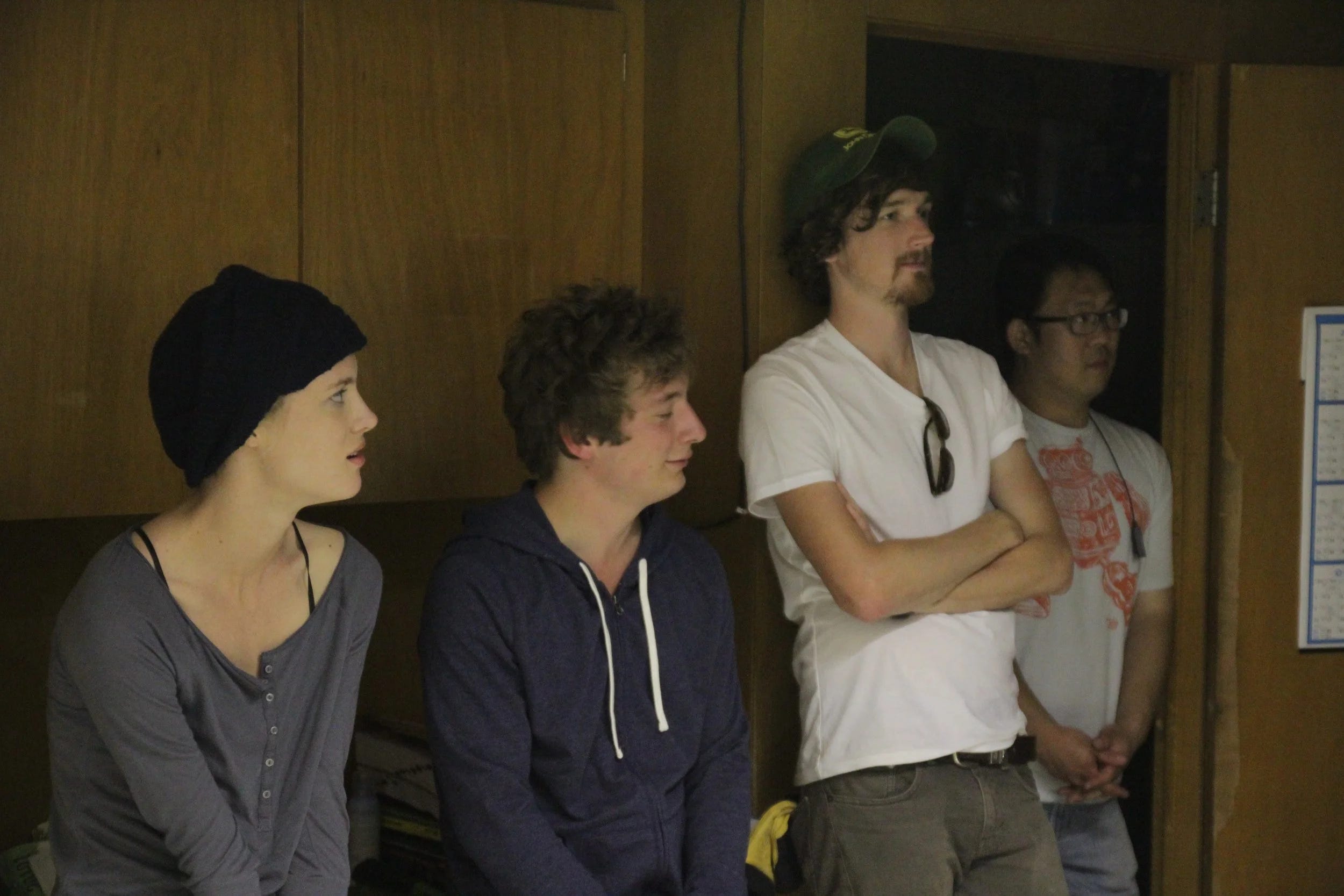
Alex Rollins Berg: Simon, you edited this movie. What can you tell us about how it evolved from the moment you started cutting to the moment you hit export on the final version?
Simon Hawkins: We did, I want to say, three or four legitimate major edits of the movie. In between that, there’s about a thousand things that were changing. Zeke and I were changing things with our producers, Brian and Justin, every day. Figuring out the beginning of the movie, to me, and I think probably to the team, was the biggest thing, sort of like unlocking what the movie was. And I think just figuring out the dynamics of that scene was a really key moment for figuring out the pacing and tone of the movie.
Alex Rollins Berg: If you’re going to direct, I think editing is mandatory. I think I learn more about directing by editing my footage than I do by the actual act of directing. Um, I don’t feel the same way, but, um… do you? [laughs] And, uh, can you elaborate?
Simon Hawkins: [laughs] I mean, sure, sure, I feel this, yeah. I obviously think editing is really important and I very much like editing my own work, too. I like having that kind of control over it. That’s the thing they always say: “If you want to know a good actor, talk to the editor.” I think there’s something about that. Just like your ability to craft performances and craft a world and craft a rhythm.
I think what was nice in Zeke’s and my relationship is that it can ping-pong off each other, you know? That’s really helpful when you have another point of view. I think Zeke often sees things like from that actor perspective, like on the day. That can be really helpful together.
Alex Rollins Berg: How did making Bad Turn Worse change your filmmaking approach? What would you do differently next time, having made it?
Simon Hawkins: This film was, in the scheme of things, a smaller budget film, shot in a relatively compressed amount of time just for budgetary reasons. You make a lot of decisions because you have to do things that way. And I think for us, a lot of great things came out of that because you’re filming on friends’ locations and you’re finding all these like cool spots in Texas. You’re just trying to find fun things for free that you can utilize. But it also makes things a bit more rushed in terms of maybe working with actors, or doing all that kind of stuff. So I think just that alone would be nice to maybe spend more time.
We edited the film over a longer period of time because there was no - yes, we’re trying to get into film festivals and it premiered at TIFF [Toronto International Film Festival] and that was super exciting - but it gave us a longer period of time to work on the edit, because no one was waiting for the movie per se. So I think that was really helpful. And I think that’s actually the thing that I would want to keep, if I could. I think editing is wildly important, and being able to have the longest amount of time to kind of wiggle around that space is big.
But in terms of changing things, honestly, budgetary things would always be great. Because it was smaller, we didn’t necessarily build out the world in the same kind of way. You don’t see a lot of the kids in a school, or family members. Honestly, a lot of that is financial. Just like, “Can we keep it as small as possible?” That’s something that, in future, [it would] just be nice to build out a world a little bit more.
Alex Rollins Berg: You’ve got amazing people in supporting roles: John Gries from The White Lotus, Mark Pellegrino from Mulholland Drive and so many other things. How did you wrangle these incredible actors to be in your movie?
Zeke Hawkins: Well, first, the producers were really smart and strategic in how we planned out the script where each one of those roles could be shot out pretty quickly. So the sheriff, William Devane, we could shoot out in a day, and then the bad guy, Giff, we could shoot that out in one week. So we already kind of planned it well. And then Mark Pellegrino, I had met him on Capote, so I knew him through Bennett. I think for William Devane, I literally just wrote a “cold call” letter to his rep saying, just how much we liked him and it’s a one day part and blah, blah, blah.
Alex Rollins Berg: This film has influences that it wears on its sleeve. One of the first things you see is the characters talking about a Jim Thompson book. What are other influences that you brought to the party that helped create the vision?
Zeke Hawkins: The truth is, with Jim Thompson, I barely knew who he was as an author when I came onto this project. So that was not my influence. I read a bunch of his books once we got involved, but I didn’t really know his work beforehand. As a filmmaker, I was turning to movies for the most part, and I’d say the two movies that probably had the strongest influence on me, the first would be Soderbergh’s Out of Sight. When we made our first cut of the film, we knew we had some great stuff, but maybe it wasn’t all totally working. The thing we were missing was really building the chemistry between Mackenzie and Jeremy Allen White. Just looking for ideas, I was watching the director’s commentary for Out of Sight, and he was talking about that famous trunk scene where Jack Foley and Karen Sisco meet for the first time and it lasts for like, ten minutes or whatever. And that meeting once carries you through the whole rest of the film - that kind of chemistry. And I remember thinking, we got to do something like that. And so as reshoots, the whole opening Whataburger diner scene really was inspired by the trunk scene from Out of Sight.
And then I’d say another film in terms of the specific visuals - I remember we took a location scouting trip down there and just something popped out of me, which was the three colors: One, there’s this huge golden sun. Two, the soil was so rich and brown. And three, I would have never guessed this - all the barns were painted this weird teal color. So I came home with this idea of teal in my head and and so that started becoming the color palette of our film.
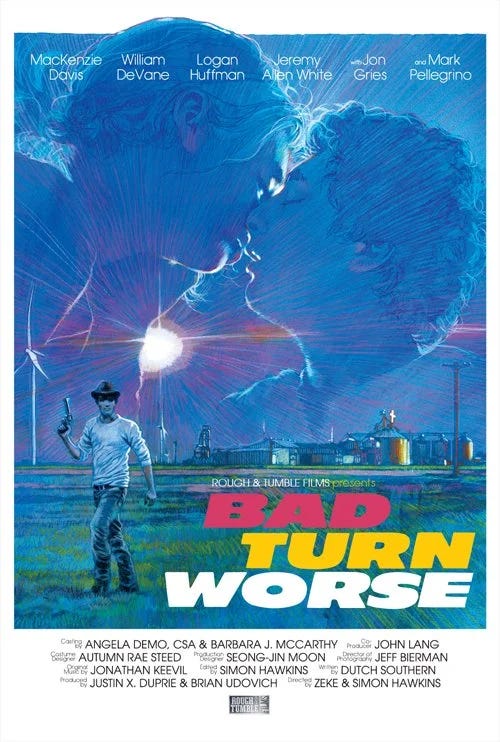
Zeke Hawkins: And then the teal brought me to Gus Van Sant’s film, Milk. If you remember, the cover is all teal and a lot of the film is teal as well. So I just started watching Milk over and over again. I was kind of trusting the movie gods, thinking like, the answers to our movie are in this film, you know? It really provided a lot of things. But there were two things specifically that I remember: One was, if anyone remembers the movie, Josh Brolin is this state rep or something. He’s always under this incredible pressure and he ends up assassinating Harvey Milk, the Sean Penn character. This Josh Brolin character, the way they photograph him, they always give him a ton of headroom so you can just feel him being crushed by the world a little bit. And, and I remember just watching Milk with the cinematographer, Jeff Bierman, and we started thinking the Jeremy Allen White character, whenever we have him, we’re just going to have him kind of crushed by this head room. And then another one, there’s a scene in Milk where I believe it’s Harvey Milk and James Franco in front of a mirror, and you sort of see double of both of them. And I don’t know exactly what it means, but there’s a double of both of them, and it’s a really interesting thing. And we ended up just doing that exactly.
You want to follow your emotions, because if you intellectualize it too much, you’re going to come up with, like, a recipe on how to make a movie. The analytical side comes later. I think first you just sort of trust wherever your gut takes you.
Bad Turn Worse is now streaming on Tubi.
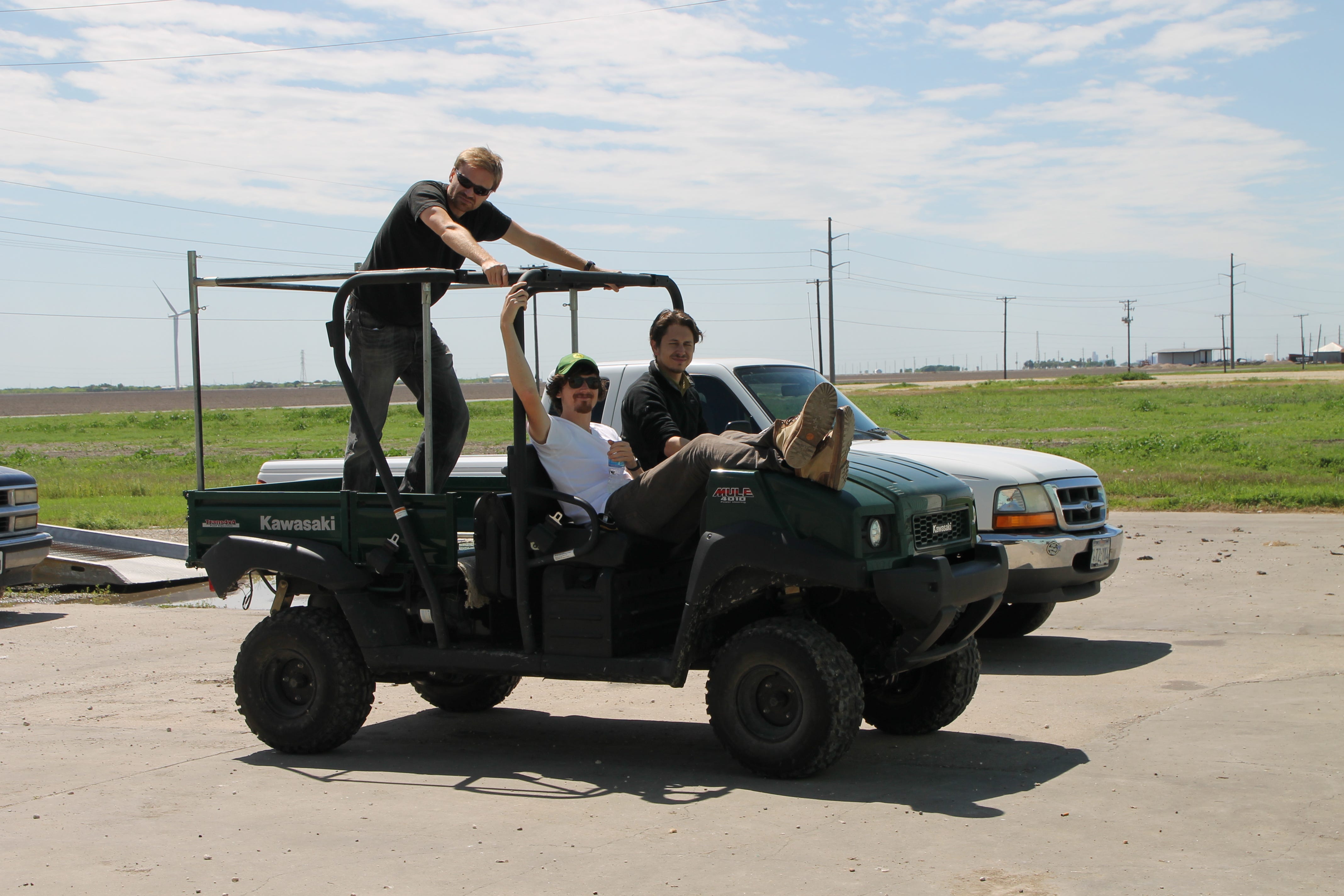
That’s all for the free edition. Paid subscribers get a bonus video, Underexposed Guest Picks with Zeke and Simon Hawkins, as well as this week’s edition of Off The Shelf.
Comments
Nothing yet. Say the first thing.
Sign in to join the conversation.