
Underexposed is a weekly ad-free film publication celebrating great underseen cinema and moviegoing culture. Paid subscribers get exclusive essays, videos, and more - while supporting the future of movie culture.
In but a handful of years, tech companies have radically rewired our media diets.
Once, we feasted together in crowded movie halls. Television, for all its vulgarities, bound us through rites of spectacle at appointed hours.
Now, an increasing number of us subsist on a drip-feed of empty-calorie pellets known as “clips.” Rather than go to a movie or commit to watching a series, we consume these clips in isolation, on demand, throughout the waking hours.
At their inception, clips were meant to stimulate appetite for more substantial narrative fare. But as The Atlantic reported this week, clips are overtaking their source material. The media that once nourished us is now feeding on itself.
Maybe you enjoy clips. I enjoy them, too. What’s the harm, you may be asking?
According to a 2024 study published by the National Library of Medicine, researchers found a significant correlation between short video consumption and weakening executive control. They found that clips capture our attention by arousing lower-order cortical brain regions, while suppressing higher-order activity - and spiking anxiety, depression, and stress in the process.
A diet of endless clips is changing us - and not in our favor.
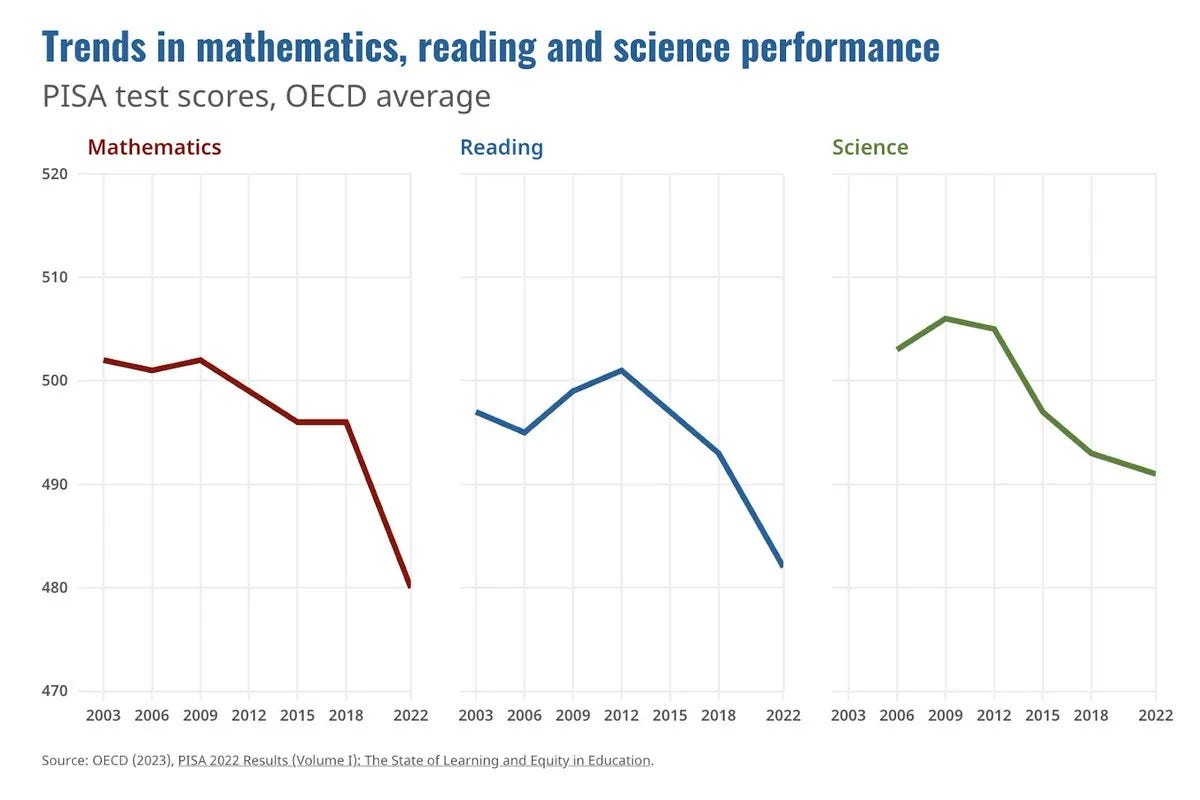
The term “brain rot” has emerged to describe the erosion of attention spans, cognitive fatigue, and inability to withstand complexity that now bedevils us.
So what is to be done? Is there a way to save ourselves from the race to the bottom of the brain stem?
UC San Diego researchers Jonathan Schooler and Madeleine Gross may have found one.
Recently, they launched a study on the cognitive effects of short-form video consumption. Across a randomly selected group, Schooler and Gross found that those who watched “challenging” or ambiguous art films showed an immediate uptick in creativity compared to the YouTube shorts viewers, whose levels barely shifted. The same pattern held for openness and conceptual expansion.
“What we found is that even small doses of it can have real value,” Schooler told The Hollywood Reporter. Openness and creativity are not fixed traits, the data showed; they can be strengthened, like muscles. “There’s a range of capacity that we each have, and almost all of us are not at the top of that range. We can all get closer by doing something like this.”
The fitness club market is valued at over $121 billion. Clearly, we understand the importance of maintaining the body. And yet, we do almost nothing in the way of preventive mental fitness. That ends today.
Yes - you have wandered, perhaps not entirely by accident, into the serene lobby of my Brainrot Treatment Center. Namaste.
A receptionist hands you a cucumber water, confiscates your phone, and leads you into a dark chamber. I am your attending specialist. As your friendly online film obsessive (and back-alley neurologist), I am here to administer a carefully calibrated course of cinematic exposure therapy - a controlled reintroduction to ambiguity, patience, and sustained attention.
Treatment is administered in escalating doses, from mild to maximum strength. Here is your first regimen. If you want more of these, like this post, and don’t forget to share it with your brain-rotted love ones.
Symptoms: Restlessness at anything over 3 minutes. Reflexive phone-checking. Mild narrative impatience.
Treatment: Short-form, visually inventive works. No second screens.
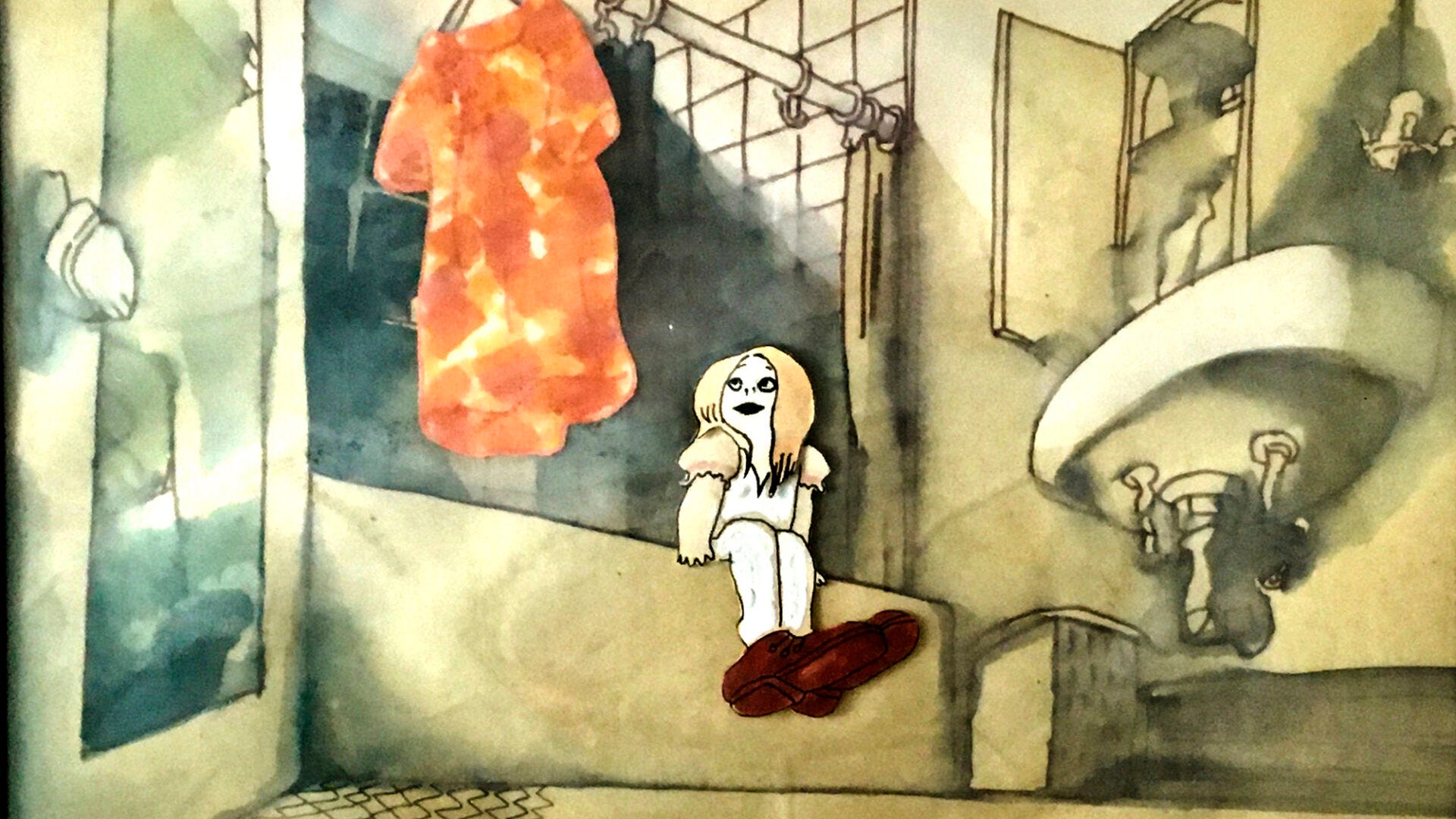
In the early 1970s, Manhattan animators Faith and John Hubley captured the texture of childhood imagination in charming shorts animated around candid recordings of their daughters, Emily and Georgia. There is something about the rawness and realness of the recordings, combined with the flitting fantastical drawings, that really move me. The Criterion Channel has several of their films, and I recommend them all highly.
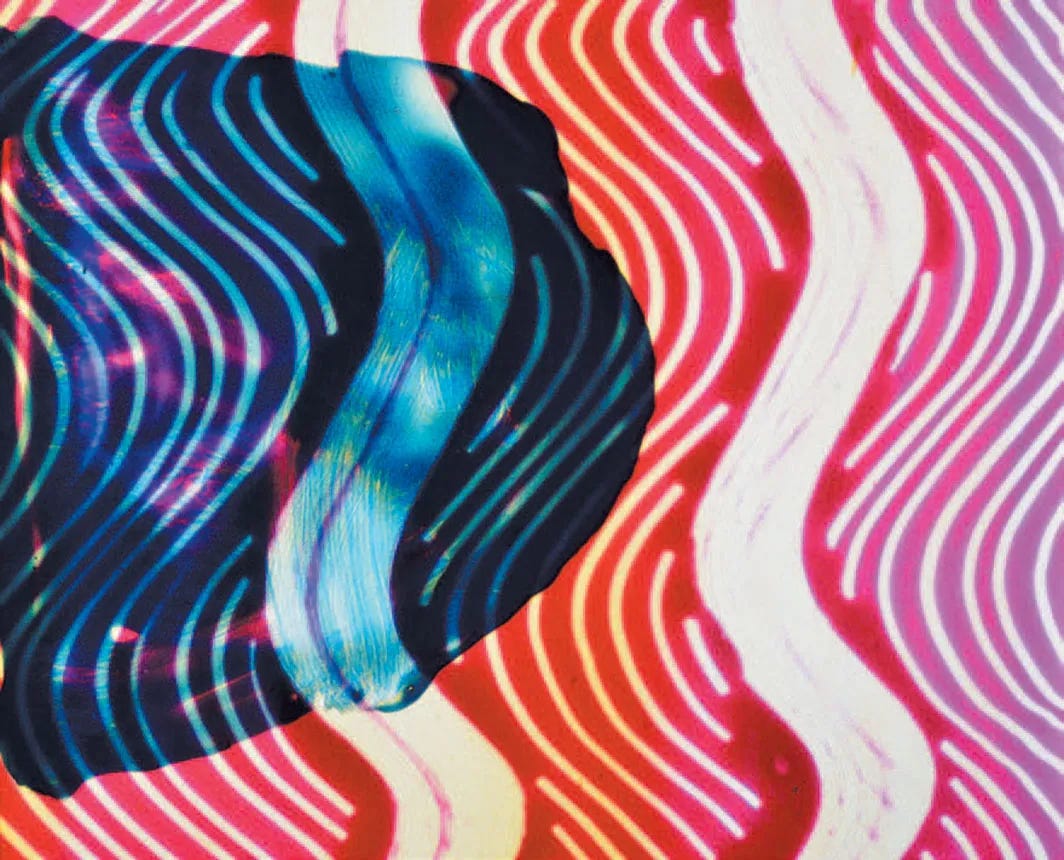
New Zealand artist Len Lye was an early experimental filmmaker. As non-narrative films go, I find Lye’s to be among the most visually delightful. You can sample it for yourself on YouTube.
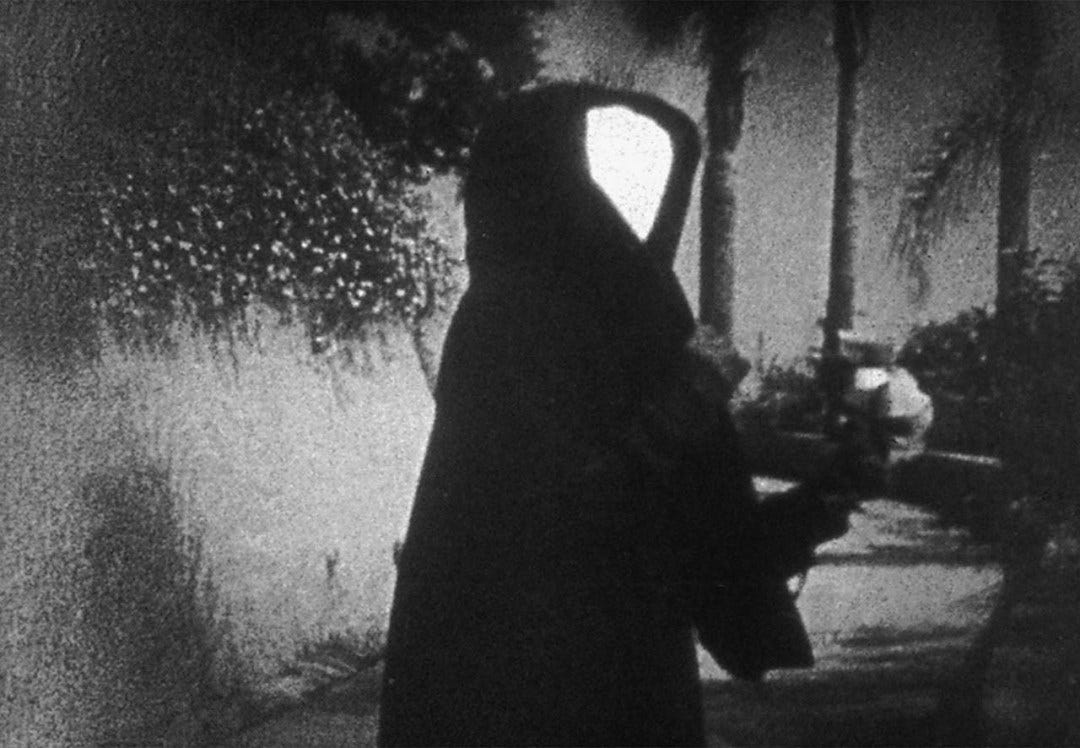
American experimental film pioneer Maya Deren made Meshes of the Afternoon to explore interior human experiences: “It does not record an event which could be witnessed by other persons. Rather, it reproduces the way in which the subconscious of an individual will develop, interpret and elaborate an apparently simple and casual incident into a critical emotional experience.” You can watch it here.
Symptoms: Acute discomfort with ambiguity. Needs “something to happen.”
Treatment: Lightly unconventional narratives.
Dosage: One feature-length exposure.
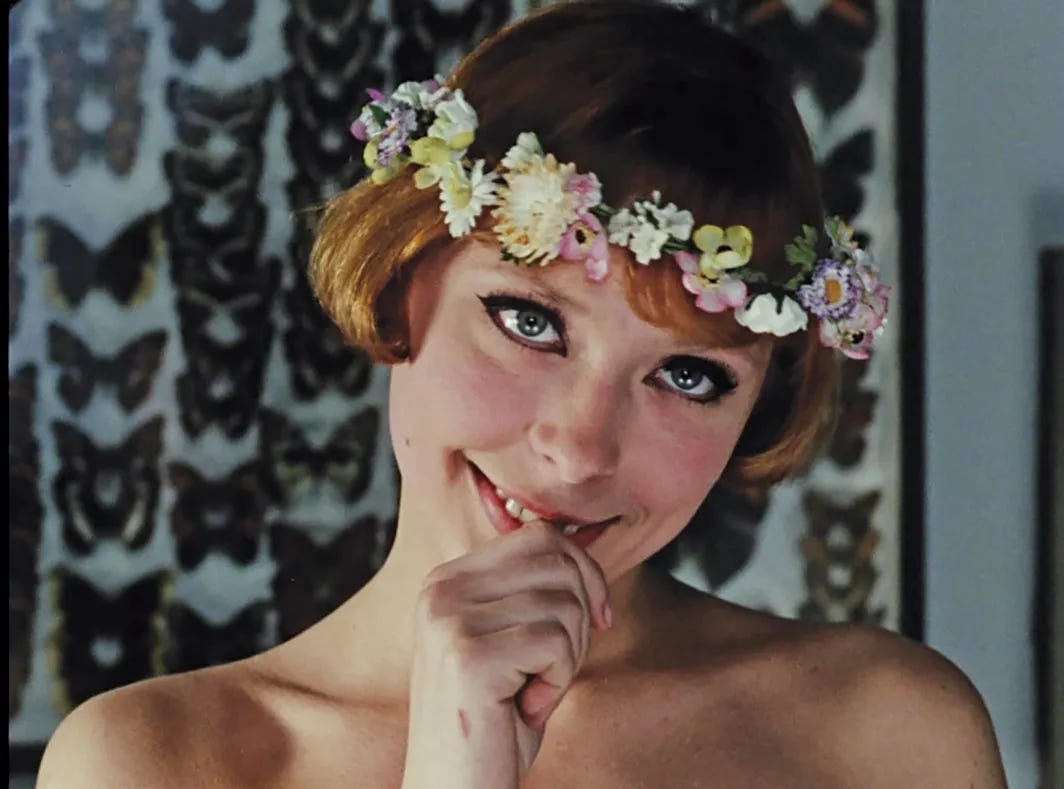
I watched this film only a few weeks ago on the recommendation of Forbidden Fruits director Meredith Alloway. A puckish proto-Jackass by way of the Czech New Wave, Daisies follows two teenage girls - Marie 1 and Marie 2 - who embark on a series of destructive pranks to rebel against a materialistic society. You can watch it now on the Criterion Channel.
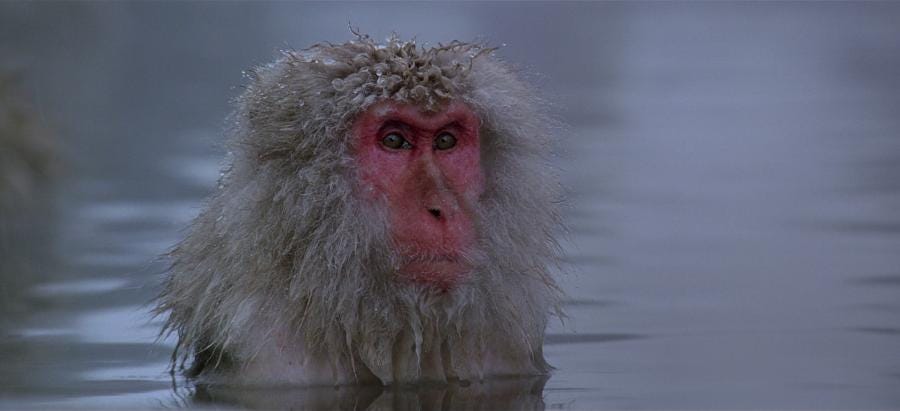
Baraka is a stunning 70mm non-narrative globe-trotting collage film that celebrates human life on scales large and small. Like National Geographic on Psilocybin, Baraka and its companion films, Chronos and Samsara, are a genre unto themselves. Roger Ebert named it among the greatest films of all time, writing, “if man sends another Voyager to the distant stars and it can carry only one film on board, that film might be Baraka.” Available for free on Tubi.
The tiers continue below. But first -
NYC! Come see me talk film LIVE this week at artXnyc. On Wednesday, May 6th at 6pm, I’ll be joining Filmmaker Magazine’s Mike Hogan, Amauteur’s Adam Kritzer and others at a Reunion Labs event, hosted by Sean Glass. Should be a blast. Get more info and RSVP here.
Are Movies Really Getting Darker? Jessica M. Goldstein investigates this week in the NY Times. “People are playing it safe. Bland safeness on set is going to be bland safeness in the end. Bland safety on set is not a way to make something strong in post.”
Why Did Hollywood Stop Making Dramas? The always-terrific Daniel Parris wants answers: “The genre’s precipitous decline does not square with its reputation. In a survey of 65,000 consumers that asked which genres they ‘want to see more of,’ dramas consistently landed in the middle of the pack across all age groups. That’s not a sign of breakout demand, but it hardly suggests a format worthy of wholesale abandonment.”
Filmstack Daily Digest turns 100 (editions) old! For the hundredth edition, I wrote a little tribute (excerpt below). Read the entire issue, with contributions from Ted Hope, Courtney Romano, Sara's Soliloquies, and Amanda Sweikow here.
In the winter of 1848, a group of California-bound pioneers known as the Donner Party became snowbound in the Sierras. Many starved or froze. Others resorted to cannibalism to survive.
There are days now - many, in fact - when the film industry feels like its own Donner Party. We seem to be snow-blind, frozen in a perpetual state of “transition,” where filmmakers, producers, financiers, and distributors stare at one another with wary expectancy. Everyone is waiting for the thaw. But how much longer can we wait? How long before we’re eating each other to survive?
Filmstack, to me, feels like the intrepid splinter group that finally broke from the wagon circle and said, Enough! We’ll find our own way out of here, or die trying! For the past 100 editions, the Filmstack Daily Digest has been our makeshift shelter: a cave against the storm, where we huddle, compare notes, and strike flint against stone in the hope of fire. And in these 100, we’ve seen more than a few sparks.
That’s all for the free edition. Paid subscribers get access to Tier III (Severe) and this week’s Off The Shelf.
Comments
Nothing yet. Say the first thing.
Sign in to join the conversation.