
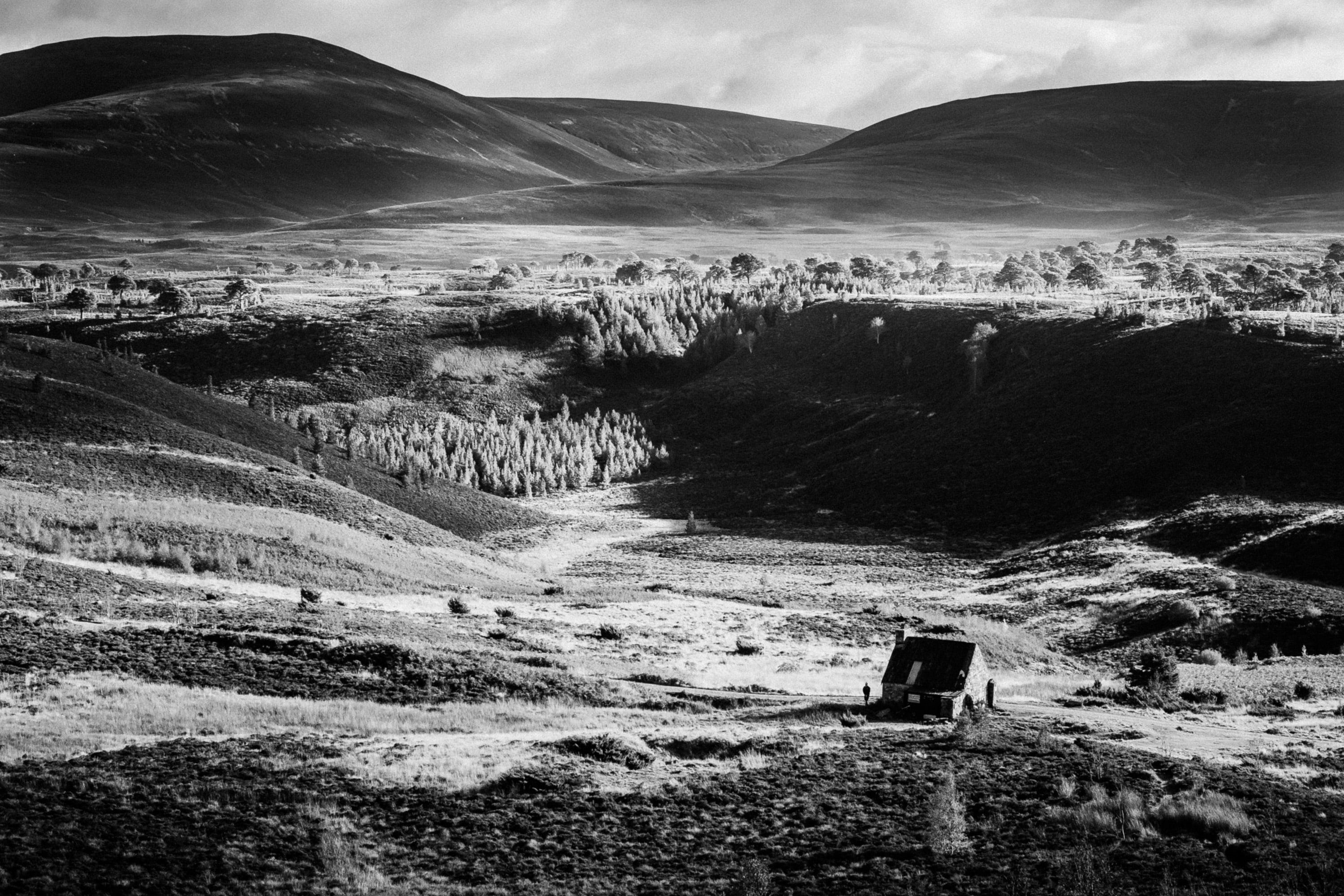
For those of you who prefer to read on paper (or e-reader) rather than in your Substack or email app, I have converted this essay into an easily printable PDF.
My residence was more favourable, not only to thought, but to serious reading, than a university.
—Henry David Thoreau, Walden
In 1845, Henry David Thoreau went into the woods in order to live deliberately. It doesn’t sound like much; he built a cabin near Walden Pond in Massachusetts, reduced his life to the essentials, spent time observing nature and reading and writing. But it was the first serious attempt to put the philosophy of Transcendentalism into practice, and the resulting book, written a number of years after Thoreau’s experiment ended, has become an enduring classic of literature.
I did not read Walden until the Covid lockdowns of 2020. Reading it felt like coming home. I saw so many of the ideals I held dear reflected back at me: the simplicity of life in nature and how it restores time to its true beat; intentional living and being true to one’s own goals; self-knowledge and self-reliance (but not, important to distinguish, individualism); ease in solitude; scepticism of progress; realisation that nature is divine and that human beings are indivisible from this divinity.
A year before reading Walden, ignorant of Thoreau’s teachings, I had gone through my own learning experience and come to many of the same conclusions. You can read the story of my own journey in The Farthest Shore. I suppose I became a Transcendentalist in 2019 and have been refining my own flavour of this philosophy ever since.
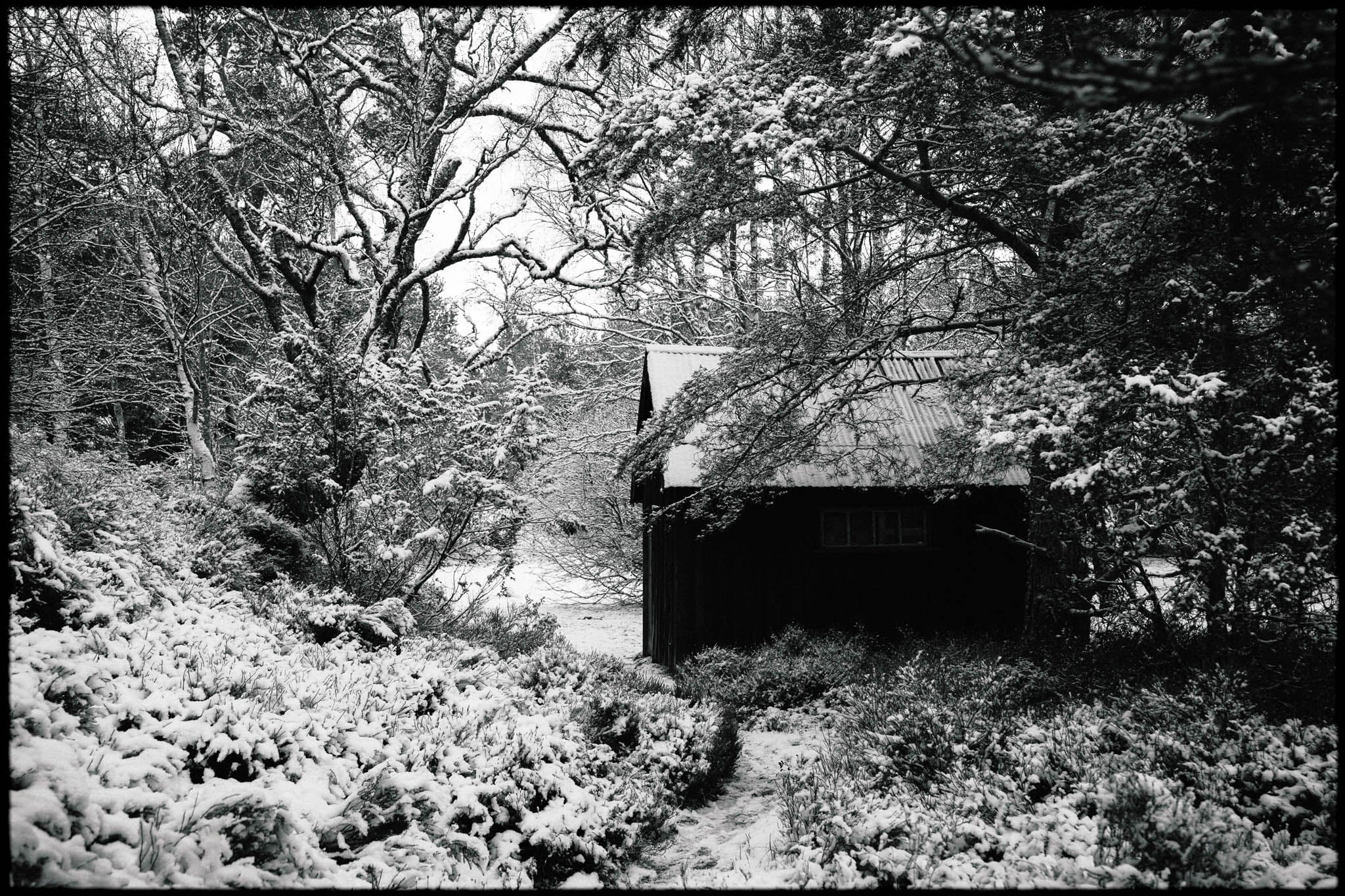
Focused spaces
So much for Walden; what, then, is a Walden Zone?
In the 21st century, the scourge of surveillance capitalism – technologies that isolate, fracture and fragment – has led to a massive resurgence in Transcendentalist-adjacent ideas. Thoreau, eager to escape from the excesses and hypocrisies of 19th-century American society, retreated to simplicity in the woods. Our equivalent is unplugging or digital detoxing. Both our approach and Thoreau’s can teach us much about ourselves and the malign aspects of our environment. Both can be valuable tools when used wisely. But – here’s the key bit – neither is actually a permanent or complete solution, and recognising that is vital.
The term ‘Walden Zone’ was coined in 2015 by William Powers in his book Hamlet’s BlackBerry: Building a Good Life in the Digital Age. The author asserted that in letting the internet into our homes – and even worse, our pockets – we have done ourselves great harm, because solitude is now almost impossible to find, and without solitude our lives become rudderless. How are we supposed to know what we want, or even think, if the voices of others are pressing in on us at all times? Similar questions led me down a tech-sceptical path many years ago, and I’ve been heartened so see countless others ask the same questions recently.
The way forward is not to completely disengage, but to create spaces where this incessant connectivity can no longer reach us. To give us a break where we can get back in touch with ourselves.
Powers said:
Thoreau could be the model. Our situation is different from his, in that the crowd is no longer just nearby – it’s right in the home, wherever there’s a screen. So our zoning has to be interior. Every home could have at least one Walden Zone, a room where no screens of any kind are allowed.
In the years since, the idea has taken root – especially amongst writers and other creatives, who keenly feel the attenuating influence of the web. A Walden Zone can take many forms. Some say that it’s a ‘tech-free’ space, but what does that actually mean? Pen and paper are technology. Books are technology. Not every screen is bad all the time, and anyway, the distracted mind gets what the distracted mind wants. But I think a consensus has formed that the Walden Zone is a place where the internet can’t follow you. I know countless writers who have carved out a focused space for themselves where the network can’t reach them.
In my experience such people tend to be more collected, surer of themselves and what they want, and live calmer, happier, more successful lives.
Before I dive into my own story, it’s important to acknowledge that creating such a space is a privilege that not everyone can afford. Not everyone can spare a room in their house for an offline reading/writing nook; not everyone has a garden they can build a cabin on. But I think it’s possible to take these principles and apply them to any situation, and I’ll explore how to do this later in this essay.
How I found – and lost – my own Walden Zone
I’ve been a writer ever since I could hold a pencil. By the time I was 13, I was writing my first novels, but already knew that focus was a scarce resource and that digital distractions would be a lifelong enemy.
Back then, computers were massive beige boxes that lived on desks. Smartphones had not yet been invented. Social media did not exist. The internet was something that made a noise when you dialled into it.
At that age, I had no responsibilities beyond my school homework. The internet had yet to gain a toehold in our home. Apart from my inexperience and lack of skill, conditions could hardly have been more ideal for cultivating a writing habit, and I took full advantage of the family desktop computer. But even then, I struggled; my brother or dad would want computer time of their own, or I’d succumb to the temptation to boot up a video game instead (I became addicted to Wolfenstein 3D). I suppose this is when I learned that distraction can take many forms, and that ultimately focus has to come from within.
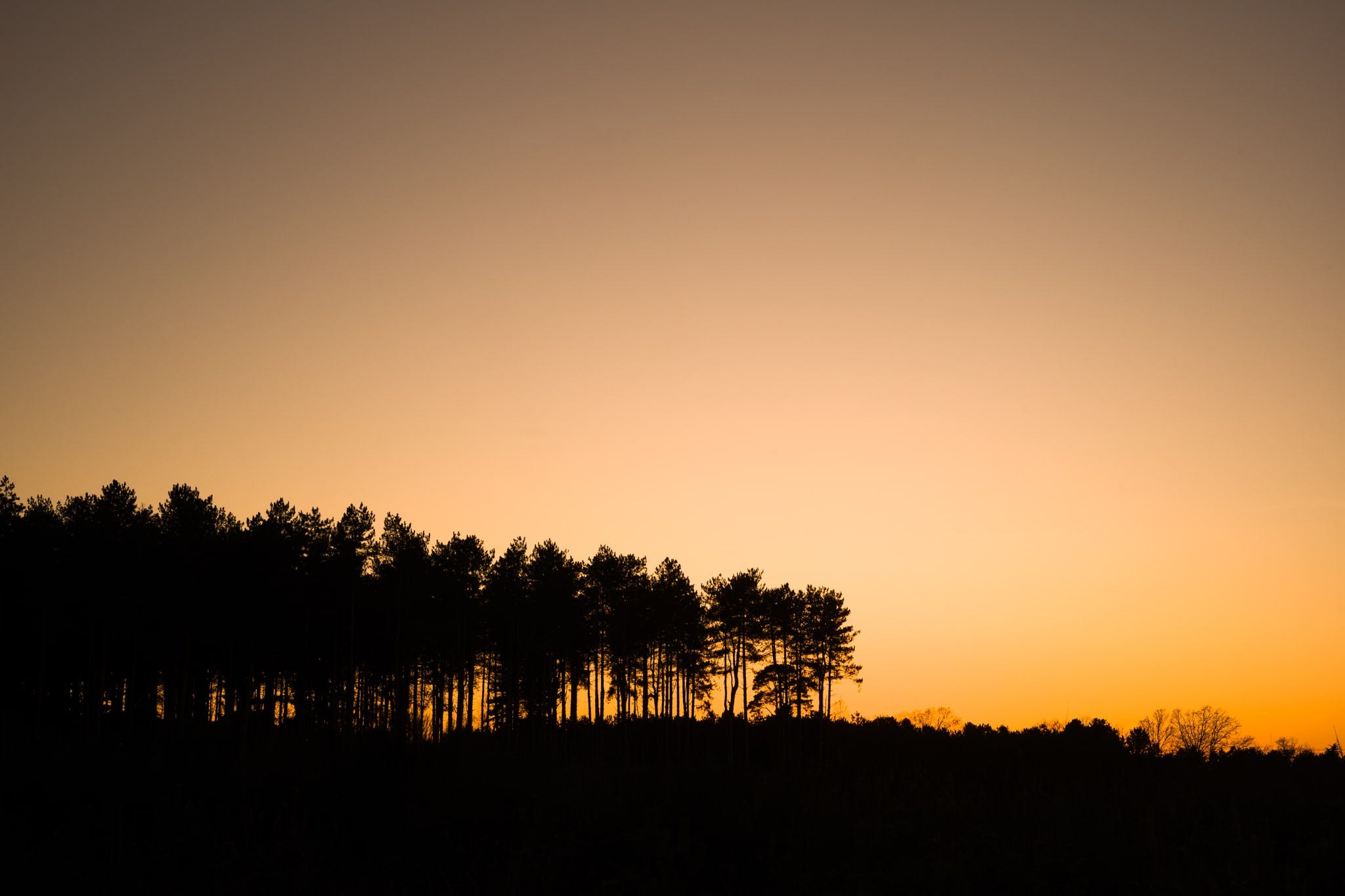
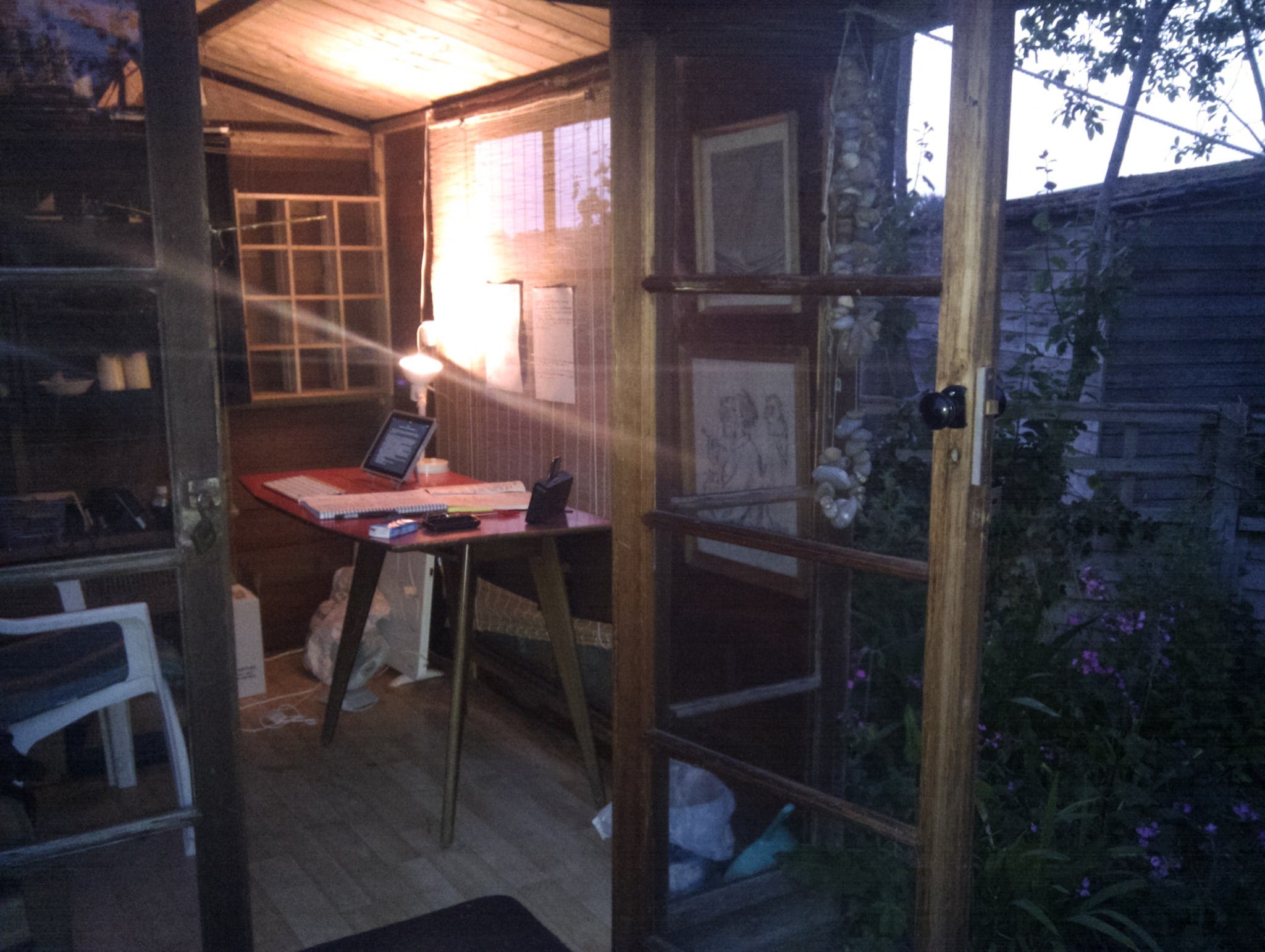
Things changed in 2002 when I was 16 years old. Our family moved to the Suffolk countryside, and our new house came with a small summerhouse at the bottom of the garden. It was a basic wooden cabin and couldn’t have been more than about 8ft square. It was surrounded by trees on one side, with a meadow on the other reaching to the edge of Tunstall Forest, and on quiet summer evenings you could stand there and watch the barn owl hunt while a fallow doe grazed peacefully in the long grass. It was a place of buzzing bees and growing things and clear light.
According to my dad’s diary, on the 14th of April 2002 – shortly after moving in – I helped Mum clean out the summerhouse, ‘removing several sacks full of old carpet, sand bags and spiders’. I have no memory of this. But I do recall that nothing in particular was done with the summerhouse after we cleaned it out.
2002 into 2003 was a frustrating time for my writing. By this point we had the internet at home. I shared a bedroom with my brother James, and our first internet-connected computer was installed on a desk in that very room. I remember arguments about whose turn it was to go online or play a game or write up homework, and I found my relationship with computers fundamentally and permanently changed. A computer was no longer a powerful but clearly delimited extension of my own brain that I could use mindfully. It had become a place to which I would go, a place without time or clear boundaries, and it became much more difficult to find that particular state of mind I needed in order to write. Even when I had my own laptop, freeing up the desktop for James’s use, the focus problem followed me onto the new device.
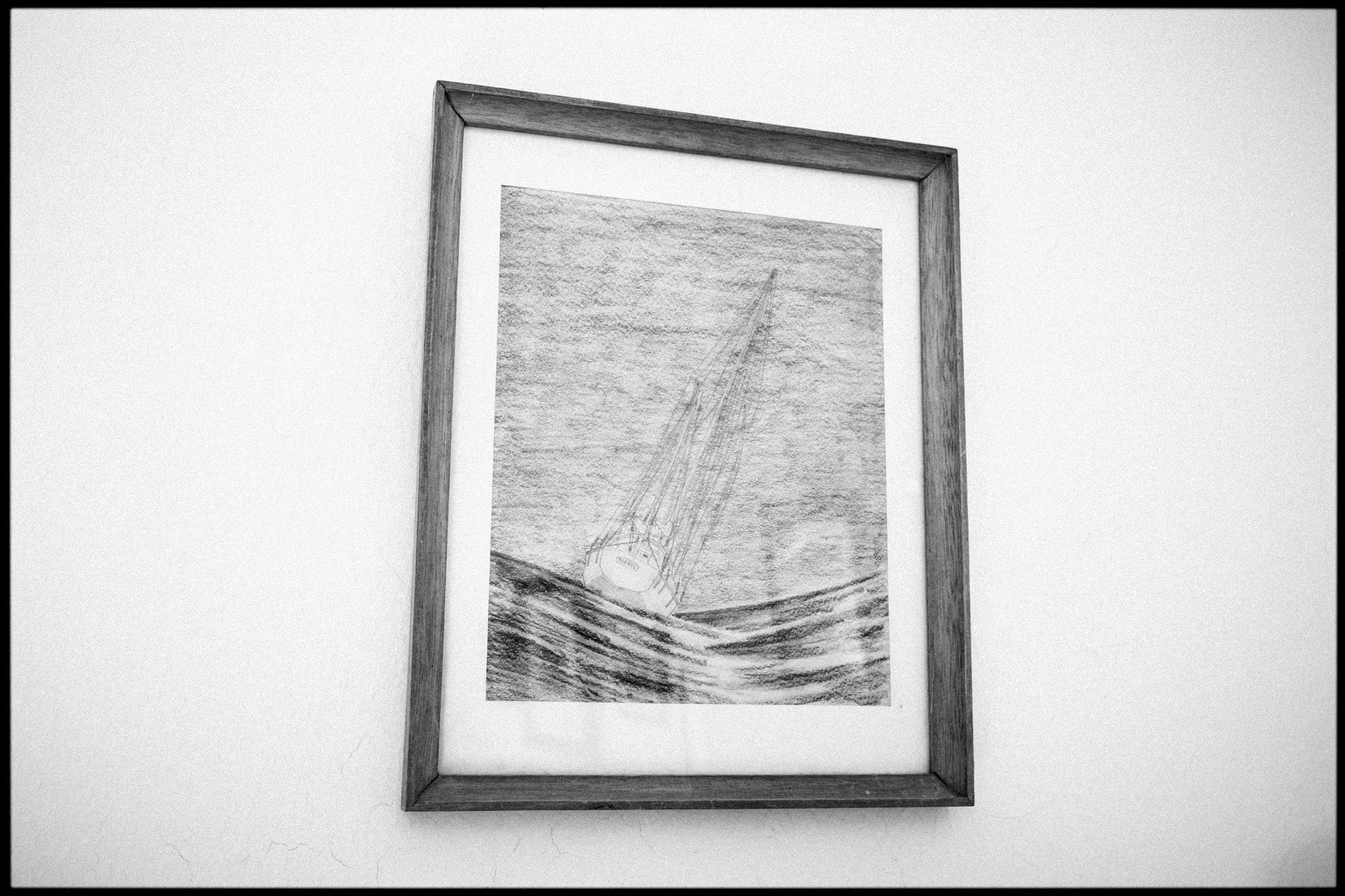
At some point in 2002 or 2003, my parents installed a few bookshelves in the summerhouse, plus the old red desk my mum had used to write her own homework when she was a child. To this setup was added a desk lamp, an electric heater for the winter and a fan for the summer. Dad hung some of his artwork on the walls: pictures he’d drawn or painted as a young man. The one I remember most vividly was the drawing of his yacht Yorrel heeling over in a gale: a symbol of my dad’s own Walden Zone he had made for himself in the 1970s (more about this in The Farthest Shore).
I don’t remember if writing down there was my idea or if one of my parents suggested it – perhaps even my brother to get some peace and quiet! But the record states that I found my Walden Zone in October 2003:
Thurs 30th Oct 03
Since the start of the half term holidays Alexander has formed the habit of going to the summerhouse immediately after lunch and writing his novel on his laptop, coming back down to the house at about 1550, which just gives time to take Amber for a reasonable walk before dark. What he will do next week when the holiday is over we do not know.
Dull Cool Rain and increasing wind after 2100
Suddenly everything made sense. The Wi-Fi wouldn’t reach down the bottom of the garden. I could write again – and the Muse returned to me in a way that seems incredible now. It was the most creative, expressive and productive time of my entire life as a writer. I was not at the peak of my skill or experience – very far from both – but I was at the peak of energy, focus, and the drive to simply write without looking back. When people talk of the Muse as some kind of winged divine being that creators can fly with for a while, channeling mighty energies, I believe them completely because I have experienced this myself. And, yes, it does feel as if the words are flowing straight from some higher power.
My records from that time indicate marathon writing sessions in which I’d sometimes write 6,000 words in two hours. I wrote novel after novel back to back. In October 2003, immediately after finishing one novel, I dove into another one and wrote 99,000 words in five weeks… then 60,000 words on another novel in the three weeks following that.
Of course, they were not good novels! But nobody was ever born a good writer. You have to spend years and years doing the hard work, improving and iterating and learning, in order to become good. My years of education and hardest effort in writing all took place when I was a teenager. There are quite simply no shortcuts. I would not want there to be. The journey is the point of all this. The meaning is in the doing.
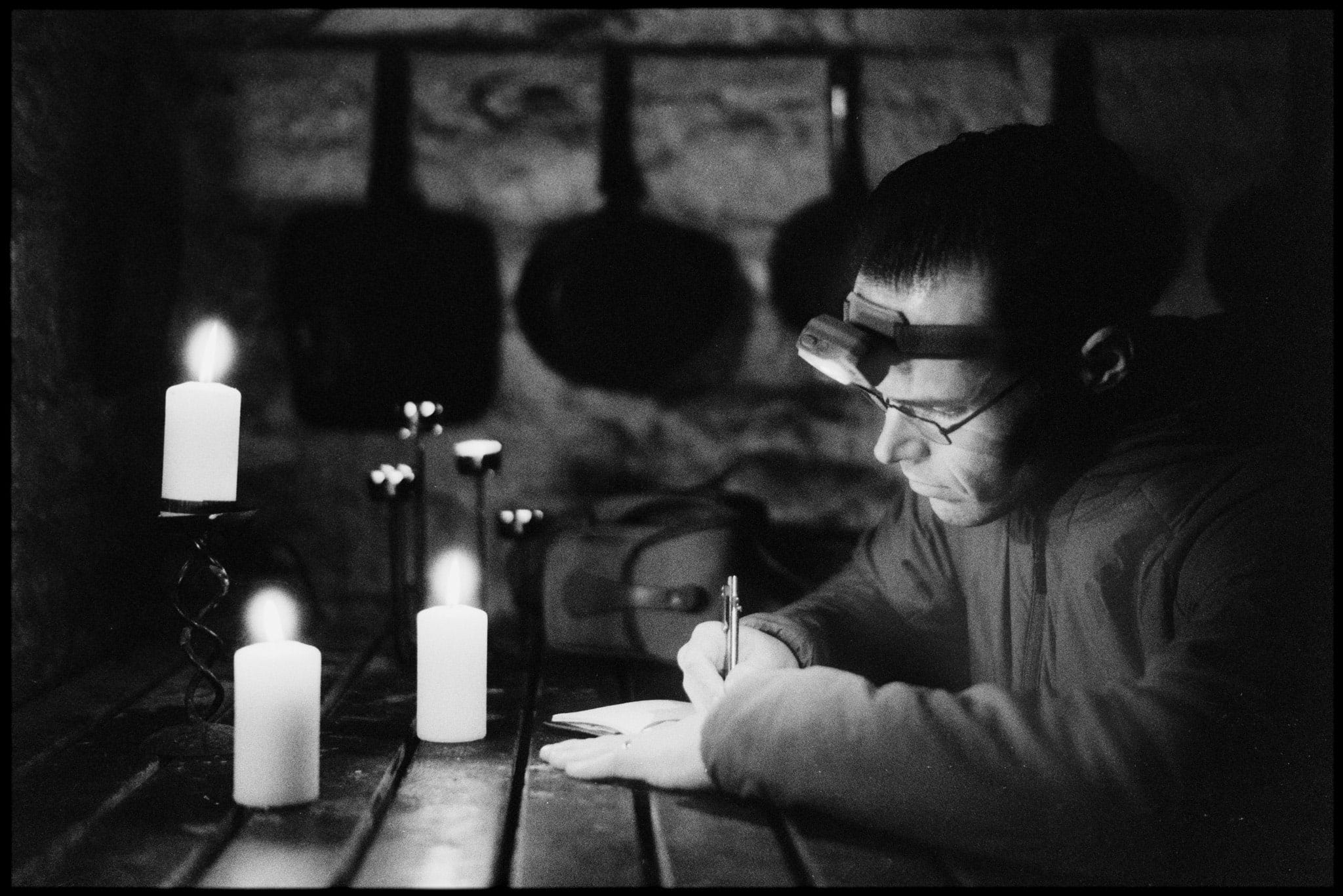
Increasingly I found that I preferred the dark evenings of winter. At night, the cabin almost became a sensory deprivation tank. I remember writing in fingerless gloves, numb from the cold as I practically sat on the feeble electric heater. Jack Frost would draw his icy artwork on the inside of the windows. To deepen the darkness yet further, I would switch off the electric lamp and write by candlelight, my laptop’s brightness turned down as far as it would go. Even back then, I had a taste for the Gothic and the dramatic. But more than that, this asceticism somehow felt right.
Once again dipping into my dad’s diary:
Mon 17th Nov 03
Alexander says he likes writing in the summerhouse even more after dark than during the day. Fewer distractions to his thought processes. This evening he went there before 1800 and came back at 2030, having written a sizeable chunk of his novel.
Drizzly, Raw
But all good things must end. I don’t think I fully understood the formula that made my writing cabin work so well. By 2005, computer games and other apps had been installed on my laptop, and the procrastination demon followed me to my writing sessions. The Muse, betrayed, deserted me – and did not return for many long years.
I went away to university, and then to Glen Coe to find adventure. For five years all attempts to write were sporadic and halting. But in 2010 I returned home for a few months, and I rediscovered the summerhouse. I had a novel I wished to finish – The Only Genuine Jones – and I ensconced myself down there until I finished it.
The Muse returned to me. I had not lost the magic. This time I had a new kind of computer to write on: a thing called an iPad, which had just come out. I saw its potential as a simplified, more focused computer without all the cruft and distractions of my laptop. I wrote most of The Only Genuine Jones on that first-gen iPad. But my spell back in Suffolk didn’t last long, and by late 2011 I had moved away permanently, leaving my writing cabin behind for good.
Temporary shrines to the Muse
I haven’t been fortunate enough to have my own dedicated writing cabin at any time since then, but I now recognise what makes the formula work, and I’ve been able to apply the lessons on an ad-hoc basis many times.
I’ve completed many long-distance trails over the years. These experiences are almost like mobile versions of Thoreau’s Walden experiment; simple living for a week or two, immersed in nature with nothing but your own thoughts and a blank notebook. I think more clearly after a week or two in the wild than I do at home, and I genuinely believe that I become a different kind of creature when I meet the Muse out there on the trail to fly together again for a while. I have filled notebooks with the most lucid and personal writing I’ve ever created.
The sense of flow is intoxicating but so very fragile. It cannot survive re-entry to your regular life.
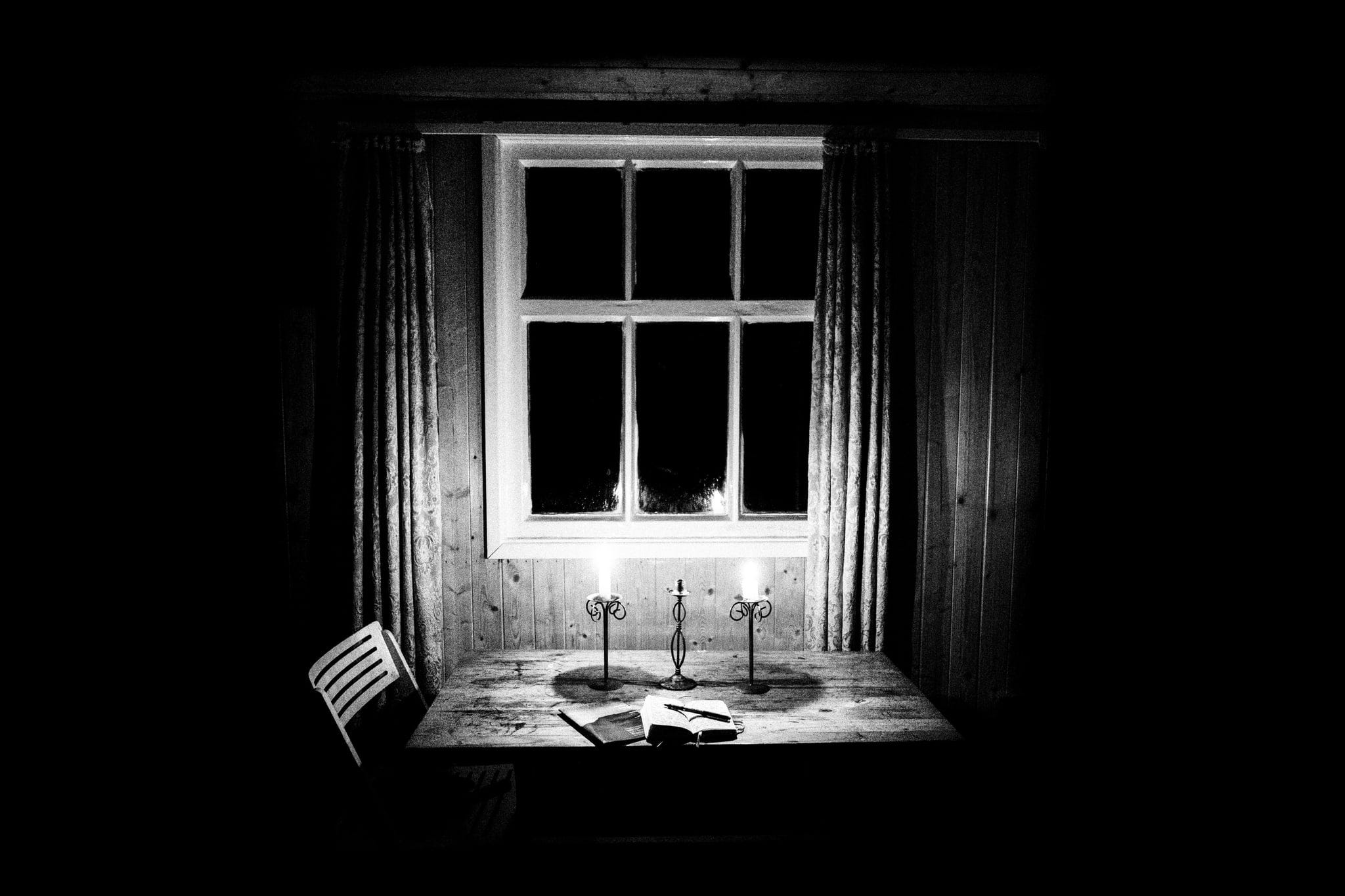
I remember, on my winter Cape Wrath Trail in 2019, writing sessions alone in bothies, with snow hammering on the windows and a guttering candle for light and warmth – as if the ghost of my writing cabin of old had reached forward through time to touch me with gentle grace, just for one night. And in the Pyrenees later that year, my notebook and papers spread out on a broken table in a tumble-down farmhouse many miles from the nearest road and no signal on my phone, poetry flashed before my eyes like phosphenes. Light in the darkness.
We can find that place again. We can each find it. All you really need is a notebook and pencil, a place to dedicate to the Muse for an hour or two, and the wisdom to turn off your phone. The words will flow. You will find your wings.
A practical setup in 2026
Today, I am fortunate to be a professional editor and writer. All the years of effort and toil and gradual improvement have led to a career doing the one thing I feel uniquely able to do.
Writing is still hard. I still struggle with focus and procrastination, and if anything the problem with digital distraction has only got worse as the online world has frayed and enshittified. Of course, I’m also older and have more responsibilities. But I now recognise the value of creative friction: just enough for the effort to yield flow and meaning, but not enough to kill the fragile creative process.
I have a study I use for my work, but I don’t have space for a dedicated offline room in my home. My main computer desk has the stuff I need for my day job: an M1 MacBook Air connected to a big Studio Display and mechanical keyboard. This is a great machine, certainly the best Mac I’ve ever used, but it’s still a modern Mac hooked up to the internet and as such is terrible for focused writing. I use content/app blockers that can help make things a bit better, but I simply can’t sit at the same giant screen I use for emails and management and everything else and also write. It’s impossible.

One thing I’ve learnt about myself is that I sometimes need a context shift – physically moving to a different location. A cabin in the woods is the ideal, but if that isn’t practical, simply moving to a different desk in the same room, and using a simpler device or writing by hand, can get you much of the way there.
Something else I’ve learned is that focus/distraction is not a binary thing – it’s a scale. Having a flexible setup can be great because sometimes all you need is a little help to get you started. You don’t always need to go full Thoreau.
In addition to my main desk, I have two other desks in my study:
Directly opposite my main desk is the analogue desk. This is a strictly analogue-only space where no digital tech is allowed. It has card files for my indexing system (more on this in a future post), pinboards, a cutting mat, and more. I also use it for art. Technically this space is a Walden Zone, but all I need to do to get back online is turn to face my main desk and press a button, which isn’t great. I’d prefer this desk to be in a different room.
Between the analogue desk and main desk, facing the window, is the focus desk. This is a very small desk – honestly the only one I could find that fits in the space. The rules: this can be used for writing by hand, or using simple digital writing devices such as an iPad (I keep mine pretty barebones) or Alphasmart (a fantastic digital typewriter). I do not allow phone use here. As a kind of compromise zone, it’s a great space for when I need more focus than my main desk can support, but might also need to refer to material on the big computer. In practice, I do much of my day-job writing here. Sometimes, that little extra dose of focus is all I need to get over the hump and finish a project.
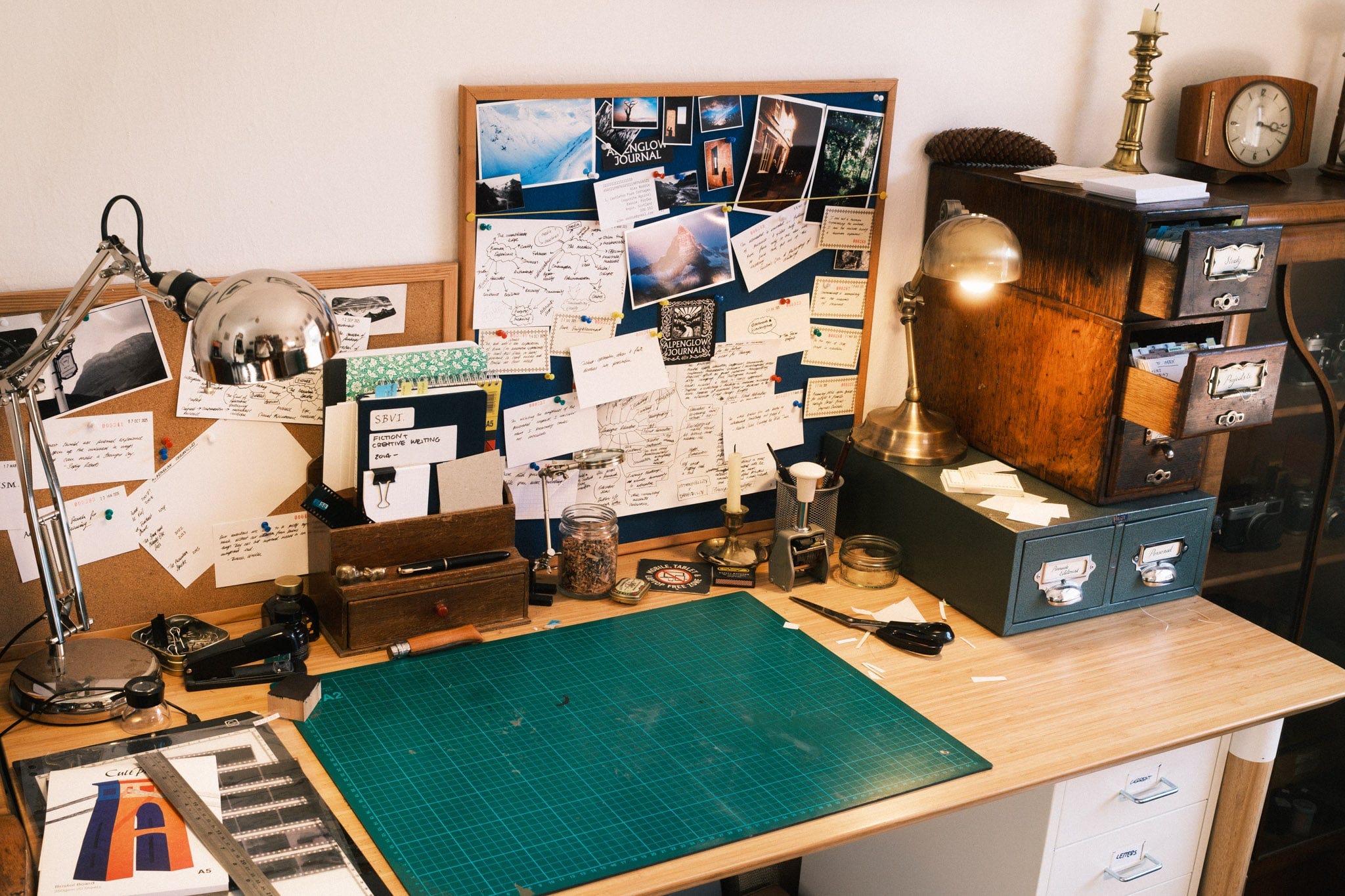
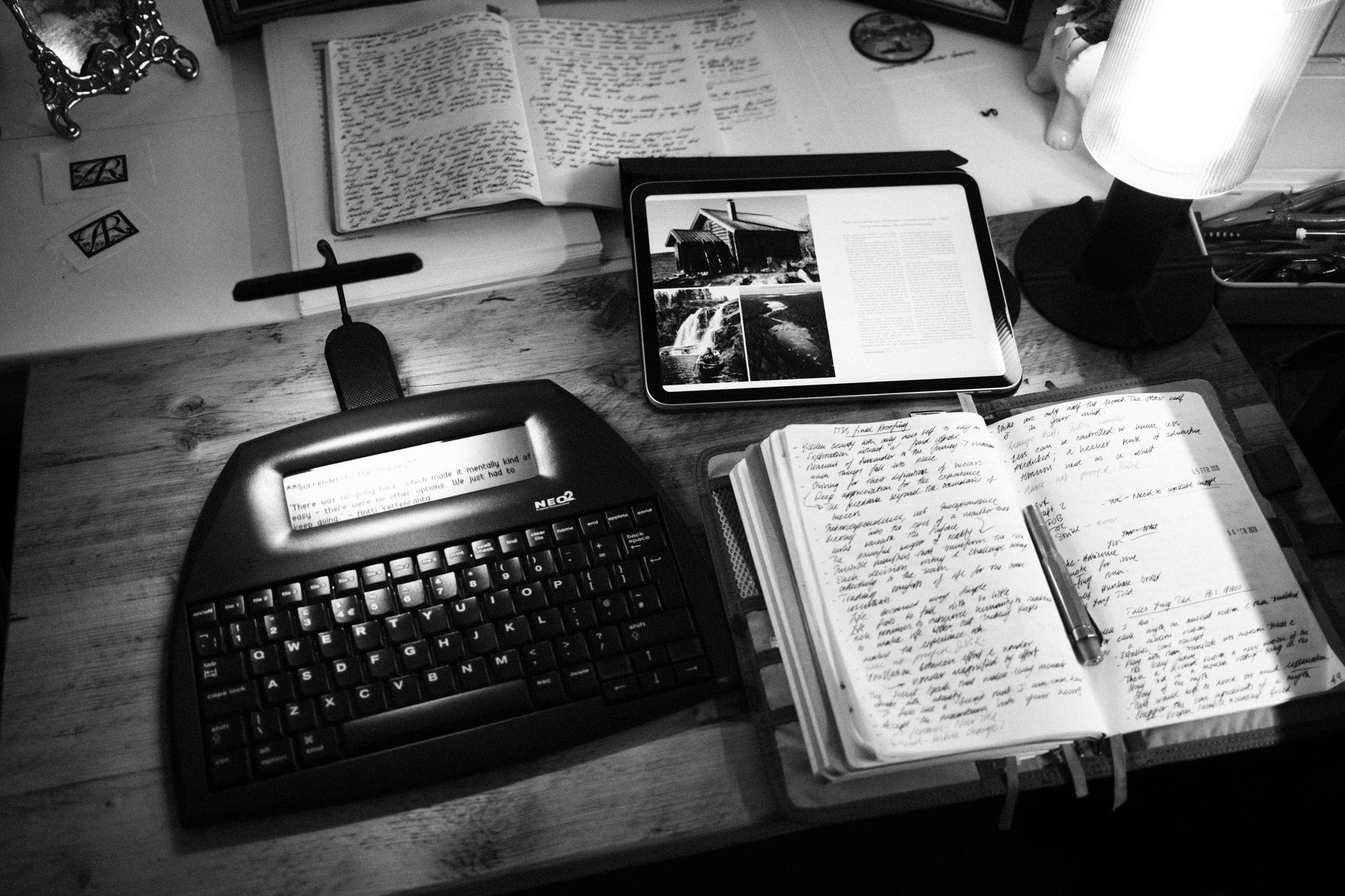
This setup works well enough and is the best I can do with the space I have available. However, if I ever have the opportunity again in future, I will certainly build my own dedicated Walden Zone once more: a separate room dedicated purely to offline writing and reading. A temple to the Muse.
Oh, and that drawing of my dad’s boat Yorrel? I still have it. It hangs in my study – a permanent reminder that the quest for solitude in nature is part of my family’s heritage.
The essentials
Let’s say you don’t have the luxury of a separate room. You have to make do with what you have, so what do you actually need to get the benefit of this idea?
A physical context shift. Some new location you can go to purely for writing/reading/creating. This can be as simple as a chair in the garden or a corner in your local coffee shop; moving yourself somewhere new is the important thing in setting the intention. Sometimes, this alone is all you need! If hiking in Scotland, a bothy is an ideal Walden Zone if you get one to yourself, but do adhere to the bothy code. Remember that these are communal spaces. The social aspect is part of the deal.
Disconnection. Either leave your phone somewhere else (in a different room is ideal) or make use of a content blocker like Freedom to temporarily disable either the entire internet or distracting websites. You could also use airplane mode if you feel safe doing so, although this also cuts you off from calls/texts, so it isn’t suitable for everyone’s situation. I am conscious that, as a man, I’m likely to be safer doing this than women in public places, so use carefully.
A focused writing tool. Pen and paper are ideal. If you only have one laptop, I recommend setting up a new user account for writing with restricted apps, content blockers (Freedom or Cold Turkey both work well), and maybe a different wallpaper as a further context shift. Use a simple writing app, not a word processor. I recommend iA Writer. Google Docs is just about the worst option because it’s difficult to use without internet access and is also just a terrible piece of software all round. Hardware digital solutions exist, such as the Alphasmart Neo digital typewriter; I’m a huge fan of these things, but they can’t be bought new and do have a learning curve. I have heard good things about the BYOK but have not tried one myself. You could also use a dedicated iPad or tablet for writing; pair it with a physical keyboard, delete most of the apps except a simple text editor, and restrict its web browser.
However you write, may the Muse be ever with you.
If we respected only what is inevitable and has a right to be, music and poetry would resound along the streets.
—Henry David Thoreau, Walden

That’s all, folks
Your support enables me to keep publishing Alpenglow Journal. I don’t earn a living from this work, but these words, images and feelings are the most personal I will ever share. It takes a lot of time and effort to put it all together. Please consider becoming a monthly paid subscriber to support me directly – or you can always drop me a one-off tip via Ko-Fi. Thank you.
Images and words © Alex Roddie. No AI has been used in the creation of any work on this page. All Rights Reserved. Please don’t reproduce this material without permission.
Comments
Nothing yet. Say the first thing.
Sign in to join the conversation.