
Upcoming Events
Friday, August 28. 6:30 PM – 7:30 p.m. Senate House State Historic Site. Keynote, Voices of Revolution 250th series.
Tue, Sep 15, 2026, 6:30–8:00 p.m. Center for Brooklyn History. I’ll be in conversation with Jesse Wegman to celebrate his new book, The Lost Founder: James Wilson and the Forgotten Fight for a People’s Constitution.
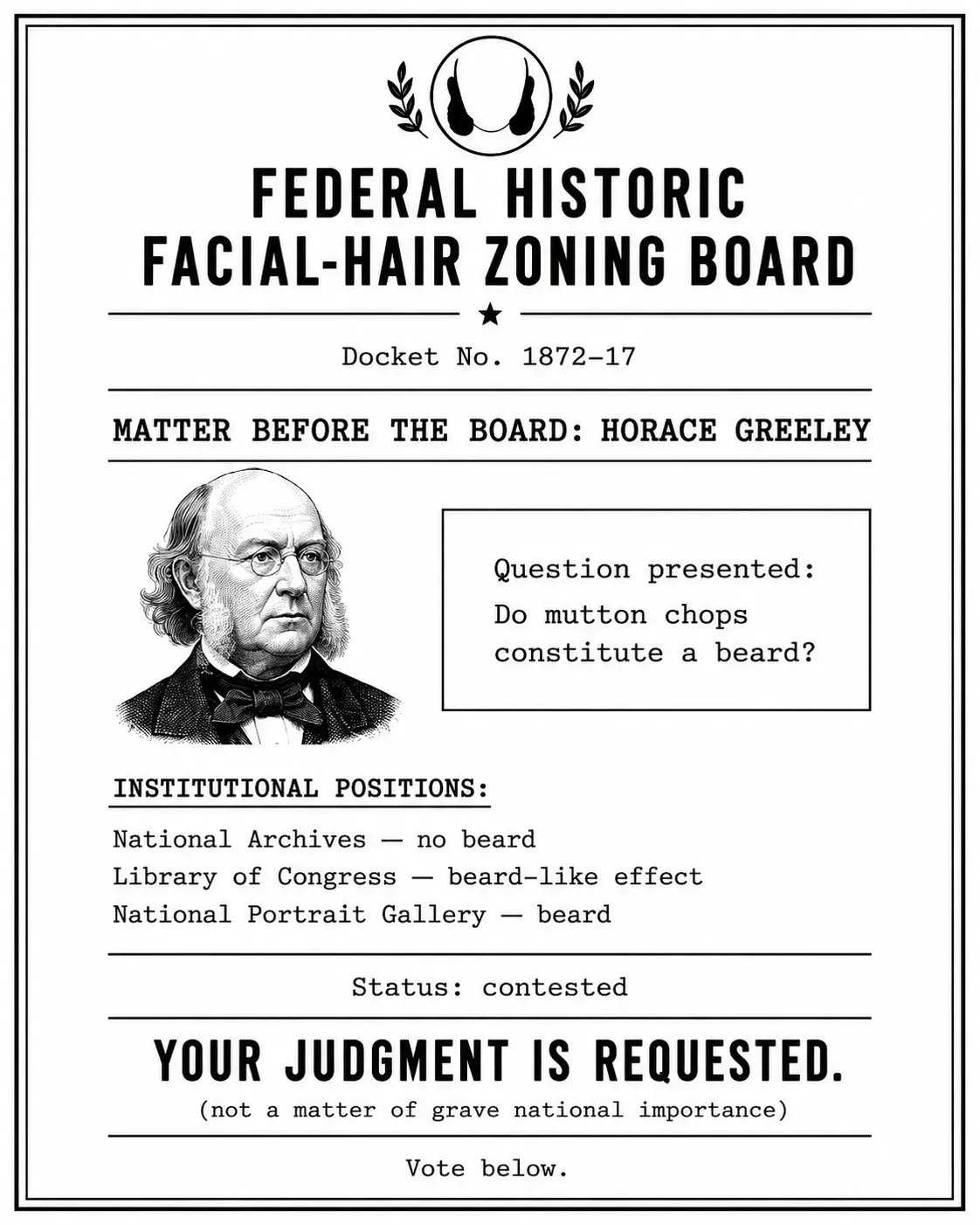
Horace Greeley’s Chin: Vote on a Question of National Follicular Importance
Subscribe because this kind of rigorous scholarship has somehow gone unnoticed by the MacArthur Foundation
With the authority vested in me by absolutely no one, you are hereby summoned to serve on the Federal Historic Facial-Hair Zoning Board, charged with determining whether presidents, vice presidents, and nominees for either office should be classified as bearded.
At the end of this facial-hair briefing book, you will be asked to vote on a question of national follicular importance.
The case before you: Horace Greeley, founder and editor of the New-York Tribune and the Liberal Republican and Democratic presidential nominee against Ulysses S. Grant in 1872.
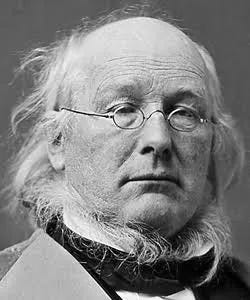
Greeley presents an unusually difficult boundary dispute. Most sideburns—strips of facial hair descending from the hairline in front of the ears—pose no jurisdictional problem, but his facial hair began at the temples, descended in two prodigious masses along the cheeks, and widened along the jaw while leaving the chin bare.
Disciples of gentle parenting might argue that all beards are different. Others would be satisfied with “mutton chops.” The National Archives settled upon “neard,” a coinage that, despite federal sponsorship, failed to achieve wider adoption.
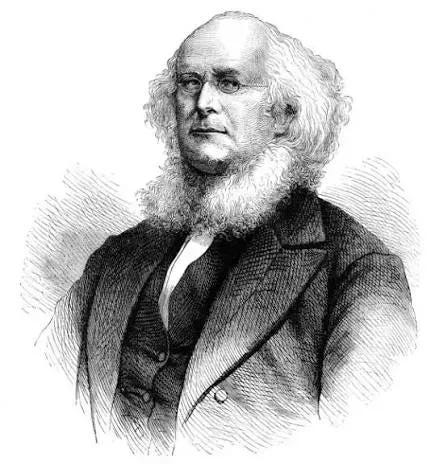
Herein lies the actual dispute: Are mutton chops simply sideburns with territorial ambitions? Or can they be considered a beard that declines connection? Most beards contain bare patches of varying size, so how much uninterrupted coverage does beardhood actually require?
Under a strict constructionist position, contiguity is dispositive—no chin coverage, no beard—but the stance is a quietly contested interpretation in the archives:
The National Archives does not counted Greeley as bearded because his facial hair did not cover his chin.
Library of Congress description of one 1872 image says his surrounding hair gives the effect of a full beard.
The Smithsonian’s National Portrait Gallery catalogs Greeley’s facial hair as a beard.
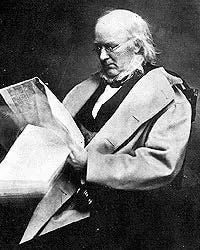
So the Board faces a genuine classificatory crisis. Vote below.
Comments are also greatly encouraged.
ICYMI
See you soonish! In the meantime, you can find me on Instagram and, on occasion, Bluesky and Twitter. My books are at Bookshop, Amazon, and your local bookstore or library. If you’d like me to sign or personalize my books, purchase copies from Oblong Books.
If you see something, say something. If you read something, pay something.
Comments
Nothing yet. Say the first thing.
Sign in to join the conversation.