
Hello! You’re reading a free edition of SMALL WINS. Every fortnight I share one technique or principle that will make you a noticeably better cook — just the knowledge that actually matters. Upgrade for recipes and for Small Wins: The Fundamentals — a series of single-subject primers (e.g. yeasted breads, ice cream) with foundational recipes, 6 times a year.
Have you ever made a granita before?
If the answer is no, please rectify this!
Really, do it now.
I know that flavoured ice doesn’t sound all that exciting but it’s one of the highest effort-to-reward ratio things you can make — and there is nothing better when the temperatures spike.
There are many reasons to love granita (I might even prefer it to sorbet): it requires no more than 20 minutes of hands-on work and no special equipment. It’s elegant. It’s gluten-free, vegan, basically everything-free (okay, okay, there’s a bit of sugar). It’s delicious and surprisingly satisfying to eat (there is texture to it!) — and did I mention that it’s COLD?
I can’t emphasise this enough: granita is so worth your time.
Today’s recipe is a classic granita flavour — coffee — but I’m using cold brew for this, which has a more aromatic, rounded, less pointedly bitter flavour profile. For ultimate speed, you can buy cold brew concentrate, which makes whipping up this granita the work of mere seconds. Or you could try making your own cold brew, which I guide you through below — it’s easy, great value and supremely convenient (iced coffee on tap for the next 2 weeks? Say less.). Either way, the cooking lesson today is on infusions and when to opt for hot vs cold.
Love,
Alexina
Coming up — My favourite way with summer tomatoes; it turns out the best fruit syrups aren’t cooked; a primer on ice cream (including the most divine no-churn extra virgin olive oil ice cream!).
When I worked for Pierre Hermé in Paris, at the height of the macaron craze, he brought out not one but two coffee macarons. The first was very classic — roasted beans, ground and infused into hot cream — and it was everything you would expect of a coffee-flavoured treat: deep brown in colour; strong, roasted notes on the palate.
The second macaron, though… the second was a green coffee version: unroasted coffee beans, steeped in cold cream to capture their subtle, grassy flavour. One of the things I love about coffee flavour is its strength (I’m a sucker for bitterness) but this macaron conveyed the flavours of coffee so gracefully that I was instantly seduced. The classic coffee macaron was delicious, yes, but the green coffee one was beautiful. All of this to say: I learnt a lesson that day about hot vs cold infusions — and now I’m sharing it with you.
Hot infusions are everywhere, they’re the default: your morning espresso, your afternoon cup of tea, the lemon syrup that you pour over your lemon drizzle cake — even commercial iced teas are made by creating a hot brew and then cooling it down. This technique has its benefits, don’t get me wrong, but in certain cases it will cost you.
What is an infusion? When an ingredient is steeped in a liquid (technically ‘the solvent’). This could be water, milk, cream, vinegar, alcohol, oil, and the liquid used determines the nature and length of an infusion.
Let’s briefly turn to Harold McGee, food scientist, to understand how heat works:
“Heat is a manifestation of a material’s kinetic energy and temperature is a measure of that energy: the higher the temperature of a food or pan, the hotter it is, the faster its molecules are moving and colliding with each other... As molecules move faster and more forcefully, their motions and collision begin to overcome the electrical forces holding them together. This frees some atoms to find new partners and rearrange themselves in new molecules. Heat thus encourages chemical reactions and chemical change.”
Hot infusions happen quickly, then: they force change, rapidly swelling the ingredient being steeped and bursting its cells. The result is something highly-flavoured and often more intense, but also murkier in colour (due to oxidation). Flavours will be ‘cooked’ rather than fresh, and any bitterness or tannins will be more pronounced, resulting in a drier effect in the mouth.
Because they are so speedy, hot infusions require closer management — i.e. you have to remove the tea bag from your tea within a few minutes. We all know what happens when you don’t: the flavours get harsh. That said, some ingredients are made for hot extraction — particularly robust ones such as woody herbs (rosemary, thyme), whole spices, black tea.
Cold infusions take place much slower. The mechanism by which they work is diffusion — the passive, net movement of particles from an area of high concentration to one of low concentration — and the result is something altogether cleaner, fresher, more delicate, more elegant in flavour. There’s a certain alchemy to cold infusions that I can’t help but find romantic.
Further bonuses: you get a lighter, clearer liquid (if infusing into water) and, if there are vitamins to be had (e.g. in green tea), they won’t be degraded in the way that they would in a hot infusion.
Summer is well on its way and any cooking technique that doesn’t require you to turn on the oven, hob or even boil the kettle is a godsend. Though cold infusions don’t work in every scenario, they are overall more versatile, flexible and work well for both robust and delicate flavours.
Here are some moments to go cold:
Cold brew coffee — For instant iced coffee on tap, cold brew your own coffee. It couldn’t be simpler to do and I’ve shared the method below.
Iced tea — Once you start cold infusing green tea to make homemade iced tea, you’ll never go back.
Lemon drizzle cake — Instead of making a cooked lemon syrup, combine fresh lemon juice with granulated or demerara sugar and pour that over the cake — you’ll get a much fresher, zingier lemon flavour as well as the satisfying crunch of the sugar.
Fruit syrups — Korean cheong, which we’ll be talking about in a few weeks’ time on the newsletter, is a perfect example of how you can extract the purest fruit flavours without heat.
Refrigerator pickles — Pickling is already a pretty simple task, but you can make it even simpler by going down the cold route: combine equal parts water and vinegar of choice, plus around 1% salt and 1% sugar. The important thing is to thinly slice your vegetables to maximise the surface area, then you just pour the brine over the pickles, transfer to the fridge and leave to steep for several days.
Elderflower cordial — Most recipes have you add the flowers to a hot sugar syrup but the trick is letting the syrup cool down significantly so that you don’t kill the delicate flavour of the elderflowers.
Hot infusions are the default — likely because they are quickest — but default isn't the same as best. Cold infusions are slower, yes, but for the right ingredient your patience will be rewarded with a cleaner, fresher, truer outcome.
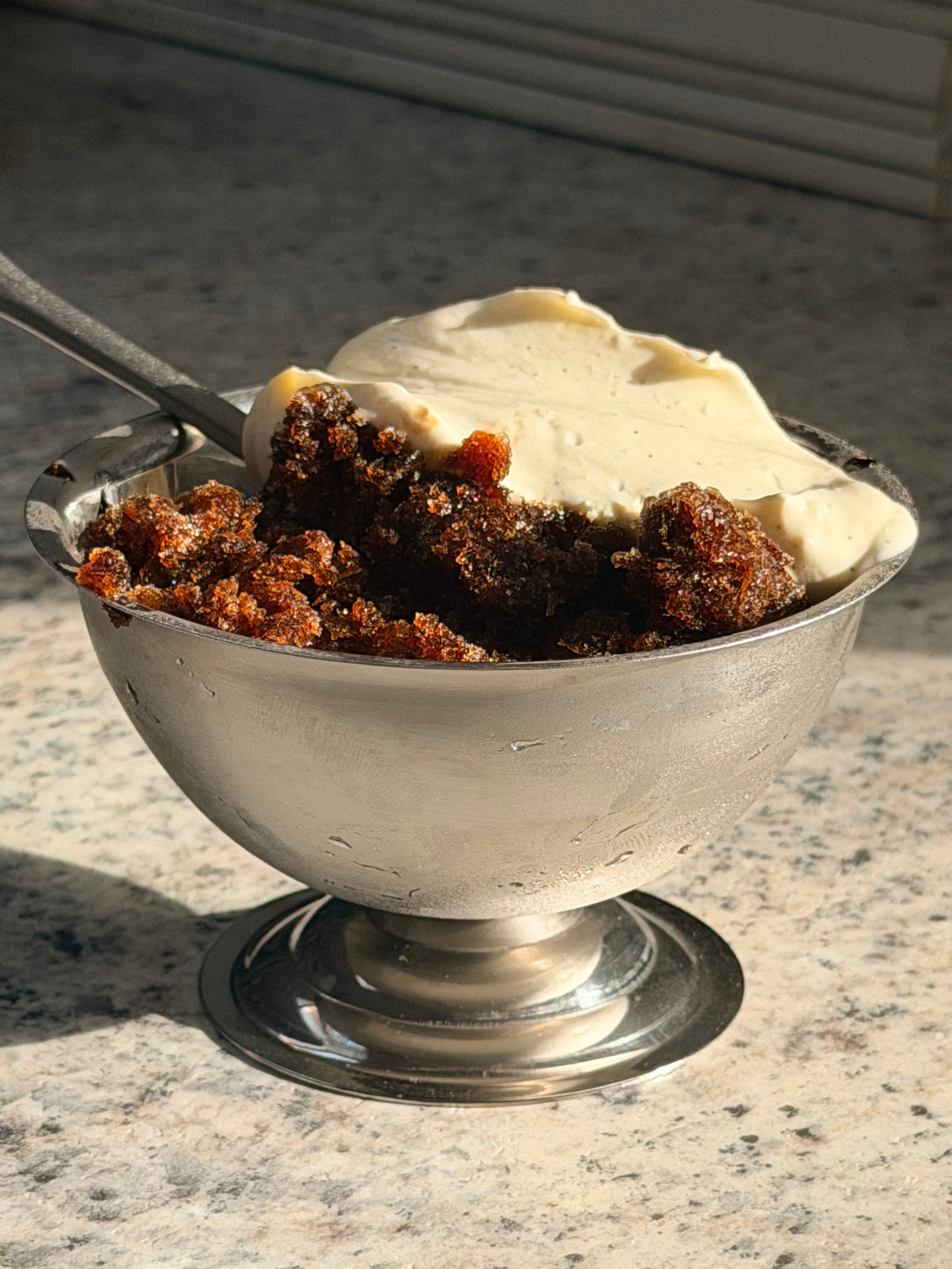
How to make cold brew coffee at home
Use a ratio of 1:4 coffee to water (filtered, ideally) — so for every ¼ cup of coffee beans, use 1 cup (250ml) water. Start with a small batch until you’ve dialled in your timings, then scale up. A larger batch will keep in the fridge for up to two weeks.
Step 1: Prep the coffee
Coarsely grind the coffee beans (finer grounds will over-extract and turn bitter).
Step 2: Infuse
Two options here. Either add the grounds and water directly to a jar, or place the grounds in a nut milk bag or piece of muslin, tie it up (essentially a large tea bag), and add to the jar with the water. The bag method makes straining easier. You can steep the cold brew at room temperature or in the fridge — the latter will take longer. Leave for a minimum of 12 hours (room temp)/24 hours (fridge), up to 60 hours (taste it at different points to see what your preference is!). I definitely prefer a longer extraction time, and I would certainly go longer if making cold brew for granita.
You can also add whole spices to your cold brew, e.g. cinnamon or cloves.
Step 3: Strain
If you used a bag, simply remove it. If you went bagless, strain twice — first through a fine sieve, then through muslin or a paper coffee filter into a clean jar.
Step 4: Store
Keep in the fridge for up to 2 weeks.
FURTHER READING + INFO
Today’s newsletter primarily concerns infusions into water. For context: alcohol is already such an effective solvent that cold infusions are the norm, whereas fat-based solvents like cream and oil generally need heat to extract flavour within reasonable timeframes. You can cold-infuse oils very successfully but you would need to have 4 to 6 weeks to spare.
If you found the topic of infusions interesting, you might also enjoy this past newsletter on tempering spices, and fat vs water solubility:
If you want to go deeper on tea, this YouTube channel by Mei Leaf (a tea room in Camden) is great — and this video where the owner makes iced tea in three different ways illustrates the hot vs cold infusion point perfectly:
Comments
Nothing yet. Say the first thing.
Sign in to join the conversation.