

It’s fascinating that Dorset features that seem permanent and immutable, were formed from living organisms and can be rubbed out by weather and waves. The hard flint used to make blades in the Stone Age came from the silica in sea sponges! And then there is the limestone.
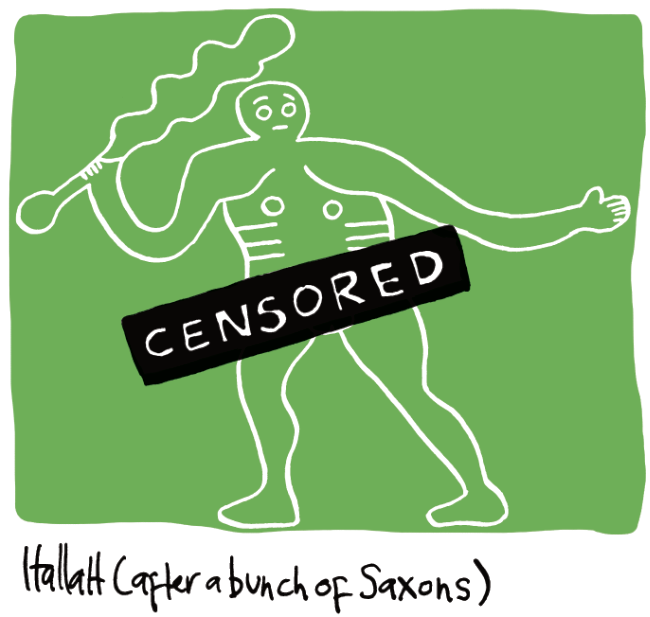
The Cretaceous takes its name from the Latin for chalk, ‘creta’. Tiny organisms that were alive about 100 million to 65 million years ago died. They were compacted to create limestone (chalk is one kind of limestone) cliffs and downs hundreds of metres tall. In the South Dorset Ridgeway, near Weymouth, you can see King George III (the mad one) and his horse carved into the chalk. And then there is the notorious Cerne Abbas Giant.
Swallet Holes
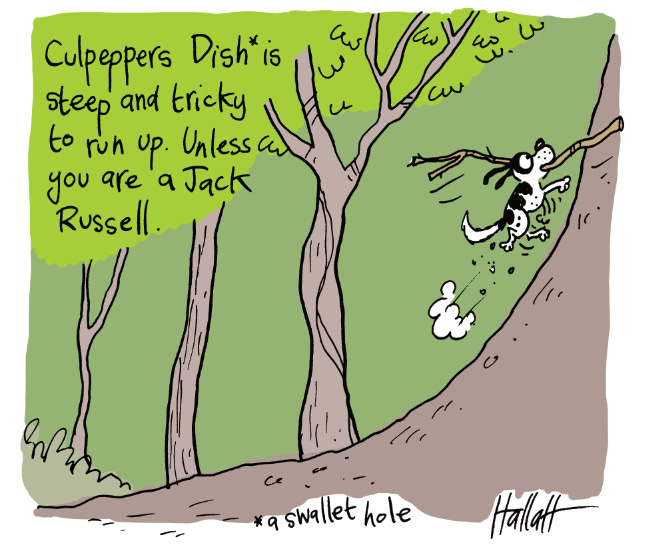
Limestone is all over Dorset, and it behaves very badly with water. Rainwater contains dissolved carbon dioxide from the air, which makes it mildly acidic. It reacts with calcium carbonate in limestone to form calcium hydrogencarbonate, which is soluble and washes out of the stone (this water is now “hard” water), often causing the ground to collapse. Because of this, the landscape around here is peppered with swallet holes. The largest I know of in Dorset is in the Piddle Valley and is known as Culpeppers Dish (with various spellings and uses or not of the apostrophe. The Spoon is nearby). It seemed enormous and vertiginous as a child and is quite big for a Jack Russell. But Molly loves to race up and down it in pursuit of balls and sticks.
Thanks for reading Alex Hallatt's Illustrated Epistle—you can help me by sharing it, thanks!
And Then There is Limescale
But swallet holes aren’t the worst thing about limestone. The real bugger is limestone’s evil twin: limescale. When hard water is heated the calcium hydrogencarbonate breaks down to form calcium carbonate, water, and carbon dioxide. Calcium carbonate is not soluble in water and forms limescale. Limescale has caused the death of many an electric kettle and the slow demise of my hot water immersion cylinder (HWC). I use rainwater for my kettle, but that’s not an option for the HWC.
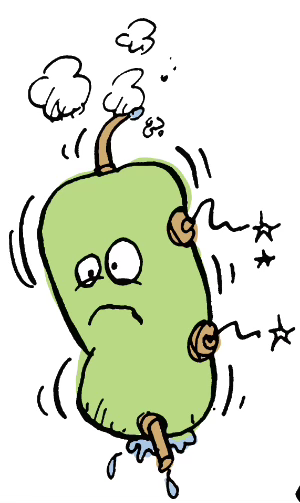
When the plumber took out the cylinder, he warned me that it would be heavy. Not so much because of the casing of copper (especially with the thin metal they use these days), but because of the huge build-up of calcium carbonate that had killed it. And rolling it around I could hear it rattling within.
But I was still surprised at how much came out when I took it to the metal recycling place (plumbers will take your old cylinder away for “free”, but I got £66 for taking it to the recyclers myself).
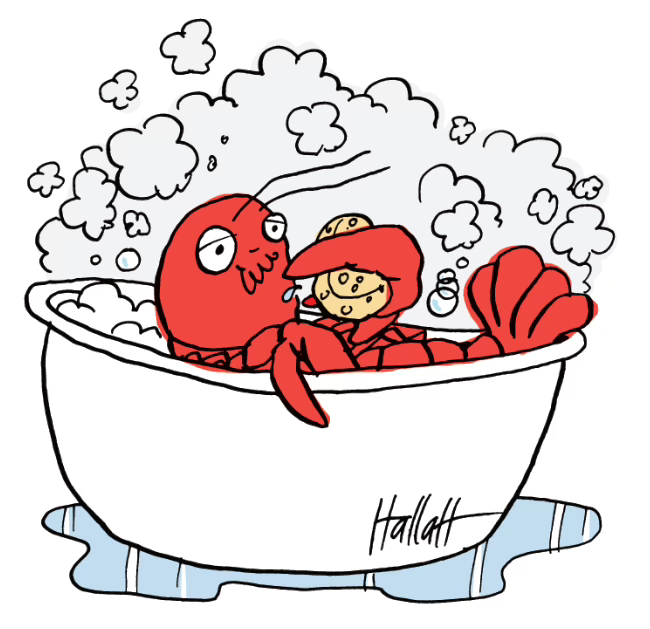
I celebrated the new cylinder installation by having a stupidly hot bath. It was wonderful.
Thank you for being one of the good humans.
Alex
P.S. This week Molly and I went on a couple of trains. She loved it.
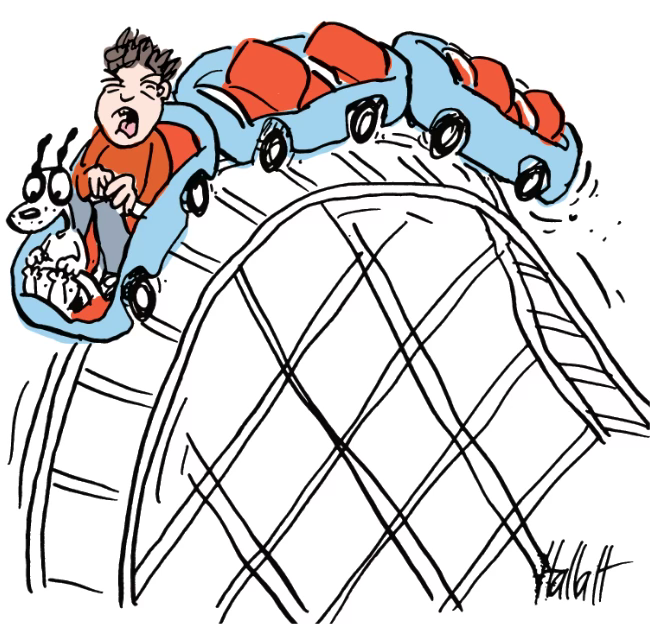
I don’t think there is a form of transport (except perhaps a plane, though I bet she wouldn’t mind if she were in the seat next to me instead of in a cage in the hold) that she hasn’t liked. The last Jack Russell I was a guardian of was a lot less enthusiastic about being on a bicycle, or paddle-boarding, or kayaking. One time I took him on a rollercoaster. He did not like it. I bet Molly would think it was awesome.
This newsletter chronicles the adventures of a bolshy Jack Russell and her cartoonist owner who is living back in England after 20 years away. Most newsletters are free, but the kind people who have paid subscriptions (less than 1USD per week) keep us in ketogenic dog snacks and drawing supplies. Much appreciated.
If you’d like to support my work without an ongoing subscription you can click the image below to

You can read more about my previous little lives in New Zealand and the Basque Country by checking out my book page at alexhallatt.com.

More Reviews Help Cartoonists Make a Living by Selling More Books
If you are one of the many readers who have enjoyed my books (usually available for free in libraries, like my latest, A New Zealand Diary), please leave a review, ideally on Amazon (where many people research books, even if they don’t buy them there) or Goodreads.
It costs only your time and helps me do battle with the algorithms.
Thank you.
Comments
Nothing yet. Say the first thing.
Sign in to join the conversation.