
There comes a point in life where you begin to understand that intimacy is not the same thing as access.
Just because someone can reach you does not mean they know you.
Just because someone has history with you does not mean they have nurtured you.
Just because communication is constant does not mean connection is deep.
And I think many of us are waking up to this grief in real time.
We have learned how to keep up with each other without ever truly sitting with one another. Learned how to perform closeness. Learned how to call ourselves “friends” while avoiding the vulnerability that real friendship and love require.
We avoid vulnerability by hiding inside casual communication. We send things online that keep us connected enough to avoid feeling disconnected, but not connected enough to truly know one another. We speak around our longing instead of through it. We say “I miss you” without the intention, effort, or openness required to truly meet each other again.
I think healing makes this harder to ignore. The more honest you become with yourself, the less satisfying surface-level connections feel—with family, friends, lovers, and everyone else in between.
Once you learn how to sit with loneliness, longing, and your own tenderness, you stop craving relationships built only on convenience and comfort. You stop settling and pretending that you’re okay with being consumed casually or in a rush.
Instead, you start yearning to be fully witnessed and savored—to be known deeply and with curiosity. You start wanting to be loved in a way that requires attention to detail and effort. You start longing to be cared. And that requires intention, emotional intimacy, and vulnerability.

You’ll stop being okay with relationships where people only want to know the composed, easy-to-hold version of you, while the heavier, more honest parts of your inner world go unseen.
We live in a culture that teaches people to fear need (I touched on this last week, here). To fear (healthy) dependency. To fear emotional labor, vulnerability, and intimacy. More and more, it feels like people want the aesthetics of community without the responsibility of truly showing up for one another. People want relationships that feel “good” and convenient, but love has never been sustained by convenience.
Our relationships ask something of us. They require honesty about our capacity, clarity about our intentions, and openness. I think we owe it to ourselves and to each other to become clearer about what we want, what we need, what we can realistically give, and what kinds of relationships we are actually capable of maintaining with care.
I think one of the saddest realizations of adulthood is understanding how many relationships survive only because one person keeps overextending themselves to maintain them. One person keeps initiating. Keeps checking in. Keeps softening first after conflict. Keeps making excuses for the distance. Keeps shrinking their needs so nobody feels burdened by having to love them well.
There is a loneliness that comes from constantly reaching for people who only know how to meet you when it is convenient for them. An ache that lingers from being emotionally generous in spaces where vulnerability is not reciprocated.
A disappointment that comes from realizing that you have been deeply present in relationships where other people only offered partial versions of themselves.
Many of us have been conditioned to believe that wanting reciprocity makes us difficult. That asking for consistency makes us “too much.” That longing for real depth, care, and connection is unrealistic—that somehow, wanting to be considered is asking for more than people can reasonably give.
We’re nudged, directly and indirectly, to keep giving grace instead of paying attention to patterns. Encouraged to explain away emotional inconsistency rather than honestly acknowledge how it impacts us. Taught to believe that when people shut down instead of communicate, they just need more time, more patience, more understanding.
And at times, that’s true.
But sometimes, what we are experiencing is not a temporary season or someone doing their best. Instead, we are witnessing, in real time, the limits of what a person is willing or able to give. And part of healing is learning to stop negotiating with reality—stop explaining away patterns, stop abandoning what we know to be true, and stop holding relationships to the standard of their potential instead of their reality.
A part of healing is also learning to be honest about what care actually looks like in practice. At some point, many of us are taught to expect disconnection as a normal part of adulthood because life will life, and people are “busy.” But the truth is, we are all busy. We are all carrying responsibilities, stress, exhaustion, and competing demands. And still, we make time for what we value. We make room for what we love.
The company I keep in this season of my life has shown me that low-effort relationships are not the baseline for everyone. We have all found ways to lean in, consider one another, and protect our connection in the messy middle of life. That, to me, feels deeply loving. And when capacity is limited, care still communicates. We use words instead of silence. Honesty instead of avoidance. We’ve learned how to say, “I don’t have the bandwidth right now,” without fearing the relationship will fall apart.
All of this is a practice and mirror to what is possible.
The past few years have shown me first hand, what it looks like to be in relationships that are healthy and clear. It’s also shone a light on the opposite. On the relationships that survived mostly because of overextending, overexplaining, or overgiving. The ones where I confused history with intimacy. Where I kept hoping effort would eventually become mutual. And if I’m honest, it has taught me that clarity—while sometimes painful—is also one of the deepest forms love.
To whoever needs to this today:
The older I get, the more I believe intentional relationships are sacred, and they require tending. There is something life-changing about being loved by people who pay attention. That kind of care softens a person. It reminds us that love is not only something we feel. It is something we (must) practice.
Maybe this season of your life is asking you to become more honest about the difference between access and intimacy. Maybe it is asking you to stop holding onto relationships simply because they’ve existed for a long time. Maybe it is asking you to notice which connections truly nourish your spirit and which ones leave you feeling unseen, lonely, or emotionally neglected.
Getting clear about what you are willing to carry and what feels nourishing and emotionally satiating—changes your appetite. You start wanting relationships where effort flows both ways. Where honesty is safe. Where repair is possible. Where people do not just love your softness, but also learn how to protect it.
And I hope you do not feel ashamed for that.
I hope you stop apologizing for desiring deeper connections.
I hope you stop calling emotional distance “low maintenance.”
I hope you stop forcing yourself to feel fulfilled inside relationships that leave your spirit hungry.
Most of all, I hope you remember this:
Wanting intentional love, romantic or platonic, is not asking for too much. It is finally understanding that your life, your heart, and your presence deserve to be handled with care, clarity, and consistency.
With Love,
A.
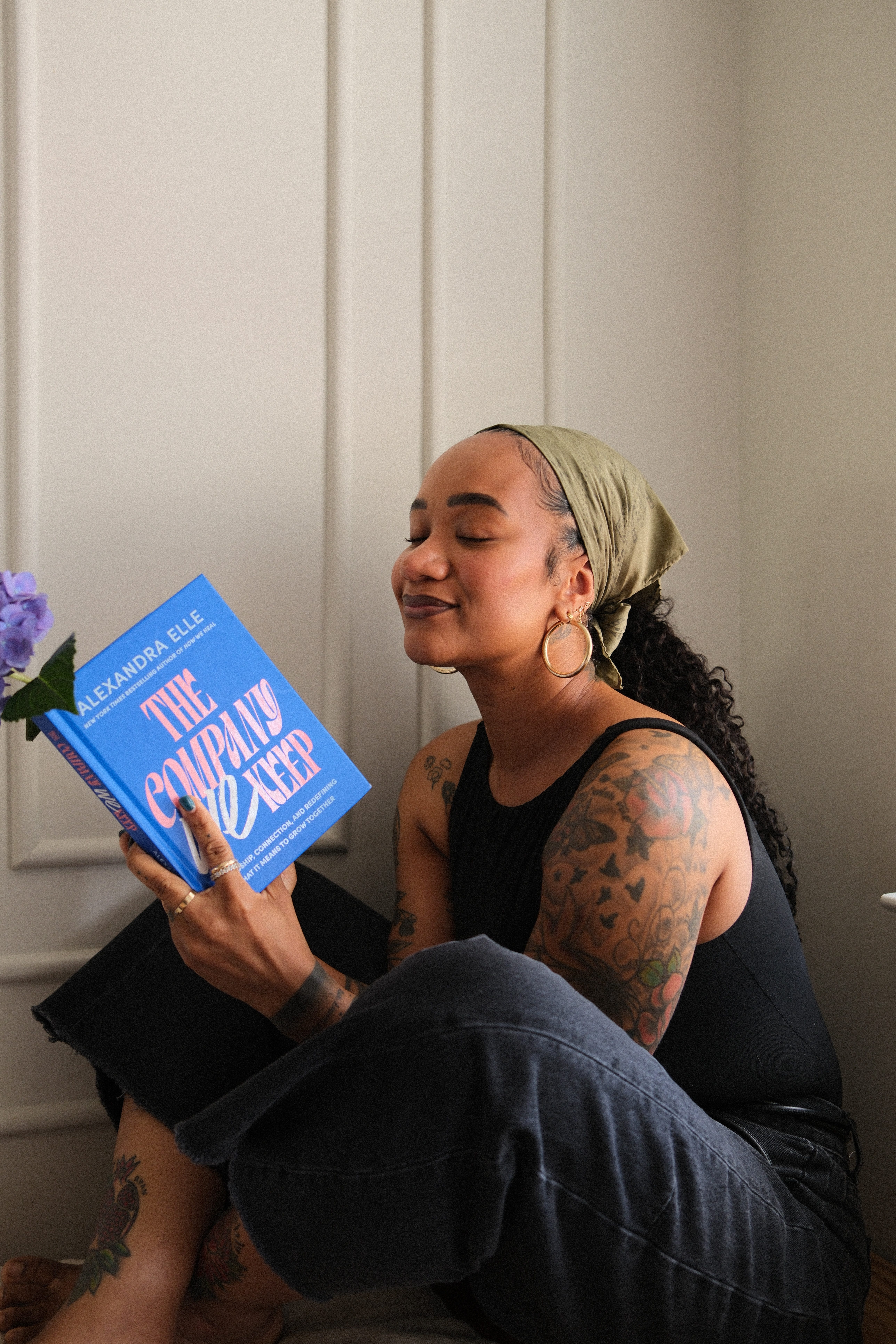
This newsletter is free for the community. If you’d like to support my work, please consider subscribing, sharing, commenting, and/or ordering my new book: THE COMPANY WE KEEP. Your support helps me continue creating honest, restorative writing and conversations that center growth, accountability, and connection. Thank you for being here with me.
No posts
Comments
Nothing yet. Say the first thing.
Sign in to join the conversation.