
Listen to the essay here (raw audio):
0:00
-8:55
There are seasons in life when everything we thought was steady suddenly shifts. Relationships dissolve. Careers unravel. Identities we’ve worn for years no longer fit. The first instinct is often fear—gripping tightly to what was, longing for stability, searching for certainty. But what if falling apart is not the ending we think it is? What if it’s an opening?
Pema Chödrön has been a teacher in my life for years. I don’t know her personally, but her writings, talks, and books are lighthouses on my journey. In her book When Things Fall Apart: Heart Advice for Difficult Times (Y’all have to read this!), she writes:
“To be fully alive, fully human, and completely awake is to be continually thrown out of the nest.”

This line has followed me for years, appearing as a gentle reminder each time life felt unsteady. I used to believe that stability was the goal—that if I did everything “right,” life would reward me with comfort. But healing has taught me that the nest isn’t where we grow our wings. We grow them in the free fall.
When things collapse around us—when what we built with love and effort begins to crumble—there’s a quiet invitation tucked under the wreckage. It whispers: Look for joy. I know in the thick of it, no one wants to hear that, but it’s true. Sweetness appears when we stop forcing life to be what it isn’t. At least, that’s been my truth this year. I haven’t known the joy that depends on perfection, but I have tasted the steadier joy that comes from trusting myself, standing in resilience, and loosening my grip in favor of curiosity.
Chödrön also writes:
“Only to the extent that we expose ourselves over and over to annihilation can that which is indestructible be found in us.”
I return to this often. It reframes endings as beginnings. The heartbreaks, the disappointments, the loss of fulfillment, the shedding of old identities—all the things I once believed would undo me—have instead become the soil where joy has taken root. Since beginning my Joy Spotting practice earlier this year, I’ve come to see that joy doesn’t wait for the storm to clear. It rises in the middle of the chaos, reminding me that even in darkness, light is present.
I think back to some of my hardest chapters—seasons when I felt stripped of autonomy, unsure of who I was becoming, and weighed down by choices that felt heavier than I could hold. On the outside, it looked as if everything I had built was crumbling. But in hindsight, that unraveling was not a punishment—it was a clearing. It was life making space for something new to take root. Every collapse pulled me closer to myself, asking me to shed what no longer fit and to stand, however shakily, in my own becoming.
Falling apart has been my teacher, showing me again and again that loss and discovery often walk hand in hand. And it was in those tender, uncertain spaces that I first began to notice joy—not the cinematic kind, but the hushed joy that’s always waiting: a quiet house, the grace of a thoughtful gesture, a just because phone call, the relief of finally letting go and leaning in, the safety that comes from staying close to people who not only say they value you, but show it.
The older I get, the more I understand that joy is less about circumstances and more about presence. It isn’t waiting for life to look how I want it to look—it’s allowing myself to feel fully alive inside of it as it is. Even when it’s uncertain. Even when it’s unraveling.

Chödrön reminds us:
“We think that the point is to pass the test or to overcome the problem, but the truth is that things don’t really get solved. They come together and they fall apart. Then they come together again and fall apart again. It’s just like that. The healing comes from letting there be room for all of this to happen.”

When I first read this, I cried. Big and wet tears dripped down my face as I took my morning walk. Years later, these words remain an anchor for me. I am reminded, each time I read them, that joy isn’t about pretending that my losses don’t hurt or that uncertainty isn’t terrifying. It’s about letting life be what it is—and trusting that joy can still find us there. To know joy is to believe that the unfurling of today will lead to the blooming of tomorrow.
So when I say that things falling apart can be an opening for joy, I never mean that our joy replaces our grief. I mean, they can coexist. That our pain doesn’t cancel out the possibility of light. That beginnings often wear the disguise of endings. And that in the collapse, we might just discover the indestructible parts of ourselves—the parts that are always capable of joy.
When you think about a season of your life that felt like it was falling apart, what unexpected lessons or openings did it create for you?
Where have you discovered small, grounded joys in the middle of difficulty—not after it was over, but right in the thick of it?
What are you holding onto right now that might be keeping you from noticing the joy already present in your life?
Exciting Things:
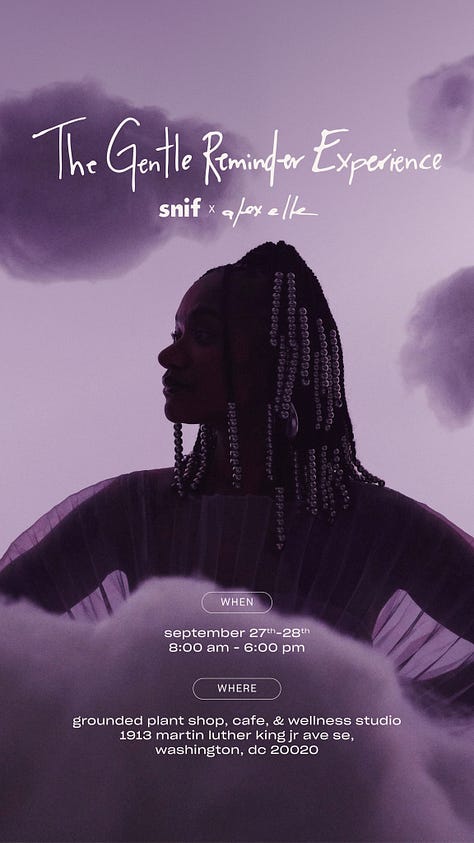
Join me and Snif at Grounded Cafe in DC on 9/27 for a writing workshop and drinks inspired by my latest perfume, Gentle Reminder. Details Here.


Join me and Christine Platt in DC on 10/7 to celebrate her new book, Less is Liberation (this book is amazing, y’all). The conversation we are about to have will be truly nourishing. Tickets here.
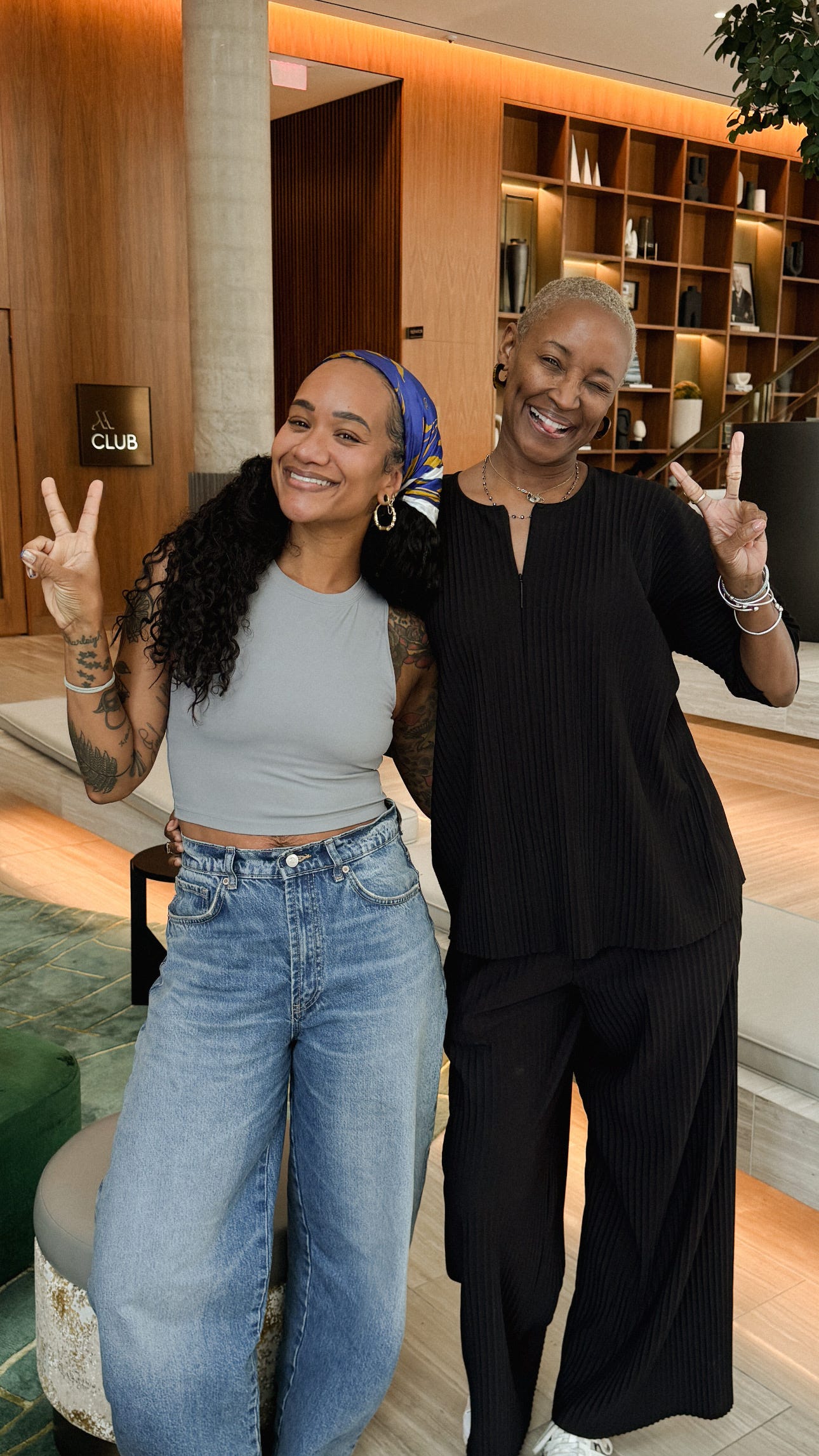
Next month, I am debuting something VERY special with the brand KARST, just for my Joy Spotting folks. Can anyone guess what it is? Teaser Here. (Like and comment on this post for a chance to win something special from me).
On 10/5, me and Josefina of Love Offering, will be teaching a virtual writing workshop titled Joy in Grief. You can get on the waitlist here. Registration opens Friday.
No posts
Comments
Nothing yet. Say the first thing.
Sign in to join the conversation.