
About eleven years ago, I visited Axel Vervoordt’s château outside Antwerp, and then Kanaal, his converted industrial complex in Wijnegem, a former distillery along the Albert Canal that he transformed into something between a home, a museum, and a philosophy made physical. I have thought about those rooms almost every week since.
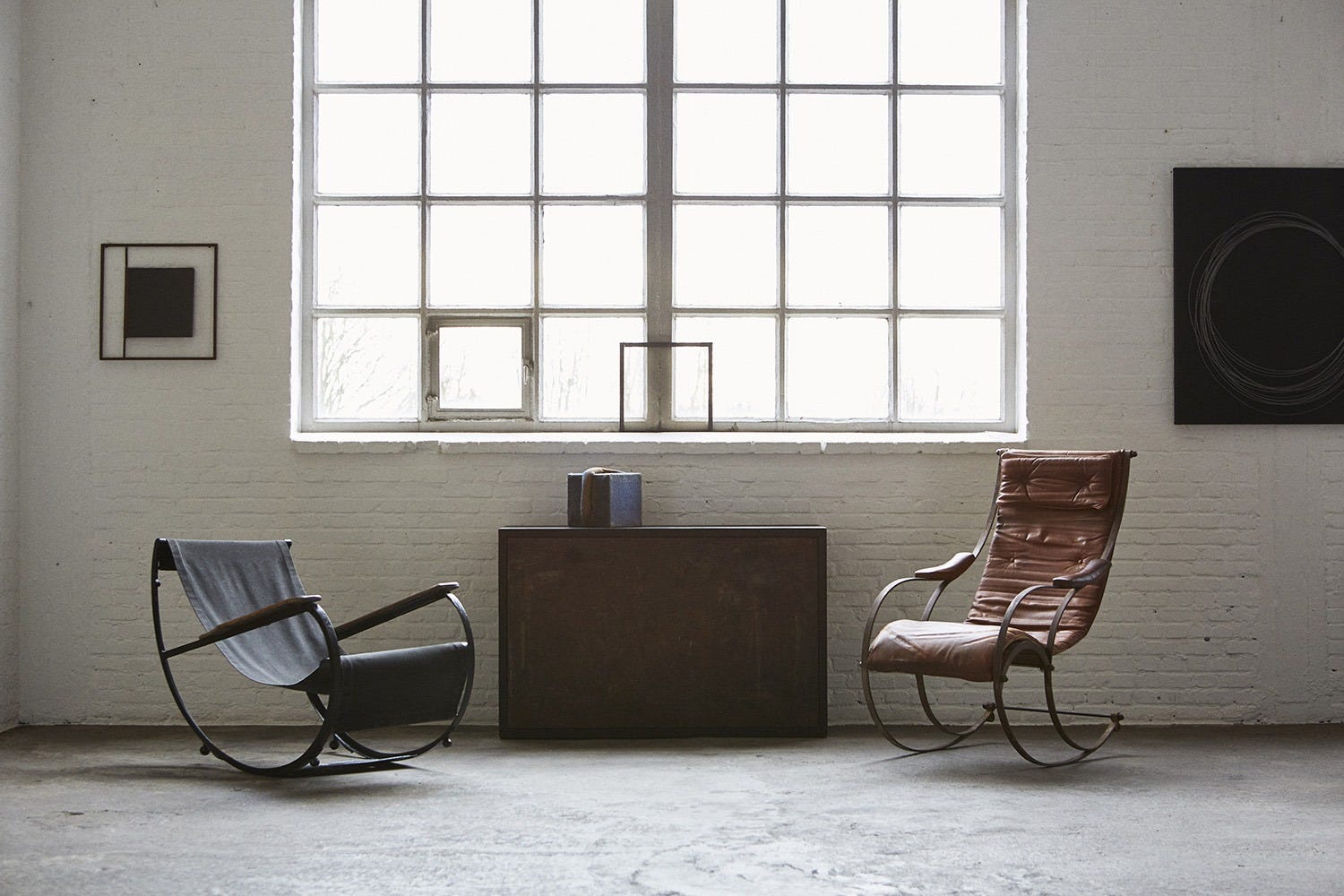
That’s the thing about certain spaces. They don’t just impress you in the moment, they rewire something. You leave seeing differently. Not just other interiors, but objects, light, your own walls at home.
The château was extraordinary. Plaster in colours that had no name, powdery, deep, walls that felt like they had absorbed centuries rather than been painted last year. One Fontana. A single painting, hung without explanation, doing everything it needed to. Linen-covered sofas on a scale that felt almost architectural The light cinematic is the only word that comes close. Sensual. The kind of light that makes you aware of the air in a room.
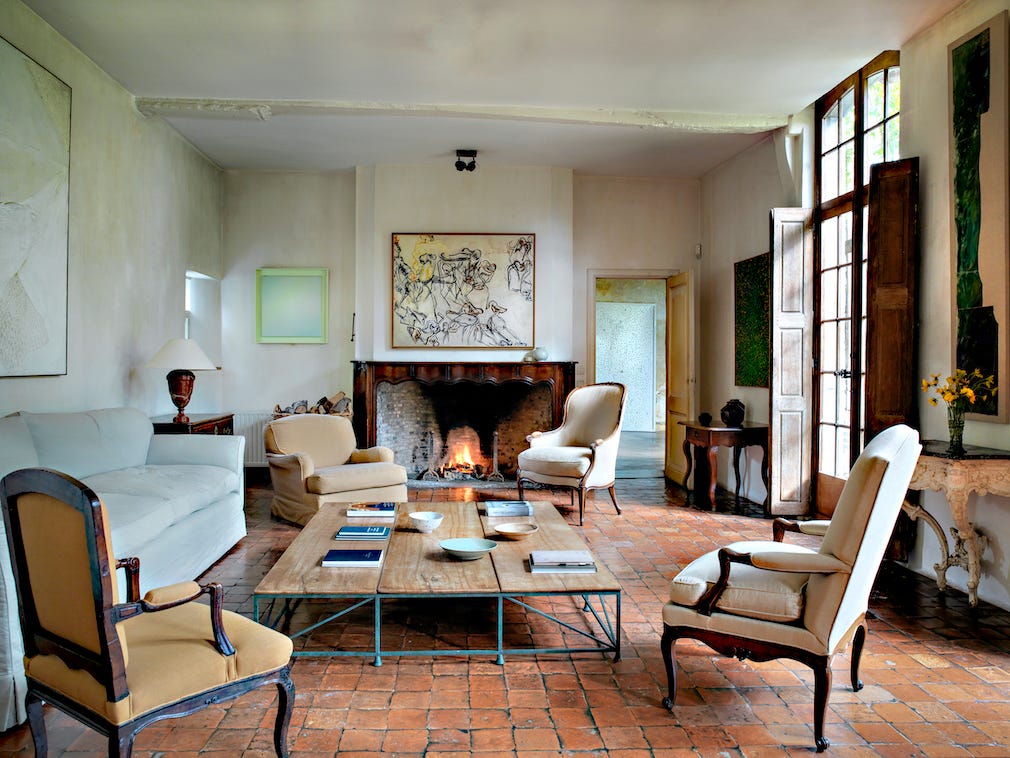
And yet none of it announced itself. That was the shock of it. Something so considered, so intentional, so clearly the result of decades of thinking about beauty and it felt like it had simply always been that way. Warm. Liveable. Completely at ease.
There is another register to Vervoordt’s work that the interiors alone don’t fully prepare you for. Between 2007 and 2017, he took over the Palazzo Fortuny in Venice, a Gothic building in Campo San Beneto, once the studio of the designer Mariano Fortuny, and staged six consecutive exhibitions there, each built around a single idea. Time. Infinity. Proportion. Intuition.
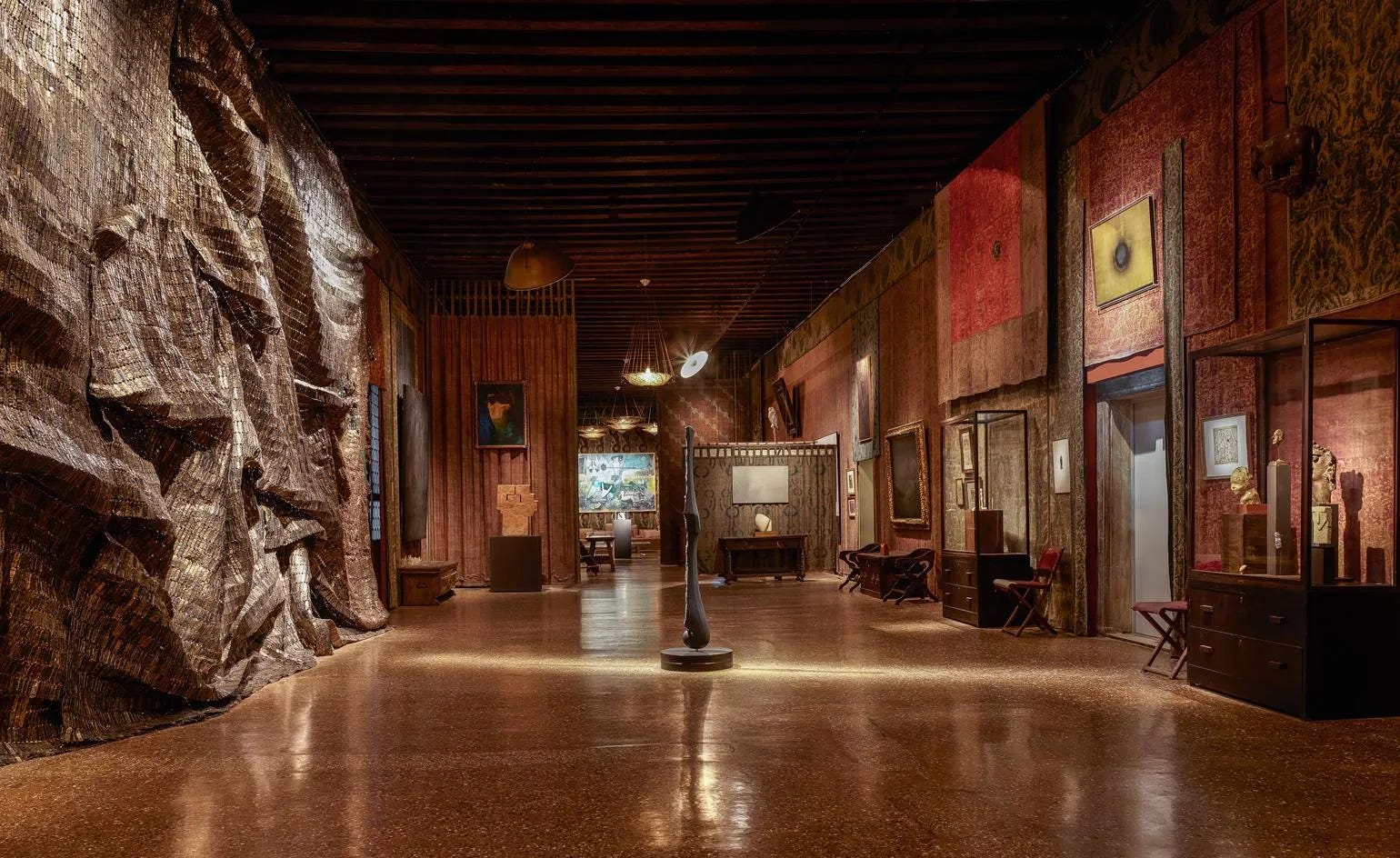
I went back year after year. At least four times. It remains, honestly, the place I would choose if I had one day left. Not the Uffizi, not the Louvre, those rooms in Venice, the light coming off the canal, ancient Neolithic menhirs placed in the same room as a 1982 Basquiat, objects that had no name and needed none. The juxtapositions were never clever in the way contemporary curating so often is. They were quiet.
Each exhibition was built around a single concept, and yet none of them felt like an argument being made. They felt like a question being asked. Which is, in retrospect, much harder to do.
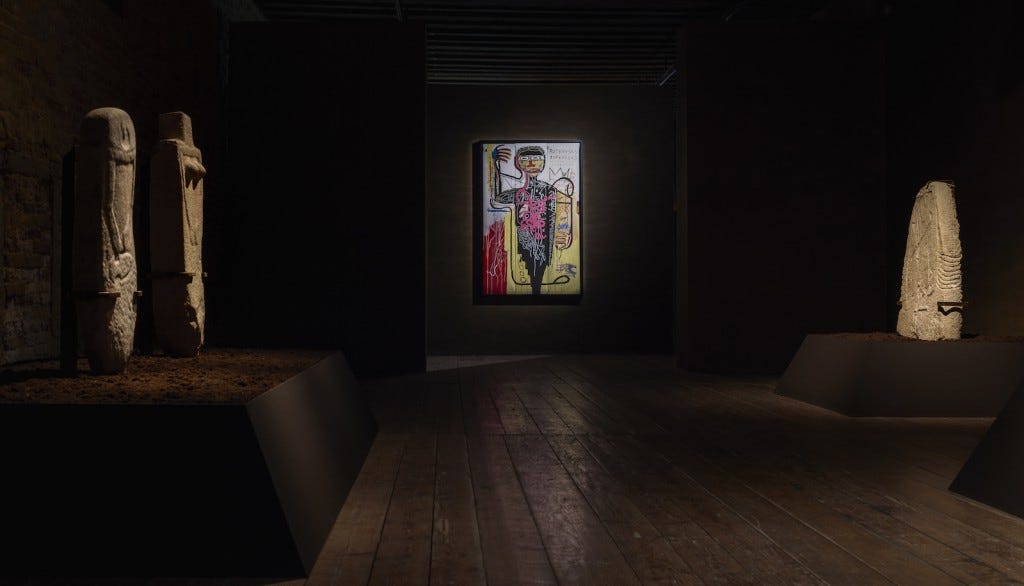
Vervoordt’s great subject is restraint, he is the restraint of someone who has looked at so much, handled so much, lived so closely alongside objects and rooms and light, that he has learned precisely what to leave out. It takes more confidence to hang one picture than twenty. More knowledge to choose a single material and trust it completely. More courage to light a room dimly when everything in the commercial world tells you to light it brightly. What looks like simplicity is, in fact, a position held with absolute conviction, about what a room is for, and what it does to the people inside it.
He also taught me something I’ve never been able to unlearn: that a truly great piece of furniture is not a functional object that happens to be beautiful. It is a sculpture that happens to be sat in. The oversized linen sofa, the particular weight of a table. These things hold space in a room the way a Fontana holds a wall. Once you see furniture this way, you cannot unsee it. It changes what you buy, what you keep, and what you quietly remove.
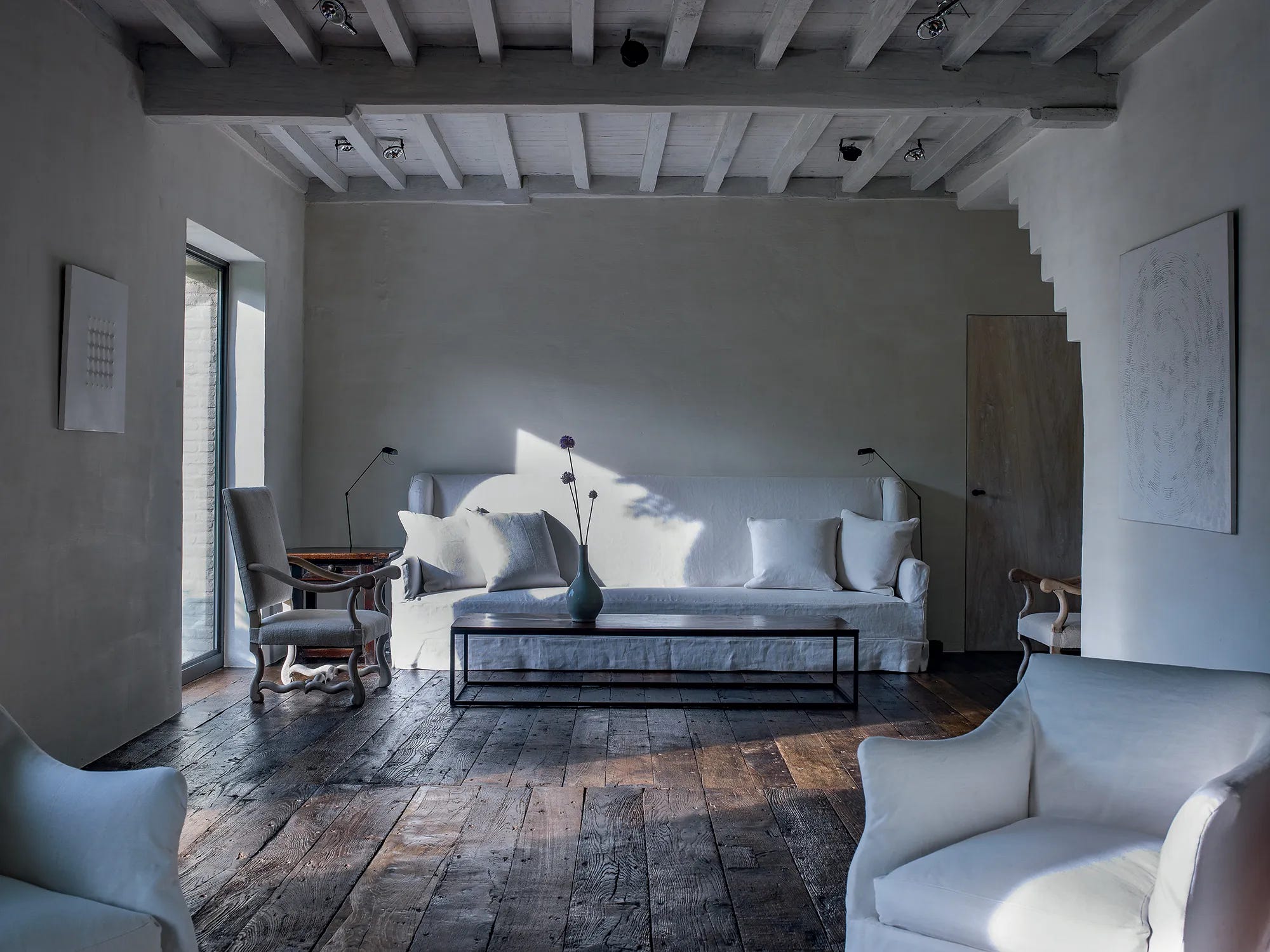
And then there is light. Not as a practical consideration but as a material in its own right, something to be shaped, withheld, directed. The rooms at Kanaal and the Palazzo Fortuny were lit like films. You felt held by them somehow, and also very awake.
The wabi principle that runs through all his work, beauty in imperfection, in transience, in the incomplete, isn’t a style. It’s an argument about what matters. That age is not a flaw. That emptiness is not a failure. That the worn, the weathered, the unfinished can carry more than the new ever could.
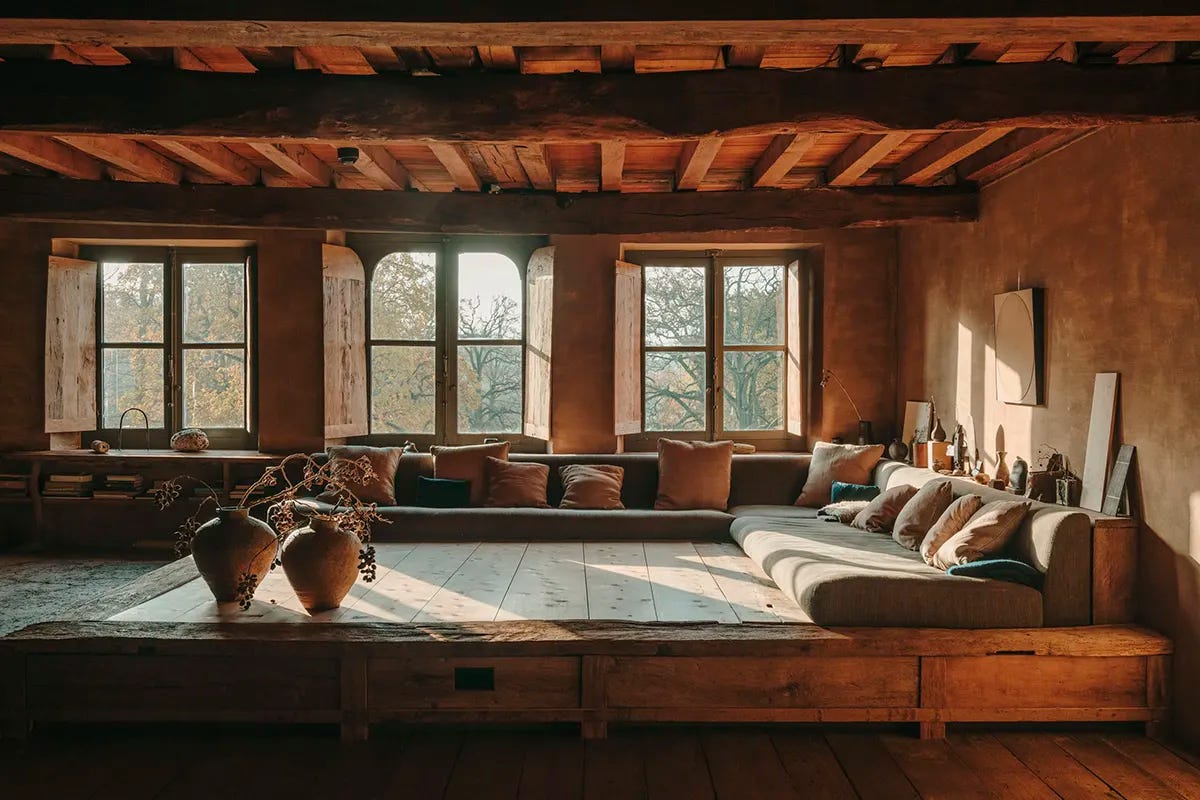
Three books worth having. Wabi Inspirations is the best entry point — his philosophy in full, the Japanese concept of wabi applied to Western interiors with extraordinary results. Living with Light is the visual companion to everything described above. And Stories and Reflections, his memoir published by Flammarion, is unexpectedly moving, less a design book than a portrait of a life spent paying attention.
It’s there in everything I do, the inspiration to leave space, to trust a single extraordinary piece to do the work of ten ordinary ones. Vervoordt didn’t give me a manual. He gave me a standard.
AE x
Comments
Nothing yet. Say the first thing.
Sign in to join the conversation.