
Most chat integrations I see in production are backed by extremely heavy infrastructure, queues, retry logic, intense logging systems.
At Popp I build large scale chat experiences with complex integrations and tool calling for enterprise customers. The bar is high with low downtime. Everything is tested at scale, when something breaks we have a protocol.
So when I say this stack is the cleanest way I’ve found to ship production chat agents as a small/solo team, I’m comparing it against extreme systems that server millions of users with real money on the line.
The main stack: Vercel Chat SDK + Vercel AI SDK.
I built a system with Parallel recently, which takes in the prompt and is able to do complex query requests.
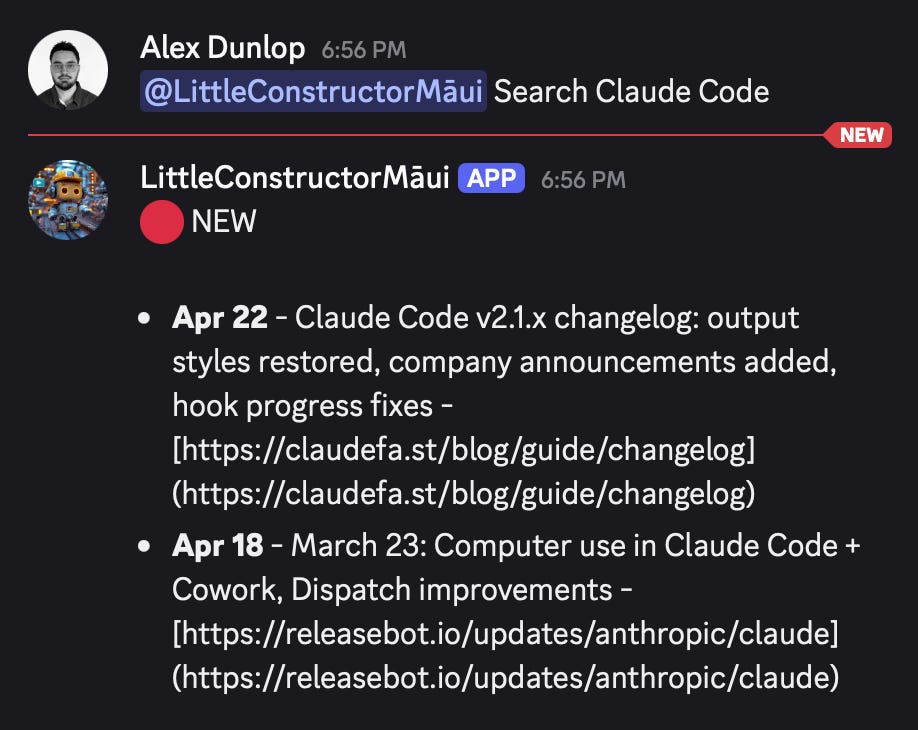
Paid subscribers get access to the repo.
Most people know the Vercel AI SDK, the ai package, tool calling, streaming, everything you need.
The Chat SDK, handles complex systems for you. Threading, conversation state/memory, typing indicators, platform adapters. Subscribing/unsubscribing.
Every chat integration I've built before this package involved reinventing these primitives. Every single time. You build the WhatsApp bot, Slack bot, then you relive everything again and again.
Your customs expect everything to work great (AI chat system standards are extremely high now).
The Chat SDK gives you a simple SDK.
That's your entire chat runtime. If you setup Slack, setting up Discord is as simple as setting up env vars.
The AI SDK's tool system is the best DX I've used for giving agents capabilities. Zod schema in, execute function out.
The model sees the schema and decides when to call it. The model uses them to decide which tool to call.
Comments
Nothing yet. Say the first thing.
Sign in to join the conversation.