
Here you’ll find some general information and a short glossary that might be useful while reading The Stelnove Saga: Of Constellations and Clockwork, Of Ruins and Repentance, and TBA Books 3 and 4.
I will occasionally add to and edit this as needed. If you find yourself curious about anything while reading and would like something addressed here, please comment below!
The noble families
Each noble family line is associated with one of the nine Stelnove, angelic beings who passed down the System of Values society is to live by nearly 1,000 years ago. The names of the nine Stelnove (with the meaning in English) are as follows:
Fede (Faith), Speranza (Hope), Carità (Charity), Guerriera (Warrior [of Faith]), Giustizia (Justice), Ambizioso (Ambition [tailored to the common good]), Saggezza (Wisdom), Costanza (Constancy), Contemplazione (Contemplation)
The names come—more or less—from Dante’s heavenly spheres in Paradiso. You’ll notice then that these are not necessarily all virtues in the Christian understanding (take Ambition, for example), which was purposeful.
Each noble family assigned to one of these must live out the Value in their work, tasks, and daily life. These Values are as follows:
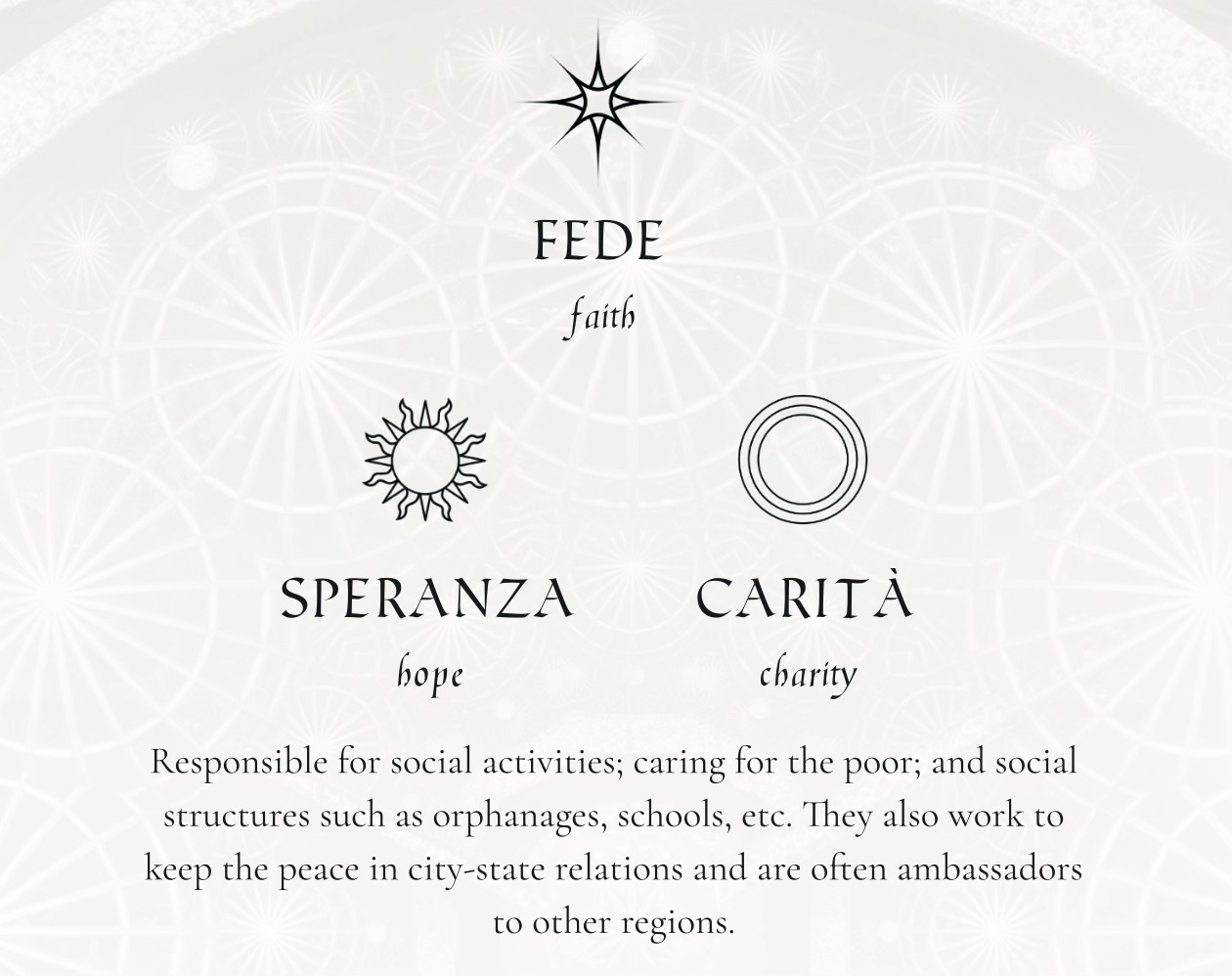
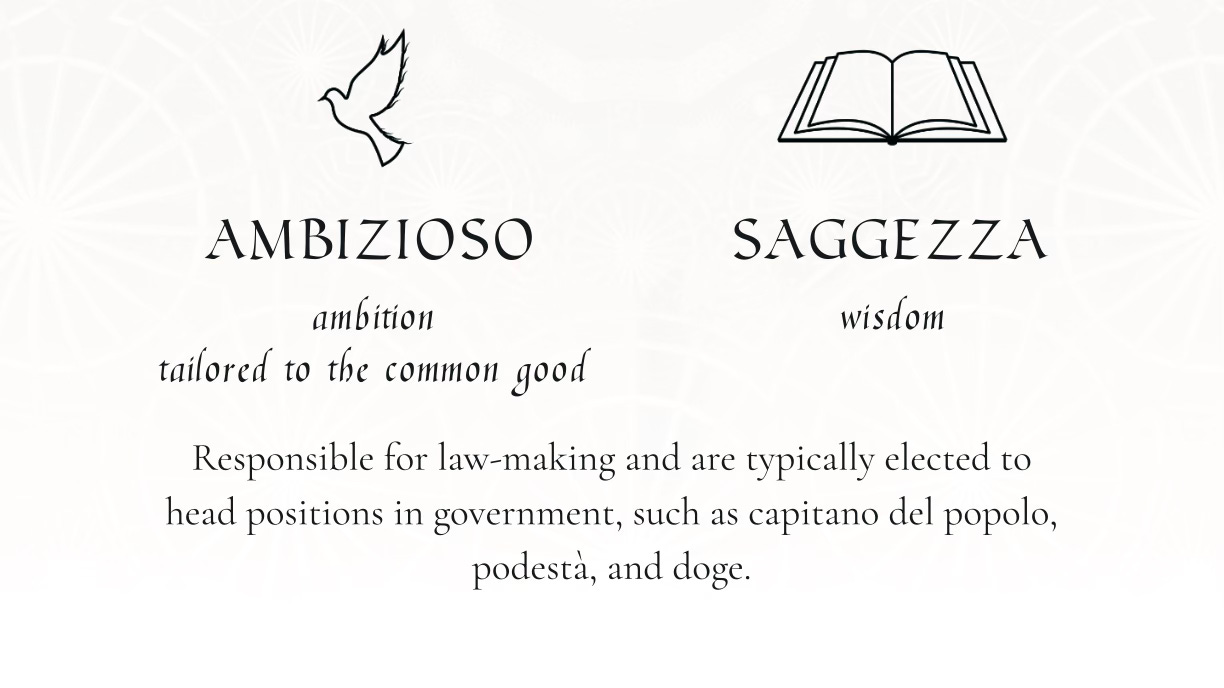
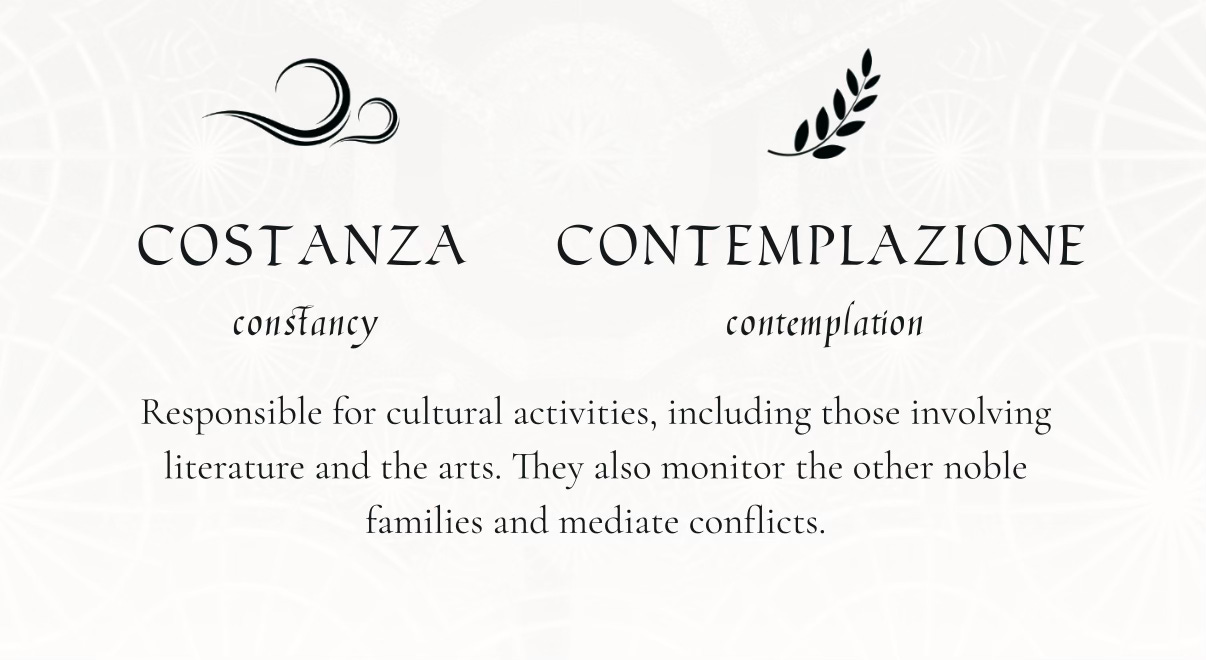
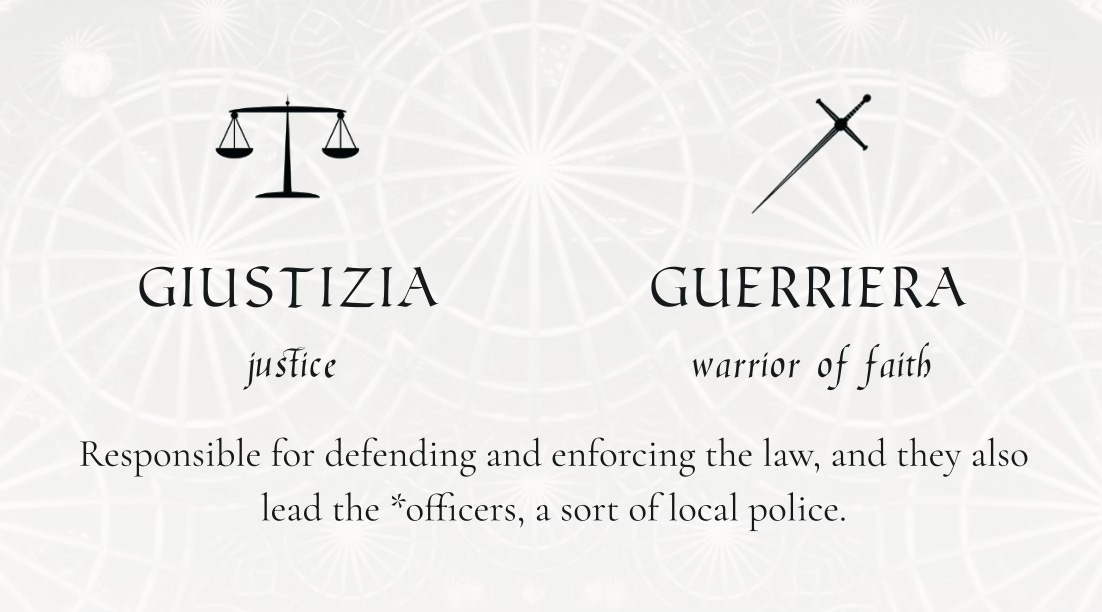
The Raids
Twenty years before Of Constellations and Clockwork takes place, there was a great societal upheaval and uprising that initiated in Selvascura and spread across the whole peninsula. This move deposed the noble families associated with Fede, Speranza, and Carità by claiming that they were invalid lines due to lack of empirical evidence on the good they supposedly brought society, particularly following a devastating war a few decades prior that left the peninsula broken and suffering from plague and famine for many years. Guerriera was later deposed too, primarily to prevent them from mobilizing any counter-revolutions. (Seeing as they are “warriors of faith”.)
The man primarily given credit for the catalyst of the Raids is Ludovico Guerra, an academic and also dean (“rettore”) of the Accademia of Selvascura, the most prestigious university on the peninsula. He is an aethallurgist (specialist on the study of aether, see below) and philosopher who, for many years, lectured on and spread the idea that Fede, Speranza, and Carità noble families were invalid.
Aether
Aether is an energy source that can be extracted from the air and has been used for a long time to provide conservative power to clockwork and provide lighting. Once they learned how to convert it into a more potent, liquid form, it proved more effective at powering clockwork.
Aether can be considered from two different perspectives that seem partially contradictory but can actually be compatible: scientific (e.g. the fact that it is an energy source found in nature), and spiritual (e.g. its legendary association with the Stelnove and the heavens where they reside, known as the Empyrean). This push-and-pull dynamic has led to many debates over the centuries on how far to take its use in mechanical devices and how much to treat it as something reverent and holy.
Fun fact: electricity doesn’t exist in their world; aether would replace it.
Clockwork technology
The real-world historical basis for clockwork used on the Speranza Peninsula is the verge escapement, the earliest form of its kind used in mechanical clocks. While in our world, it wasn’t terribly accurate, on the Speranza Peninsula it functions much better, primarily thanks to the addition of aether in clockwork.
The question I asked myself when thinking about clockwork in this world was how could it advance without the addition of the pendulum, something that had been particularly innovative when it was added to clockwork later. This, again, is primarily thanks to aether on the Speranza Peninsula, but also due to different laws of physics and mechanics at play.
This YouTube video is particularly useful to help visualize how the verge escapement operates.
Aside from watches (worn around the neck rather than wrist) and table clocks, the other piece of clockwork most often mentioned is automi (plural, the singular is “automa”), namely owl automi used to carry messages. These are powered by aether and use aether to “track” the person to deliver the message to. They essentially look like little clockwork owls (about hand-sized) that open up to fit rolled messages in. They can be used even over long-distances, but there is the danger of interception.
Italian Renaissance clothing
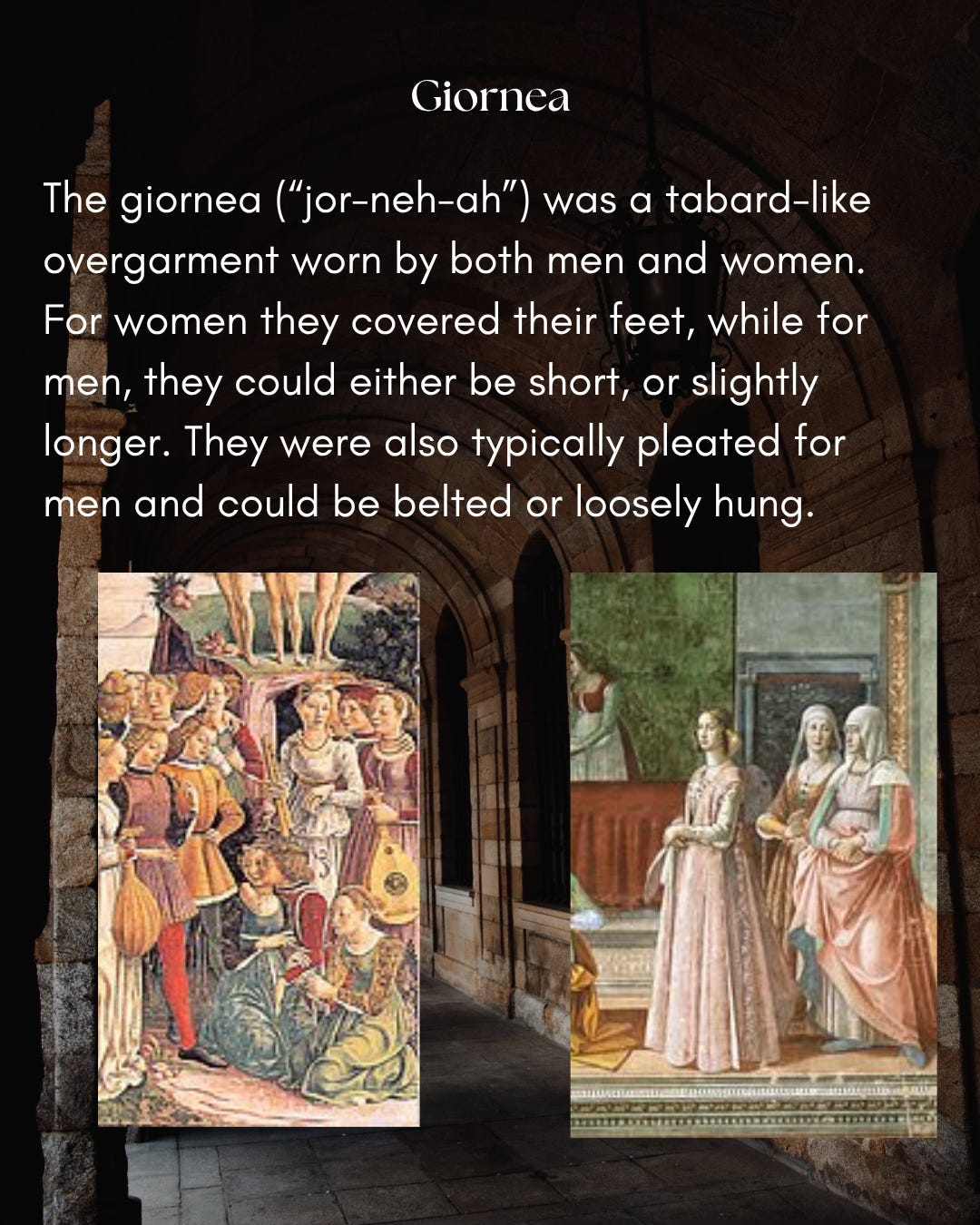
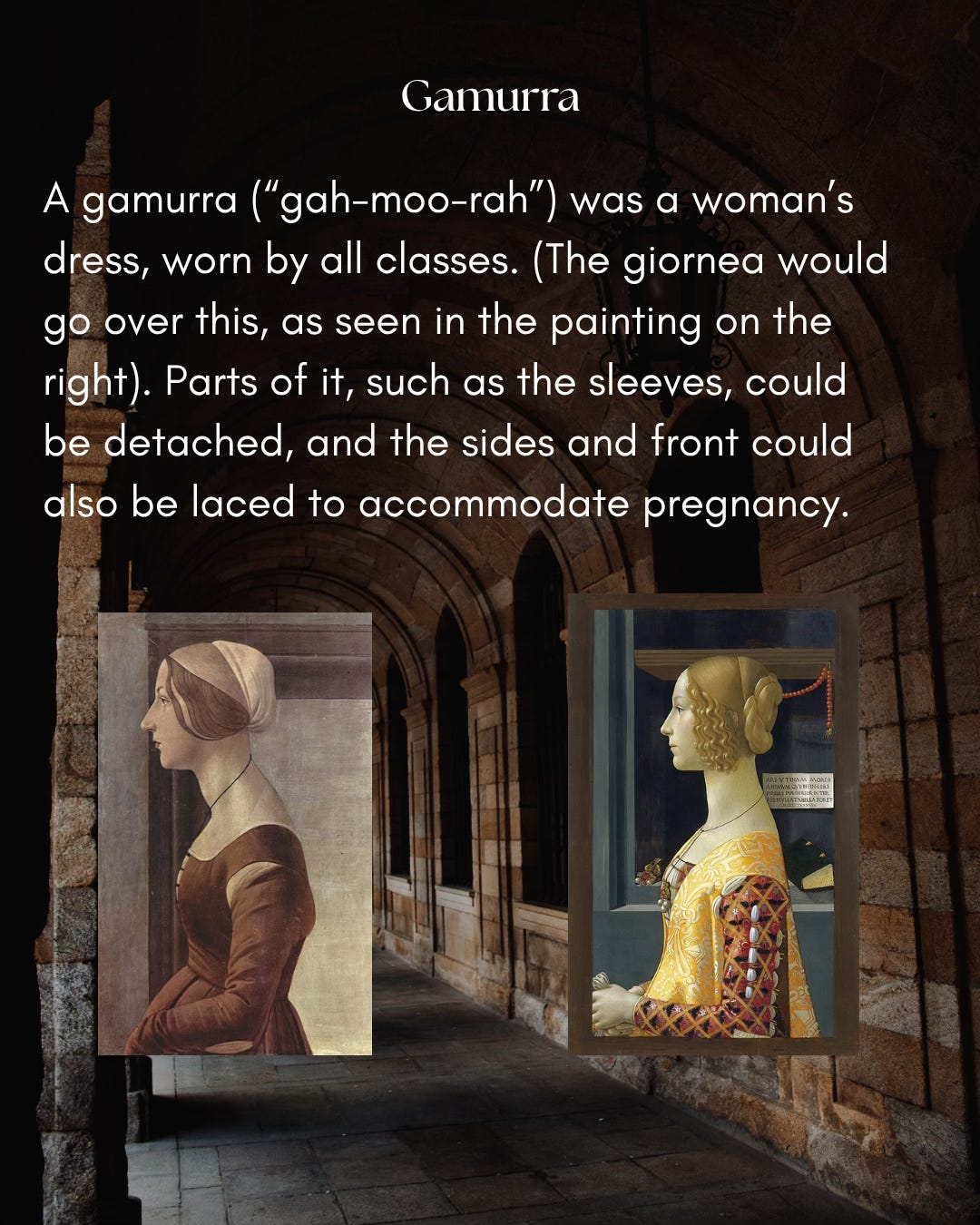
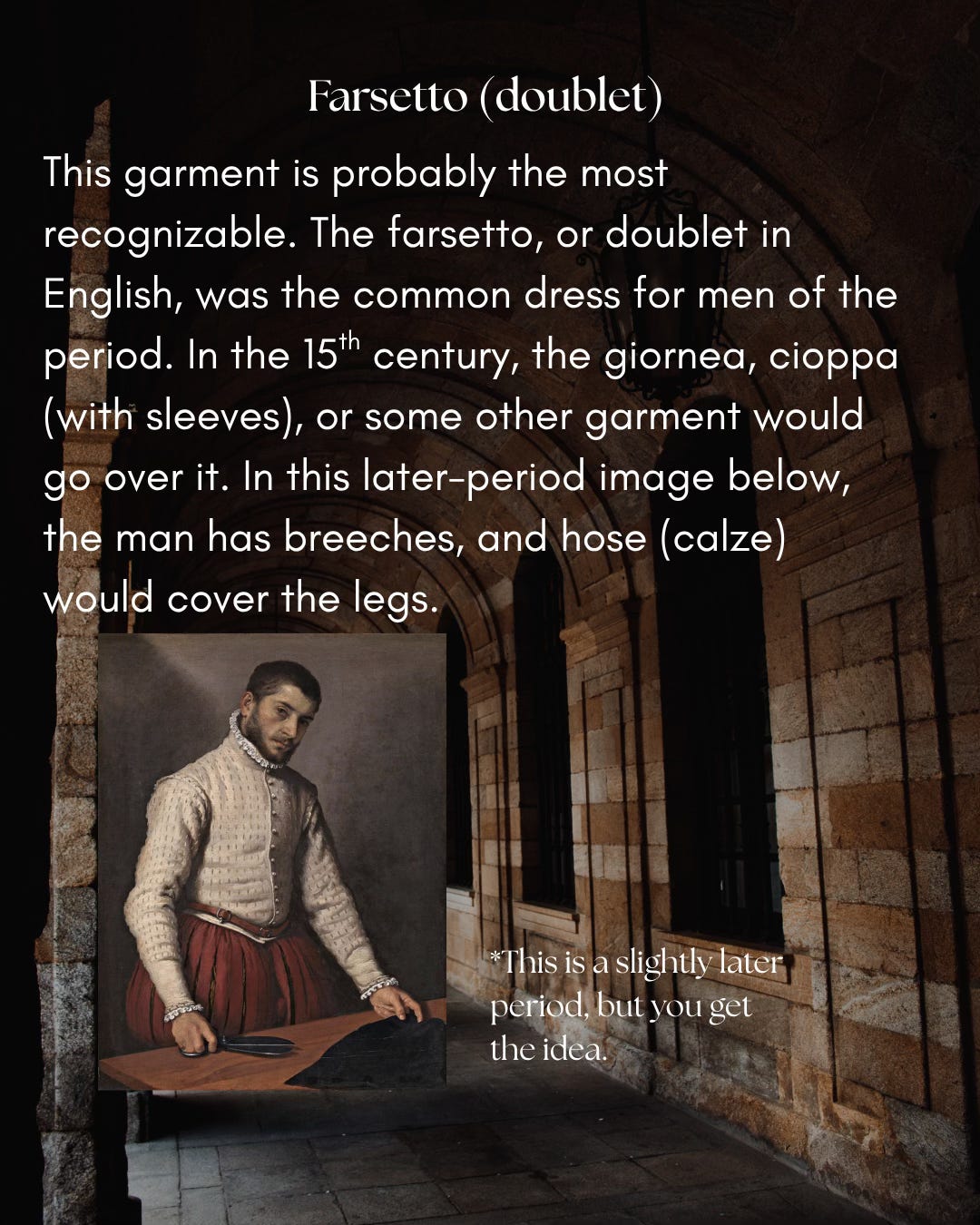
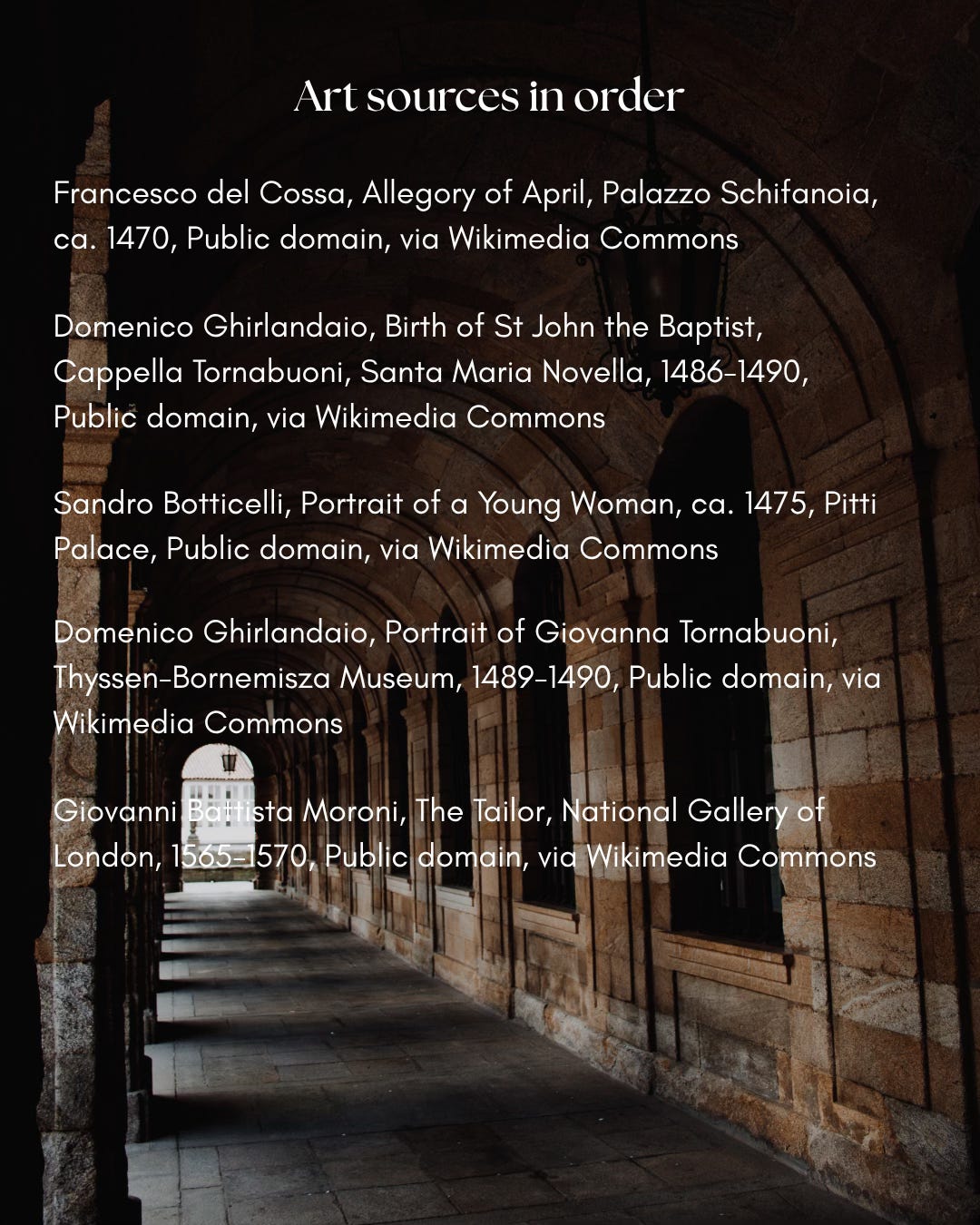
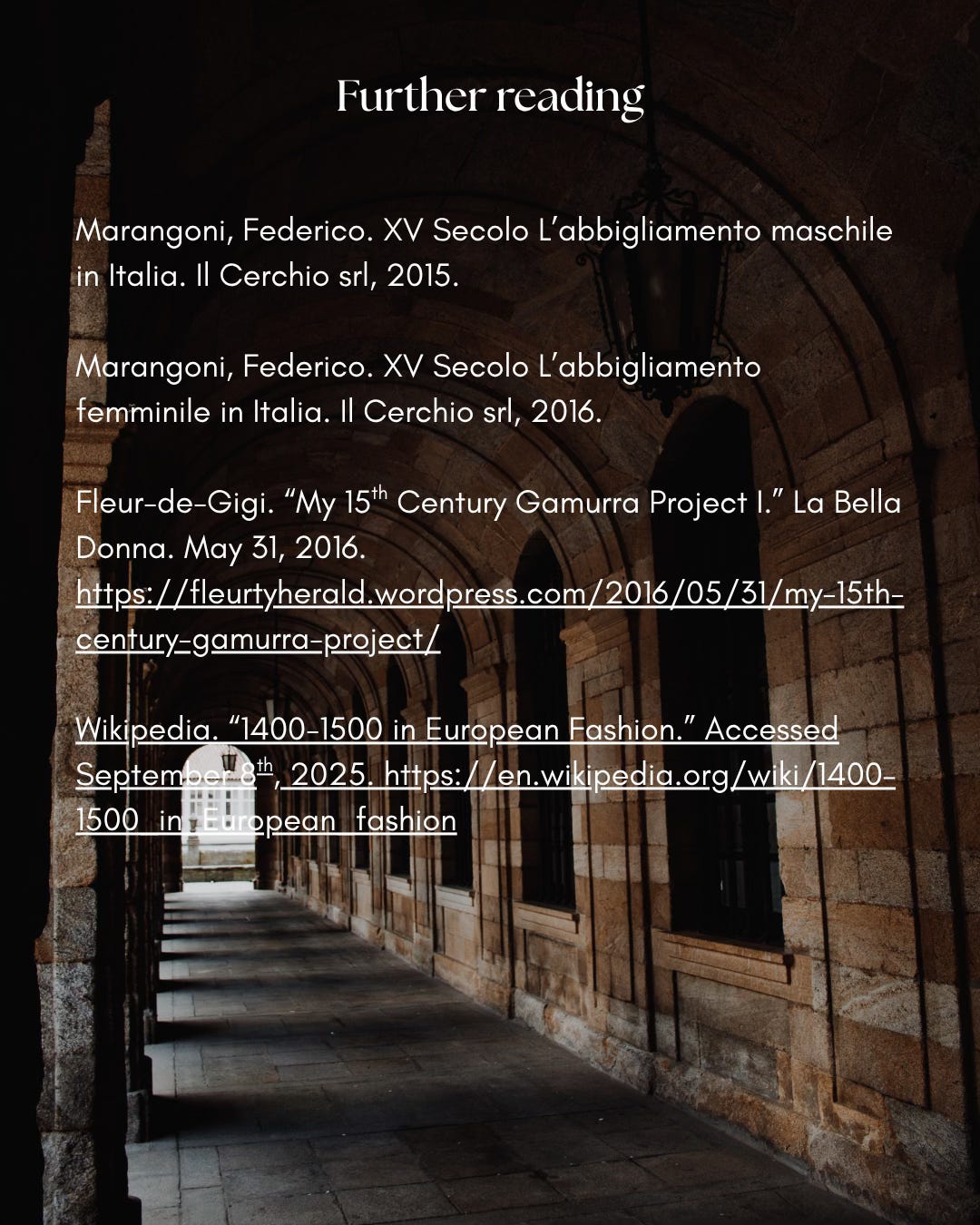
The fashion was inspired primarily by late fifteenth century central Italy. Below are slides I created on Canva for an Instagram post detailing the clothing, so I will include them here as well (including references to further reading).
Important places
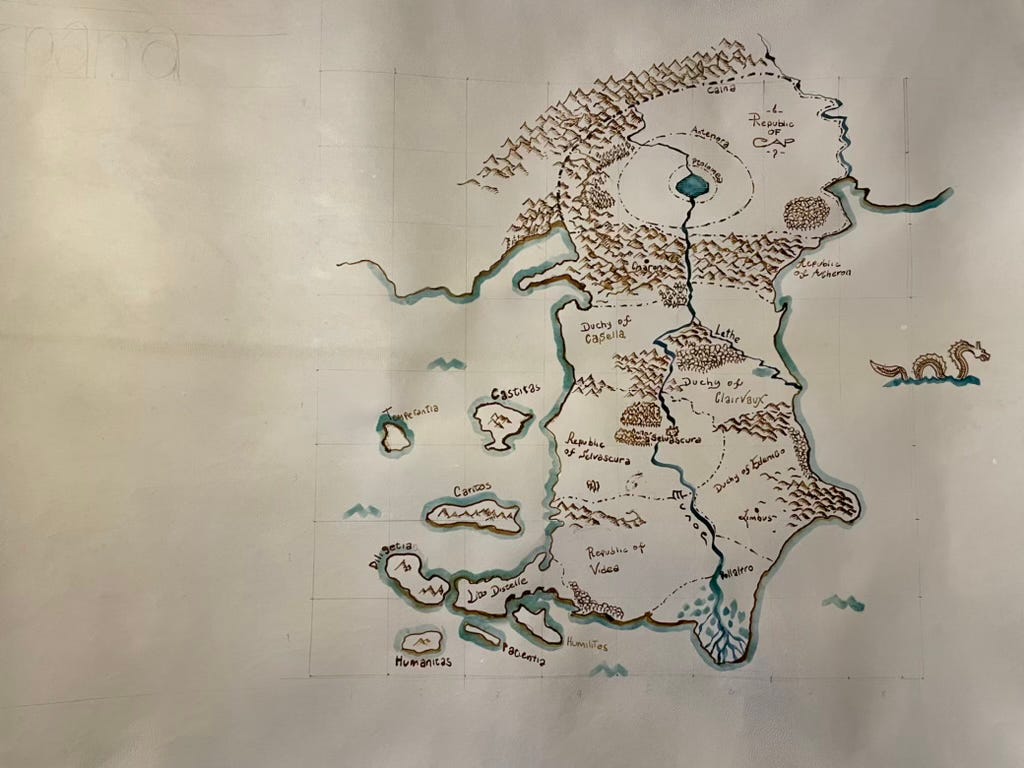
The Republic of Selvascura is the heart of The Stelnove Saga, where the first book begins and where much of the second book takes place. (Toward the center of the above map). The journey the characters go on in Of Constellations and Clockwork takes them north through the Duchy of Casella, the Republic of Acheron, all the way into the heart of the Caina Republic.
Furbizia
Literally, in Italian, “cunning”, or “cleverness”. You’ll hear the word furbo much more frequently, which is the adjective form, to describe people who do something crafty or clever to get what they want, but not in a good way. My Florentine husband taught it to me when I first moved to Florence and said it was an important word to know there. XD
In the world of the Speranza Peninsula, it is the name of a strategy game similar to chess. I named it “furbizia” somewhat tongue-in-cheek.
Comments
Nothing yet. Say the first thing.
Sign in to join the conversation.