
In honor of ten years since I first came to Italy, I thought it would be a good time to share this reflection. I have been living in Italy full time since 2019, and previously had two other brief stints here: nine months in 2017-2018 and four months in 2016. This has comprised most of my adult life so far. I have learned many things about living abroad and wanted to share a few of those below for anyone considering it.
Considering buying me an espresso if you enjoy my work.
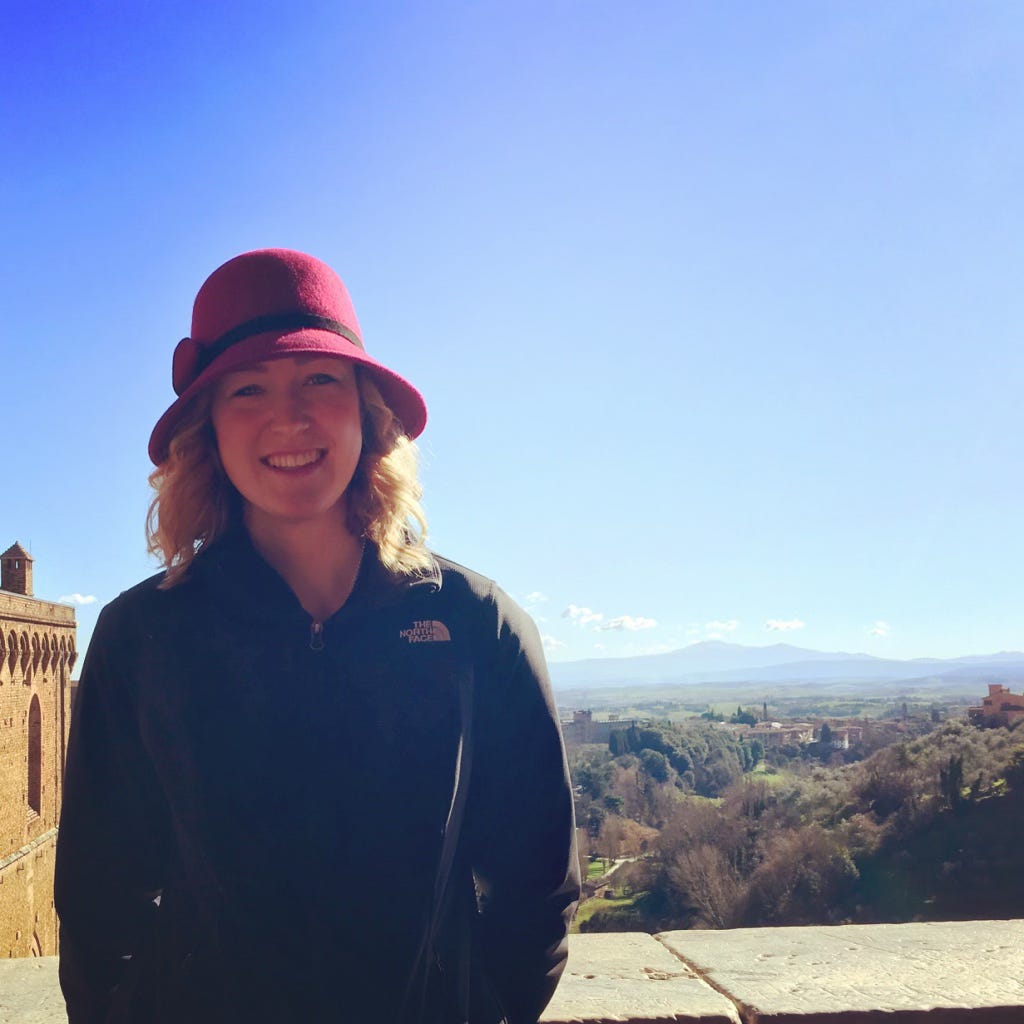
1. Bureaucracy gets harder, not easier
This was something someone told me back in graduate school, when I was trying to find a way to stay in Florence past the end of my program. “You know, the longer you stay here, the bureaucracy gets harder, not easier,” I was told morosely over a glass of wine in a popular spot in the Sant’Ambrogio district. Looking around, it had been hard to believe at the time that a place that felt like an integral part of me could so easily be snatched away.
While I would give a caveat to this now, I do think it’s generally still true. At the time I was told this, it was very easy to come to Italy on a student visa. Apply to study at a language school for a year, with the ability to work twenty hours a week, and you would be set for a while. This has changed, though, and many consulates have figured out that people were doing this only as a gateway to come to the country, with no serious studies being done at language schools, the most common academic “entrance” to Italy. Now many consulates require you to have a certificate for an intermediate or advanced level of Italian before studying the language here.
Regardless, it is hard to remain in Italy because at some point people need to be able to work more than twenty hours a week and can’t afford to keep shoveling out money for school. Work visas are nearly impossible to come by, due to the strict decreto flussi quotas. (Unless you have Italian parents or grandparents and come from a certain country). There is the new “Digital Nomad Visa” for freelancers and remote workers, but there are many stipulations that come with it (such as being a “highly specialized worker”), and I personally think it too will become quite difficult to obtain, if it isn’t already.
And that’s all just to get here. This isn’t counting getting your health insurance (tessera sanitaria), carta d’identità, codice fiscale, cell phone plan, rental contract, and all the scams along the way. (I hate to say it, but it’s true: this country has made me very untrusting of people). These are all basic life necessities, but they become more complicated in another language and with unnecessary, overly legalistic bureaucratic hurdles to jump through.
So Emily in Paris just hopping over to Rome like she’s changing states? Laughably ridiculous.
2. It’s much harder (read: lonelier) once you have kids
This is a big one I’ve discovered since having two babies here. In all honesty, I’m not sure I’d recommend moving to Italy with young kids. This country, sadly with one of the lowest birthrates in the world, is not built for children and families. I have heard all too often of people leaving Italy after they have kids for this reason, and if we ever move to the U.S., it will most likely be for the same reason.
Giving birth here is a different story. Apart from being treated like complete and utter garbage in recovery and feeling neglected and verbally abused, during labor and birth itself, I felt I was in competent hands. (*laughs maniacally*) Granted, I also gave birth in one of the best hospitals in the country, but I do feel like here they are less likely to do unnecessary interventions, and for that reason, I’d prefer giving birth here than in the U.S. (Not to mention, it was all free).
My second birth experience here was an absolute dream. I delivered our son in a birth center, so it was free of all medical interventions, with only natural means of relieving pain and coping through contractions. The midwives who worked with me there were so pleasant and loving and caring, and made me feel empowered to make my own decisions during labor, while also providing support and suggestions. (Highly recommend water therapy during transition, by the way). Bedside manners in medical centers here are usually poor at best, but my second experience was phenomenal.
Raising children here, however, is another thing. We have found daycare affordable, and there are certain governmental “bonuses” you can get as a family, but the overall societal structure is not built for children, other than the fact they are welcome and adored in pretty much every place. For instance, I never realized how bad Italy’s disability access is until I had to get a stroller up a little useless step into a shop, or even half a flight of stairs because there was no ramp. Many sidewalks are too narrow to be comfortable (looking at you, Florence), and the paving is a joke. Elevators are practically non-existent. It’s all these little things that make day-to-day life more uncomfortable than it could be.
Then there’s the loneliness. No one is having children here. In my prenatal class, I was the youngest by about a decade. I was called “crazy” for having two kids two years apart. People tend to wait until closer to forty to have their one child. I’ve had people tell me how young I am for a mom—except not really, I’m thirty!
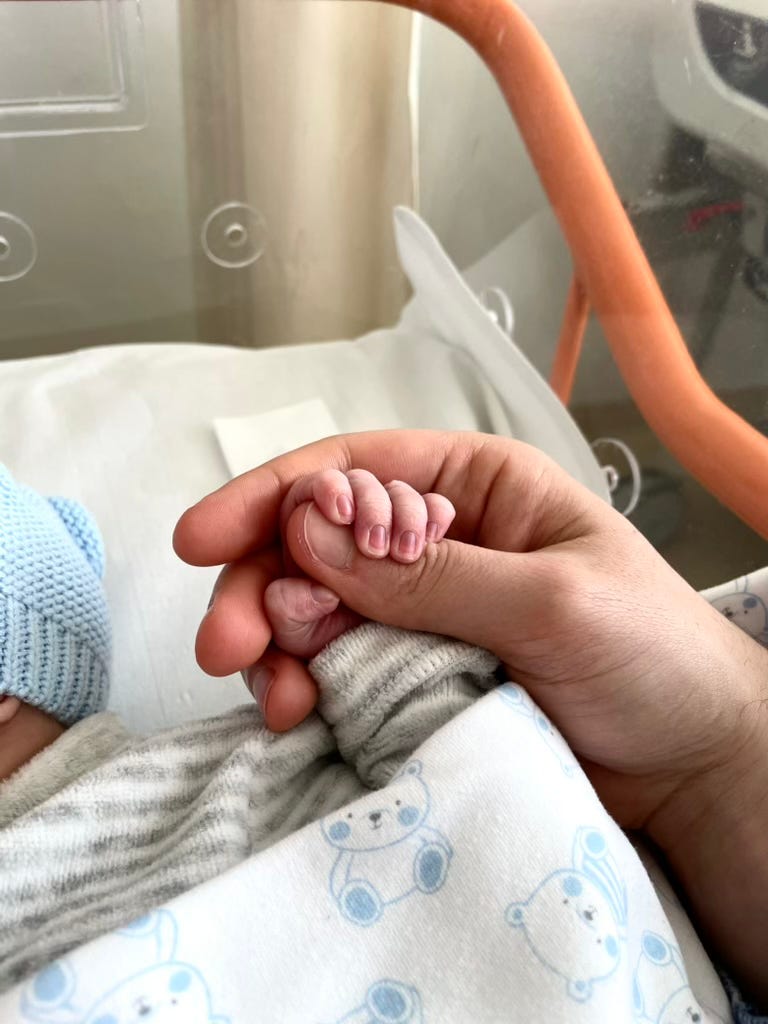
Truthfully, the hardest part about life right now is the loneliness. I look at people I went to college and high school with back home who all get to be in each other’s weddings and be pregnant around the same time and share these incredible joys together, and that’s a special experience I’m locked out of. One of the worst parts about pregnancy is feeling like you have to do it alone. Not that I didn’t have support—I had my amazing husband and his family, of course—but I had virtually no female support, which counts for more than I thought it would. My mother is far away, my mother-in-law sadly passed away two weeks before our wedding, and I have very few female friends around. Certainly none who are in my same stage of life. Living abroad, you get used to having transitional friends, those who move away and move on after a while, but I didn’t realize how suffocating this kind of isolation could be until I had to bear children alone.
I would think long and hard about what kind of community you want to surround yourself with before moving here.
3. Nothing increases your confidence like being forced to learn a new language and integrate into a new culture
There was something quite surreal about getting into the back of a stranger’s car in a foreign country, knowing I couldn’t communicate with them. When I came to Italy for a semester abroad in college, it was the bravest, most outside-my-comfort-zone thing I’d ever done. I knew “ciao” and that was it. For the next four months, my host parents and I primarily communicated by Google Translate.
When I returned to Siena after graduation, I tried to work on my Italian more but found my biggest block was speaking without inhibition. I’m a naturally reserved person and not particularly chatty in English, and then with Italian, I found myself too scared of making mistakes and sounding like a fool. It took a long time to press through this, and I had to be put in some situations where I had no choice but to speak Italian. Being in a choir with all Italian members helped me quite a bit. But what really made the language “click” was living with my husband’s family during lockdown. It was like I was with my host family again, surrounded by only Italian, and I found myself speaking it more with my husband than usual because of that.
I still don’t speak fluently, but I am much more confident now. Unfortunately I don’t practice it as much anymore because I’m committed to speaking only English around my children so they learn. It’s all about working within the parameters of the lexicon and grammar you do have to get your meaning across, even if you have to give a long explanation for a simple word. Having this experience has also made me a much more confident speaker in English.
4. You will never want to drive again
I got an Italian driving license out of pure necessity, and it was like pulling teeth. The theory exam can’t be done in English, and it is hard, even for Italians. But I passed it on the first try, and I’m so proud of myself because I did the entire process while pregnant and newly postpartum.
That said, I love the ease with which you can get around Italy by walking or biking or public transport. I love being able to walk places. There’s a freedom and simplicity in it that I always miss when I’m back in the U.S. My bike is my companion at this point, an old friend who has joined me on so many adventures, from restaurants and bars with friends to book club meetings, and pregnancy appointments.
5. You tend to miss your family back home more, not less, as the years go on
It was very clear to me early on that I wanted to remain in Italy as long as possible. I didn’t look beyond that. I thought the hardest part of leaving my family was when they dropped me off freshman year of college and I forced myself not to turn around as I walked to my prison cell dorm. In reality, it has been harder as my life gets more and more solidified here, and as I watch my family back home hit milestones and live their lives that I can’t be a part of. This is a feeling I can’t quite put into words, though I try sometimes. I often feel like a foreigner both in Italy and in the U.S. I exist in an in-between space, and while I have dual citizenship, I don’t feel fully Italian nor fully American anymore. I am learning that this is okay, though. I knew I wanted to live a unique life back in high school when I dreamed of getting out of my town and traveling and going on adventures. This is the path God has called me to be on, and to now share with my children. I want to foster in them a love and understanding of both cultures, to feel comfortable being bilingual speakers, and to hopefully raise them with empathy for those of different backgrounds and beliefs—something desperately needed right now. I do worry about how they’ll be treated by other kids in school—no matter where we live—but I pray I can turn any negative situation into a learning experience for them. They should feel incredibly blessed to have such a complex background, and I hope they come to realize that one day.
It’s not easy being far from family and trying to forge a life in a very different place. But my experiences have also been beautiful, enriched my understanding of the world, and inspired my writing too.
Have you ever moved to a very different place from where you grew up? (Even if in the same country?) Tell me what your experience was like in the comments.
Thanks for reading! Subscribe for free to receive new posts and support my work.
Comments
Nothing yet. Say the first thing.
Sign in to join the conversation.