
*I originally wrote this article a few weeks ago. I’m no longer fostering Abby because her sickness required someone more experienced than me. While sad, I know it was the best thing for her. Maybe I’ll dip my toes into the fostering pool again soon, but for now, these are my reflections about the experience.
I was reading an article from Culture Vulture, and I couldn’t even finish it before I had to rush over to Substack to start composing this post.
In it, the featured writer, Maya Richardson, discusses the concept of tiny deaths, such as fruit rotting or missing out on an exciting event. She states:
i believe that even the tiniest of deaths deserve attention and a proper grievance. this way, we are able to let them rest, and we are able to keep living. we learn to accept change. the more we come face to face with grief, the more we transform, whether we like it or not.
tiny deaths prepare us for the big ones, or the big one (what ever that means).
I love this statement so much.
She goes on to say:
I might even cry about the gorgeous peach I bought last week, that is now rotted in the fruit basket. I am mad at myself and I am mad at the fruit.
I also love how she seamlessly mixes heavy ideas with a lighthearted tone. I can wholeheartedly relate to the feeling of wanting to cry when setting my eyes upon something so beautiful. Sometimes, I wish I could bottle up that feeling, whatever it is, and save it for days when I need a little more magic in my life. A little bit more of that je ne sais quoi.
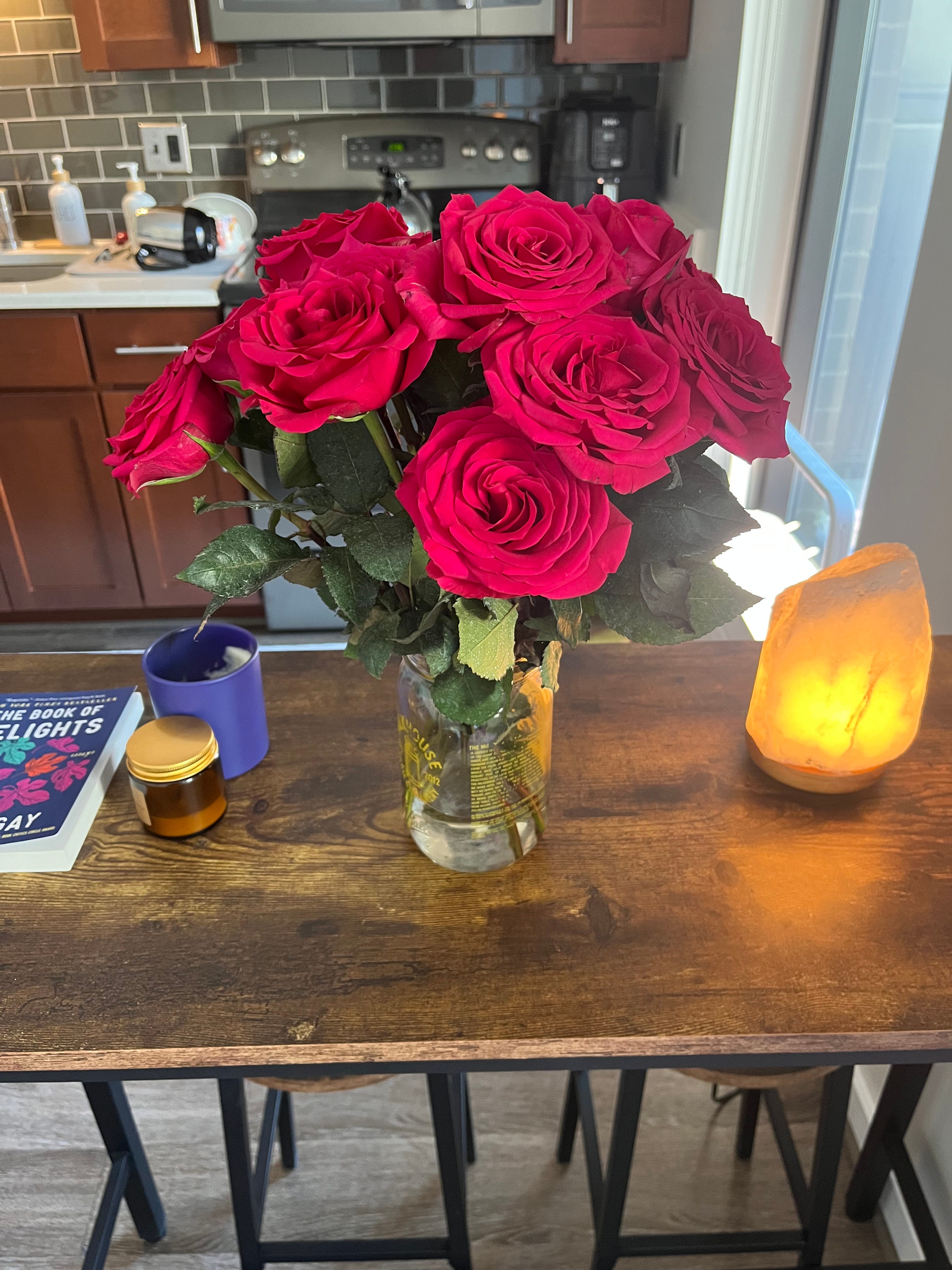
The equivalent for me right now would be the fully bloomed red roses on my counter. They are so beautiful I could cry. Throwing away that perfect peach is indeed a tiny death worthy of mourning. I mourn every time I throw away the remains of the second bag of lettuce I buy from Trader Joe’s because the first one doesn’t last me a week but the second one is hard to finish before it spoils. In this economy, no one should be wasting quarter-full bags of lettuce. And yet.
I like the way Richardson discusses tiny deaths about seemingly small things - like spoiled food - and then compares the experience to big deaths - in her case, the death of a close friend. These tiny deaths prepare her for the big ones, she says. There is a clear disparity between losing an item and losing a dearly-held relationship, but Richardson makes a good point, because if throwing away flowers that wilted too soon or missing out on a party due to illness are enough to induce grieving, then how would we ever survive losing a loved one? How would we make sense of death?
We still don’t really make sense of death. It’s something that happens, often unexpectedly or after a long road of expecting, and then we’re forced to muddle through the complex web of what comes afterwards. I talk more about that in this post. However, tiny deaths are a starting point. They teach us how to feel deeply, process, mourn, and move on in a way that emulates the steps we take after bigger, more profound losses.
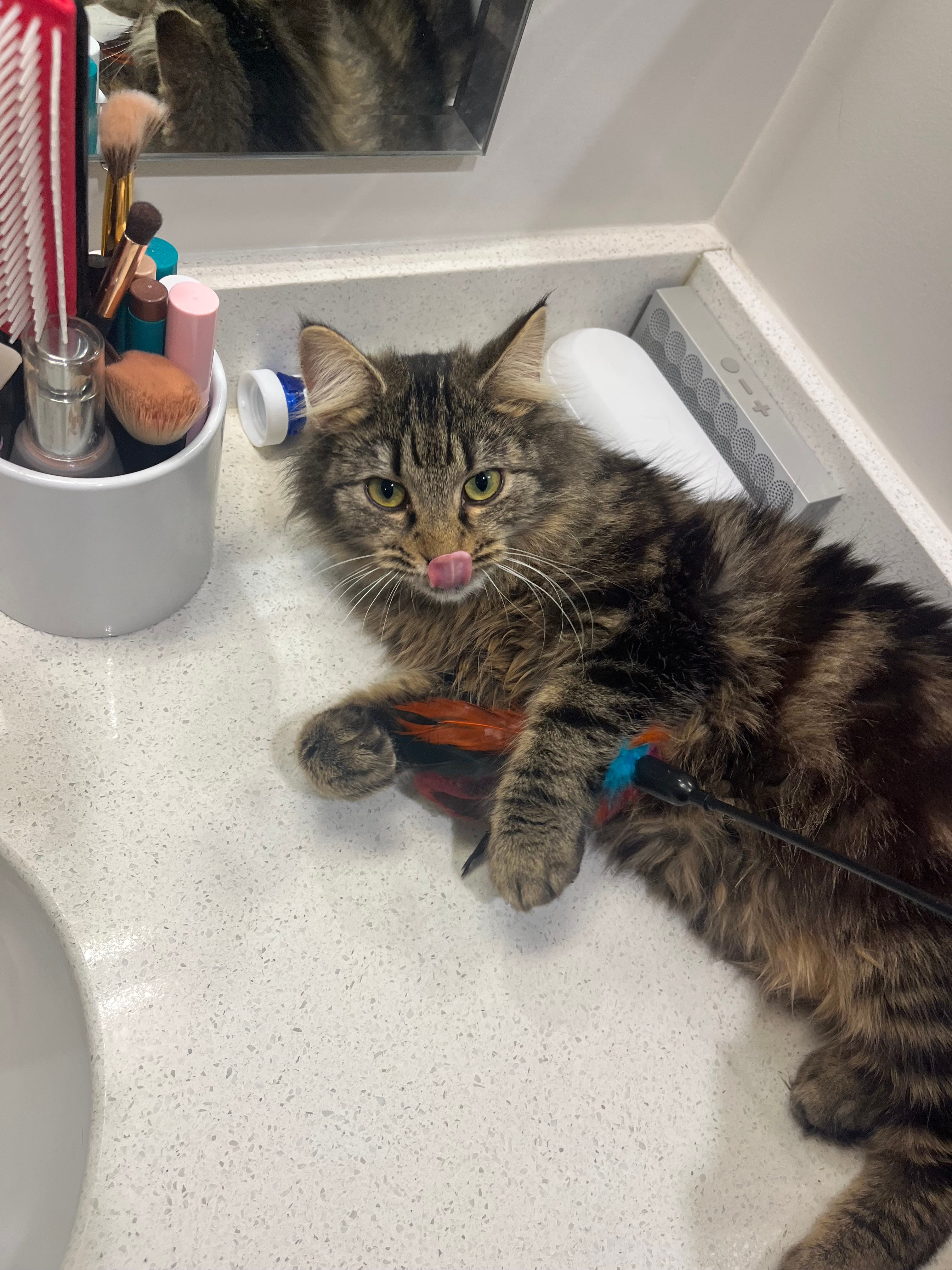
I’m experiencing myriad tiny deaths this week because I recently decided to foster a cat. I have never had a cat and I’ve never once considered myself a cat person. In fact, if you asked me three weeks ago if I even liked cats, I would have said no. But recently, some of my friends have started adopting cats and the idea of a little companion to come home to after a long day didn’t sound so bad. After babysitting my friend’s kitten, I thought, hey, maybe I could do this, too.
Why not a dog, you may ask? I’ve always loved dogs and would get one in a heartbeat - when I’m an older, more responsible adult. Technically, I am that now, but dogs are a level of effort I don’t think I’m ready for yet. I fear I’m too selfish. When it’s freezing at 11pm in late January, will I really want to take the dog out to poop? Realizing my dream of adopting a puppy won’t be happening anytime soon because of my own shortcomings is a tiny death in and of itself.
So, I’m now fostering a cat. And let me tell you, it has been a baptism by fire. Not only did I have to bathe her immediately upon bringing her home (she has an upset stomach and was in a car for 30 minutes, I’ll let you do the math), but she also has worms and potentially more parasites, so I’m giving her two types of medicine three times a day. I have to wrap the poor thing in a towel and hold her like a baby so I can force pills and syringes full of yucky liquid down her throat.
My bathroom is a smelly mess because she’s still having GI issues and litter is everywhere. I could have predicted the litter, but it’s one thing to know it in theory and another to feel it in between your toes when you walk through the bathroom barefoot accidentally on the first night. Despite all of that, she is the cutest, sweetest, most cuddly cat I’ve ever encountered. I will simply have to adjust to the changes that inevitably come with taking care of an animal, especially a sick one.
In my overwhelm, that article shed light on something I think a lot of us tend to gloss over. Every tiny death is another experience that teaches us something about life and who we are. We’re hardwired to avoid pain and sorrow and mishaps, but they’re unavoidable. We’re programmed to seek joy and happiness and pleasure. But those feelings wouldn’t exist without their counterparts. It’s just like the intensive I’m still participating in with Ross Gay’s Book of Delights (see this post for more information about that).
As a perfectionist who jokes about being a little OCD about cleanliness (it’s, like, not really a joke…), the concept of tiny deaths was a good reminder to stop worrying so much about the little things. They’re transforming me, not the other way around.
It’s a reminder to not only let myself feel everything as deeply as I do, but to revel in that ability, because it truly is a gift.
Comments
Nothing yet. Say the first thing.
Sign in to join the conversation.