
Oh my god.
Revisions are hard.
I read a Substack article recently by a writer who was working on a novel for quite some time. In wanting to be a writer vs actually writing, Lindsey Peters Berg discusses how she was publishing short fiction pieces in literary magazines and scrolling through Twitter while her novel was a slow, work in progress. She had no consistent practice, she said, and was only writing when she was inspired.
This article hit home for me because, man, can I relate. Writing when you’re not inspired is hard work. I’ve seen many articles by seasoned writers discussing how all throughout their twenties, they lacked consistency, chasing elusive inspiration rather than steadfast routine.
Does that mean in two years, when I turn 30, I’ll magically learn how to be consistent in my writing practice?
Haha. I know it won’t magically happen. And I can be consistent when I have a solid idea. When I lack consistency is when I’m stuck on something. Whether it’s character development or plot holes, if I can’t figure out the answer to my question, I can’t write.
That’s why I’m writing this right now. Because I’m stuck on my third draft of my novel and there are questions I can’t answer. The words can’t flow until the scaffolding is in place.
When I sat down to think about 2025 and the habits I wanted to cultivate or change over the next 12 months, I decided I wasn’t going to be one of those people who only created when I was inspired. That’s fine for poetry or flash fiction or even Substack, things I do because I love them, but I wanted to build a practice around my novel so I could start taking the steps needed to reach my goal: finishing the book and publishing it.
I don’t remember where I heard this information, but in a book or a podcast about building healthy and sustainable habits, I learned that one of the best ways to create a habit is attach it to something else that you already do regularly. For example, taking a walk every day after lunch.
Going back to the article I mentioned above, Lindsey discussed how she started to become more consistent by setting a writing goal of 200 words a day. She states:
Just having that small, daily goal was so helpful in actually getting me to the page. And the more that I made writing a daily habit, the more I showed up to the work, physically and emotionally. The process of writing became a part of my everyday life, one that I usually really enjoyed.
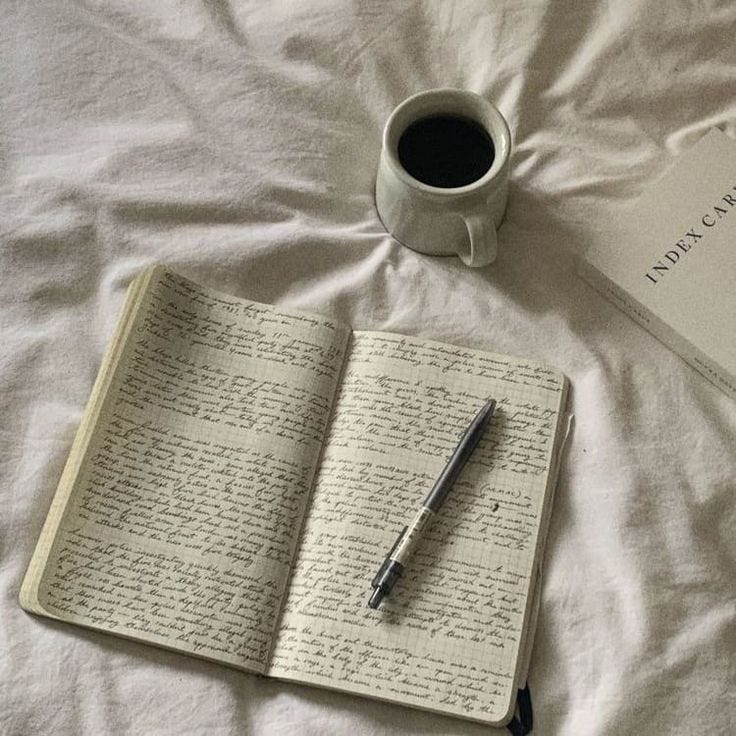
With this in mind, I decided to copy her 200-words-a-day goal and attached this newfound habit to the end of my workday. The moment I shut my work laptop (a beautiful macbook that I wish I could write my novel on), I now reach for my personal laptop (an older, much less beautiful macbook), to start my 200 words.
For a while, I was not only very consistent, but I was enjoying it much more than I had in a long time. Beyond that, I was hitting 200 words easily and sometimes writing way more, into the thousands.
It not only showed me that I can dedicate time to this labor of love (which more often just feels like labor lol) without the spark of inspiration but also without sacrificing large chunks of time. Furthermore, to state the obvious, daily writing can actually be fun!
Which, duh, of course writing can be fun. Why would I be on here, or writing a book, in the first place, if I didn’t think writing is fun?
It’s not always fun though. It’s not fun when you’re staring at a bunch of pieces of your book and trying to figure out how to make them all fit. As Eva Langston said in her article, How I’m “tinking” the revision of my novel:
Revising a book is like cleaning out your closet. First, you’ve got to take everything out and look at it, which is going to feel completely overwhelming. Get rid of stuff you don’t need, consolidate what you do need, and then put everything back in a more organized and visually-pleasing way. You have to make a mess first, in other words, to make it better in the end.
It’s funny she compared the process to cleaning out a closet because wow, she’s so right. I also recently cleaned out my closet, so I can relate to the visceral sense of overwhelm she’s describing. I’m so tempted to be like the 20-somethings all those seasoned authors described and scrap the whole thing and write a new book. But as Eva’s article states, putting the time and work into revisions are how you learn to write the better book.
The only way to write a better novel is to embrace the revision process. That’s how you write a better novel.
There’s a metaphor for life somewhere in there…
I know she’s right. And that’s why I’m going to keep “tinking” (as she calls it) with my book, too. It’s why I’m not going to discard the time and effort I’ve already put into it. One day, I will finish my third draft and it will be damn good. Maybe far in the future, maybe not.
I now have an outline because, even though I hate outlines, there are some key elements of organization that need to be arranged. Once those pieces are sorted out, I can go back to letting the words take me wherever they want to go.
And then revise again.
Comments
Nothing yet. Say the first thing.
Sign in to join the conversation.