
This post presents a fictional scenario in which there was a World Cup competition in 1942. The process used to generate this scenario is described in the previous post.
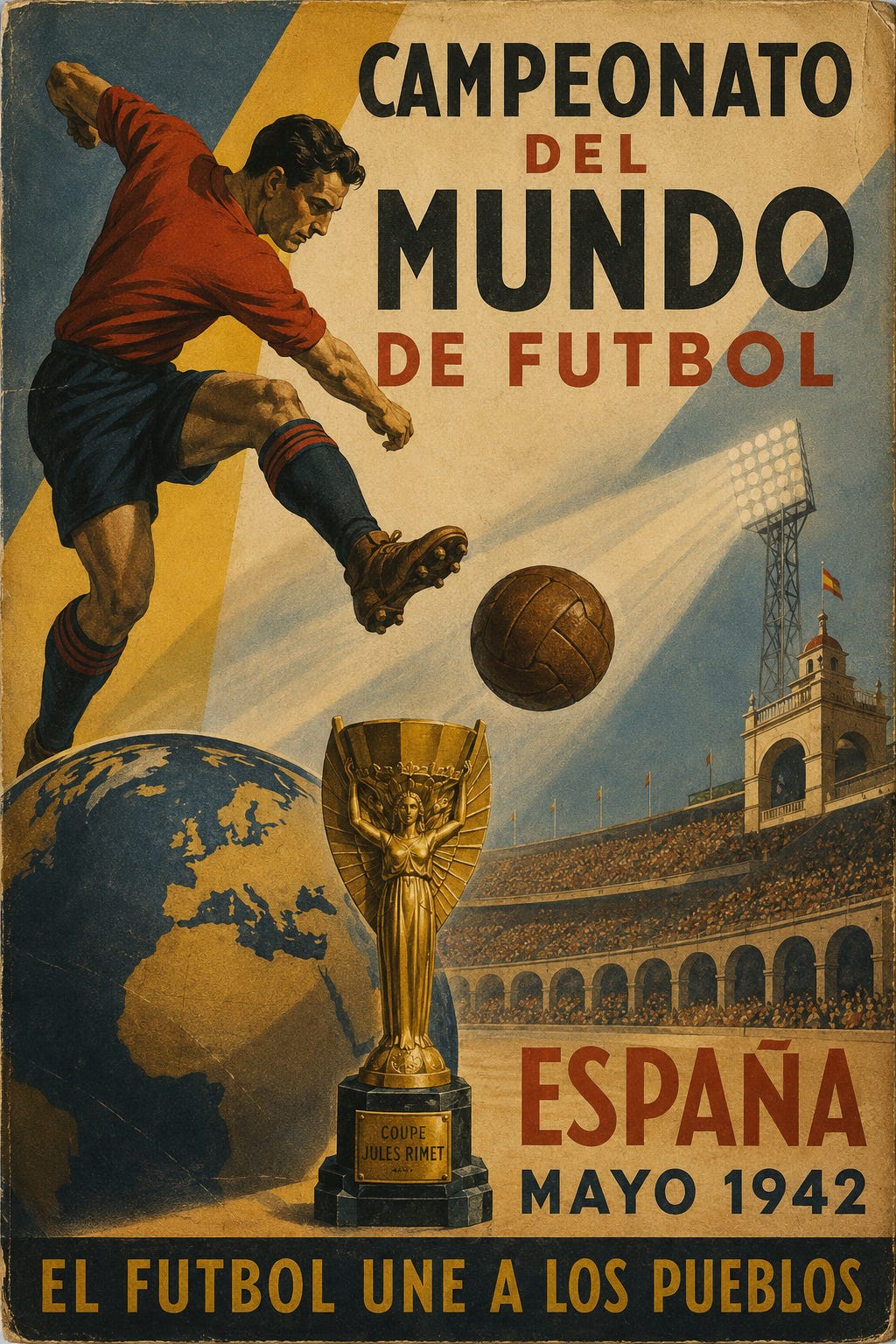
The idea of organising a World Cup in 1942 first came up in discussions between Franco and Mussolini on 12 February 1941 in Bordighera, Italy. Mussolini was bemoaning the fact that Italy would not have the opportunity to defend their World Cup title and potentially win the tournament for the third time in a row. Franco was heard to quip that, “you have the trophy in your cabinet, so why should we not hold our own tournament”. This exchange was picked up in diplomatic reporting and found its way back to the Reich Minister for Foreign Affairs, Joachim von Ribbentrop, who immediately saw the opportunity to use football as a vehicle for consolidating Germany’s web of alliances. Ribbentrop arranged for Hans von Tschammer und Osten, the head of the Nazi Sports and Physical Exercise Department, to consider options for a 1942 World Cup.
The Germans were aware that the tournament realistically could only involve nations that were not actively hostile to the Axis powers. Von Tscammer, who enthusiastically seized on the World Cup as a way to restore the prominence of his role (which had diminished substantially since the start of the war), put together two plans: one for a World Cup that would be held in Germany and another for a tournament in Spain. Ribbentrop favoured the Spain-based tournament due the logistical limitations of holding the tournament in Germany, and because he felt a Spanish World Cup would be easier to sell diplomatically. In the early summer of 1941, the German Ambassador to Spain was instructed to Lobby Franco and gauge his interest in the project.
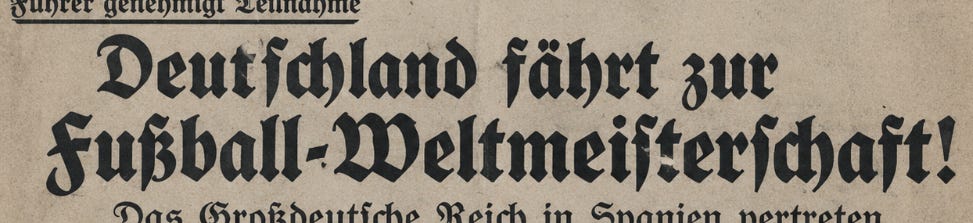
At some point in the discussions, football-mad senior Francoist, José Moscardó Ituarte was brought into the conversation. He was a huge advocate of the idea and it began to gain traction within the Spanish regime. Momentum for ‘España 42’ was boosted further when Ribbentrop managed to convince Hitler to provide financial and logistical support for the tournament’s organisation. Ribbentrop then floated the idea with his Italian counterpart, Galeazzo Ciano, when they accompanied Hitler and Mussolini during their meeting at the Brenner Pass in June 1941. Mussolini, on getting wind of the plan, immediately endorsed the idea, and was keen to ensure that if Italy won the trophy for a third time they would get to keep it permanently, even if the tournament wasn’t endorsed by FIFA. He allegedly declared, “what an Italian wins in his boots will not be handed back to a Swissman in his spats.”
Following agreement on the part of the key actors, joint diplomatic efforts began, involving Spain and Germany encouraging other nations to participate in the tournament. The decision was taken not to attempt to secure official FIFA backing for the World Cup, as this would present the international community with the opportunity to publicly delegitimise the tournament. Axis allies were invited first, with the likes of Bulgaria, Slovakia and Croatia quickly accepting. Particular effort was put into obtaining South American participation. Quite separately from the divisions caused by war, the decision to host both the 1934 and 1938 World Cups in Europe had already created unfavourable sentiment outside Europe. Argentina and Chile as the most sympathetic nations were extensively wooed. Acting Argentinian President, Ramón Castillo, saw it as an opportunity for arguably the best team in South America to prove their brilliance on a world stage. His son, also named Ramón, had just been appointed President of the Argentinian Football Association after a no-doubt meritocratic recruitment process. Ramón Jr was invited to Spain and lavishly hosted. Upon returning home, he instructed the legendary Argentinian manager, Guillermo Stábile, to prepare a team for a tournament in Spain at some point in the Spring of 1942.
Occupied nations or collaborationist governments nations, such as Denmark and Vichy France, were coerced and agreed to send teams. Some European neutral nations, which had already been playing international fixtures against Axis nations, decided to participate in the tournament as a sop to Hitler that cost them relatively little. Japan were invited to take part, but were forced on the basis of practical transportation issues to turn down the opportunity.
The date was set for May 1942 and José Moscardó Ituarte began to organise venues and hosting logistics. Hans von Tschammer und Osten was keen to be involved in the planning and use German financial support to gain a dominant influence over the event. The two developed a somewhat tetchy relationship, which often hampered the efficiency of the planning process. Ituarte recorded in his journal of von Tschammer that “what this man knows of football could be written in fewer words than his name.”
By the time Goebbels had come up with the idea of framing the tournament in the context of the international anti-Comintern struggle, with events promoting the glorious achievements of the Spanish Blue Division to be held at the opening ceremony, the tournament was in the advanced stages of planning. Part of this planning involved a tournament draw which was shrouded in controversy, and widely considered to be rigged in order to allow Germany and Spain a more favourable route to the final.
The favourites for the tournament were Spain as hosts, Italy as reigning world champions, Argentina as one of the best teams in South America, Sweden as a strong team of the era, and - of course - Germany, which would be backed by the full resources of the Nazi state.
The Spanish team was managed by Eduardo Teus, a former goalkeeper who had been born and raised in the Philippines. He built on the distinct Spanish style, which was beginning to evolve from the frantic ‘Furia Espanola’ to a more deliberate approach based on short passing. His team relied heavily on the attacking partnership of Edmundo Suarez (Mundo) and Paco Campos, who both dominated the Spanish domestic league scoring charts.
Under Vittorio Pozzo, the Italian national side stuck with a version of its Metodo tactical system. This involved the team adopting a WW formation, which saw an inversion of the defensively focused players from the widely deployed WM setup favoured in England throughout the 1920s and 30s. The greater number of halfbacks (equivalent to today’s midfielders) within Pozzo’s system allowed the team to dominate possession and helped them to win the World Cup in 1934 and 1938. The team retained defensive stalwarts such as Alberto Foni and Pietro Rava, while introducing new attacking talent such as Valentino Mazzola.
The Argentinian team, which had recently narrowly lost the Copa America to Uruguay, was built around the River Plate squad, nicknamed La Máquina (the machine) for the combination of flair and ruthless efficiency which had delivered them numerous domestic league titles. Under the guidance of Argentine coaching legend, Guillermo Stabilé, and with the individual goal scoring brilliance of José Moreno, Argentina were a formidable outfit.
This Swedish team was the precursor to the successful Sweden side of the 1950s. Founded on principles of athleticism and skill, they could conceivably have been as dominant as their successors in European football had it not been for the disruption caused by the war. During the war, Sweden’s neutrality and its highly developed, grassroots sporting system allowed the country to nurture a talented national team. This team featured a young Gunnar Nordahl, who would go on to become AC Milan’s highest scorer.
The German team was also able to draw on players formerly of the successful Austrian national team, following the Anschluss. This had led to some internal team tensions earlier, but by the time of the World Cup in 1942, influential Austrian players like Karl Decker and Ludwig Durek were fully integrated into the squad. Under the stewardship of Sepp Herberger, they modelled their playing system on FC Schalke’s Kreisel (spinning top) system, which promoted positional fluidity and was an antecedent of Total Football.
Switzerland were always a resilient team in this era, beating both Germany and Italy at different times. Hungary were often involved in high scoring games and favoured an attacking style, which would eventually provide the foundations for the Magical Magyars of the early 1950s. Denmark were always competitive in the Nordic Football Championships of the time, but were usually pipped by Sweden. Portugal were an unpredictable team that seemed to fluctuate between brilliance and mediocrity, with little in between.
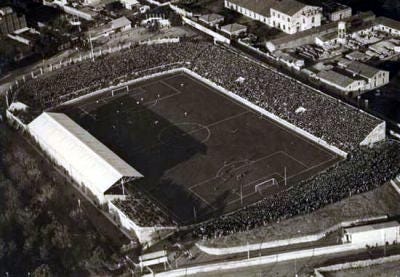
The matches were played across Spain using the stadia of some of Spain’s domestic professional football teams. This included semi-finals being held in Barcelona (Camp de Les Corts) and Valencia (Estadio de Mestalla), and the final being played in Madrid (Estadio Chamartin). These stadia typically held upwards of 20,000 spectators and generally featured open terraces where spectators primarily stood.
There was no official seeding for the tournament unlike the 1938 World Cup. However, the draw that emerged, appeared to favour Spain and particularly Germany. Conclusive evidence of rigging was never uncovered, but the fact that Germany and Spain appeared in separate halves of the knockout structure and both received relatively easy routes to the semi-finals led to widespread speculation that the draw had not been conducted as randomly as organisers claimed.
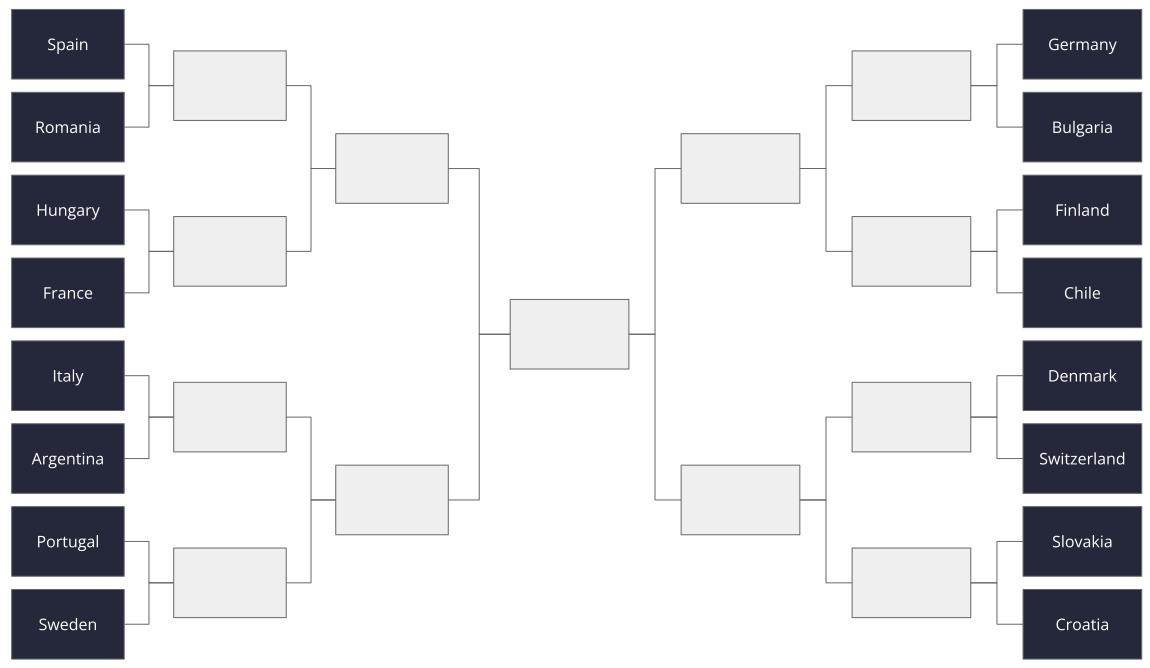
In the next post, we kick off the tournament with the first set of simulated results from the round of 16.
No posts
Comments
Nothing yet. Say the first thing.
Sign in to join the conversation.