
We grew up together, we prayed at church together, you already knew everything about me. But when we formally met, I didn’t recognize who you were.
At that age, you listened to me in a way no one else did. When I couldn’t find the words, You understood what I was trying to say. I was shy, quiet, but you made me feel like I had something worth sharing.
I never thought I was good at grammar.
I didn’t think I was smart.
I definitely didn’t think I was a writer.
Even when I didn’t believe you, you kept reminding me that those labels don’t matter — that it was the meaning behind my words is what does.
Was it 4th grade? Maybe 5th? I was small. We all were.
The desks felt big. The world even bigger. Everyone around me seemed to be fitting in. Raising their hands, making friends, getting picked for teams during recess. I hadn’t found my place in all this.
I just wanted to leave this reality. I daydreamed during mass. I ran with my arms spread like a plane. I built worlds out of Legos on my bedroom floor. I got lost in Pokémon on my Gameboy.
I escaped. I pretended. I imagined new stories where I made sense. I didn’t feel like I belonged in this world, not really at school, not fully at home. So I reinvented the world so it could fit me.
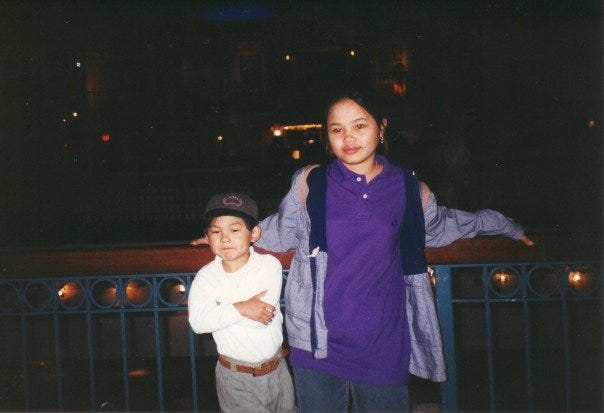
But in the digital world, I found corners that felt familiar. Websites that celebrated fantasies like Star Wars and chat rooms with strangers who shared niche interests. It’s the places in this virtual reality where I could explore and find where I could belong.
At school, the teacher had other ideas for us to make sense of the world. Through words. She shared with us poems — examples of incomplete sentences with words that frequently rhymed. I felt blank. I didn’t understand the meaning. And so when our teacher assigned us to write a poem, I didn’t know where to begin.
I looked for help on the internet. I sat at the family computer, waited for the dial-up tone to finish its screeching song, and I stumbled upon a simple website of poems on AOL: just a list of titles, anonymous authors. I read many, most with words assembled like the poems shared in class, but none that meant anything to me. I thought, “How would I ever write something like this?”
And then I found one.
I don’t remember the title. Or the lines. Or any of the words. But I remember feeling the poem. It was a message that I could understand and relate to. It felt like something I might say — like someone had written the words I didn’t yet know how to write.
So I copied it.
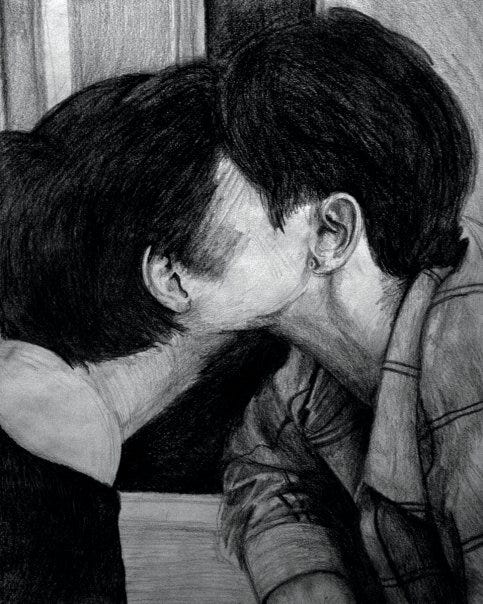
Word for word. Onto lined paper in pencil, in my handwriting. I didn’t think. I submitted it. I felt like the poem would be unremarkable to anyone else. That it would go unnoticed.
The next day, the teacher knelt beside my desk. Smiling. “This is one of the best poems I’ve ever read,” she said. “I want you to read it aloud to the whole grade.”
And that’s when you showed up.
You said to me, “Let them believe it.”
I stood onstage and read the words like they were mine. The way everyone looked at me. The clapping. The teacher’s pride. My classmates speaking to me for the first time and congratulating me. And all I could focus on was you.
I didn’t want to listen to you. I tried to ignore you, to start earning what my parents wanted for me, by myself.
To get into Phillips Exeter.
To go to Harvard.
To become a doctor.
To be “successful.”
This was supposed to be the path. It wasn’t mine, but it would get me away from you and what you said.
But I wasn’t smart enough. Not in the ways the world needed for me to be. I was mad at you, because you knew I would never accomplish any of this. I needed help, and I had no one else besides you.
I didn’t have a good time in middle school. Except for when we were in history class, the only place I could still imagine, another time, another world from this one. You knew that it was only subject I was remotely capable. Everywhere else, I was disappointing.
You saw me at home when the nights ended in fights about my homework, my grades, and my future. I wanted to play my games, to escape this world. I contemplated ending it all, to turn it off. But you were always there when my finger was on the off button, talking me through what else I could do.
You stayed with me.
We wrote away messages and profiles like coded emotion.
We found song lyrics that sounded like my own thoughts.
We looked through pages of a psychology book from mom.
We talked about dad and how we always yelled at each other.
You wanted to speak to dad for me, so I let you. And when the anger faded and the house was quiet again, you wrote my letters. I left them on his office desk for him to find. And when he did, he’d read it alone. On his time.
You explained how I felt. You’d tell him why I was trying to escape. That I wasn’t lazy, I was misunderstood. That I wasn’t incompetent, I was overwhelmed. That I loved him, but he was hurting me.
Sometimes, I wouldn’t hear from him for days. But then a letter would appear in my room. A gesture. A moment. A truce.
You spoke with him through silence. Through written words left behind. You said the things we couldn’t say to each other’s faces. Our hearts spoke to each other through writing. Where yelling failed, the words came through.
Maybe that’s when I started to understand you’ve been trying to help all along.
In difficult times, you never looked down on me, and you always did the most to help. You let me believe your voice was mine. Even as I built something new on my own, you stayed beside to give me confidence.
I gave you a nickname, my “Lionmoose.”
Two animals that shouldn’t belong together. A Leo, the sign I was born under. And a moose, the animal I knew of growing up in New Hampshire. Fire and forest. Bold and quiet. Mythical and real.
You kept me rooted when I pretended, and I found a way to become.
Through our teens and into our twenties, we began naming the feelings we had.
We wrote about relationships that were meant to be, but unreasonable to exist. About love that fell apart.
Because of distance.
Because of culture.
Because of the fear of holding someone else back.
Fate and frustration. Love against nature. Hope against odds. Belief against reason.
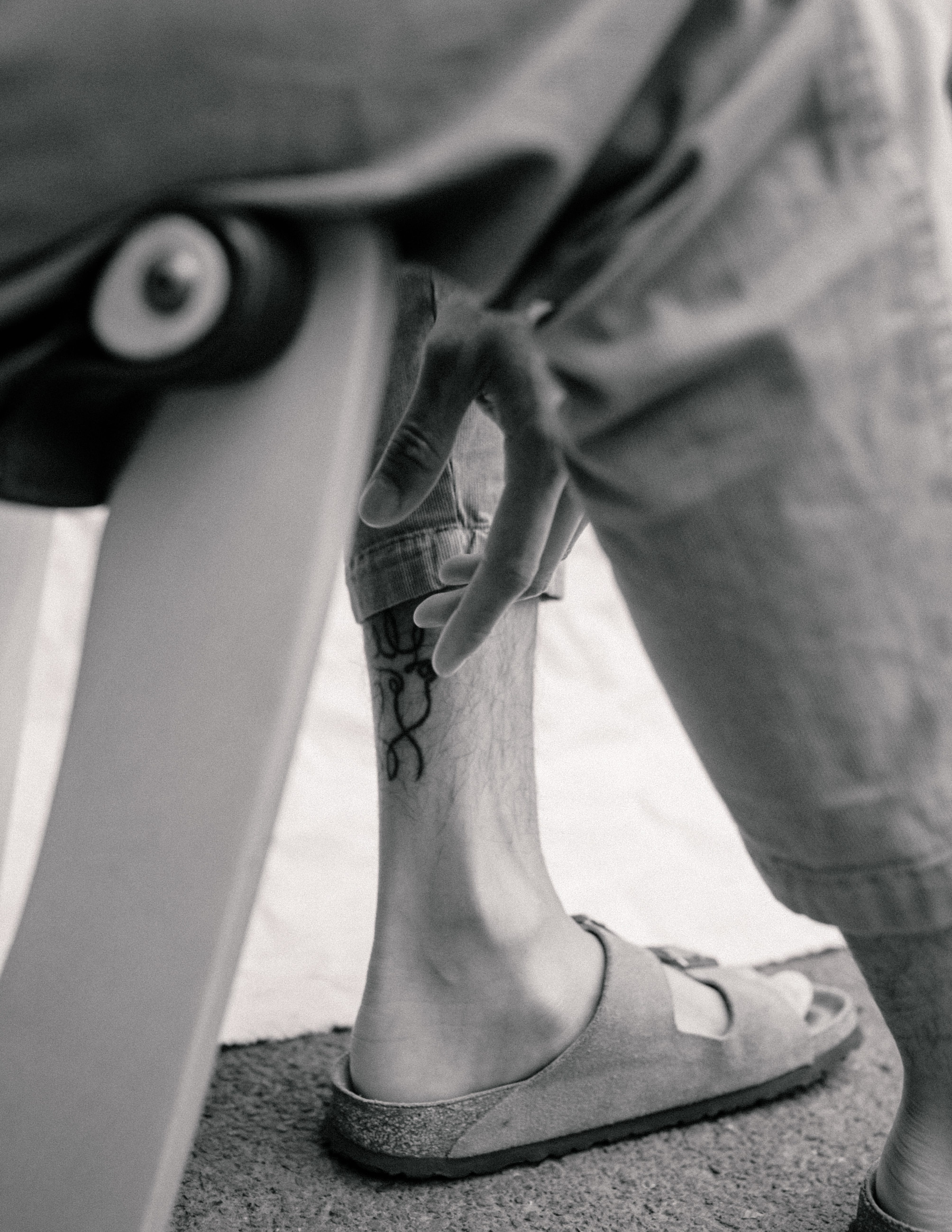
In college, we found ways to wrap this message into the drawings, models, prints, sculptures, photos, videos, and more. We spent hours creating, and when we finished, I would give you the credit. For the first time, I was finally being understood by others.
In my career, we layered stories into brands and the interfaces I designed. I obsessed over clarity and meaning, and I treated every project like a small piece of truth. You made me a designer with a poet’s heart.
In everything, you pushed me to make something of what I believed. To mean it. To write it all down, even if no one ever read it. To keep creating, not to prove anything, but because that’s what it meant to be me.
I knew how to finally fit into this world and take my own path. I thought I finally became smart enough to do what I couldn’t do growing up. You made me a better son, a better friend, a better partner.
Then I left you behind.
Text within this block will maintain its original spacing when published
We separated.
Lion
                    and
                                     Moose.
It made more sense this way.
I’m in my thirties now, around the same age my parents were when I met you. And lately, life has felt as lonely as it did back then.
What would you have done?
It’s not a good excuse for me to say that the reality of the world had taken priority. Work. Meetings. Deadlines. Money. Taxes. Dishes in the sink. Taking out the trash. Visiting the parents. Full calendars. Less time. More structure.
The rhythm of the life I made has left little room for you, and I let our relationship quietly fade into the background.
What do you remember?
I started caring about doing what others were doing, and I wanted to do things right.
I have been surviving instead of living. Reasoning instead of loving. Working instead of playing. Designing instead of making. Doing instead of experiencing. Saving instead of investing. Performing instead of pretending. Judging instead of understanding. Talking instead of speaking.
I forgot my voice. I forgot about you.
Did you forget about me?
I forgot that you give me the motivation to make. You give me the courage to continue existing in this world. You are the reason for learning. For navigating conflicts. For communicating in new ways. For turning my feelings into forms.
You showed up in the shape of a lie, with a poem that wasn’t mine. Yet, somehow, you were my truth.
And this whole time together, I never called you by your real name. The name that knew me before I knew myself. The nickname my family gave me.
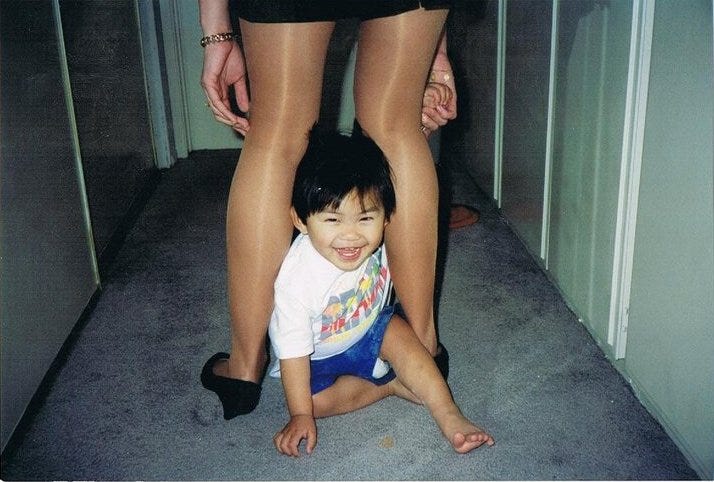
Pipo.
I’m sorry.
Do you forgive me?
-Pips
No posts
Comments
Nothing yet. Say the first thing.
Sign in to join the conversation.