
Most companies that reported last week grew revenue, but their stocks fell anyway. The S&P 500 lost 0.6% and the Nasdaq 2.1% in a week where nearly every report confirmed that demand for AI computing is real.
Building AI capacity means paying for chips, data centers, memory, and power years before the revenue arrives, and the market spent the week sorting companies by who covers that gap: the company’s own cash, its customers’ cash, or borrowed money.
This piece covers the equities portion from this week’s Pulse.
SPY, which weights the S&P 500 by company size so a handful of giant tech names dominate it, finished up 0.1%. RSP, which holds the same 500 stocks but counts each one equally, rose 0.8%. QQQ, the tech-heavy Nasdaq 100, fell 1.1%, and SOXX, a basket of chipmakers, fell 4.3%. The broader market was bought on Friday with selling targeted specifically at large-cap AI names.
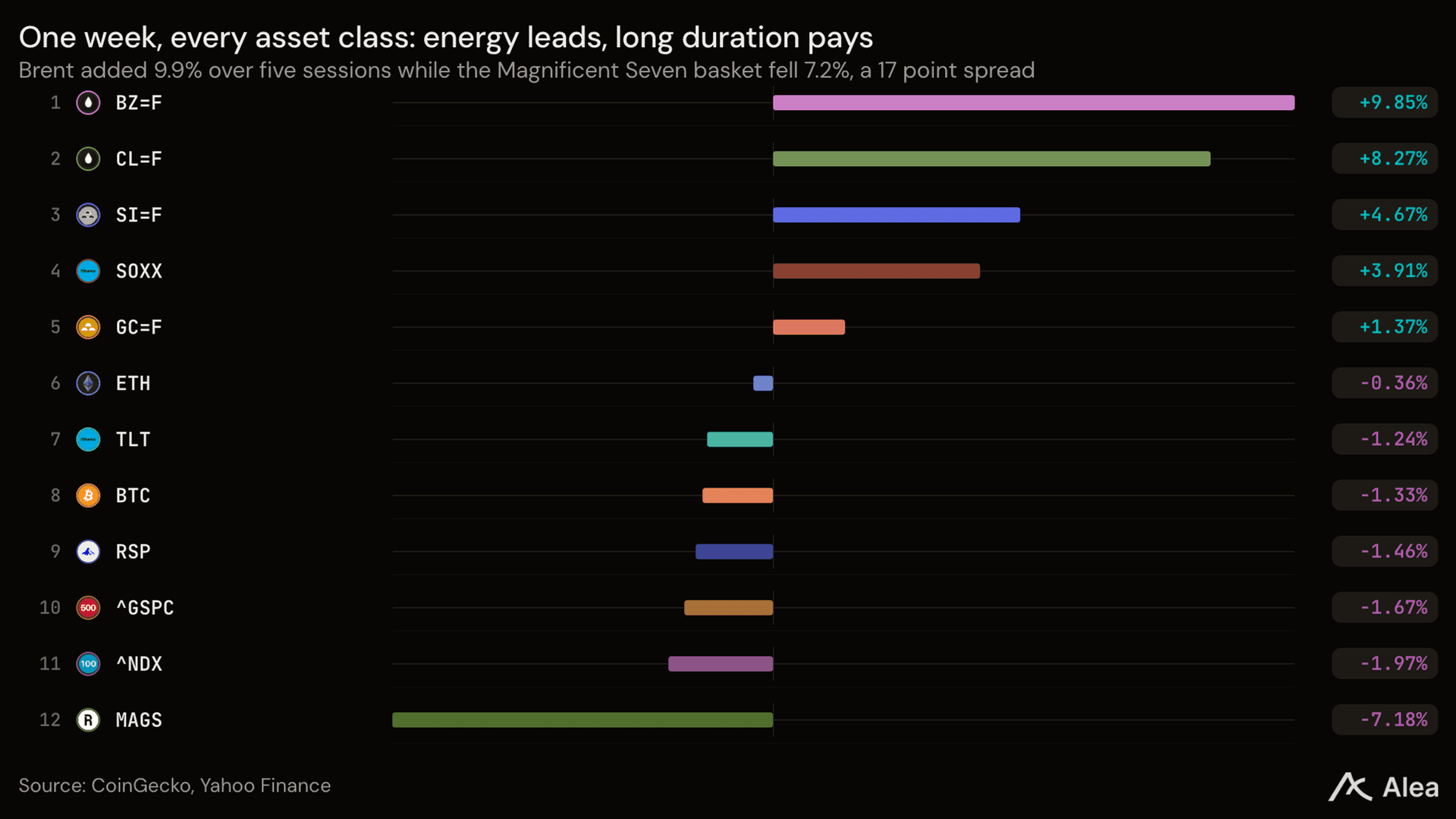
Those stocks fall hardest when rates look stickier because their prices are dependent on profits expected years from now. When rates rise, the boring alternative of holding a bond pays more for waiting, so every future profit gets marked down against that richer alternative. Investors were not exiting the market; if they were, the equal-weighted basket would have fallen too.
A business generates cash from operations. It also spends cash on capex, the chips, buildings, and grid connections of the buildout. When capex exceeds operating cash flow, the difference has to come from somewhere, either new debt, new shares, or the company’s reserves.
All 3 got more expensive last week. Debt costs the interest rate directly. Equity costs more when rates knock the share price down, because the company must sell more shares to raise the same cash. Spending reserves means giving up the interest those reserves now earn, which rises with rates.
Rates faced upward pressure from two main drivers. First, attacks disrupting oil tanker traffic through critical shipping chokepoints pushed Brent crude above $100/barrel, raising baseline inflation expectations. Second, import prices were up 7.1% year-over-year, driven by cost increases in computers, semiconductors, and industrial machinery. This is the exact hardware driving the AI infrastructure expansion. These pressures limit the Federal Reserve's room to ease monetary policy, with interest rate futures pricing in a 75% probability of a hold and a 25% chance of a rate hike.
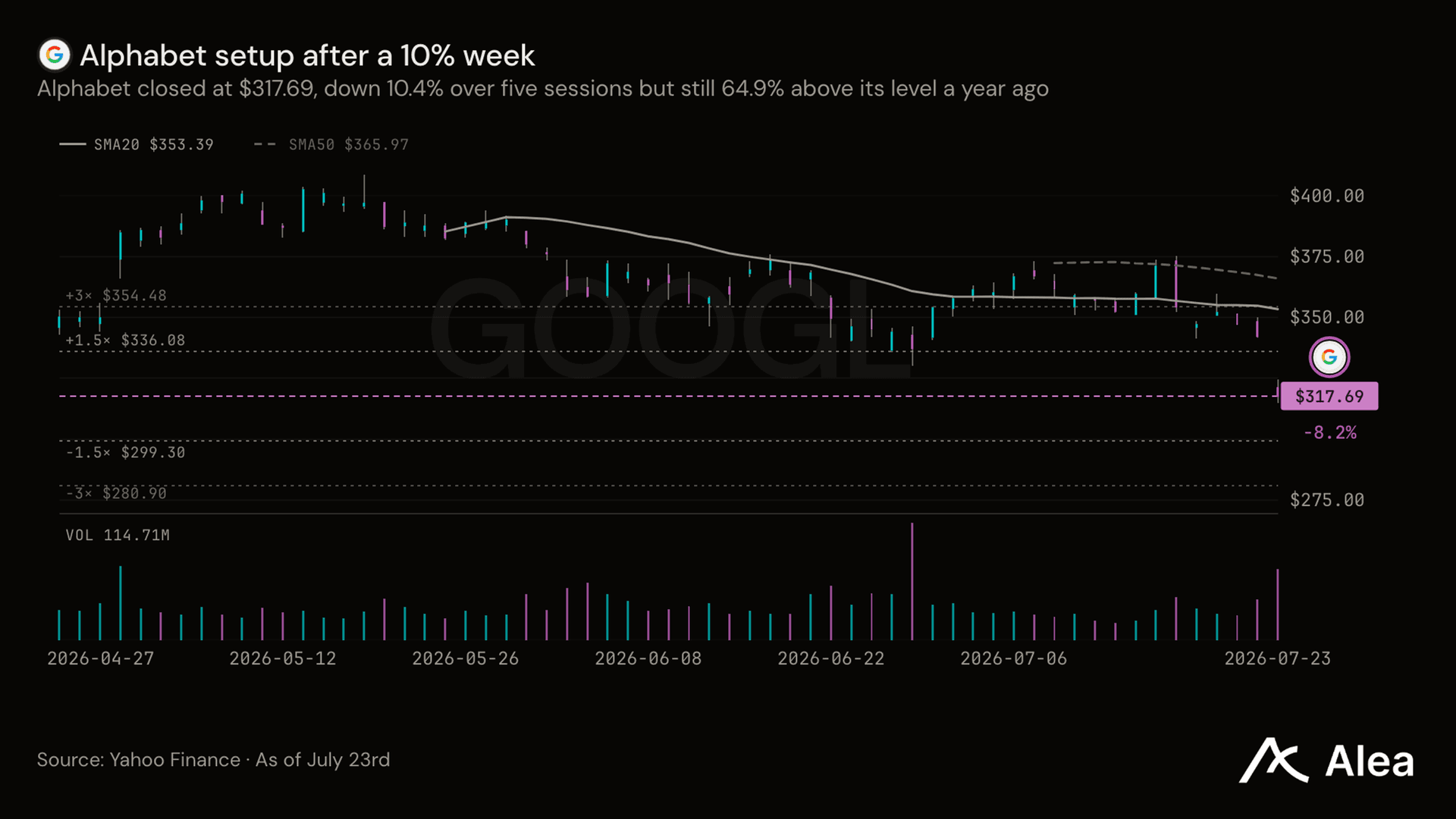
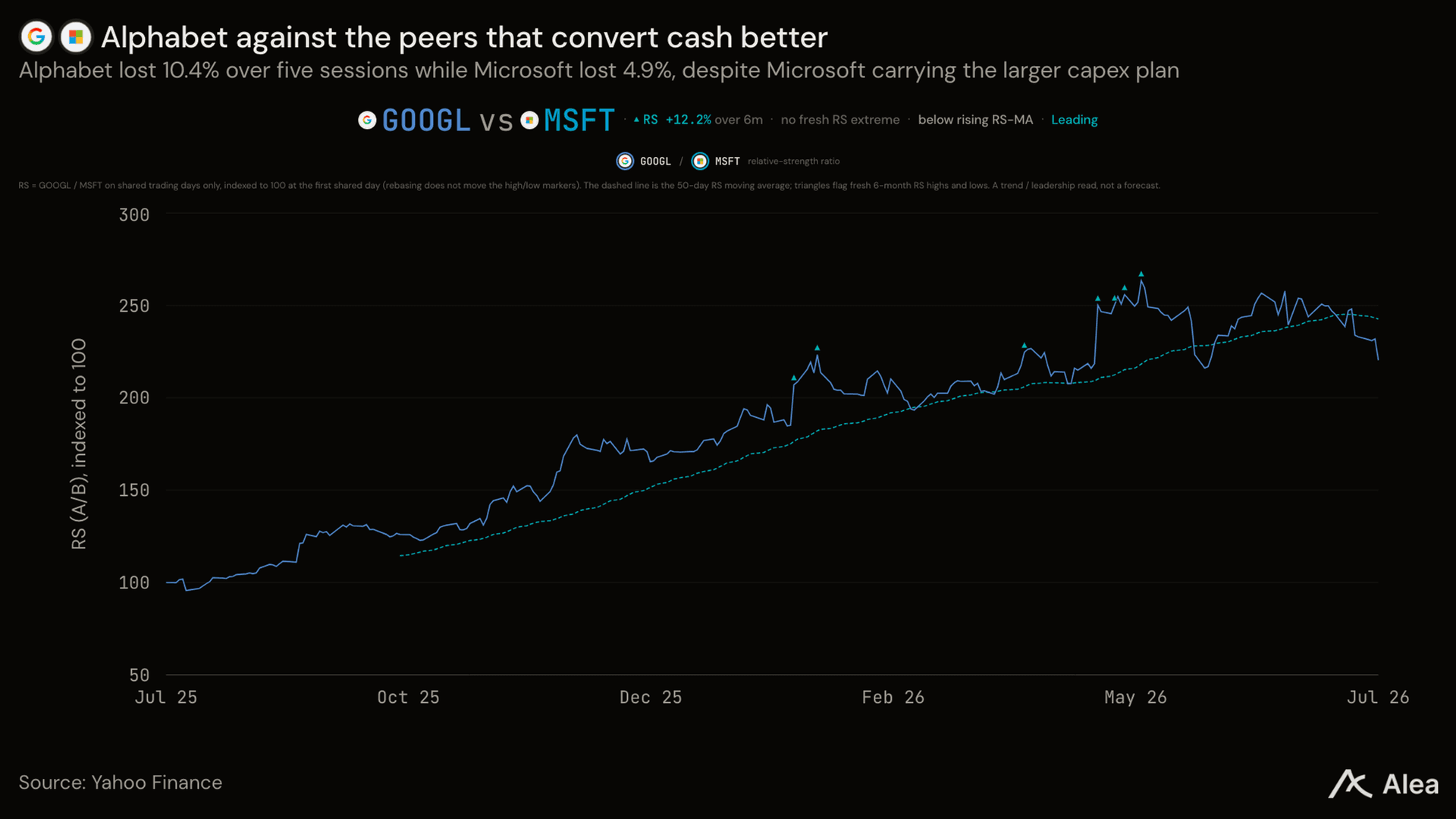
Alphabet’s quarter was strong everywhere it operates: Cloud revenue grew 82% to $24.8B, Cloud margin widened from 20.7% to 35.6%, and Search still grew 17%. The stock fell 7.2% on the report anyway, because Alphabet spent $44.9B on capex against $39.1B of operating cash flow, a $5.9B shortfall in one quarter, and then told investors to expect $195–205B of capex in 2026. Nobody disputed the demand, so the selloff repriced how the spending gets funded.
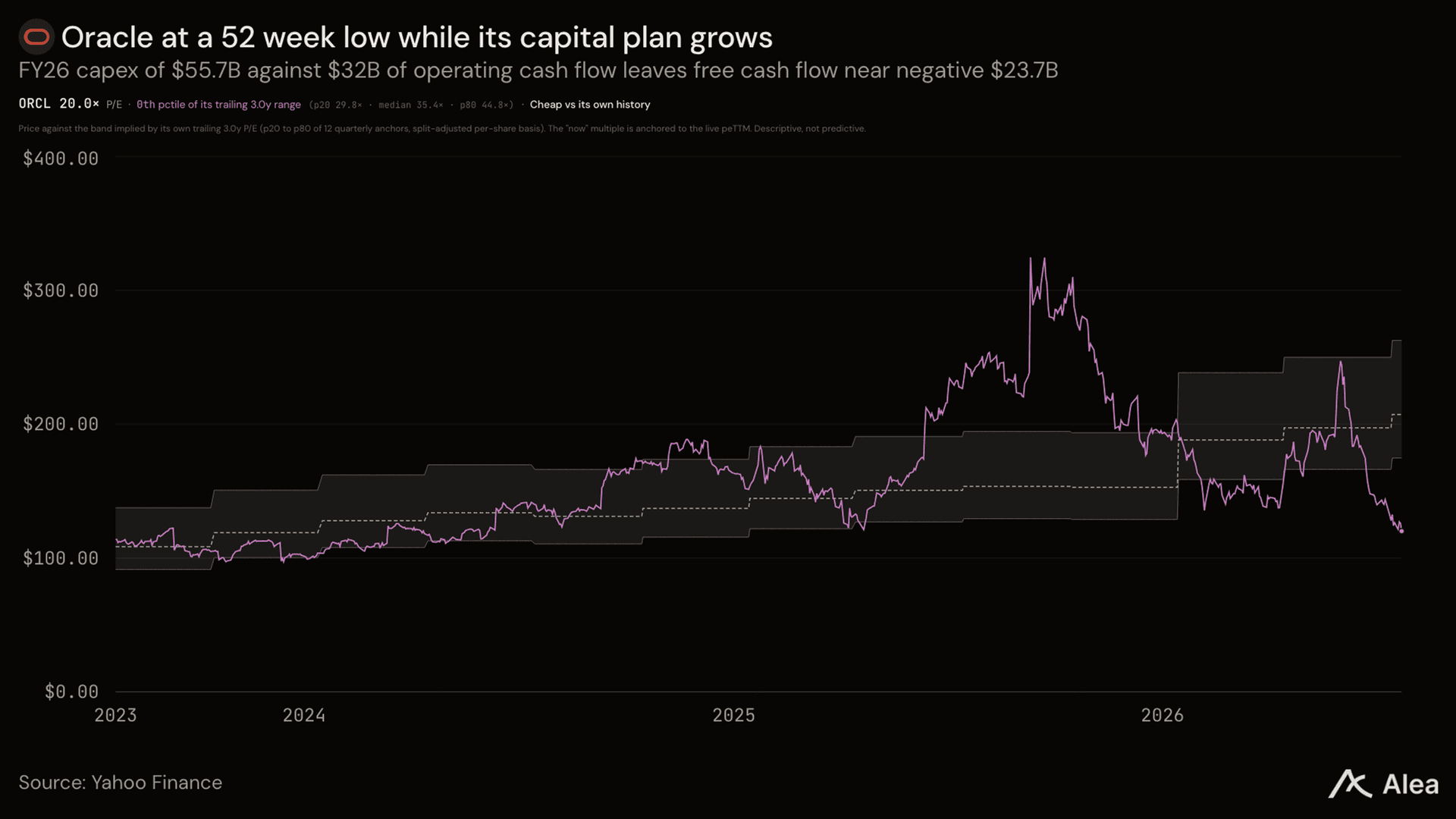
Oracle reported an annual funding deficit with $55.7B in capex against $32.0B in operating cash flow ($23.7B shortfall), with financing plans calling for roughly $40B in combined debt and equity issuance. Despite securing a Pentagon contract valued up to $7B, the stock touched 52-week lows due to the front-loaded capital required to construct data centers before revenue arrives.
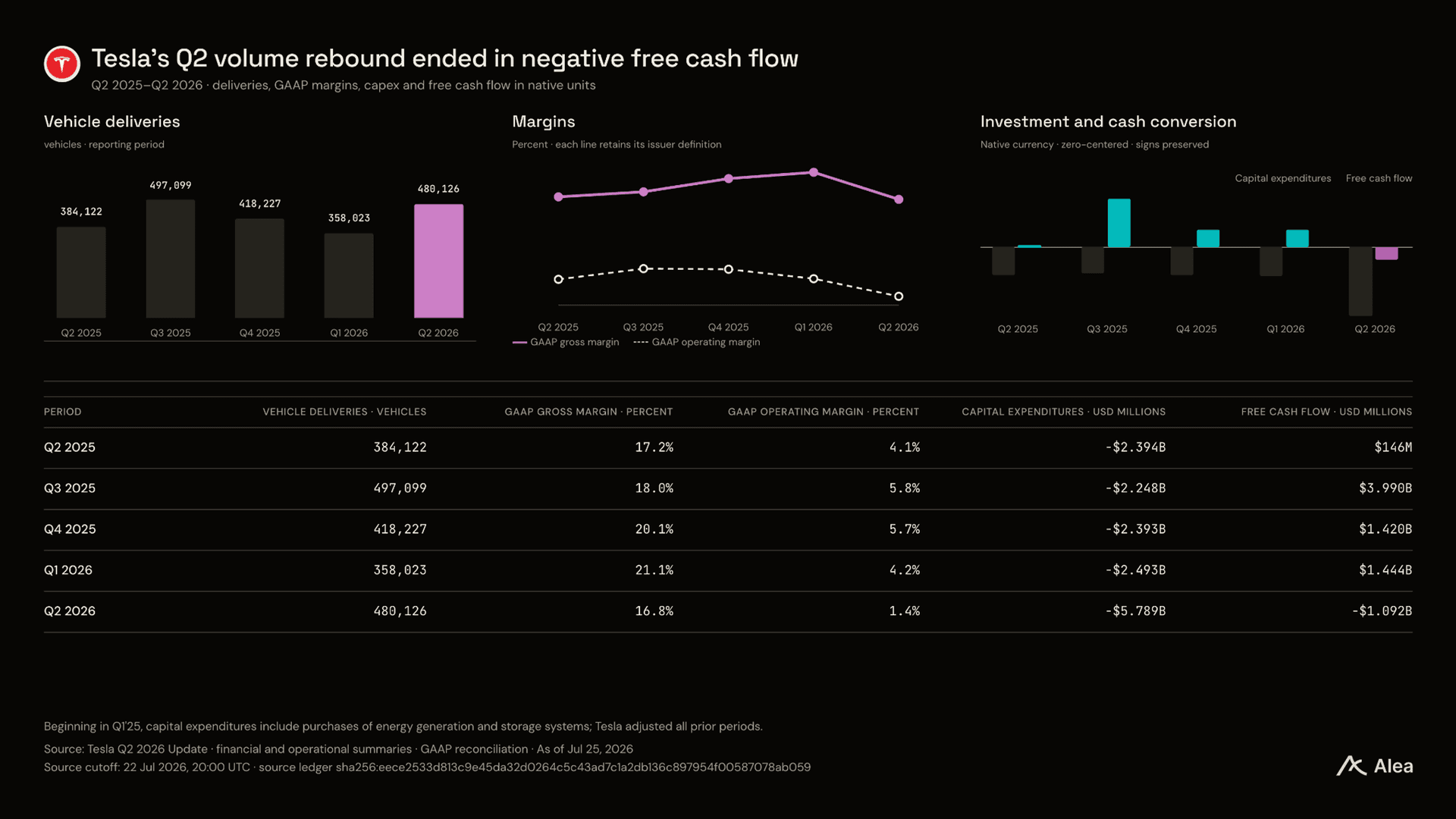
Tesla delivered a record 480,126 vehicles, but operating margins compressed to 1.4%. Operating cash generation was insufficient to cover $5.8B in quarterly buildout expenses, resulting in negative free cash flow of $1.1B.
Companies that held value had customers or counterparties who absorbed a portion of their buildout costs through contractual commitments. First, a customer deposit is cash handed over now for supply later, which finances the factory with the buyer’s money directly. Second, take-or-pay agreements oblige the customer to pay an agreed minimum whether or not they take delivery, which turns future demand into a legal claim a lender will finance against. Lastly, a backlog, which is a stack of signed orders not yet delivered, funds nothing by itself, but it removes the demand risk that makes lenders charge more.
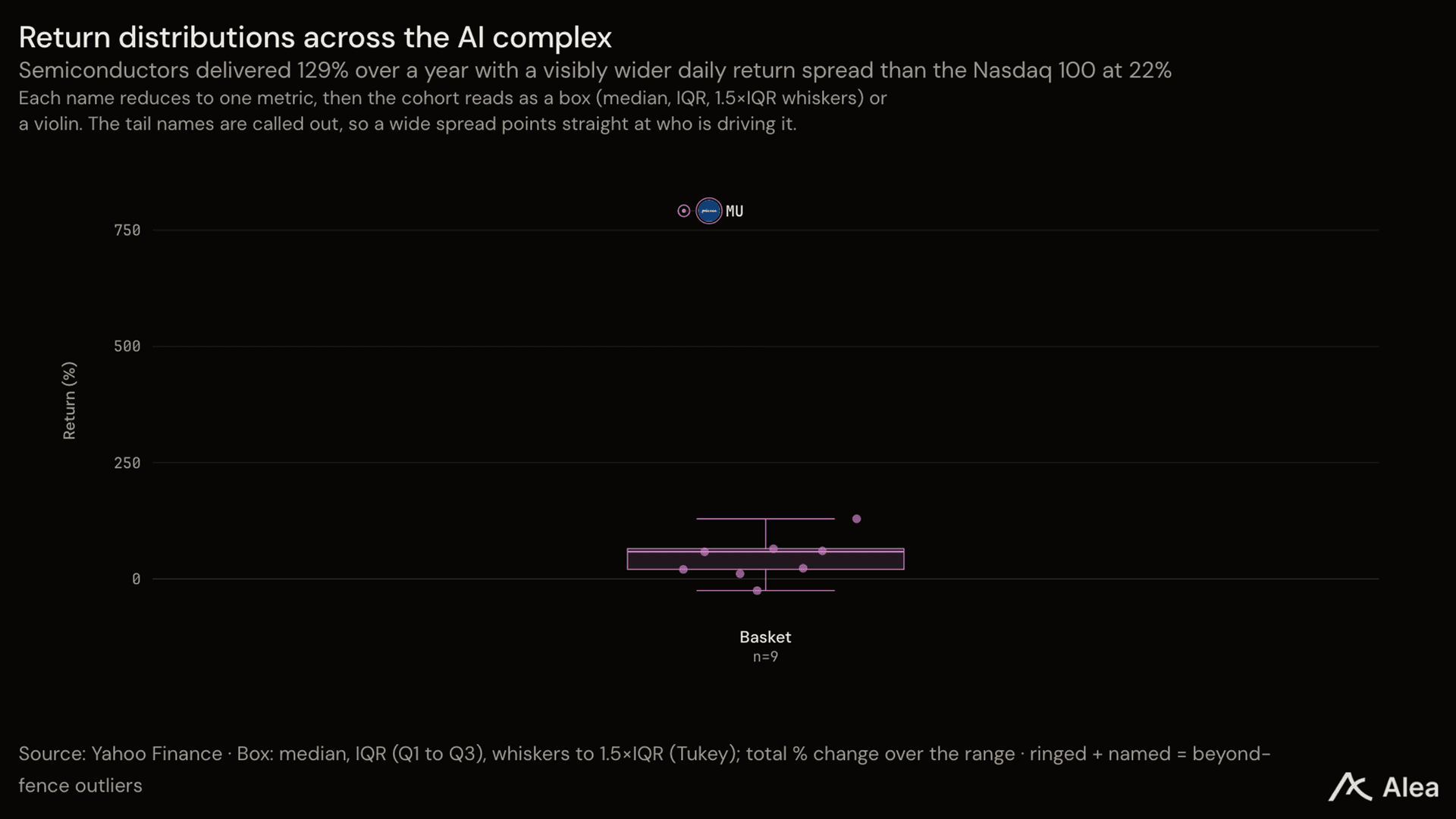
Micron has 16 multi-year take-or-pay agreements covering about a fifth of its DRAM output through 2030, roughly $100B in contractual minimum revenue, and $22B of customer deposits. Its customers are paying to build its factories.
GE Vernova, which sells the turbines and grid equipment that turn power demand into electricity, booked $24.2B of orders in a quarter it delivered $11.1B of revenue, and its $176B backlog equals about four years of work already sold.
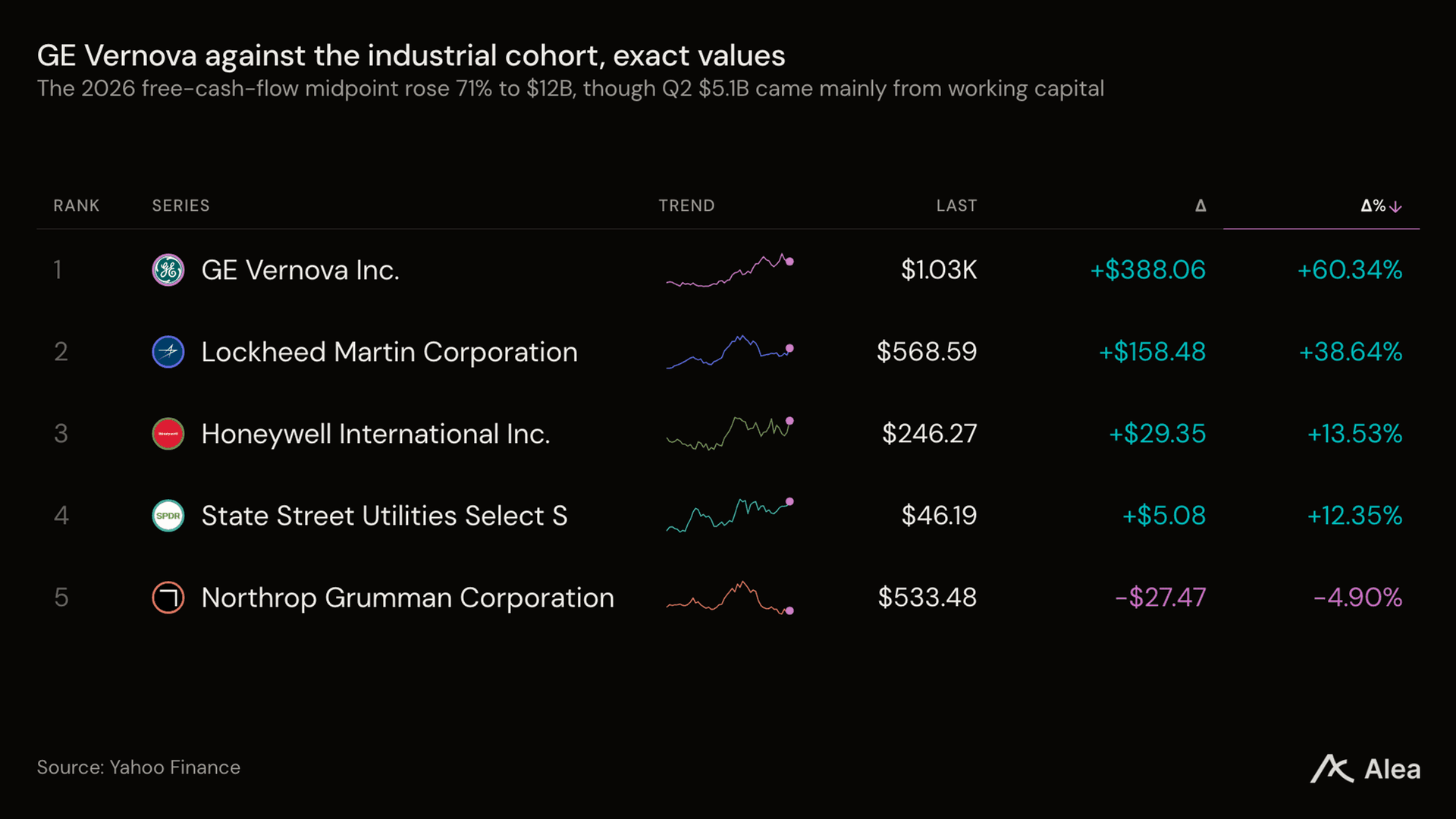
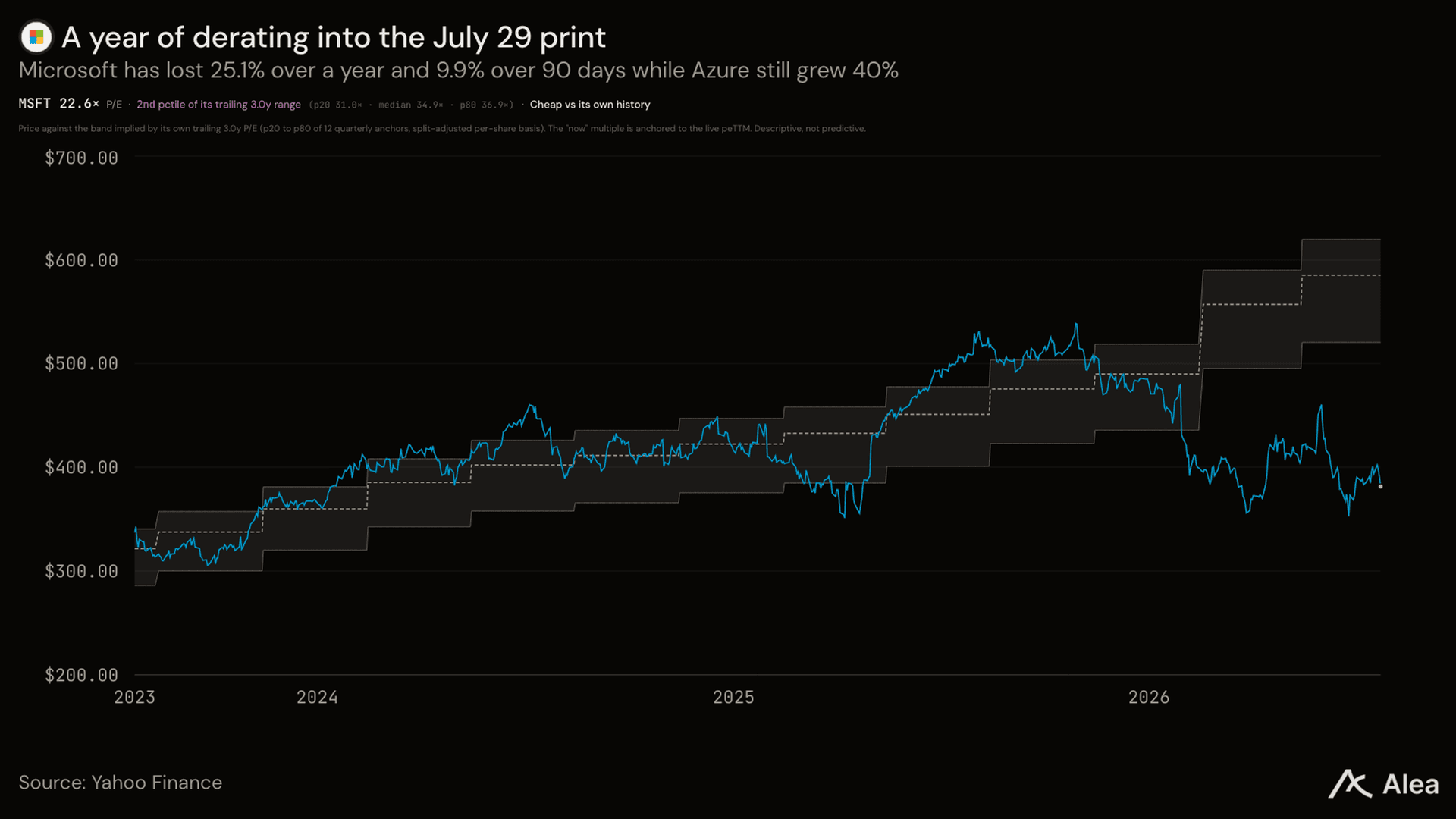
Lockheed’s backlog reached $230B, around 2.9 years of revenue. Microsoft is the self-funded version of the same escape: it spent $31.9B on capex, about 68% of its $46.7B operating cash flow, and still had $15.8B of cash left after the buildout. It runs the same buildout as Alphabet without needing outside money.
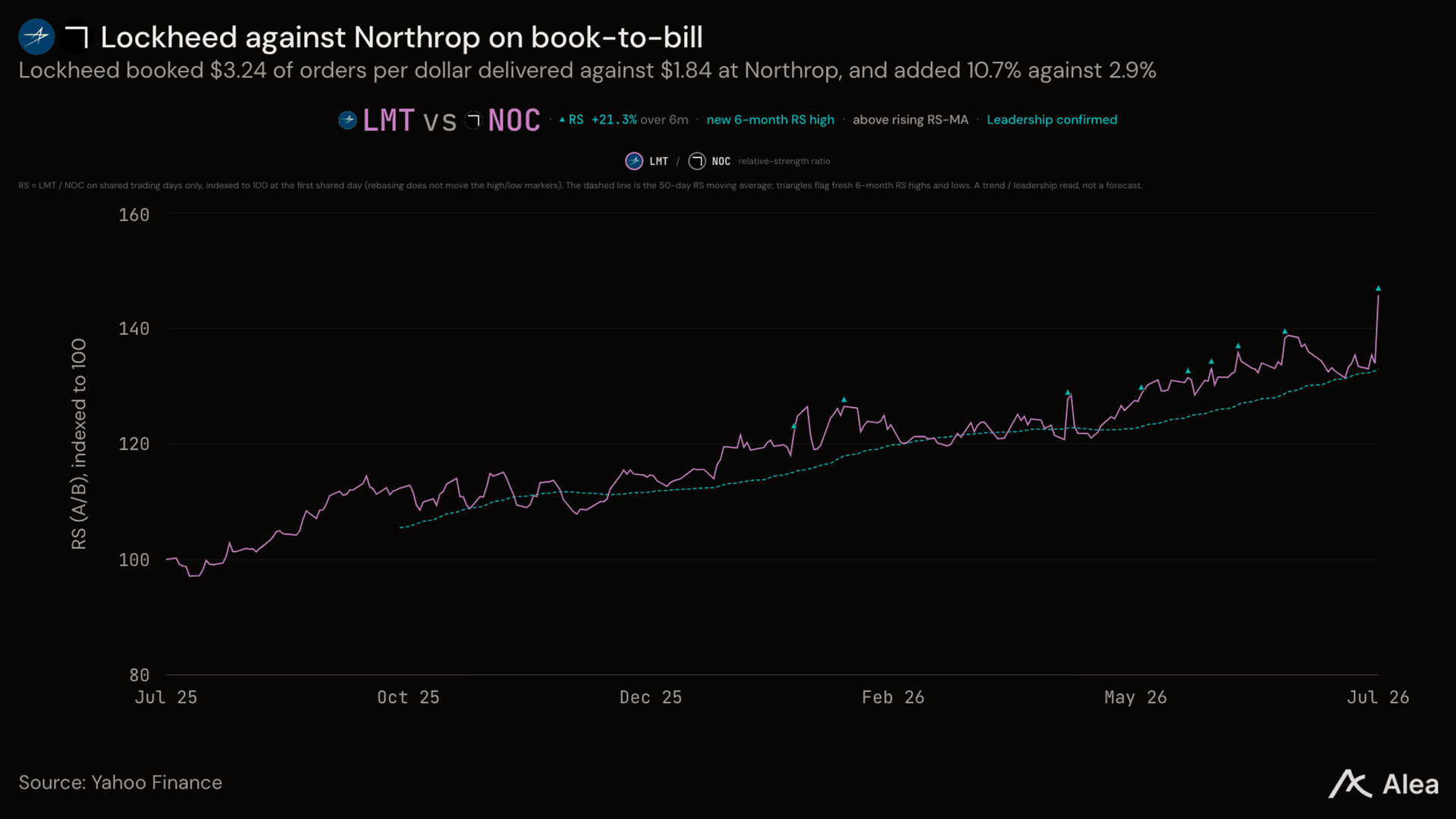
There are 2 caveats. Pre-sold revenue is not pre-sold profit. Northrop booked $1.84 of new orders for every $1 delivered, and its margin still slipped from 11.8% to 10.6%, because orders can arrive faster than a company can deliver them profitably. And the diversification across these names is thinner than the ticker list suggests: much of the incremental order growth in memory, chips, and power equipment traces back to the same few data-center budgets. That is why Micron, contracts and all, still fell 6.9% on Friday. Owning the memory maker, the chip basket, and the turbine maker adds tickers faster than it adds diversification.
Microsoft reports earnings on July 29 and stays in the self-funded bucket only if Azure grows near 40% and operating income again grows faster than revenue while capex climbs past $40B a quarter. The Fed also announces its rate decision on July 29, so expect volatility.
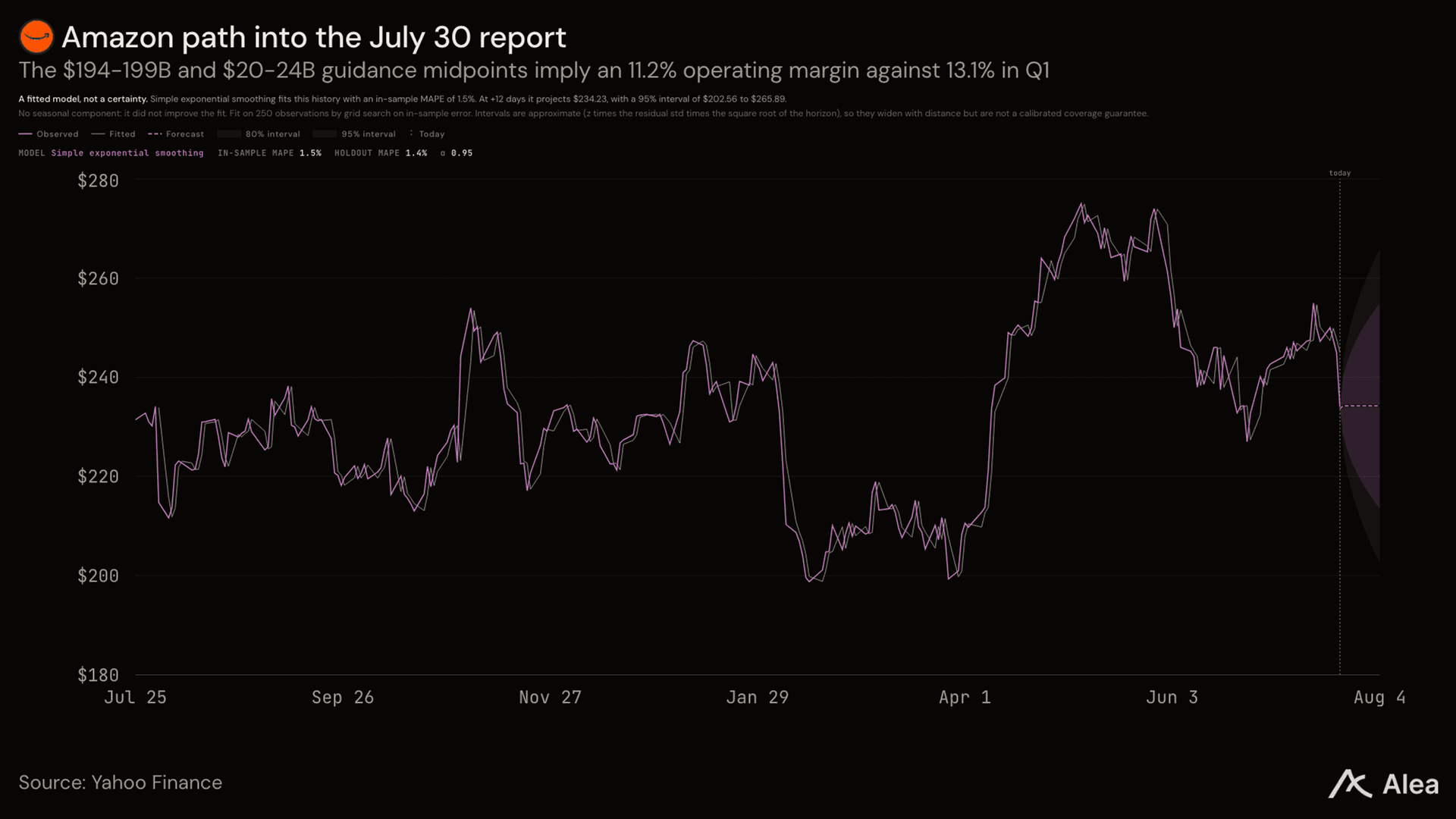
Amazon reports earnings on July 30 with trailing free cash flow already down to $1.2B from $25.9B a year ago. Its own guidance implies an 11.2% operating margin against 13.1% last quarter, and a print with operating income above $22B would show the cloud business refilling cash faster than the buildout drains it.
This piece is the equities section of this week's Pulse, which we’ve made free. The full report runs the same read across 25+ names, the two shipping chokepoints behind the oil move, token-level crypto coverage, and prediction-market odds into the FOMC: read the full Pulse here.

Become a Premium member and get the full Alea platform.
Join thousands of sharp crypto investors & traders using Alea to evaluate opportunities and deploy with conviction. For just $149/month, Premium unlocks:
Full report suite: Deep Dives, Perspectives, Blueprints, Theses, Benchmarks, Memos & Pulse.
Protocol Data Rooms: Standardized due diligence portals with live analytics, risk matrices, and governance tracking across 24+ protocols.
Podcast Digest & Summit Digest: Key takeaways from the conversations shaping markets, so you don’t have to listen to every pod.
Governance Tracker: Live proposal feeds and voting activity across major protocols.
Full access to the historical research archive.
Comments
Nothing yet. Say the first thing.
Sign in to join the conversation.