
The other day I posted what I thought was a pretty ho-hum box and was pretty surprised by the response.
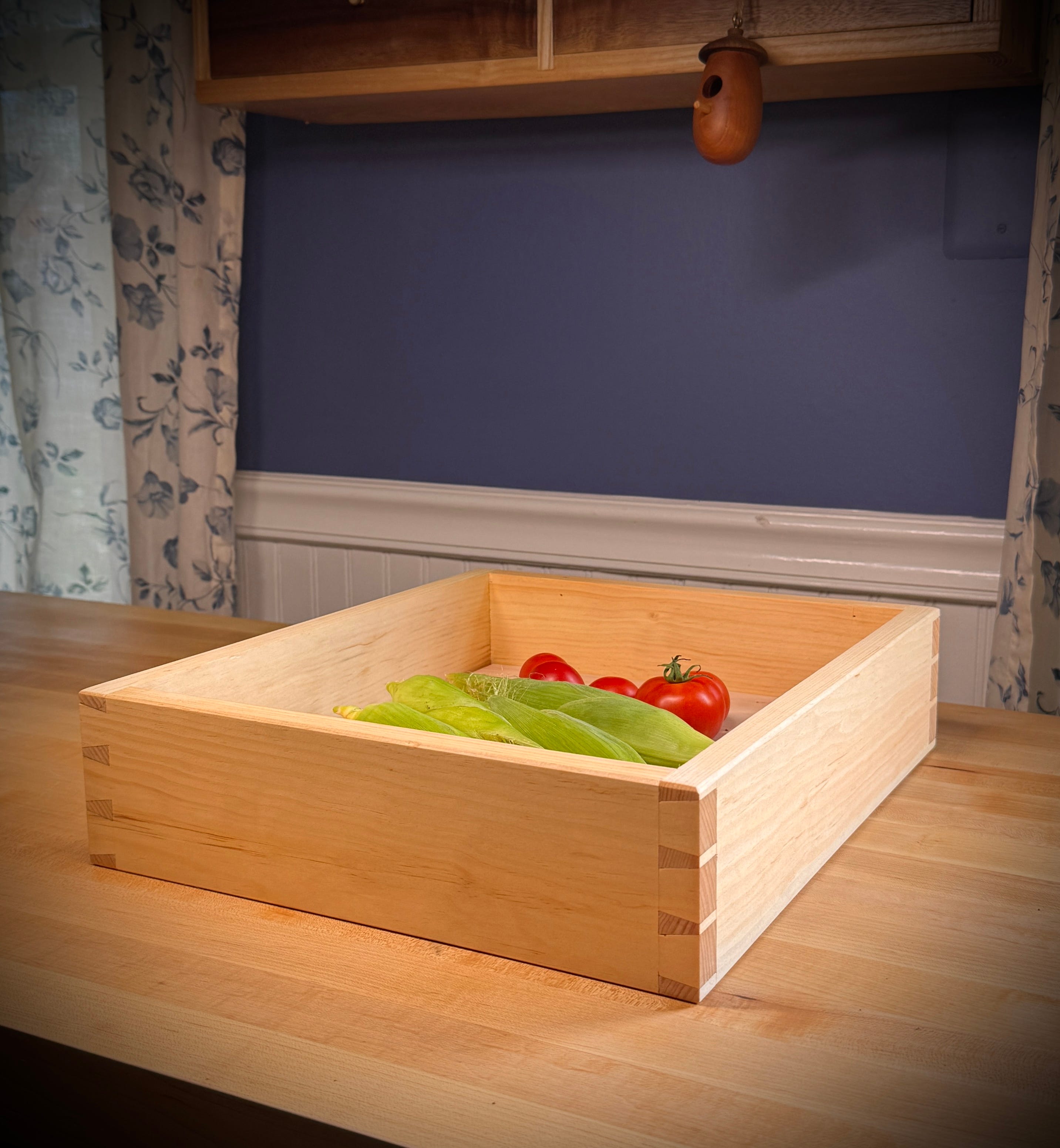
Last Friday evening I was in my shop playing drums along to Michael McDonald’s classic 1982 album “If That’s What it Takes” when my wife walked in. Over the last decade, she’s been slowly converting any usable land on our property into garden space. At this time of year, there’s a daily crop of tomatoes, cucumbers and the like that tend to clutter up the kitchen counter.
She wanted things to be a bit tidier, so she asked if I had a spare box she could use. I don’t really keep any of my work, but I also have an abundance of mostly-finished demonstration pieces that I can’t bring myself to toss. Luckily, one of them was the frame for a dovetailed box that had just the right dimensions.
I glued it up, sanded it all pretty, slapped some oil on it, and handed it over to my wife.
Again, I didn’t think much of it— the use case is pretty mundane, the box itself is mundane, and I had cut all the joinery months ago. But I always like to throw up a picture of my work if only so I have a record of having made it.
The response I got was pretty unexpected. More than a few folks commented on the “beautiful simplicity” of it, and how when basic things are executed well, they can be quite elegant.
I definitely agree with those sentiments, although I don’t particularly feel them about this box. It’s boring and mundane and I’m sticking by that. But I think I know why folks are drawn to it, and it’s something I should expand on.
In most of my writing, I shy away from talking about design. This isn’t because I don’t think I’m a good designer or that I’m incapable of it. I’m quite wary of saying anything good about myself, but I do think I have a pretty decent design sense and I think it’s evident in my work.
The reason I avoid it, though, is because I find it so personal. Design preferences are things that folks develop over time based on lived experiences. Since I really do believe this, it’s a bit hard for me to think I should speak about design from any position of authority.
The same just isn’t true for technique and all the other stuff I write about. With those I’m just telling you how to execute things— how they ultimately look is entirely up to you. There’s more of a cause and effect there, and because of my experience I feel comfortable speaking on it.
But design is so much more important for good woodworking than technique. I remember years ago hearing seasoned woodworkers say this and I would get incredibly frustrated. Why the hell was I spending so much time learning how to cut a perfect dovetail if the masters were just going to tell me the joint itself doesn’t really matter?
I know better now. It’s not that the joint doesn’t matter. It’s just that it’s one part of a piece, and because of that, it has to be carefully considered in that context.
Returning to the box, I think what makes it so attractive is not the dovetails themselves and how they are largely gapless. It’s really in how they look, how they are spaced, how wide the tails are relative to their thickness, their slope, etc. One can learn to cut absolutely flawless dovetails, but if they don’t have a firm grasp on how to get them to look good within the context of a piece, who cares?
So what makes those particular dovetails attractive? Again, this is a discussion of design, so everything I’m saying here is just my personal preference.
First off, consider the number of tails. On a board this narrow (about 3 1/2” wide), folks are often tempted to just put two or even (gasp!) one dovetail. That’s something I really try to avoid— two dovetails just looks unfinished and rushed to me. I’ve made plenty of pieces with components that only have two dovetails, and every single time I wish I had squeezed in some more. Three is now my minimum.
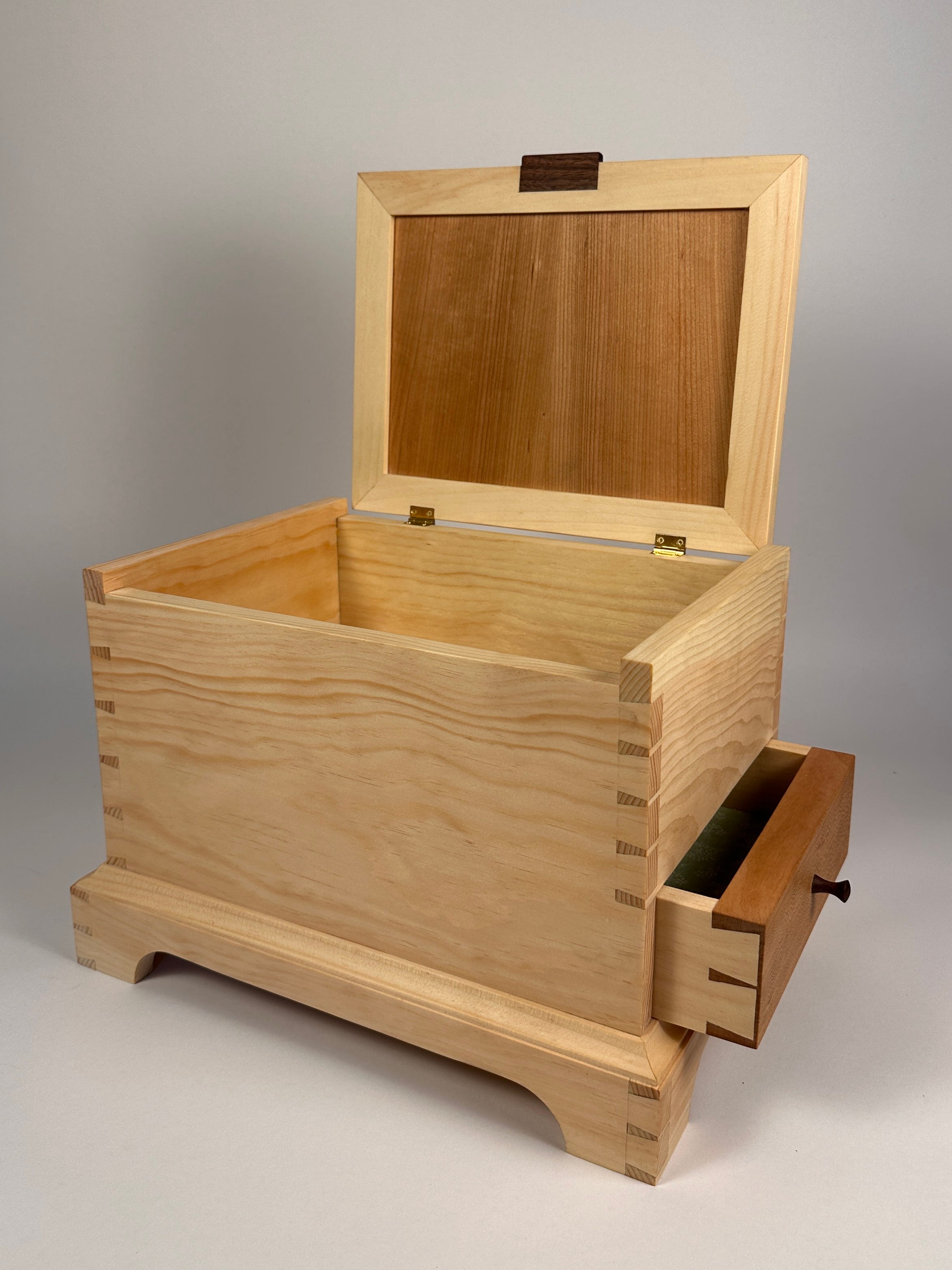
When it comes time to space the tails, I’m generally trying to make my tails fat and my pins narrow. To me, this is just The Way a Dovetail Joint Should Look. Pins that approach the same width as the tails will always make a joint look machine cut, and pins that are wider than tails make my eyes hurt.
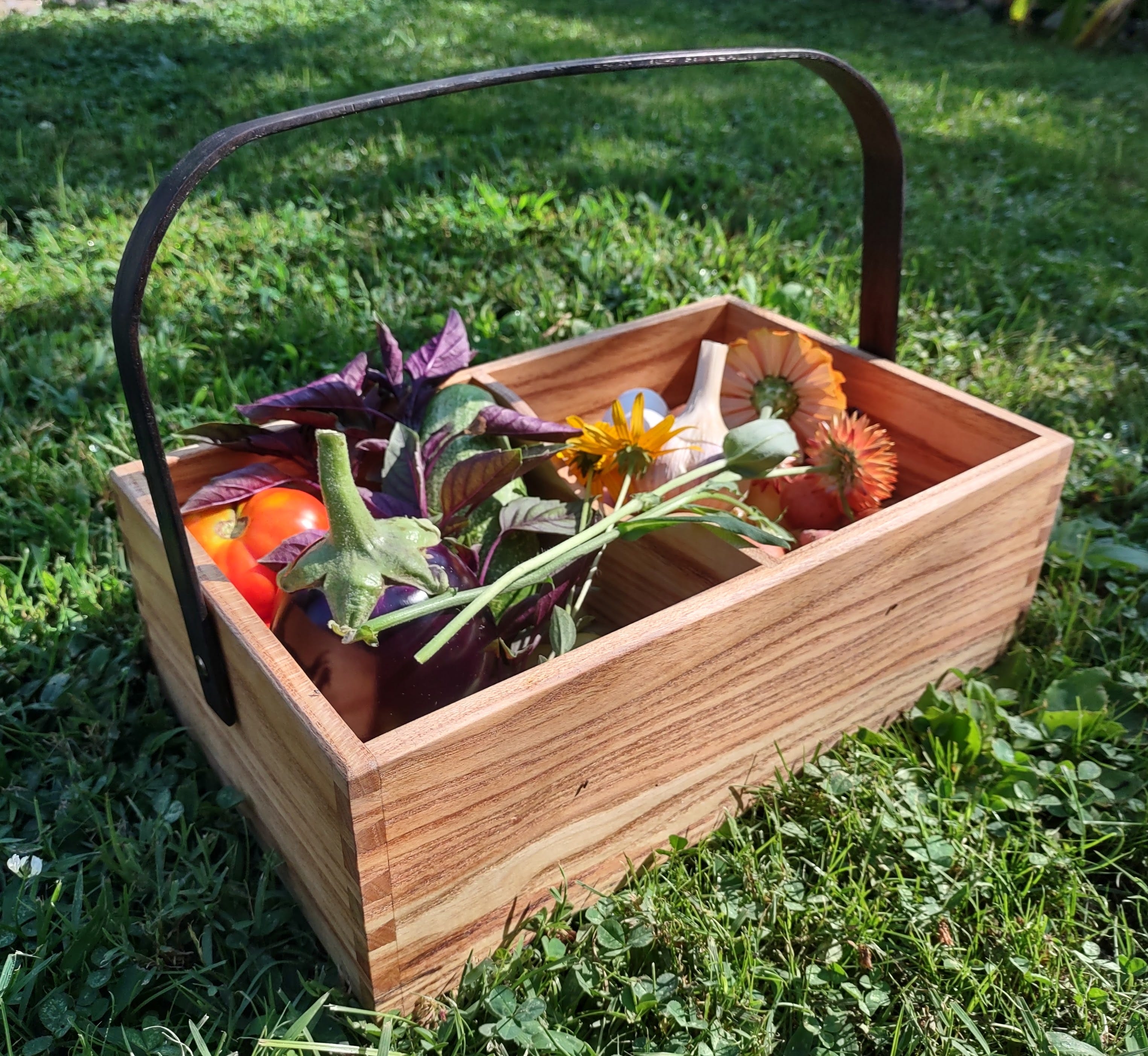
How wide the tails and narrow the pins are is a moving target. Some of it depends on how long the tails will be. Longer tails will have wider distances between them at the baseline due to the slope, so on these I make the spacing at the top very tight. When the tails are shorter, I’ll ease up and space things out more.
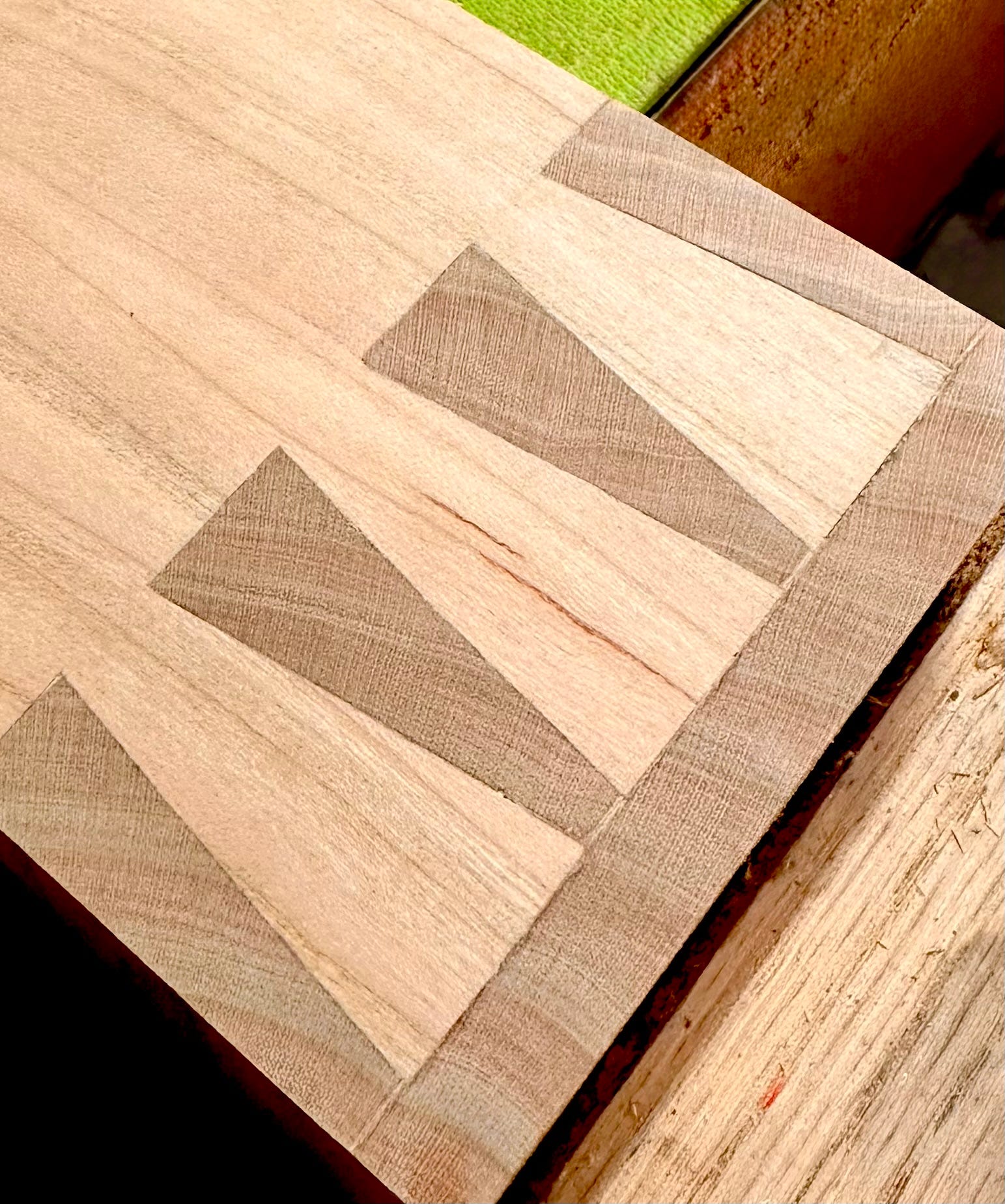
If you’re curious how I space my dovetails in practice (and make sure they are all equally sized), check out my book on box-making.
I’m certainly not saying that my dovetail design rules are the be-all end-all or that folks should even follow them. This is just a friendly reminder to not lose the forest for the trees and really think about why you’re cutting a joint to begin with.
There is nothing inherently good or magical about a dovetail joint. It’s a joint just like many others in woodworking. A single option of many. A piece could have thousands of dovetails all over it, but if they’re not arranged in a way that’s visually pleasing, not a soul is going to care.
Instead, they’ll ooh and ahh over a demonstration piece that, while hastily put together, followed some basic design principles.
No posts
Comments
Nothing yet. Say the first thing.
Sign in to join the conversation.