
In 1981, two kids got sick in the same Portland, Oregon arcade on the same day. Then, just ten days later, state, local, and federal agents raided arcades throughout the region. All this happened after people noticed men in black suits taking pictures of players’ initials on the high-score screens of Portland arcade games and poking around the backs of game consoles. In the next half-decade, all around the country, there were at least nine reported cases of players having epileptic seizures that were triggered by video games, and, famously, one kid dropped dead of a heart attack while playing Berzerk.
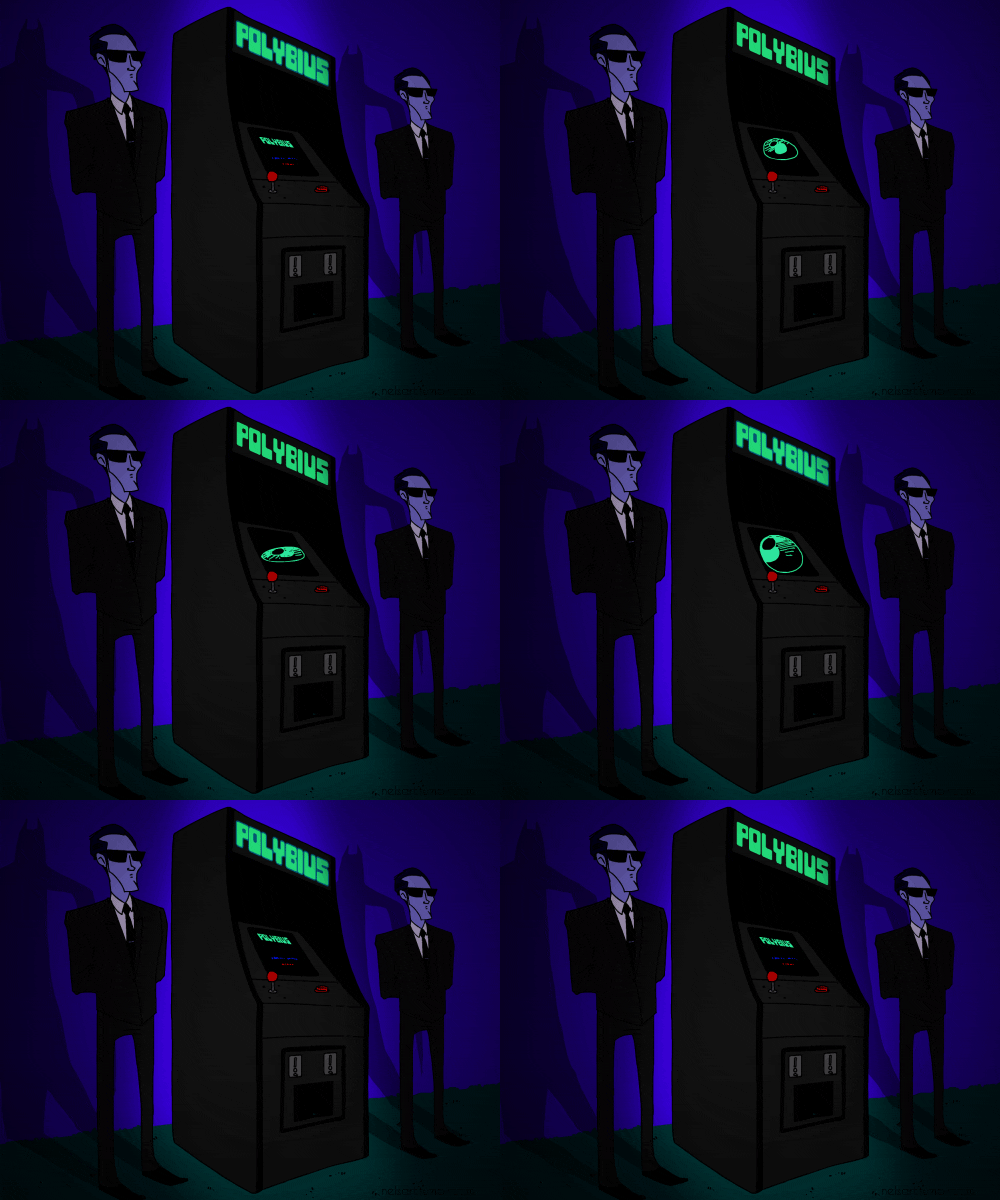
Soon the legends of these events solidified around a single explanation: A hard-to-find, abstract video game called Polybius was causing nausea, headaches and nightmares in players. The game was so addictive, rumor had it, that kids kept coming back to play Polybius until they went insane, committed suicide, or outright vanished. Those men in black suits? They were CIA agents, who had placed the dangerous video game in Portland arcades to test the effects of psychoactive stimuli on live subjects—which was why men in black had been collecting data from the machines all month long.
And the reason no one could find Polybius in arcades in Portland or anywhere else when they went looking for them now? That was obvious: when word got out about the top secret video game and its deadly effects on players, the men in black yanked them from arcades so their secret experiment wouldn’t be discovered.
Polybius remained nothing but an urban legend until GamePro magazine wrote an article about it. Their main source was a website called coinop.org, who even claimed to have an image of the arcade game’s home screen:

At last, some evidence! And a new clue: “Sinneslöschen” was the name of the software company that supposedly made it. But Sinneslöschen didn’t exist, in the United States or anywhere else. And translated from German, it roughly meant, “Sense delete”—aka sensory deprivation. Exactly what the men in black had been using Polybius to do!
So, was a secret, CIA-sponsored, psycho-addictive video game called Polybius really killing kids in Portland, Oregon and elsewhere in the early 1980s?
In a word, no.
It turns out there were pretty ordinary—though still interesting—explanations for every part of the story. First, two Portland kids really had gotten sick in the same arcade on the same day in 1981. The first one was 12-year-old Brian Mauro, who was trying to beat the Asteroids high score record of 30.1 million points in a single game. He was so serious about it that he had a chair with back support brought into the arcade, and wore gloves to keep his fingers from blistering. He even had a local news crew there to film the attempt.

Brian played for a whole day, accumulating enough extra spaceships that he could “let a few fall to hurtling asteroids and attacking enemy ships while he rested,” reported the Eugene Register-Guard in a short, entertaining write-up. The arcade’s owners massaged his hands when they cramped, and Brian heroically played some of the time one-handed. It was also Thanksgiving, and his mom, Anne, brought his Thanksgiving dinner to the arcade. (!)
Twenty-eight hours into his marathon attempt, Brian Mauro left the game feeling sick to his stomach and never came back. But it wasn’t because of a CIA psychotropic experiment. “He said he thought he drank too many Cokes,” a spokesperson for the arcade told the paper.
The other kid, Michael Lopez, coincidentally got a terrible headache while playing Tempest on the same day, at the same arcade, and later collapsed in a friend’s front lawn. It turned out he was having the first of the many migraine headaches he would continue to have for the rest of his life. “It’s not the game’s fault that my basal ganglia have some faulty parts in their complex harness of neurological wiring,” he told Retrocade Magazine in 2012. “Blame that on genetics.”
Neither of them had played a secret CIA mind-control game called Polybius.
And the men in black who had been taking pictures of high score screens, and fiddling with the backs of arcade game consoles? Well, that actually happened, but it was the FBI, not the CIA. Some Portland-area arcade operators had been using their video games for illegal gambling by modifying them with counters, and paying out cash to players based on how many points they scored in their games.

Before their raids, FBI agents had quietly gone into every arcade in the city and poked around the backs of the machines looking for the counters. They had also taken pictures of the video games’ high score screens—to try and identify player witnesses they could interview.
The truth is, Polybius the video game wasn’t real. Whoever started the rumor was clearly having a little fun. But I think they built a bit of a lesson into the legend too. You see, Polybius is the name of a real Greek historian who lived from around 200-118 BCE. His Histories is notable for being the only Hellenistic historical work to survive from that era, and his analysis of Greek constitutional changes was a big influence on Enlightenment writers John Locke and Montesquieu, whose work in turn inspired the framers of the United States Constitution.

Where things get really interesting is the introduction to his Histories. There Polybius says he’s going to cover only the events that happened during his own life, because “accounts of the remote past amount to hearsay, and do not allow for safe judgments and assertions regarding the course of events.” Even eyewitnesses, he explains, can be contradictory. As a result, Polybius says, “the historian must examine the data, apply reason, and pass judgement.”
Sounds like the person who named the legendary video game “Polybius” was trying to tell us something.
(Or maybe they called it “Polybius” for the simple reason that the real Polybius was from a place in Greece called…Arcadia. Womp womp.)
It’s easy to see now why the myth of the mind-bending Polybius arcade game was so easy to believe. Photosensitive epilepsy affects 3% of people with epilepsy, so millions of kids playing video games in the early 80s meant that a few of them were bound to have seizures triggered by the flashing, strobing lights in the arcades. Atari and other video game makers were known to slip unfinished game consoles into arcades as beta tests and secretly monitor player reactions. And of course, the CIA really did illegally experiment with behavior-altering drugs on people without their consent in a twenty year project called MKUltra, which was revealed to the public in 1975.
Even more than that, faith in the US government dropped from a high of 73% in 1958 to under 30% by the late 1970s as a series of government scandals and misinformation campaigns came to light. That trend has continued to the present day, where only 17% of Americans trust our elected officials in Washington to “do what is right.” We’ve gotten to a point where most of us don’t believe half of what our politicians tell us.
It’s no surprise then that actual belief in conspiracy theories is on the rise. As Karl says in my novel War Games, “When every other thing the government tells you is a lie, no one knows what’s real. And when you can’t tell fantasy from reality anymore, you’ll believe anything.”
Polybius remains one of my favorite conspiracy theories, in part because I’m a child of those early 80s arcades, and in part because I now live in Portland, the mythical testing ground of Polybius. And I’m not the only one who loves it. It’s widely cited as the inspiration for 1984’s The Last Starfighter, a movie I love, about a teenager who is recruited to be a fighter pilot in an interstellar war when he breaks the record on an arcade game that is secretly a real spaceship battle simulator.

It has also made appearances on The Simpsons (which, by the way, also has many character names based on street names in Matt Groening’s home town of Portland, Oregon):
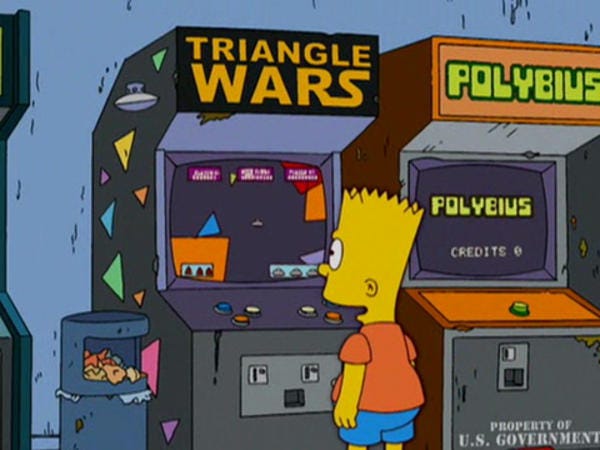
(Love the “PROPERTY OF U.S. GOVERNMENT” stamped on the bottom!)
A home version appears in the 1980s time traveling show Paper Girls:
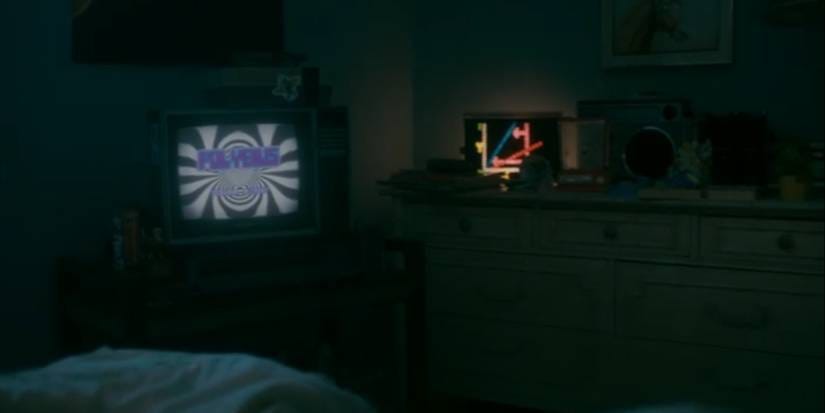
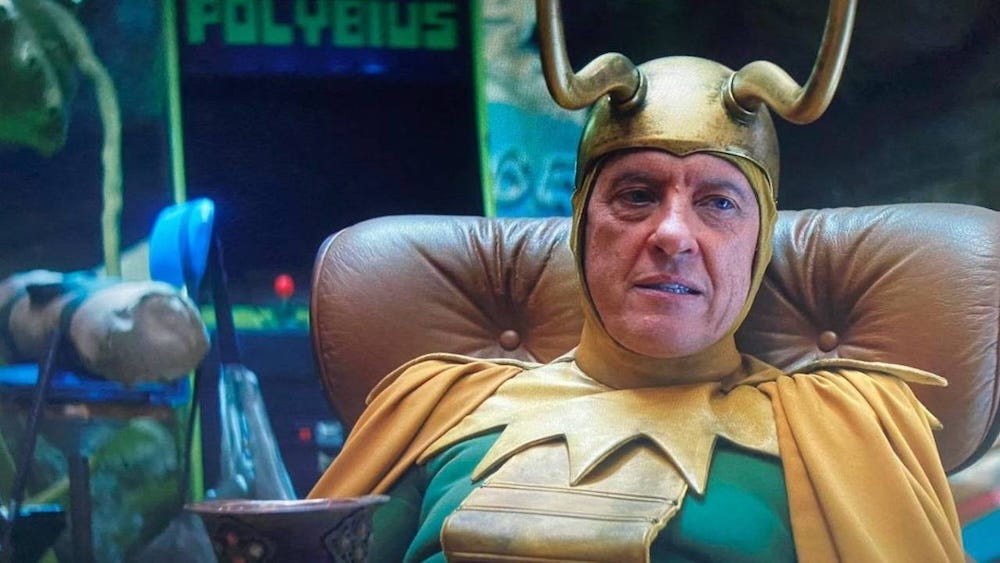
And Polybius gets a now infamous background shout-out in the Marvel TV show Loki:
If you want to read more about the entertaining myth of Polybius, I highly recommend Brian Dunning’s podcast and article about it on Skeptoid, as well as Cat DeSpira’s update on her 2012 Retrocade Magazine article. And if “BuzzFeed Unsolved”-like videos is more your speed, check out the YouTube video “Polybius - The Video Game That Doesn’t Exist” by Ahoy.
The school year is almost over, which means I have only one more free, live, virtual school visit coming up before the summer. And it’s just a week away!
Please join me online Tuesday, May 19 at 1pm ET, 12pm CT, 11am MT, 10am PT. As always, I’ll talk about the inspirations for some of my books, and then answer viewer questions live. Bring one reader, a whole class of readers, or a whole school of readers—there’s no limit on how many people can join me.
The event is free, but you have to register in advance to be there!
Can’t make it next Tuesday? Don’t worry—the event will be recorded and up for the rest of the summer. And I’ll see you again online in September!
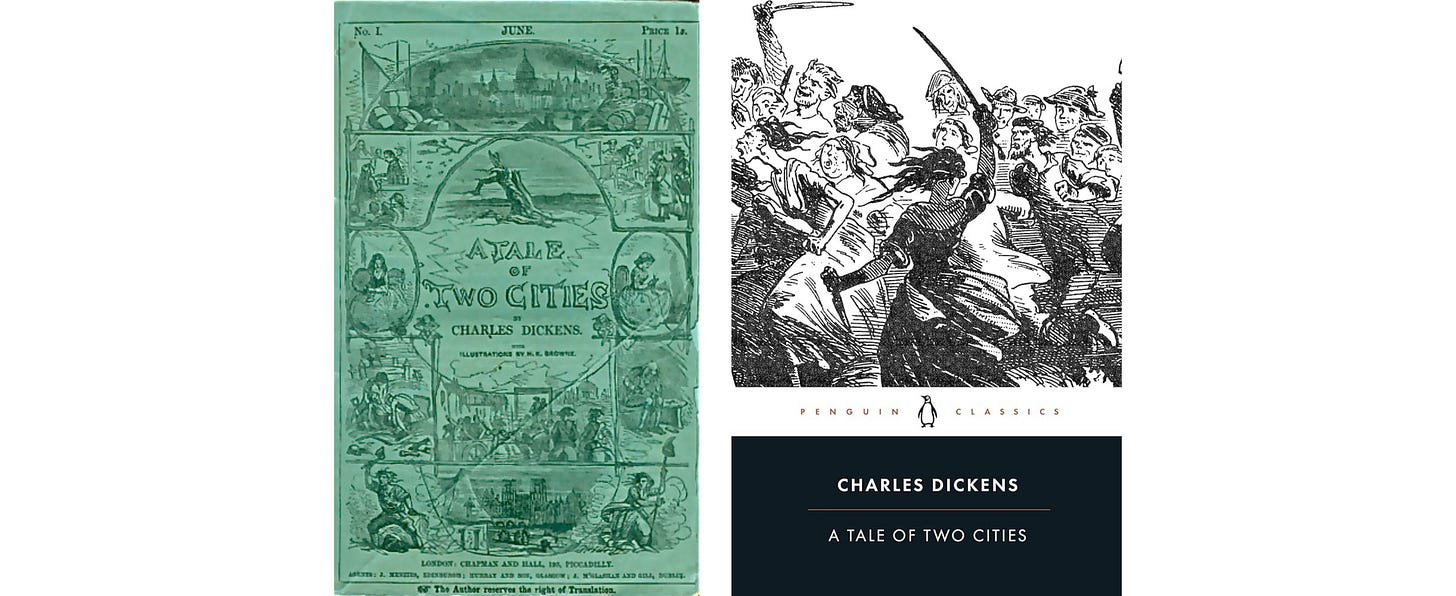
Until last month, the only book I had ever read by Charles Dickens was The Mystery of Edwin Drood, which was assigned reading in the Mystery and Detective Fiction class I took as an undergraduate at the University of Tennessee. And, well, if I’m being really honest, I cannot claim to have read the whole thing, as I’m pretty sure I bailed on it part way through. (And I’m not the only one. Dickens also didn’t finish it—but in his case, it was because he died first.)
I’ve always felt I should get around to reading something else by Dickens. (I mean really reading it, not just pretending to read it.) So when my mom suggested that she and I and my wife and daughter form a little Gratz Family Book Club to read classics that few or none of us have read before, I immediately suggested A Tale of Two Cities. Only one of us—Wendi—had read it before, and she was happy to give it another go.
This one appealed because it was historical fiction with social justice themes. Which…is kind of the way I describe my own books. To be clear, I am not saying I’m, like, the twenty-first century Dickens, or anything so presumptuous. We’re certainly very different stylists. And you could fit four of my books into any one of his. But I admire his humanist goals, his cliffhangery chapters, his wit, and his deliberately popular appeal. So let’s say I’ve always aspired to be Dickens. (Even though I hadn’t read any of his books. Ahem.)
We finished A Tale of Two Cities last month, and I really enjoyed it. It’s not always the easiest prose to understand, and Dickens never says anything in 100 words that he can say in 1,000 words. (He did, after all, publish the book in 31 installments of his self-published literary periodical All the Year Round, and something had to fill those pages every month.) But the story is a proper pot-boiler while also being historical fiction (which I love), and the interconnectedness of the characters is delicious.
I also appreciated what the introduction to our edition had to say about it, which was that in many ways, Tale is Dickens’ most concise novel. For one, it’s among his shortest novels. Not counting his novellas and the unfinished Edwin Drood, it’s his second-shortest novel, clocking in at a still hefty 145,000 words. (For comparison’s sake, my books average around 70,000 words each—and I’m shooting for much shorter lately.)
But it is also “concise” in that Dickens is trying to tell the story of the French Revolution through the far more personal stories of his characters. Thus the lives of Charles Darnay, Lucie Manette, Dr. Alexandre Manette, Sydney Carton, and Monsieur and Madame Defarge, in their ways, are parallels of the larger historical event.
And that, after all, is what I’m often trying to do in my own books, whether I succeed as famously as Charles Dickens or not.
That’s it for this month! If you liked this newsletter, please share it online, or with anyone you think would be interested:
And if you aren’t already a subscriber and you’d like to be, you can sign up here:
Until next time, don’t play any psychotropic video games without me!
No posts
Comments
Nothing yet. Say the first thing.
Sign in to join the conversation.