
This is part three of three posts that make up a talk on ‘The Place of the Left in the Struggle to End Imperialism’, given on 10th July 2026 at an international summer school organised by Fudan University in Shanghai
Part 1 is called ‘Can the workers of the world Unite?’
Part 2 is called ‘What is the Left?’
This post is public so feel free to share it.
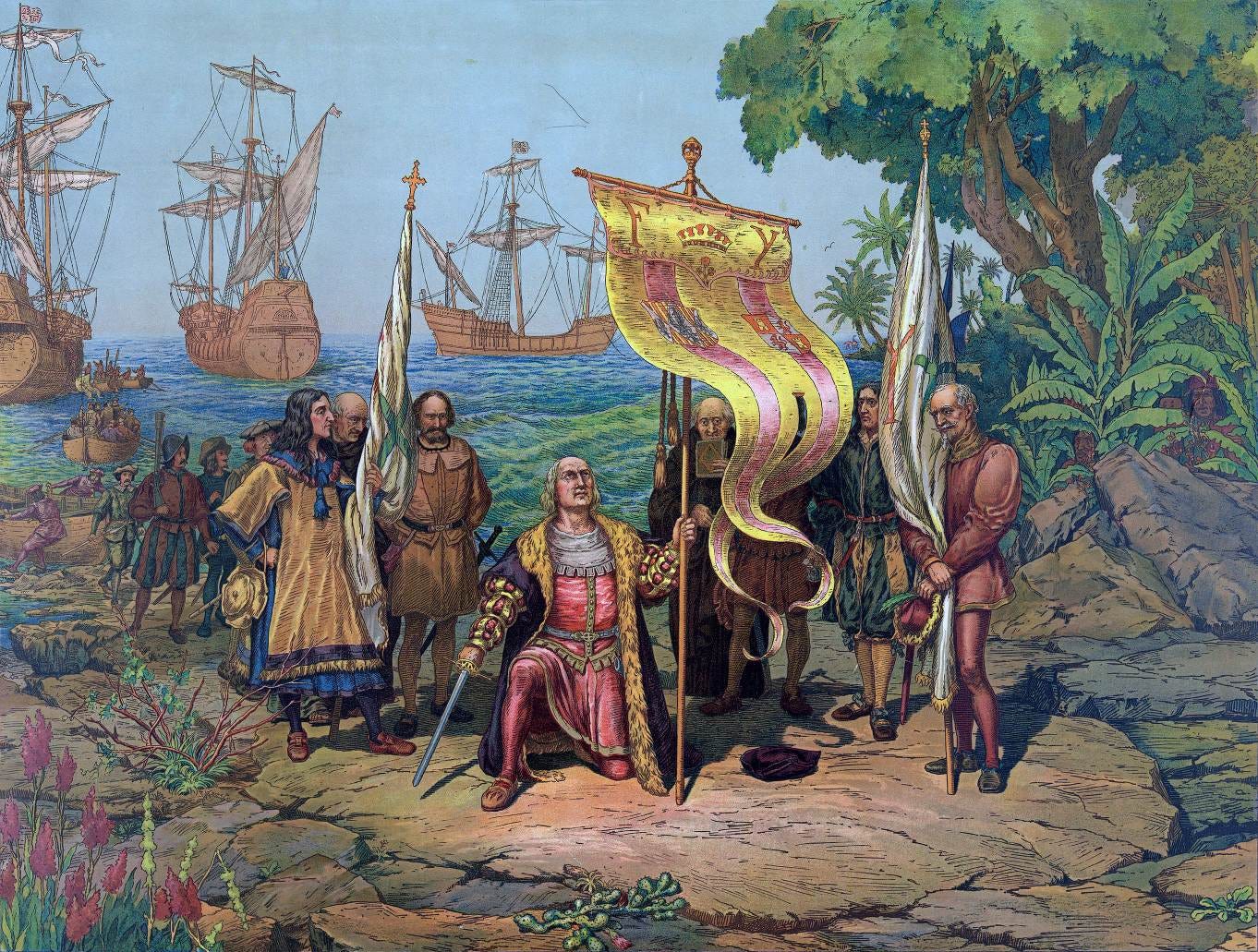
It is a commonplace idea in Western Left Liberalism, including too many Marxists, that Marx had no conception of imperialism and had nothing to say about it. This ridiculous idea can be sustained only because the Left Liberals do not understand that Imperialism is nothing but an extension of Colonialism.
This, in turn, arises because the western Left thinks, frankly, that Capitalist Imperialism is a modern invention. This is a very unfortunate misreading of Lenin’s famous description of Imperialism as a ‘final stage’ of capitalism. It would be truer to say that capitalism is the final stage of imperialism. This is because capitalism was born out of colonialism, of which modern imperialism is merely the most developed form.
Once we understand the real question to be the nature of colonialism, Marx’s perspicacity becomes completely clear. From his earliest days his ideas are very forthright, being expressed most clearly in his frank analysis of slavery, the founding economic institution of the United States of America.
An entire chapter of Capital Volume I (27) is devoted to explaining the process by which colonialism gave birth to capitalism. It contains many of Marx’s most famous remarks which are, however, almost always quoted out of context as if they were a kind of afterthought or side issue. Consider thus the following:
The discovery of gold and silver in America, the extirpation, enslavement and entombment in mines of the indigenous population of that continent, the beginnings of the conquest and plunder of India, and the conversion of Africa into a preserve for the commercial hunting of blackskins, are all things which characterize the dawn of the era of capitalist production. These idyllic proceedings are the chief moments of primitive accumulation. Hard on their heels follows the commercial war of the European nations, which has the globe as its battlefield. It begins with the revolt of the Netherlands from Spain, assumes gigantic dimensions in England’s Anti-Jacobin War, and is still going on in the shape of the Opium Wars against China, etc.
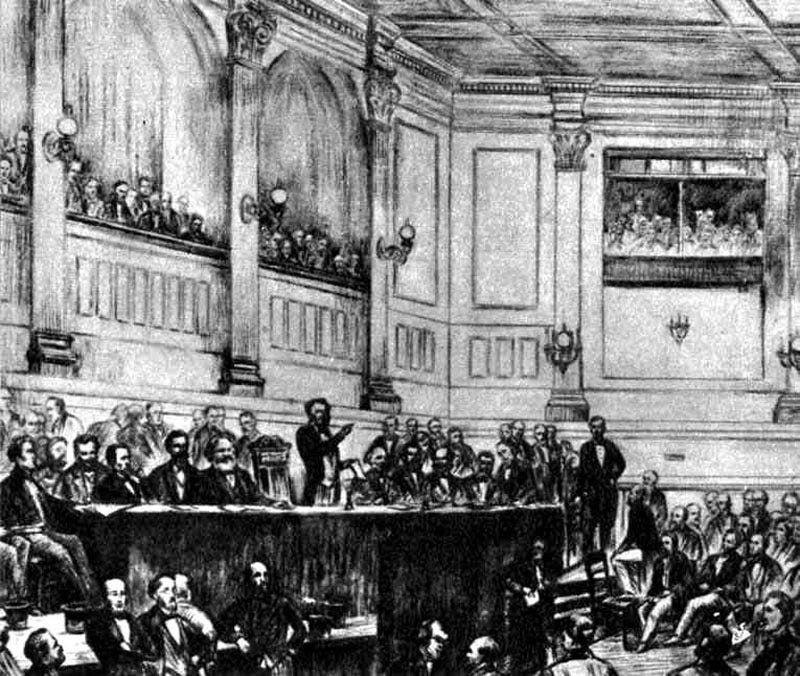
From the earliest days of the First International, Marx insisted on these points, and in his address to its founding conference he remarked:
If the emancipation of the working classes requires their fraternal concurrence, how are they to fulfill that great mission with a foreign policy in pursuit of criminal designs, playing upon national prejudices, and squandering in piratical wars the people’s blood and treasure?...
[Such conflicts] have taught the working classes the duty to master themselves the mysteries of international politics; to watch the diplomatic acts of their respective governments; to counteract them, if necessary by all means in their power; when unable to prevent, to combine in simultaneous denunciations, and to vindicate the simple laws or morals and justice, which ought to govern the relations of private individuals, as the rules paramount of the intercourse of nations. The fight for such a foreign policy forms part of the general struggle for the emancipation of the working classes.
These lessons were poorly absorbed by the successor to the Workingmen’s International, the Second International, and the origin of Europe’s mass socialist parties. It should again be stressed that the postwar ‘Second International’ was not in any way a continuation of this body, refuting the persistent lie, articulated in particular by Tony Blair, that the Communist International arose from a ‘split’ in the international.
The Second international fell apart in the Great War and was dissolved. It briefly tried to re-form in 1923 as an alliance of its anti-Comintern remnants, but without success. The present international was created in 1952 at the height of the Cold War and was, not to fine a point on it, a simple instrument of US anti-Communism.
Its defining characteristic was the notion of a ‘peaceful transition’ to socialism, which it opposed to the revolutionary methods of Communism, not least in China. The essence of this Faustian pact is that the parties of the Social Democracy, overwhelmingly concentrated in the Imperialist heartlands, agreed as a matter of principle to leave their imperialist states intact.
Actually, the issue at stake is not that of violence – these parties have no hesitation in supporting the most extreme violence of their own governments against the workers of the rest of the world. The key difference between the genuine Left and this liberal fakery is purely and simply this: that genuine Left workers’ organisations in the imperialist countries are those that resist, by all means at their disposal, the military and economic pillage of other countries by their own governments. This can mean such a simple act as voting against it in parliament – which the parties of the European Social Democracy notoriously failed to do. Or it can mean mobilising to protest against war and demand peace – which the West’s ‘Left’ parties also signally fail to do.
As Marx’s speech to the First International, cited above, states that the workers should respond to the ‘criminal designs’ of their governments in order to:
counteract them, if necessary by all means in their power; when unable to prevent, to combine in simultaneous denunciations, and to vindicate the simple laws or morals and justice, which ought to govern the relations of private individuals, as the rules paramount of the intercourse of nations.
The idea that the response of the Left should be to make a revolution at home, as explained in part 2 of this article, is almost invariably the basis for an ultraleft abstention from the duty of solidarity with those under attack. The fundamental point is that the current actions of those workers’ organisations that present themselves as ‘Left’ fall short even of vindicating the ‘simple laws of morals or justice…as the rules paramount of the intercourse of nations’.
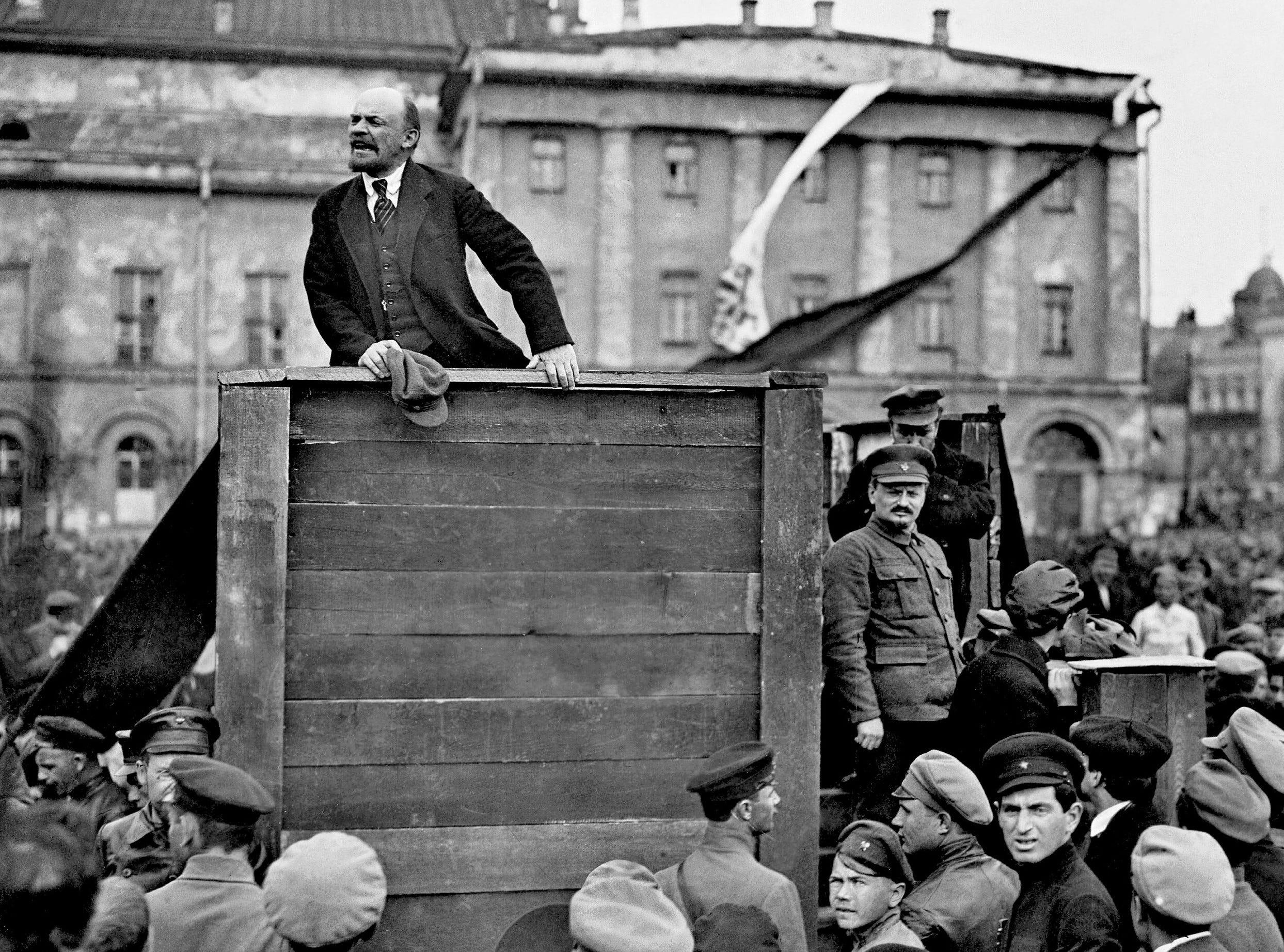
The Third International was founded, for this reason, precisely out of the centrality of opposing imperialist war. It adopted stringent conditions for admission for this very reason. Its 1920 congress adopted Lenin’s conditions for admission of which point 8 reads:
Parties in countries whose bourgeoisie possess colonies and oppress other nations must pursue a most well-defined and clearcut policy in respect of colonies and oppressed nations. Any party wishing to join the Third International must ruthlessly expose the colonial machinations of the imperialists of its “own” country, must support-in deed, not merely in word-every colonial liberation movement, demand the expulsion of its compatriot imperialists from the colonies, inculcate in the hearts of the workers of its own country an attitude of true brotherhood with the working population of the colonies and the oppressed nations, and conduct systematic agitation among the armed forces against all oppression of the colonial peoples..
The Comintern declaration was never dropped and never featured in the many other disputes of the Communist movement. It is an indispensable and primary statement not merely of the responsibility of the mass workers’ organisations, but of any within this general movement who seek the mantle of ‘socialism’ to justify their moral stance.
However, the analysis and definition of imperialism itself is the subject of enormous dispute and confusion in the left. It is dominated, frankly, by the urge to find isolated quotes from Lenin which justify calling Russia and China imperialist.
It is worth therefore noting that the 1921 conference adopted what amounts to a definition of imperialism, which integrated and, crucially, superseded the early positions of Lenin, Luxemburg, Bukharin and the other participants in the debate around the causes of the First World War. These were provided by the Indian Marxist M. N. Roy, whose ‘Theses on the Eastern Question’ were adopted by this conference.
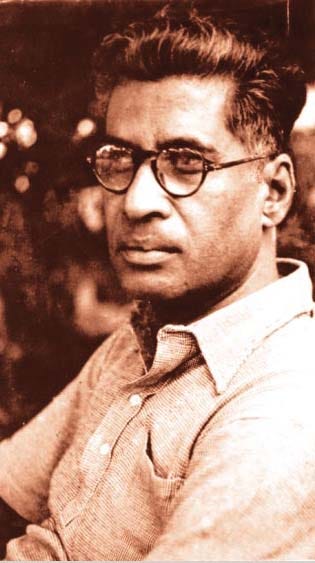
The essence of Roy’s definition is that the imperialist countries were those that had achieved a world monopoly in the exploitation of foreign labour. And this is the key defining feature of the imperialist countries today. It is not altered by the transition to neocolonialism, because it is an economic characteristic of imperialism, in which force is simply an ancillary means to accomplish it.
Its key is the division of the world into two great parts; a minority of countries with a monopoly of the production of advanced technology, and a majority which is forced, by both economic and political means, to specialise in the production of primary goods, agricultural goods, and generally in the products of cheap labour. As a result of this division, the imperialists are able to exploit foreign labour at between ten and twenty times the rate at which it can exploit its own workers.
Now, that doesn’t mean that any country which has industries abroad is imperialist. The key point is the characteristics of the whole nation, which is defined by the dominant faction among the classes that control the state, not by the actions of individual parts of those classes. In the imperialist countries, power is in the hands of that section of the capitalist class which is devoted to foreign exploitation — the colonial magnates which still rule England today, the rapacious kitchen cabinet of Donald J. Trump, the Bismarckian krypto-fascist heirs of Prussian military industrialism, the Napoleonic dreamers of the French elites, and the Empire-building revanchists who repeatedly climb back into the seats of power in Japan.
This gives rise to two things. The first is a special type of state that characterises imperialist countries and is not found anywhere else. The common feature of all states of this nature is that it is dedicated to preserving this monopoly, which is why they are invariably warlike by nature.
The second feature is that these states form a distinct bloc, organised and until recently completely dominated by the USA. This bloc, which Lenin’s comrades described as the ‘Robber Barons’ of the world, is an exclusive club. Since 1918 nobody has joined it except South Korea and Singapore – tiny populations in relative terms which were grudgingly allowed into the club to serve as buffer states to prevent them going Communist. It characteristics are perfectly described by NATO’s first Secretary General, Lord Ismay, Churchill’s chief military advisor and a former general in Britain’s army of occupation in India who said of NATO that its purpose was to ‘Keep the Russians out, the Americans in, and the Germans down’.
Indeed, the very fact that this bloc is a club is a further nail in the coffin of the outrageous claim that Russia, or China, or for that matter Turkey, South Africa, India or Brazil are now, or can become, imperialist powers. This is a ridiculous idea for the simple reason that it is economically impossible for a monopoly to be shared.
This is why politically none of these countries, even to the extent that they may wish to become imperialist, will be allowed to become imperialist.
And this brings me to the current state of the world.
This system is now falling apart. This is not simply because of the resistance of the South, though this has played no small role; it is because, due to the falling rate of profit in the North, they have been snared in a prolonged decline which is entirely of their own making. They only response they can make is to intensify, at one and the same time, their assaults on the workers of the South, and of their own countries.
For this reason I question the hypothesis that seems to lie behind the concept of ‘hyperimperialism’ which suggests that this new aggressive phase is a product of the strength, and unity, of the imperialist countries. I think to the contrary it is the product of their weakness, which has now reached the point where they openly attack not just workers, but each other. Of course they have always competed with each other, but not in ways such as the destruction of the NordStream pipleline, which is simply an act of war by the USA against Germany – no other description fits what is now coming to light.
What we see is, in this sense, a return to the conditions that led up to world war I, in which the conflicts between the Great Powers are combining with the conflicts between the imperialists as a whole, and the working class as a whole. The key difference is that in World War I, the Great Powers fought each other; now, they are lining up against the whole of the non-imperialist world. Their problem is that to do so, they also have to line up with each other, and it was their failure to do so in World War II that led to the victory of the USSR and the Chinese revolution. It follows that if any imperialist country merely refrains from taking part in the military madness of the others, it already strikes a blow for the world working class.
This does not make the imperialists any less dangerous; there is actually no beast more violent than a cornered one. As a result, it is rapidly returning to its essential, primal forms in which naked repression and military force come to the fore, displacing all pretence at liberal virtue.
What this condition of the world does demand is that the workers organise to become a worldwide force capable of halting the beast in its tracks. The rise of fascism, in new forms, proves that this task is an urgent one.
It is also, however, a task that can be accomplished. Roy’s positions on fighting imperialism – and those of the 21st Congress – are completely clear. It is that the consequence of imperialism has brought a new mass force into existence; the poor peasants and artisans of the colonised countries.
By converting the peasants and artisans of the subject countries into an agricultural and industrial proletariat, imperialism brought into existence another force which is destined to contribute to its destruction. This being the case, the overthrow of the capitalist order in Europe, which to a great extent rests on its imperial extension, will be achieved not alone by the advanced proletariat of Europe, but with the conscious cooperation of the workers and other revolutionary elements in those colonial and subject countries.
M. N. Roy
Under today’s modern conditions we must only add the following: in the intervening years, the size of this ‘other force’ has increased by a factor of ten or twenty times. It now clearly outnumbers the size of the working class in the heartlands. The terms of Roy’s equation are therefore reversed. It is not the colonial and subject countries who must ‘cooperate’ with the workers of the imperialist countries. It is the workers of the imperialist countries who must cooperate with their sisters and brothers who are actually at the forefront of the battle which their own governments are waging against the workers of the world.
Did the Comintern’s addition of colonial liberation to the demands of the workers’ movement change the ideals of the founders, as claimed by critics who see the anti-imperialist struggle as extraneous or indeed, counterposed, to class struggle? Actually, far from negating world working class unity, the Comintern extended it.
These declarations therefore do not contradict the First International. They incarnate Marx’s principle that ‘no nation that enslaves another can ever itself be free’. They concretise the Manifesto’s view that ‘the Communists have no special interests of their own, other than that they represent the most general interest of all workers’, in the context of the fratricidal war of 1914.
Workers, the Comintern says, can only act worldwide if the workers in the imperialist countries side with the far larger proletarian army of the colonies. The Comintern, an explicitly anti-imperialist alliance, remained a Left alliance because, like its predecessors, it wanted to represent the interests of the propertyless against those of the propertied on a world scale.
Any world anti-imperialist movement should therefore rest on a clear concept of what imperialism is: a world economic system of differential exploitation imposed on four-fifths of the world by one-fifth. This has two consequences.
It first follows that the social democratic parties will not challenge the actions of the imperialist states. They are already crumbling for this very reason and the task of the hour is to create genuine Left replacements for them in the heartlands.
The reason bears repeating: since the chief income of the imperialist states comes from the exploitation of labour abroad, it follows — as night follows day — that these parties will support everything their governments do to maintain their domination over workers abroad, including everything we’ve seen: barbaric wars, coercive and punitive sanctions, regime change, and all of that.
So, the reason for that is that the super-profits that can be earned by the imperialists in exploiting foreign labour are much, much higher than the profits that can be obtained by exploiting their own labour. On the details of this I have shared with you, via the organisers, a paper on the persistent inequality of nations, which demonstrates that not only has the income of the imperialist countries in money terms relative to that of the countries of the Global South grown persistently since the end of the Second World War, and particularly under neoliberalism, but that its magnitude is of the order of 10 or 20 times bigger, which vastly exceeds what it could get by concentrating or exploiting its own workforce.
If you can get by exploiting 20 Indian workers the amount of labour that you can get out of one English worker, of course you’re going to focus on exploiting the Indians. If an American monopolist miner can get the work of 10 labourers to extract oil cheap food, or textiles from Latin America, from India, from Indonesia, or wherever in the world he goes, then of course he’s going to do that, rather than focus on concentrating his own workers.
This is the true origin of the disintegrating ‘welfare state’. The states that emerged from the last war, and the revolutionary upsurge that followed it, simply found it cheaper to buy off a big section of its own working class, bribing and corrupting its organizations, rather than risk a big fight with them that could lead to Communism.
But this bears no relation to the objectives of the First, Second, or Third International. It’s not a left policy. It’s an imperialist policy. That is why new, genuinely Left and therefore genuinely anti-imperialist mass parties are required throughout the nations of the Collective West.
But that, in turn, requires us to redefine what the task of these parties are. It’s not simply to rise up and make revolution. The primary thing is — comes right back to our definition of the left. It’s not to make compromises. It’s to not give up. It’s to say: what is happening to the Palestinian people is unacceptable, and we’re not going to put up with it.
And it’s the imperialists themselves who recognize this. This is why in Britain, horrendous jail sentences are being doled out against people who simply express their disagreement with their government’s policies.
The law of my country threatens even voicing an opinion about these actions. What this has to do with ‘freedom of speech’ or even freedom of thought is a matter for which the Labour Party’s leadership will answer to history. I do not think their grandchildren will have any reason to take pride in them.
What I will say is this: the very fact that the state treats such mild acts of civil disobedience as a crime comparable to the genocide of the Palestinian people conclusively tells you what the nature of that state is, and just how degenerate it has become. These people have lost all right to tell any other country what to do.
I will also say this: resoluteness in opposing the imperialism of one’s own government doesn’t take the form of rising up with arms in hand. Quite the contrary, it’s not a terrorist activity, which is one of the important defences that has to be entered against the repression of the imperialists at home. It actually doesn’t involve violence at all. It simply involves saying: No.
There’s a wonderful phrase by one of my favourite German writers called Kurt Tucholsky, in which he said that nothing is more difficult, and nothing requires more moral conscience, than to stand up against the common sense of one’s time and clearly say: No.
Rosa Luxemburg has said, nothing is more revolutionary than the truth. So even telling the truth is in and of itself a revolutionary act. If one defines a revolutionary act as simply not compromising with the state — that, it seems to me, creates a workable definition for the basis on which the left organizations of the future within the imperialist countries and the anti-imperialist organizations of the whole of the world can come together on a common basis.
That finally, however, leads us to ask the question: what does this concept of anti-imperialism mean in the Global South? Is it an invitation to compromise with the bourgeoisie of these countries? If we say that we’re making common cause against the imperialist aggressors, and we don’t clearly make a condition of socialism or even the economic advancement of those countries — are we throwing away something that the workers really need?
Well, this is why I advanced the idea, in part one of this talk, that the Left should be a minority within an anti-imperialist international. This has a specific meaning: it should be an organised minority, just as the Communists were in the struggle to liberate China from Japanese imperialism. In the neocolonial circumstances of today, the decisive issue dividing the Left from the general anti-imperialists of the global south is not confined to the military question: at the core of what has to be achieved is economic sovereignty.
And indeed, this is the ultimate guarantee of security. The notion that the task of the workers is to ‘develop the forces of production’ is an acquisition of Marx and of the Communists, which has acquired a new and vital meaning for those countries whose economies have been devastated and whose peoples have been ruined by imperialist predation.
However, a cautionary point has to be made, on which I will include. The way that one should judge the progress being made in any country towards that possibility does not rest on the strength of its economy but on the consciousness and resolution of its working class, expressed in the quality of its political leadership. And the encouragement of that political development is in fact the key task of any new international organisation.
This is why I have to close on second comradely critique of the concept of hyper-imperialism, which makes a detailed categorisation of the countries of the world based – as I read it - on the aspiration, or achievement, of their governments, as regards economic sovereignty. But I don’t think that the Palestinians have reached any level of striving for economic sovereignty; yet they are leading the world in the example they have set on resisting what the imperialists are trying to do, simply by standing up to it and saying: we exist.
So, I think that one should look where Marx looked, where he says the key feature, as regards the prospects for socialism or communism in any country, is the state of consciousness of its working masses. That’s why a new workers’ international is needed, that’s why its first priority must be to solidarize with everyone under attack by the imperialist club – whether that attack is military or economic – and finally, why the Left must be part of it.
I’m going to leave you on that thought, and hope for a fruitful, if not too pugilistic, discussion.
Thank you.
Comments
Nothing yet. Say the first thing.
Sign in to join the conversation.