
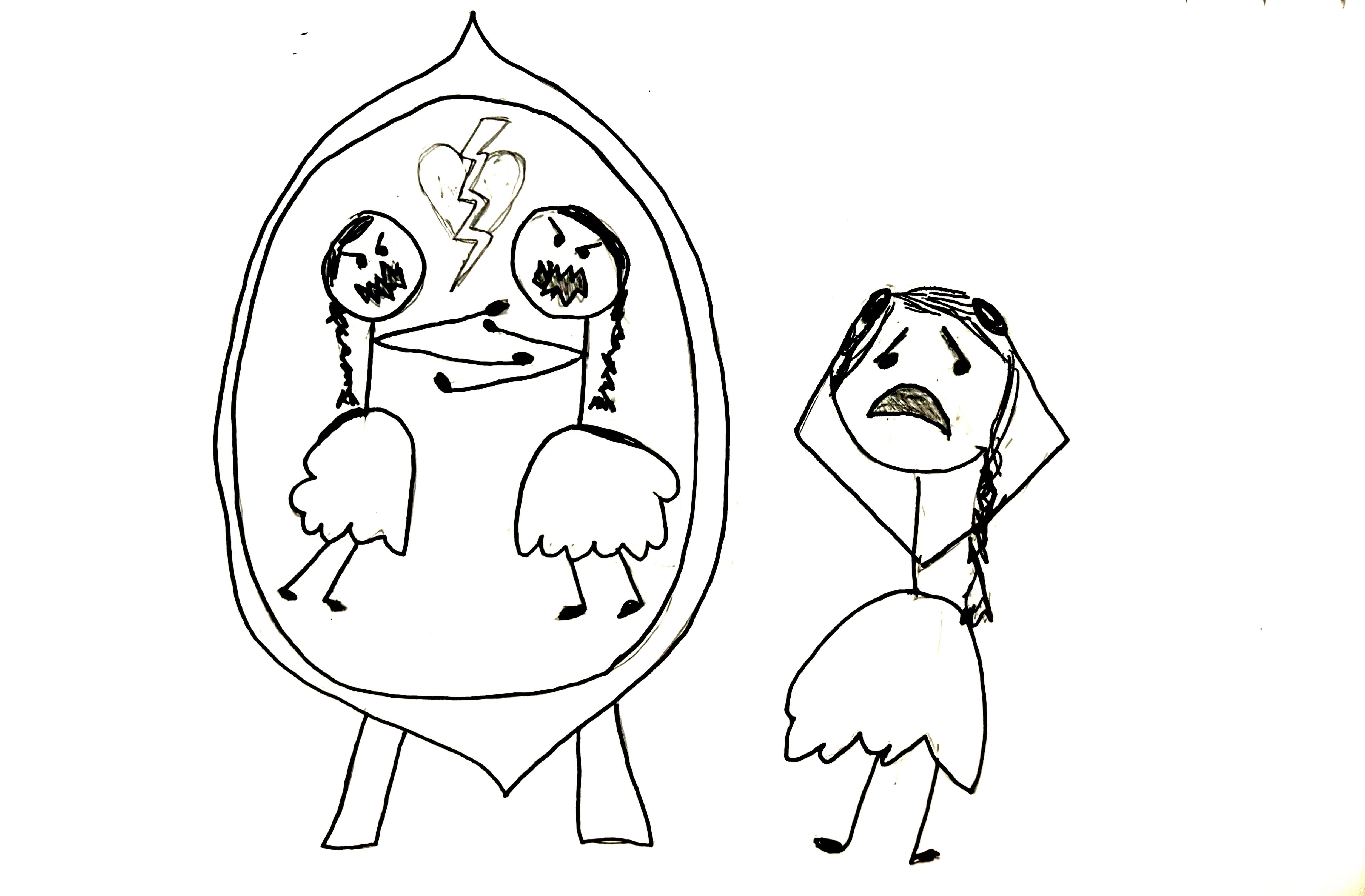
Despite divides and across lines, there seems to be one thing that most can agree on:
Love is important.
Whether you’re a tree-hugging hippy or a bible-thumping evangelist, there’s something in us that knows:
Life is better when we love it.
The message is pervasive. On bumper stickers and billboards across the world, love is presented as the ultimate path to peace: if we could just love each other, life would start flourishing!
And yet, love doesn’t always come easy. In fact, when I aim to look at the world today with love, the most gracious conclusion that I’ve been able to make is that love must be really hard.
It must be hard to do.
It must be hard to see.
Though I understand that the peephole though which I’m able to see the world is skewed (I doubt that the internet and/or the media present a full or accurate view), there’s no denying that really rough stuff is happening (and has been happening throughout history), and that this rough stuff does NOT feel like love.
Why is that? Is it because there’s some kind of anti-love that’s been injected into the world that dries up the hearts of humans? Or perhaps some people are just born evil, utterly incapable of loving?
These gloomy explanations are inescapable, not only when I took into the screen, but from the feedback that I’ve gotten from many of the people that I’ve respected around me. I remember a class on religion that I look in university: When we were asked to articulate our own beliefs (for our final paper), I presented an optimistic view unabashedly: “I believe in love” was the center of my story.
But, in the notes that my professor returned to me, he offered a familiar critique that (in summary) said: Your paper lacks depth without the recognition of evil.
The feedback was unsurprising as I admit that evil is not a word that I use readily, mostly because it summons such a powerful mirror: by calling something evil, I give myself every right to hate it. But the more I hate evil, the more I seem to become it.
Even so, I get my professor’s point: seeing the world through the lens of rainbows and butterflies feels like a lie when it ignores the fact that many butterflies fight; they’re not all airy-fairy-sharey when food is scarce and another butterfly is headed for their dinner. They take no shame in letting the other butterfly go hungry while they devour the whole dang flower12. What selfish little beasts exist in nature!
Yet, if I want a world of love, then it feels safe to assume that loving the world would be part of the equation. But how do I love all that rough stuff that’s not so loving?
For a long time, my strategy was to defend against the heartless army by somehow discerning those who are worthy of love from those who are not. I raised my fist against the enemy: “Down with those who challenge the loving!”
But it was a slippery-slope as I couldn’t help but to find the enemy close to home. Every person that I’ve ever loved has, at one point, hurt me, and each has the capacity to worry and scare me. If the definition of evil is to be selfish or scary, then (from one view or another) we’ve all got a little evil lingering: I’ve certainly seen it in my own reflection with greedy little fingers who took the biggest piece of chicken. Frightened, I’ve jumped ship when I was needed. I’ve displaced blame. I’ve scapegoated. With white little lies that turned to black- cutting corners isn’t cheating if it happens fast.
Still, I’ve rode the horse of “loving imperfections,” at least as long as it justified my own actions. But as soon as it required loving those who hurt me, I’d say the same imperfections deserved punishing. The hypocrisy, itself, isn’t easy to see as I’ve pointed fingers at the very same thing.
Caught in the trap of my own distain, for years I’ve been searching for another way: How can I see all of the hurt and harm in the world with open eyes, and still love it at the same time?
For me, it starts with understanding:
Why is love so dang challenging?
The question itself can be embarrassing as the hardest thing about love (for me) has been the idea that it ought to be easy, that it ought to flow freely.
If love’s hard for me, does that mean that there’s something wrong with me?
Recently, I read a book that brought this insecurity to the surface. Science-based, the premise of the book was this: If we could just rationalize how important love is, surely we all would do it! The book offered proof of all love’s benefits as it aimed to convince readers that love is a reasonable action. It assumed that love is something that can be swayed, as if the will to love is enough to save the day.
But throughout the book, the subtext was loud: If after seeing all the proof that love’s really good for you, you still don’t do it, then maybe some of us just aren’t cut out for loving. Maybe some of us are just jerks.
That’s how I felt, anyway, as I absorbed each line to the backdrop of difficulties from my own life: The wall that I hit. The returning wound. The generosity that dries when I’m scared and confused.
Ironically, it’s these challenging moments that need the most love, yet so often they’re the ones that get tossed and thrown by the belief that love should be easy:
If we struggle to love, are we worthy to be loved? If not, then what love do we have to give? How can we give love if we’ve been deprived of it?
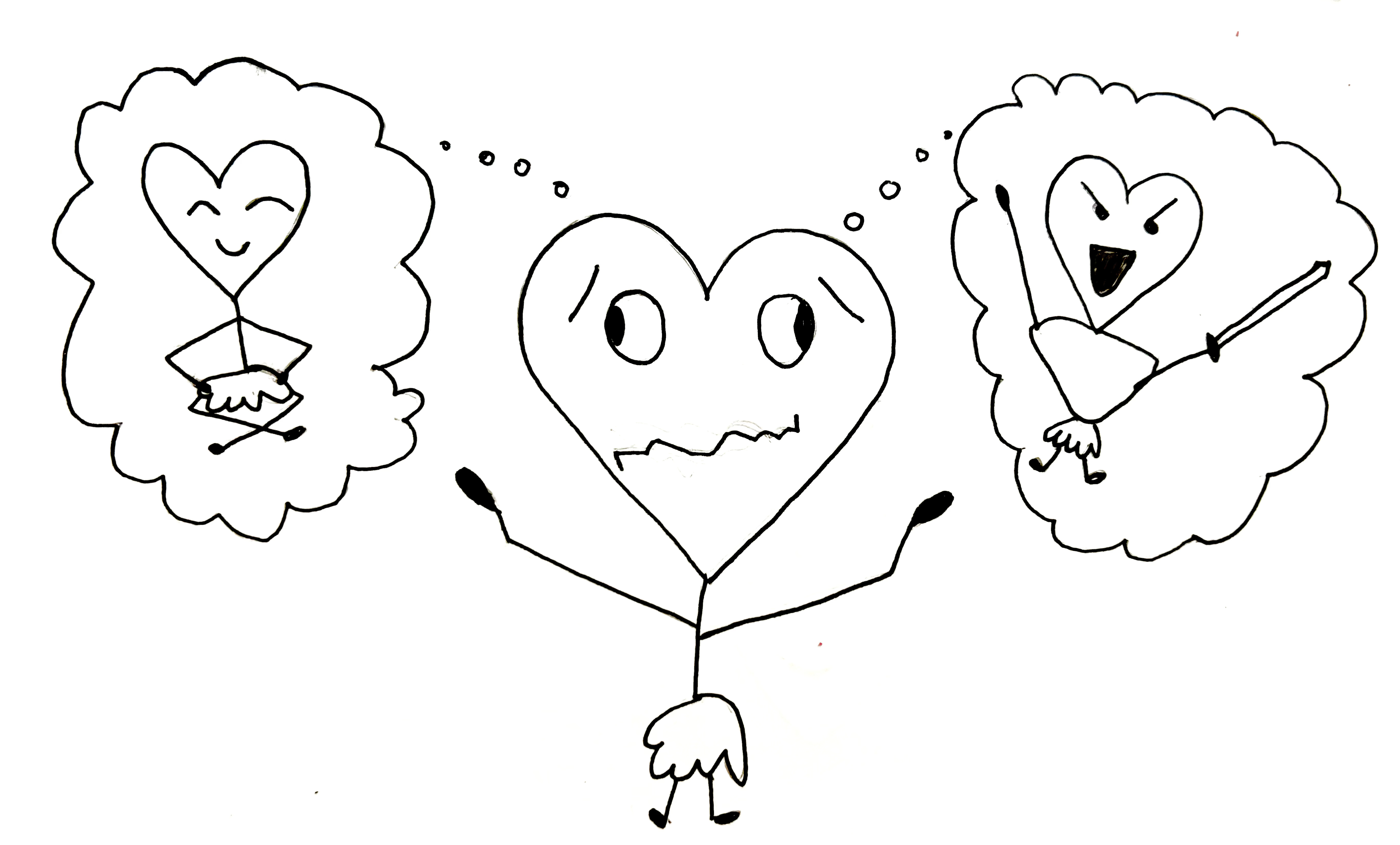
These questions of the heart are not new to the human experience. Indeed, they’ve been well-documented since singers began to sing and poets began to rhyme. Despite slogans and symbols that paint love as simple, there too are reflections of all the ways that love is difficult -starting with confusion. What does love actually look like? What does it feel like? Is it hard or soft? Learned or inherent? Unconditional or earned? Perhaps, most importantly, is love selfless?
To answer this question: on the one hand, I’ve been advised to secure my own oxygen mask before helping others when the plane has crashed; it’s not possible to love others without loving your own two hands.
On the other hand, I’ve been told to put the needs of others before my own. Remember the allegory of the long spoons3? In this message of love, everyone in both heaven and hell are given ridiculous long spoons. In hell everyone goes hungry as they try to feed themselves selfishly (but can never reach their own mouths). But, in heaven, instead of feeding themselves, folks feed each other (and everyone is satisfied). The moral is clear: when you think about others, everyone is fed. When you think of yourself, everyone goes hungry.
In any case, both hands make sense: You can’t give to others if you, yourself, are empty, yet caring for others is uniquely fulfilling. Still, these two hands are often presented as opposing each other, as if caring for others makes it impossible to care for yourself, or caring for yourself makes it impossible to care for others.
This false dichotomy was highlighted, again, in the book that I read about the research-backed benefits of serving others. Though, on the one hand, the author did acknowledge that there are certain basic needs that we must meet for ourselves (in order to be capable of serving others), many of the studies that were presented compared those-who-are-in-it-for-themselves vs those-who-care-about-others as if they’re mutually exclusive. I found myself frustrated, on numerous counts, as, on the one hand, the author encourages readers to serve others explicitly because it’s good for those who serve, while on the other hand, he emphasizes that the best kind of service is that which is done without self-interest.
I don’t blame him for the confusion: I’ve spent my life confused about whether caring about myself is a good or bad thing (and it’s caused a lot of suffering). For many years, the recognition of my own selfish tendencies has left me feeling both incapable of love, and unworthy of receiving it. This has been a vicious cycle as the less worthy I’ve felt of love, the less love I’ve had to give.
What began my process of reconciliation (between care for myself and care for others) was a better understanding of our nature, starting with how ecosystems work. As an interdependent system, each individual in the ecosystem serves the rest. But, they don’t do so intentionally. From the perspective of each individual, everyone is self-serving.
For example, beavers are known as ecosystems engineers4 because they provide so many benefits to the environment. Firstly, their dams slow down rivers. This slowing water allows sediment to accumulate, which helps to filter water (and keep it clean). It also allows fish to thrive5. Furthermore, the dams help water seep into the surrounding soils, which keeps the land around them green and hydrated, preventing wildfires. What’s more, the dams allow for a slow release of water overtime, which helps rivers to maintain a flow even during times that are dry.
Meanwhile, beaver dams and lodges create habitat for other creatures, like birds, amphibians, and bats. They make bridges for critters to cross rivers, which help ecosystems to share and connect. Finally, as the beavers harvest willows for their dams, their work helps the willows to thrive: pooled water from the dam provides willows with the ideal moisture to grow, and the scattered logs and branches help willows to reproduce through cuttings6.
That being said, as far as science can see, the beaver is not acting altruistically. It doesn’t think to itself “Gosh, I love the willows and the birds and the fish and the bats and the forest so much! I’m gonna do everything that I can to help them all out!” Instead (as far as science can see), beavers build dams because winters can be cold, and they need safe places for hibernating. Similarly, birds don’t necessarily mean to help trees to spread their seeds; they’re just hungry -so they eat the berries and poop them out as they’re flying7. The fact that it all works together so harmoniously (despite the utterly selfish motives at the center of all the components) is nothing short of astonishing -miraculous, even.
Still, as I began to better understand the workings of ecosystems, at first I was hesitant to acknowledge the selfish motives at the center of it; it didn’t fit the world-view that I was trying to prove: I wanted a story of love and peace and harmony, but my observations didn’t fit. Though, as a whole, life is harmonious, on the micro level, it can be ruthless - and disheartening.
But thankfully, with a steadfast aim to love our nature, what began as a dispiriting revelation eventually turned into heartwarming hope and compassion. Life is hard for all of us, and yet: here we all are. After eons of struggle, life has sustained. The resilience of life, as a whole, is heartening.
With this in mind, I began to see how humans are also part of the ecosystem. We are mammals, after all; we’re all predators and prey in the same cycle of life. Perhaps, within this frame, I might find clues as to why love feels so hard sometimes.
Happily, my investigation has brought helpful insights: understanding humans as animals who contend with the same challenges that all of life faces has helped me understand why, at times, we fall from love’s graces.
From the mammalian point of view, we are not made to be selfless. In fact, it’s quite the contrary. We’ve been made to survive; it’s automatic8. That being said, as social animals9, our survival depends on each other. So, total selfishness doesn’t serve us either. Balancing those two instincts: to nourish and protect our own survival while supporting the survival of our family/tribe/community has been at the crux of the human condition ever since we started banding together.
It’s here, in recognizing love as one of the core challenges of the human condition that my heart has begun to soften:
When I expect love to be easy, it becomes harder. When I expect love to be hard, it feels easier.
With that in mind, in this series I’ll share some of the nerdy nature notes that I’ve found regarding the automatic (and animalistic) responses that both keep us from love, and move us toward it.
The aim is simple:
To grow understanding for the parts of life are hardest to love so to cultivate the compassion, care, and creativity that help us to overcome them.
In our darkest moments, may love find us mercifully
Follow "Love Notes to Our Nature"
(and read the stories and science behind the songs)
https://www.sciencenews.org/article/monarch-butterfly-caterpillars-head-butt-fight-food-milkweed-video#:~:text=Once%20the%20researchers%20overcame%20these,the%20amount%20of%20available%20food.&text=Your%20browser%20can’t%20play%20this%20video.&text=An%20error%20occurred.,make%20it%2C”%20he%20says.
https://nhm.org/stories/flight-club
https://en.wikipedia.org/wiki/Allegory_of_the_long_spoons
https://kids.frontiersin.org/articles/10.3389/frym.2023.1209980
https://www.fisheries.noaa.gov/feature-story/oregon-beavers-engineer-better-fish-habitat-more-fish#:~:text=The%20study’s%20findings%20include:%20*%20**Increased%20fish,*%20Closing%20the%20watershed%20to%20beaver%20trapping
https://www.nature.com/articles/s41598-019-44381-2
https://blog.3bee.com/en/why-trees-and-plants-need-bird-droppings/
https://www.health.harvard.edu/staying-healthy/understanding-the-stress-response
https://www.thesocialcreatures.org/thecreaturetimes/evolution-of-social-connection
Comments
Nothing yet. Say the first thing.
Sign in to join the conversation.